

The Chernobyl Exclusion Zone remains one of Earth’s most haunting yet paradoxical places, where death and life intertwine in ways no scientist ever predicted. Nearly 39 years after the world’s worst nuclear accident, this radioactive landscape has transformed into something nobody saw coming. What was once expected to be a barren wasteland has become Europe’s most unlikely wildlife sanctuary, capturing images that challenge everything we thought we knew about radiation’s impact on nature.
The Elephant’s Foot Still Glows in the Basement

Deep beneath the destroyed Reactor 4 lies one of the most dangerous objects on Earth. In December 1986, after six months of investigation, the team discovered with the help of a remote camera that an intensely radioactive mass more than 2 metres (6 ft 7 in) wide had formed in the basement of Unit Four. The mass was called “the elephant’s foot” for its wrinkled appearance. It was composed of melted sand, concrete, and a large amount of nuclear fuel that had escaped from the reactor.
Internal radiation levels were estimated to be as high as 10000 röntgens per hour in certain areas (normal background radiation in cities is usually around 20–50 microröntgens per hour, and a lethal dose is 500 röntgens over 5 hours). This bizarre formation continues to radiate deadly energy, creating crystalline structures that scientists have termed “chernobylite.”
The New Safe Confinement Under Attack
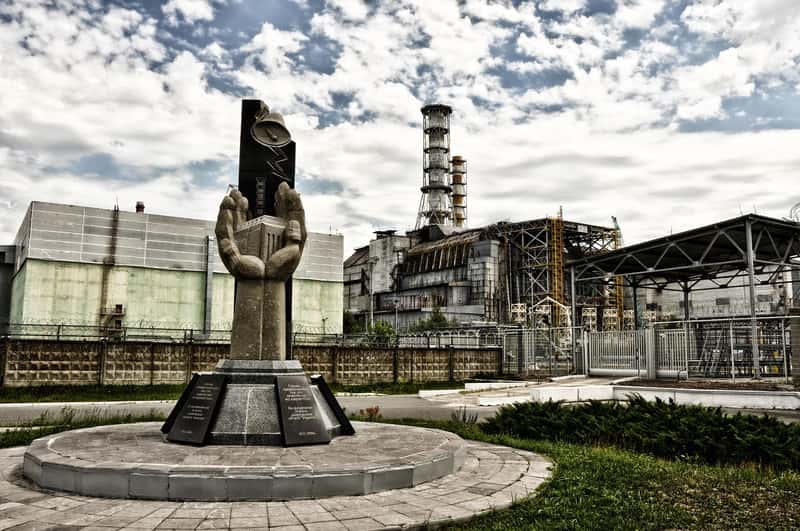
In November 2024, a Russian drone attack damaged the NSC. Both the internal and external layers were breached during the attack. The world’s largest moveable structure, designed to contain Reactor 4 for a century, now faces an uncertain future.
The lead engineer for the Chornobyl NSC and Sarcophagus, Artem Siriy, told the Greenpeace team that 50 percent of the north roof as well as the south roof and side walls of the Chornobyl NSC had been affected by burning caused by the Russian drone attack. There is severe damage to the roof cladding material and damage to critical structures, including the crane system, as well as the potential for initiating corrosion as a result of intrusion of snow and water under the Chornobyl NSC arch. Because of the high radiation levels above the Sarcophagus, it is very possible that the entire Chornobyl NSC will have to be moved back on its rail system to where it was constructed before repair can be made at an enormous cost.
Genetic Mutations in Chernobyl Dogs Revealed
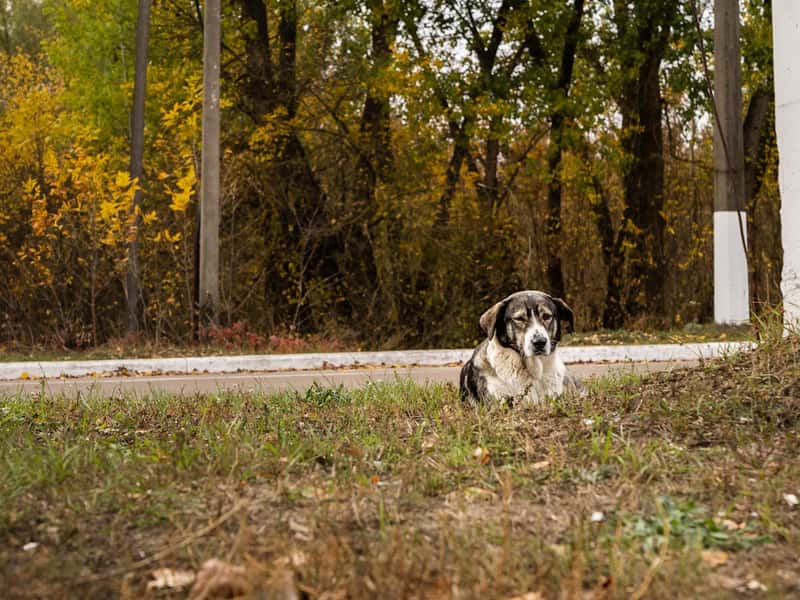
Living among radiation-resistant fauna are thousands of feral dogs, many of whom are descendants of pets left behind in the speedy evacuation of the area so many years ago. As the world’s greatest nuclear disaster approaches its 40th anniversary, biologists are now taking a closer look at the animals located inside the Chernobyl Exclusion Zone (CEZ), which is about the size of Yosemite National Park, and investigating how decades of radiation exposure may have altered animals’ genomes – and even, possibly, sped up evolution.
Scientists from the University of South Carolina and the National Human Genome Research Institute have begun examining the DNA of 302 feral dogs found in or around the CEZ to better understand how radiation may have altered their genomes. Their results were published in the journal Science Advances in 2023. These genetic studies represent groundbreaking research into radiation’s effects on mammalian DNA evolution.
Radiation-Adapted Creatures Emerge
Studies have shown that frogs inside the zone are darker than those outside of it, which may help them resist some of the effects of radiation. This discovery suggests that some species are actively adapting to their radioactive environment rather than simply surviving it.
Twenty-one years later after the Chernobyl power plant explosion, various isotopes of plutonium, strontium-90, americium-241, and cesium-137 were still detected at high levels causing adverse biological effects across the nearby areas. Wildlife continued to be exposed to substantial radiation doses after humans were evacuated from these areas. Yet many species continue to thrive despite this ongoing exposure, creating an unprecedented natural laboratory for studying radiation adaptation.
Farmland Returns to Production After 39 Years
Recent research suggests that thousands of hectares of land in the Chernobyl exclusion zone had contamination drop to a level safe enough to allow farming to commence in those areas. This research potentially opens the door to reclaiming large areas of land for agricultural use.
Thousands of hectares of Chernobyl-affected farmland, long deemed too dangerous for cultivation in northern Ukraine can safely return to production, according to new research. The study, led by the University of Portsmouth and the Ukrainian Institute of Agricultural Radiology, developed a method for the safe reassessment of farmland abandoned after the 1986 nuclear accident. Published in the Journal of Environmental Radioactivity, the research opens the door to potentially reclaiming large areas land for agricultural use – land that has remained officially off-limits for over three decades due to radioactive contamination.
Natural Radioactive Decay Creates Unexpected Recovery
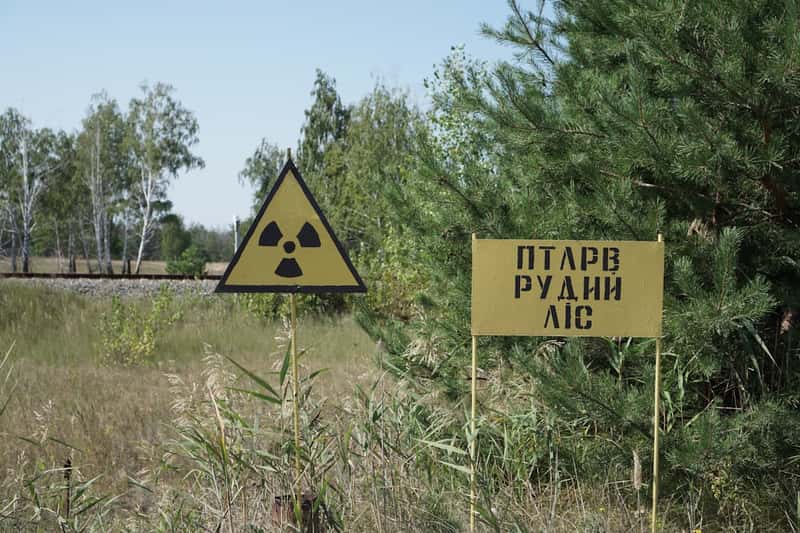
These new data, together with a comprehensive analysis of historical data shows that 90Sr remains mobile in the subsurface environment, while groundwater concentrations of 137Cs, Pu isotopes and 241Am are relatively low, and are not of radiological concern. During the last two decades, 90Sr and 137Cs levels have declined or remained stable over time in the majority of monitoring locations. This is due to natural attenuation driven by gradual exhaustion of the fuel particle source, geochemical evolution of groundwater downstream from waste dumps and radionuclide retention in surface soil due to absorption and bio-cycling.
Most of the radioactivity released from the reactor decayed rapidly. Within a month, only a few per cent of the initial contamination remained and after a year this dropped to less than 1 per cent. This natural decay process has created conditions that allow life to return far sooner than originally predicted.
The Chernobyl Exclusion Zone stands as one of science’s most paradoxical places, where humanity’s greatest nuclear disaster has inadvertently created one of Europe’s most thriving wildlife reserves. From radioactive masses still glowing in basement chambers to genetically adapting frogs and returning farmland, the zone continues to reveal secrets that challenge our understanding of radiation’s long-term effects. The recent drone damage to the protective structure adds a new chapter of uncertainty to this ongoing story of nature’s resilience in the face of humanity’s most dangerous mistake.