Ask ten people about Mexico and you’ll probably hear two stories. One is about a beach week that went perfectly. The other is about a headline that made a relative cancel a trip.
Both reactions come from real information, which is why the debate never really settles. The answer depends heavily on where you’re going, what you’re doing, and which numbers you choose to trust.
What the Official Warning Actually Says
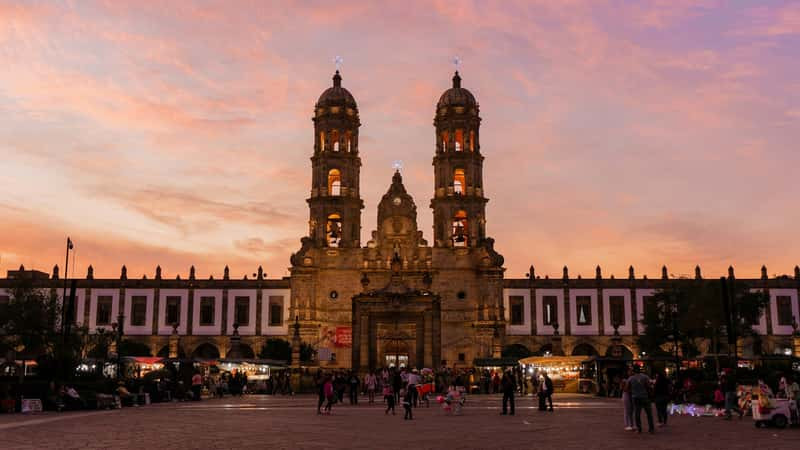
The U.S. State Department reissued its Mexico advisory on May 29, 2026, and the country stays at Level 2, Exercise Increased Caution, because of terrorism, crime, and kidnapping.[1] That’s the headline most people see. The details sit lower down the page.
Six states are at Level 4, Do Not Travel: Colima, Guerrero, Michoacán, Sinaloa, Tamaulipas and Zacatecas.[2] Level 3, Reconsider Travel, covers Baja California, Chihuahua, Durango, Guanajuato, Jalisco, Morelos and Sonora, some with regional carve outs.[2] Level 2 is the same rating given to France, Germany and the UK.[1]
Homicides Have Dropped Sharply

The official numbers point in a clearly positive direction. The daily average of intentional homicides fell from 86.9 in September 2024 to 40.8 in August 2026, a reduction of 53 percent, according to the National Public Security Executive Secretariat.[6] August 2026 registered the lowest monthly average in 12 years.[6]
Independent statistics are broadly consistent with the direction, if not the exact size. The government agency and INEGI, Mexico’s independent statistics institute, use different methods and report different figures, yet both point to a national decline.[7] The preliminary annualised rate for 2026 is 12.9 per 100,000 people, against 25.4 in 2024.[8]
What the Headline Number Leaves Out
A falling rate is not the same as a safe country. Even 40.8 killings a day adds up to nearly 15,000 a year.[8] There are also fair questions about how the drop is measured.
Comparing two single months can exaggerate a trend, and the year over year figure is the steadier yardstick.[8] By that measure, August was about one third below August 2025.[8] Critics add that the NGO Causa en Común documents that deaths classified as culpable homicide rose while intentional homicide victims fell[9], which suggests some reclassification. Separately, no independent count for 2026 exists yet, and feminicides, disappearances and extortion aren’t in the headline figure.[8]
Violence Is Concentrated, Not Spread Evenly

The national average hides a lopsided picture. In February 2026, just over half of all homicides in Mexico occurred in only eight states.[10] Guanajuato, Sinaloa and Chihuahua led the list.[10]
More recent reporting shows a similar pattern. Seven of 32 states account for about half of this year’s cases.[8] The usual trigger for a Level 4 rating is sustained organised crime activity, kidnapping risk and armed group control of roads, not random street crime.[2] That helps explain why a visitor in Mérida and a driver on a rural highway in Zacatecas face such different odds.
Millions Keep Going Anyway

Travelers don’t seem to be staying away. Mexico received 51.1 million international visitors in the first six months of 2026, up 7.7 percent from the same period in 2025.[11] The figure needs context, though.
It includes tourists and same day visitors, and 24.5 million of the total stayed at least one night.[12] Through July, the count reached 59.71 million visitors, of whom 28.91 million were overnight tourists.[13] Arrival numbers don’t prove safety on their own. Still, they show that very large numbers of people travel there and come home without incident.
Cancún and Mexico City by the Numbers
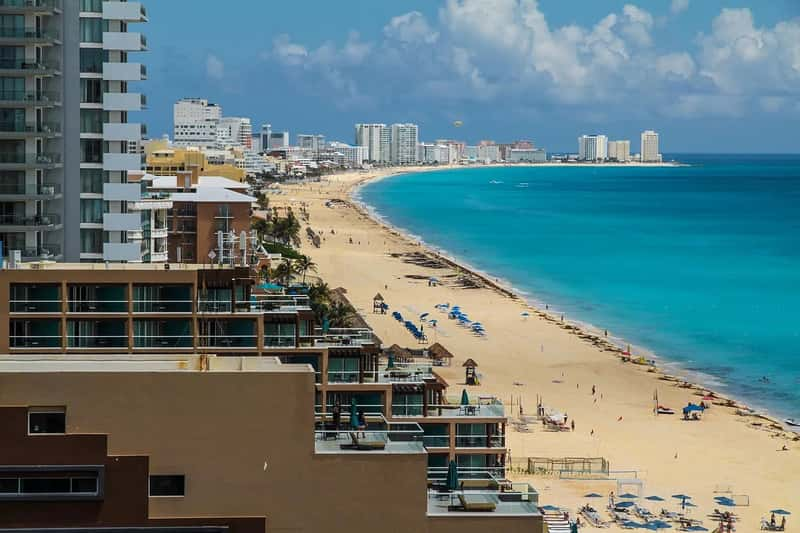
Two of the most visited places have fairly modest homicide rates. Cancún’s municipality had a trailing twelve month rate of about 6.9 per 100,000 from September 2025 to August 2026, roughly the same as Los Angeles.[14] Mexico City’s citywide rate was about 7.7 per 100,000 over the last 12 months.[14]
Central tourist areas like Roma, Condesa and the Centro Histórico generally sit below the citywide average.[14] That doesn’t mean nothing goes wrong. The U.S. advisory notes that shootings between rival groups have occasionally injured bystanders in Quintana Roo.[15] Unrest at Cancún airport in February 2026 also briefly disrupted operations.[16]
The Risks Tourists Actually Run Into
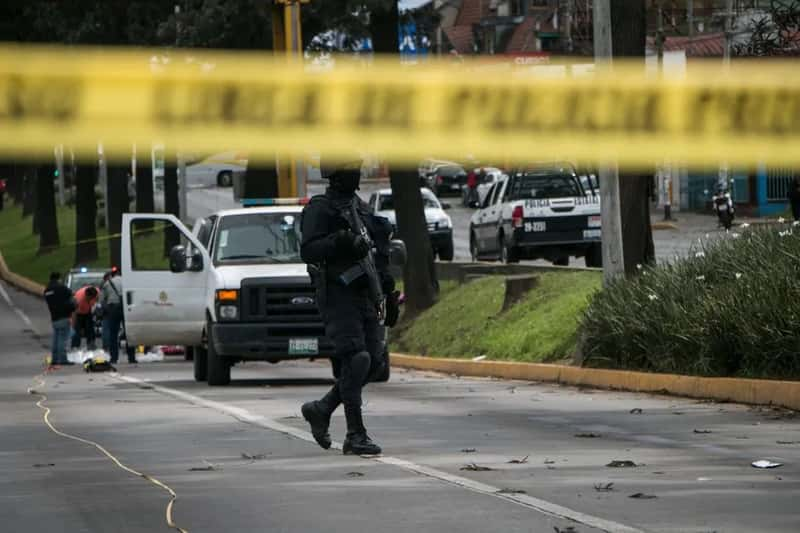
For most visitors, the realistic problems are ordinary ones. Pickpocketing, phone snatching, ATM skimming and taxi scams affect visitors in Mexico City, Cancún, Playa del Carmen and Guadalajara.[17] Drink spiking in nightclubs is another risk that affects visitors.[18]
More serious crimes do occur, though they are less common. Express kidnappings, short abductions aimed at draining ATM accounts, are a risk in Mexico City and other big cities, particularly with unlicensed taxis.[17] Extortion tied to the CJNG cartel mostly targets hotels, restaurants and local businesses rather than tourists directly.[18] The advisory also tells travelers to stay aware after dark in downtown Cancún, Tulum and Playa del Carmen and to keep to well lit pedestrian streets.[18]
Planning Around the Map, Not the Headline
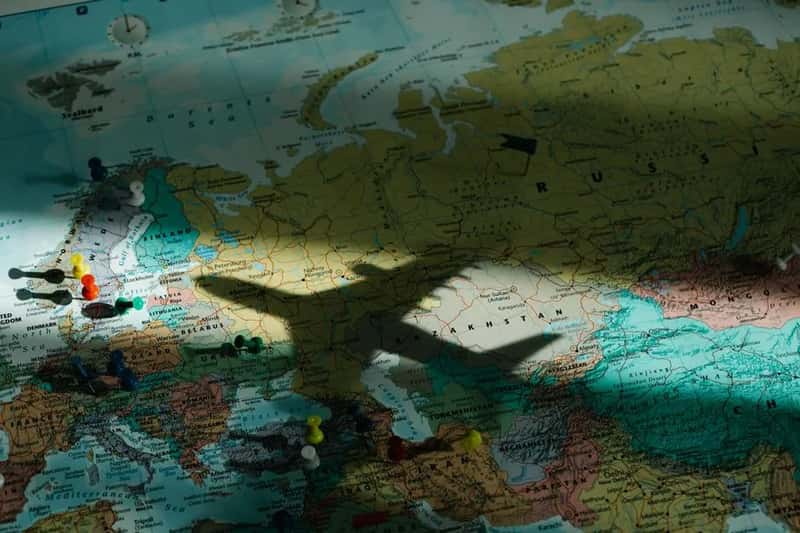
The simplest rule is to check the level for your exact destination, not for Mexico as a whole. The Level 4 states are not for leisure or tourism.[1] The advisory itself says conditions vary widely by region and tells travelers to review location specific guidance before visiting.[19]
Small habits help in the places most people actually visit. Standard precautions include sticking to tourist areas, using licensed transportation from airports, and avoiding driving after dark outside resort zones.[5] In Oaxaca, the coastal road along Highway 175 has had incidents, so daytime travel only is advised on its mountain sections.[5] Conditions can change, so cross check travel.state.gov before booking.[20]