Beneath Jordan’s vast desert sands lies an archaeological treasure trove that continues to astonish researchers and rewrite history books. Jordan is believed to contain numerous undocumented archaeological sites across its territory. Recent excavations between 2023 and 2025 have unveiled lost civilisations, rediscovered ancient settlements, and revealed the sophisticated urban planning of kingdoms that once thrived in this seemingly inhospitable terrain.
These desert cities represent far more than isolated settlements scattered across barren landscapes. They reveal complex networks of trade routes, religious centres, and technological innovations that sustained civilisations for millennia. From Neolithic shrines dating back 9,000 years to Byzantine churches lost for over 1,500 years, Jordan’s desert archaeological discoveries paint a picture of continuous human adaptation and ingenuity
Ancient Petra’s Underground Secrets Resurface
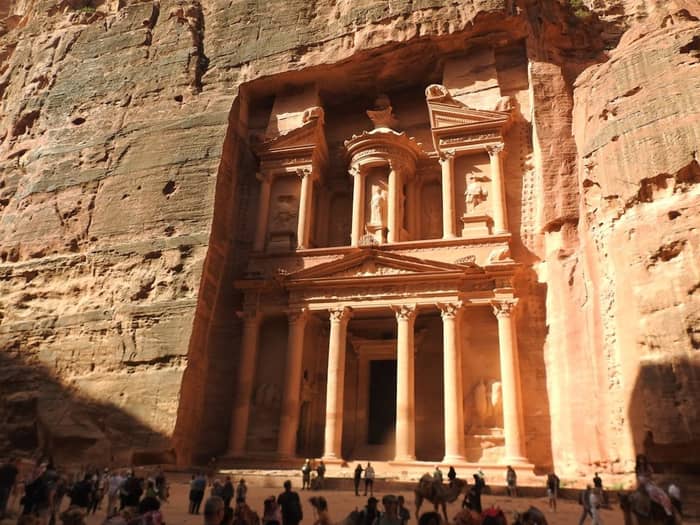
One of the year’s most remarkable finds was the discovery of 12 ancient skeletons in a tomb beneath the Treasury at Petra, a desert archaeological site in Jordan known for the elaborate structures carved into its red sandstone cliffs. This groundbreaking discovery in 2024 has provided unprecedented insights into Nabataean burial practices and daily life.
The Nabataeans must have paid a lot of attention to the afterlife, he says. “They looked at their life as a short journey.” Some tombs are housed in elaborate rock-cut facades, like the Treasury, where archaeologists found a tomb containing 12 skeletons in 2024.
Petra’s population thrived in an inhospitable desert environment thanks to a “sophisticated water harvesting system that was intended to collect every drop of water,” Al-Salameen says. The Nabataeans piped water in from springs outside the city and carved channels into the rock to collect rainwater. They also built dams and reservoirs to store water.
Excavations have demonstrated that it was the ability of the Nabataeans to control the water supply that led to the rise of the desert city, creating an artificial oasis. The area is visited by flash floods, but archaeological evidence shows that the Nabataeans controlled these floods by the use of dams, cisterns, and water conduits. These innovations stored water for prolonged periods of drought and enabled the city to prosper from its sale.
Prehistoric Sanctuary Reveals 9,000-Year-Old Spiritual Practices

An exciting find has been uncovered by a team of French and Jordanian archaeologists in the eastern desert of Jordan. The 9,000-year-old shrine is part of a Neolithic campsite flanked by large structures known as ‘desert kites’ that were used to corral wild gazelles for slaughter. This remarkable discovery in 2024 provides the earliest evidence of organised spiritual practices in Jordan’s desert regions.
A find like this is unique for two reasons: firstly, the site is well preserved as almost everything was intact. Secondly, two large upright carved stones with anthropomorphic features were found. Additionally, an altar, a hearth, marine shells, and a miniature model of the gazelle trap were discovered.
Desert kites are found throughout the deserts of the Middle East and consist of at least two long stone walls that narrow into an enclosure. These structures demonstrate sophisticated hunting techniques employed by Neolithic populations to survive in harsh desert conditions.
The researchers said in a statement that the shrine “sheds an entirely new light on the symbolism, artistic expression, as well as the spiritual culture of these hitherto unknown Neolithic populations.”
Jerash’s Hidden Byzantine Mansions Tell New Stories
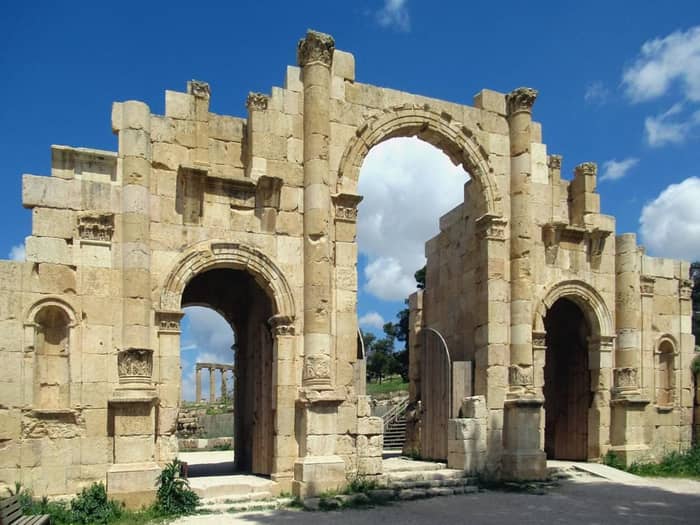
Built during the Byzantine era, this residence was destroyed in an earthquake in 749 at the end of the Umayyad period, preserving many remnants in place. However, during the third excavation season, which the team is concluding at the moment (May 2024), the team discovered several rooms, including a kitchen, storage room, and stable, identified by the previously found remains. Recent excavations also uncovered a staircase linking the Roman Cardo Maximus to the building, highlighting its architectural integration with the surroundings.
The building’s size, over 750 square meters, and its proximity to the Cardo marketplace suggest it may have been the home of a wealthy merchant, indicating a close relationship between the residence and nearby shops, reflecting a mix of commercial and social activities. This House of Hearts represents one of the largest urban residences discovered in Jordan from the Byzantine period.
Since 2022, Julie Bonnéric, Director of the French Institute of the Near East (Ifpo), has led the Eastern Jerash Project’s exploration of a large courtyard building in central Jerash, east of the Cardo. The ongoing research provides crucial insights into the transition between the Byzantine and Umayyad periods in Jordan.
Forgotten Decapolis Cities Emerge from Jordan’s Northern Regions

Archaeological evidence reveals the city’s peak during the Greco-Roman and Byzantine periods, when it became a prosperous hub in the Decapolis, a federation of ten Greco-Roman cities protecting the eastern frontier of the Roman Empire. Excavations led by archaeologists from John Brown University since 1980 have uncovered Byzantine churches, a Roman bath complex, a theatre, city gates, a monastic complex from the Early Islamic period, and miles of water tunnels connecting springs and cisterns.
Research shows that the city remained active well into the early Islamic period, long after earlier scholars had assumed northern Jordan was abandoned. This discovery challenges previous assumptions about settlement patterns in Jordan during the transition from Byzantine to Islamic rule.
Amman consists of nine ancient cities built on top of each other – the first during the Stone Age; the others were built by the Assyrians, Babylonians, Ammonites, Moabites, Romans, Byzantines, Greeks and Islamists. The city was renamed in the Roman period after Ptolemy Philadelphus, who occupied the city at the end of the third century BC. The Romans rebuilt the city, inaugurated the Roman Amphitheatre, added their mark to the Citadel, and paved the streets flanked by columns.
Jordan’s desert archaeological discoveries continue to challenge our understanding of ancient civilisations and their remarkable ability to thrive in challenging environments. From 9,000-year-old spiritual sites to lost Byzantine cities, these findings demonstrate that Jordan’s deserts were far from empty wastelands. Instead, they hosted sophisticated societies that developed innovative technologies, maintained extensive trade networks, and created lasting cultural legacies that still inspire researchers today.