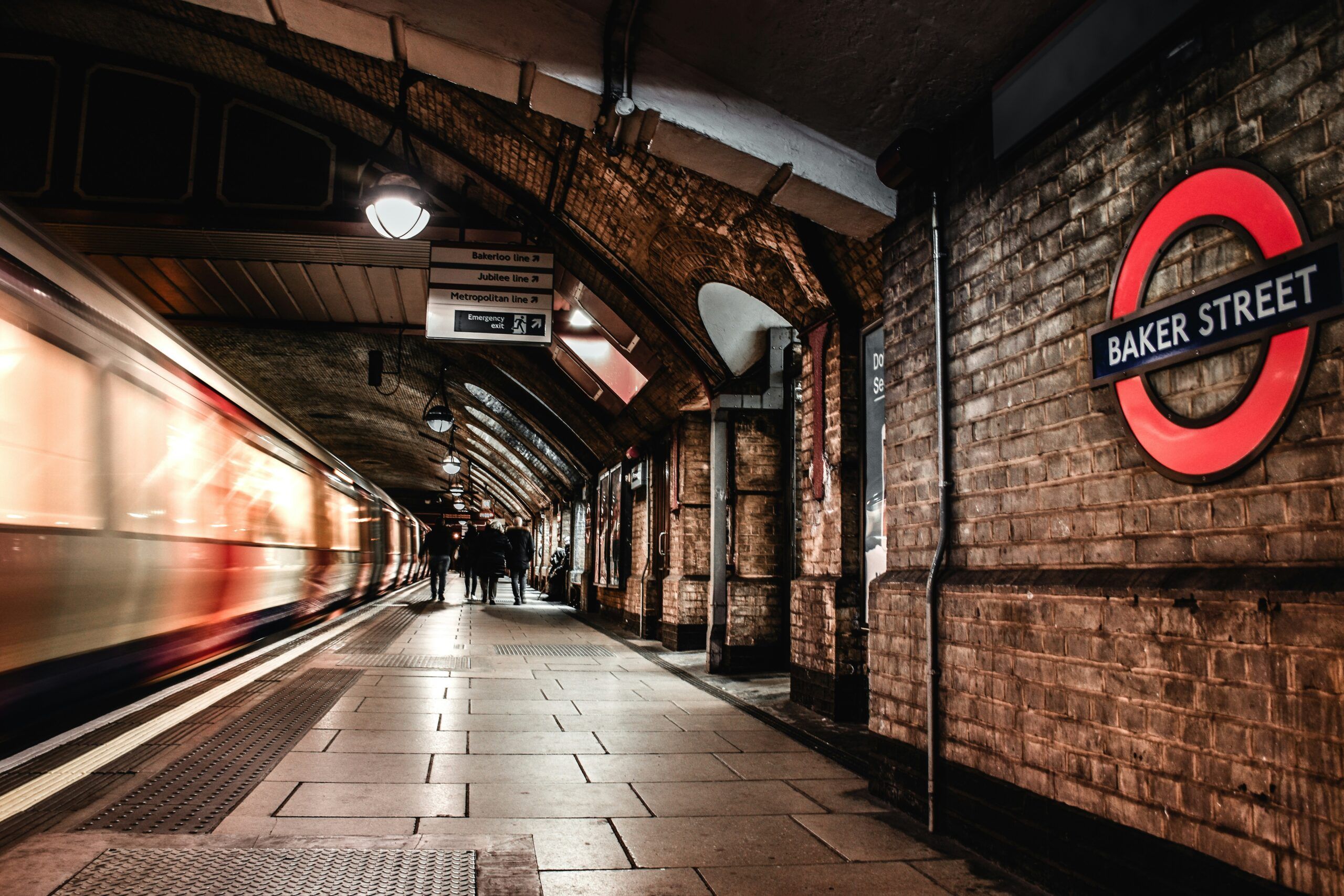
The Tube runs on a set of rules that aren’t printed on any sign. Nobody hands them to you when you tap in, yet most regulars can list them without thinking. Break one, and you’ll probably feel it before anyone says a word.
Some of these habits come from polling of Londoners, and some from Transport for London’s own research and campaigns. A few of the surveys are older, and I’ll say so where that matters. What follows are five behaviours that commuters keep coming back to.
Don’t Rush the Doors Before Anyone Gets Off
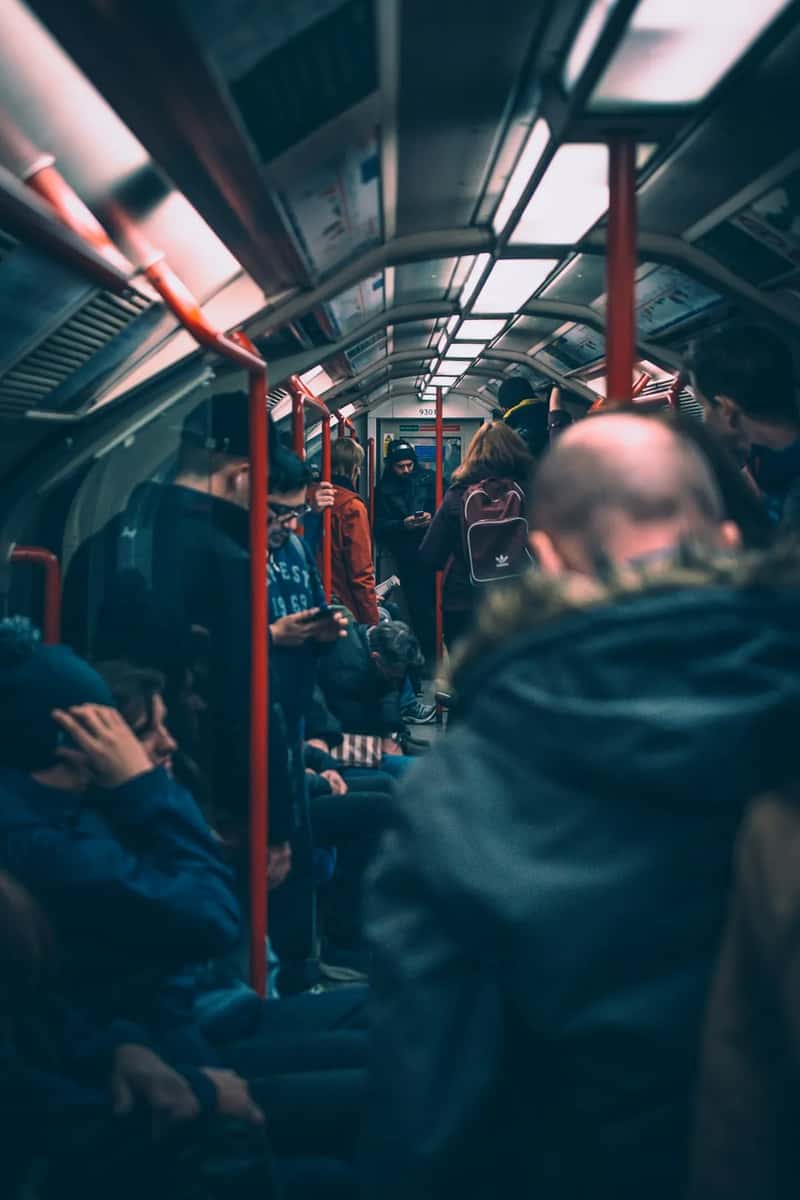
This one tops the list every time it’s measured. A YouGov survey of Londoners found that 90% of commuters find it annoying when others don’t let people off the tube before getting on, including 60% who find it very annoying.[1] That’s about as close to agreement as opinion polling gets.
The same poll pointed to related sins. Not letting people pass to get off the train, and not getting up for the pregnant and the elderly, were both rated very annoying by a majority of commuters.[1] The fix is simple. Step to the side, let the carriage empty, then board.
Don’t Play Sound Out Loud

Headphones are the expectation, and TfL has been saying so publicly. In August 2025 it launched a poster campaign, starting on the Elizabeth line, and its research found that 70 per cent of 1,000 customers surveyed found loud music and phone calls without headphones a nuisance.[2] The campaign was set to spread to other TfL services that autumn.
It isn’t only bad manners either. TfL’s customer director said its by-laws prohibit playing music and streaming content out loud without permission.[3] Enforcement officers usually ask the person to stop first, and further action can mean being asked to leave or being reported for possible prosecution.[3] Loud phone calls draw complaints too. A Tombola survey found almost half of working Londoners (47%) named speaking loudly on the phone as the most infuriating commuting habit.[4]
Don’t Stand on the Left of the Escalator
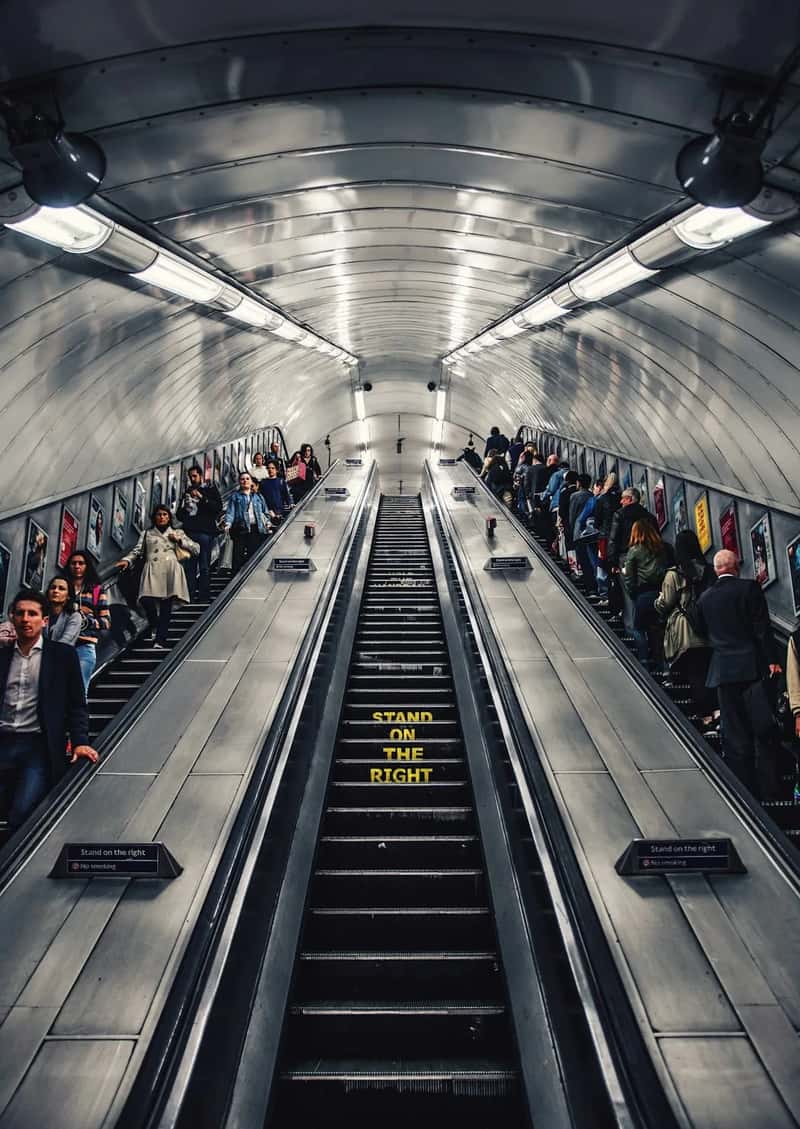
The rule is old and widely known. Londoners stand on the right and walk on the left.[5] The origin is practical rather than mysterious. When Earl’s Court got the capital’s first escalator in 1911, its diagonal end pushed passengers off to the left.[6]
Interestingly, the rule isn’t beyond argument. In a 2016 trial at Holborn, standing only escalators carried an average of 151 passengers per minute, compared with 115 where people stood on the right and walked on the left.[7] Even so, TfL had no plans to roll standing on both sides out across the network.[8] Until that changes, blocking the left lane will still earn you a sigh from somebody behind you.
Don’t Look Away When Someone Needs a Seat
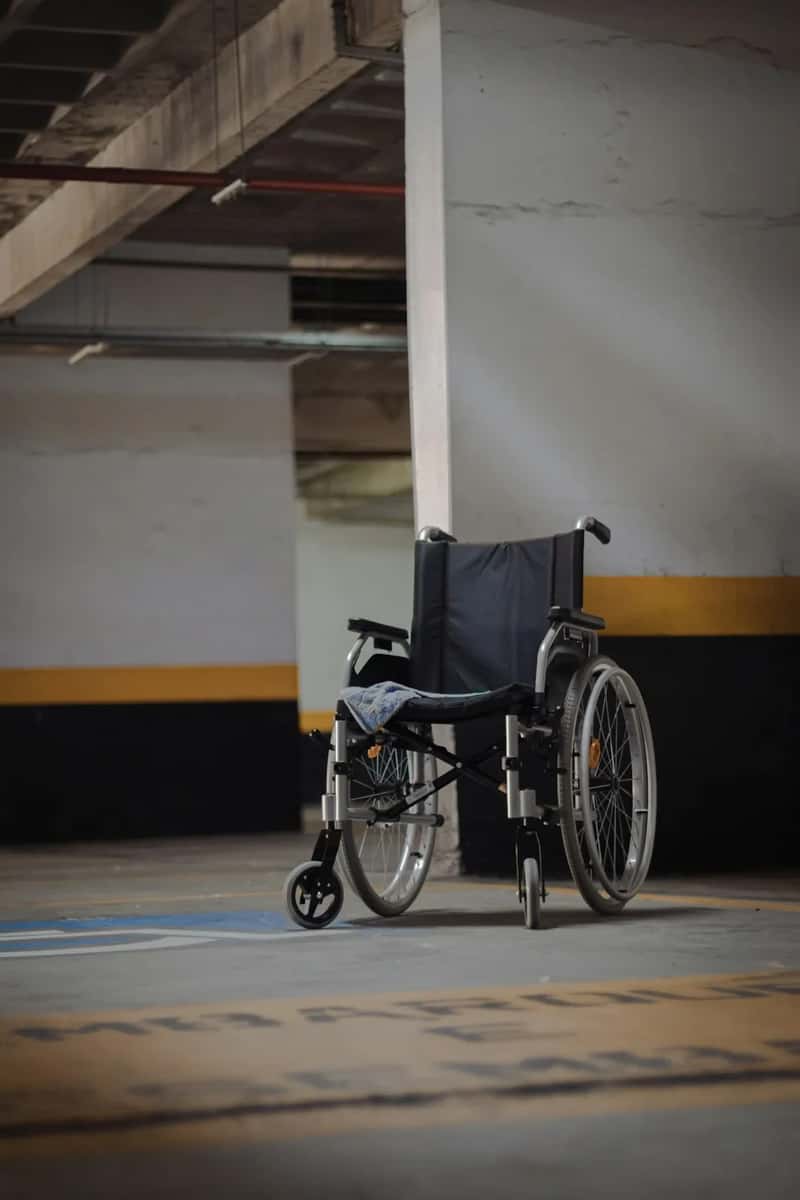
Priority seating is a bigger deal than it looks. During TfL’s seventh annual Priority Seating Week in 2025, it encouraged people to look up and be aware of their surroundings in case someone was in greater need of a seat.[9] The same push asks riders to glance up from their phones now and then.
Not every need is obvious, which is the whole point. The Please Offer Me A Seat badge, introduced in 2017, helps people with hidden disabilities, conditions or illnesses signal that they need to sit.[10] Plenty of people don’t wear one, though. TfL’s advice is that a quick, polite offer of a seat can go a long way[10] if you’re unsure.
Don’t Wear Your Backpack or Lean on the Pole
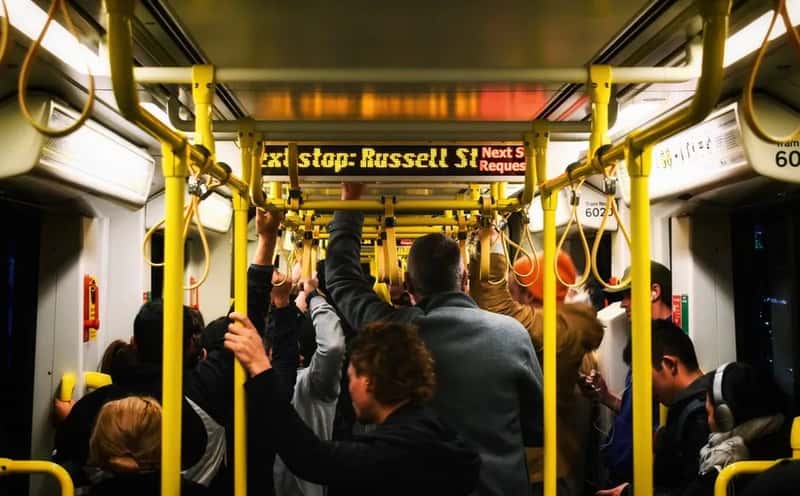
This is the quieter irritation, and the polling I found is older, so treat the numbers as a guide rather than a current reading. In YouGov’s research, 75% of Londoners aged 65 and over found not taking off backpacks annoying, compared with 49% of 18 to 24 year olds.[11] A bag on your back swings round in a packed carriage and catches people without you noticing.
Poles matter too, especially when the train is full. Leaning on poles so others can’t hold on to them annoyed 70% of women and 53% of men.[11] If you’re standing near one, hold it upright, keep your weight off it, and leave space for other hands.