If you’re dreaming of a solitary tropical paradise, forget it. Phuket is not that place. Not anymore. And probably not for a long time.
Phuket is fully, unapologetically anthropized. This is not an island that gently hosts tourism—it has been completely and utterly reshaped by it. There are real cities here, sprawling neighborhoods, outlets, massive shopping malls, traffic, and an infrastructure that makes it clear this is one of Thailand’s most developed destinations. The idea of “I’ll just go there and find a quiet beach” simply doesn’t apply. The island is huge, yes—but everywhere you go, you feel the pressure of people, vehicles, noise, and commerce.
History and Geography: How Phuket Became Phuket

Phuket is Thailand’s largest island, connected to the mainland by a bridge and located in the Andaman Sea, off the country’s southwest coast. Geographically, it’s a substantial piece of land—mountainous in the interior, fringed by long beaches on the west coast and more sheltered bays on the east. Historically, Phuket’s importance is that of a trade port and a key stop for merchants as early as the 16th century. Tourism arrived relatively late. While Phuket saw occasional visitors in the 1960s and 70s, it wasn’t until the 1980s and especially the 1990s that it transformed into an international destination. The construction of Phuket International Airport, followed by large-scale hotel development, shifted the island’s economy almost entirely toward tourism. Places like Patong evolved rapidly from fishing villages into dense resort cities, and the west coast became synonymous with mass tourism.
The island’s historic heart is Phuket Town, located on the eastern side. Unlike the resort-heavy west coast, Phuket Town developed as a commercial and administrative center, with Sino-Portuguese shophouses, markets, and temples. Today, Phuket is less an island retreat and more a fully developed region. Key areas include Patong (entertainment and nightlife), Kata and Karon (resort beaches), Kamala and Bang Tao (high-end resorts and residential developments), and Phuket Town (cultural and administrative center). What was once a trading island is now a global tourism hub—efficient, accessible, and heavily built.
Beaches Without Illusions
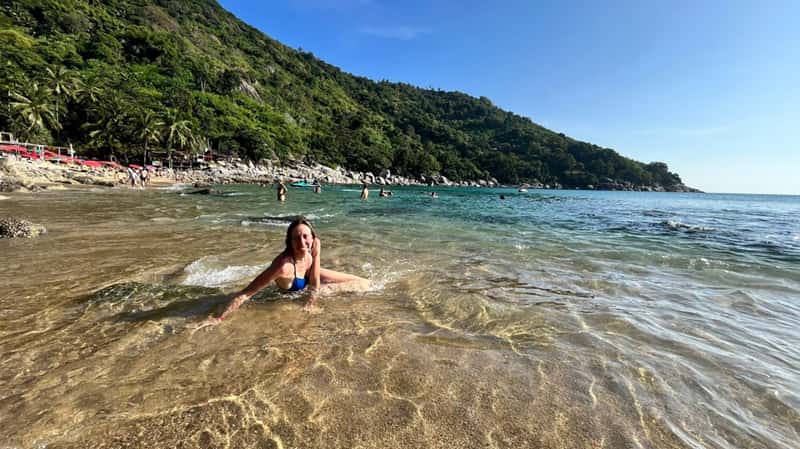
Every beach in Phuket, even the ones that look remote on a map, comes with conditions. Big beaches often prohibit personal umbrellas—yet are filled with rows of rented umbrellas and loungers. Smaller beaches promise intimacy and deliver crowds. And everywhere, the same elements intrude: jet skis, quads, vendors, music, plastic, exhaust fumes.
Even when the sea is beautiful—and it often is—the poetry is fragile. It’s easily broken by something loud, fast, or unnecessary passing through the frame. This is not about being precious. It’s about managing expectations. Phuket does not reward spontaneity. You don’t stumble into peace here. You negotiate for it. And toughly.
Escaping (A Little) by Boat
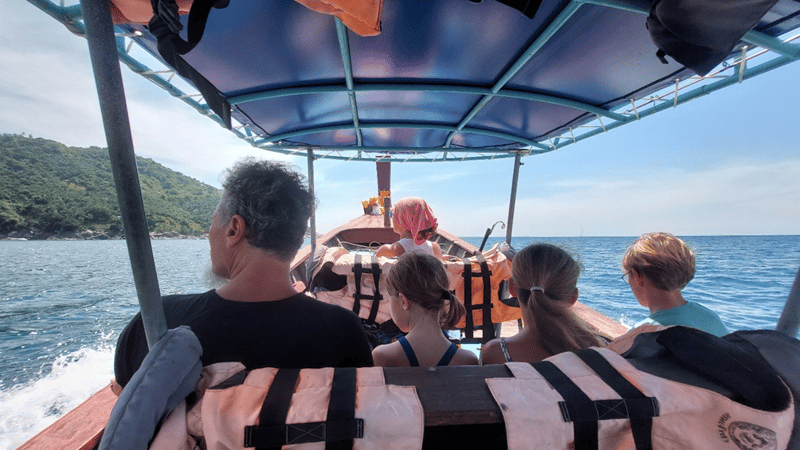
The only way to slightly relieve the sense of suffocation is to get on a boat. Hiring a longtail or joining a small island-hopping tour takes you offshore, to smaller islands scattered around Phuket. The water opens up, the horizon widens, and for a moment you can breathe again.
It helps. But it doesn’t solve the problem. Even on small islands, you’ll find a quad, a jet ski, a loud group, or infrastructure creeping in. The beauty is still there—sometimes stunning—but it comes with effort, patience, and a high tolerance for interruption. Peace in Phuket is something you have to actively conquer, and even then it rarely lasts long.
Where We Stayed, Where We Went
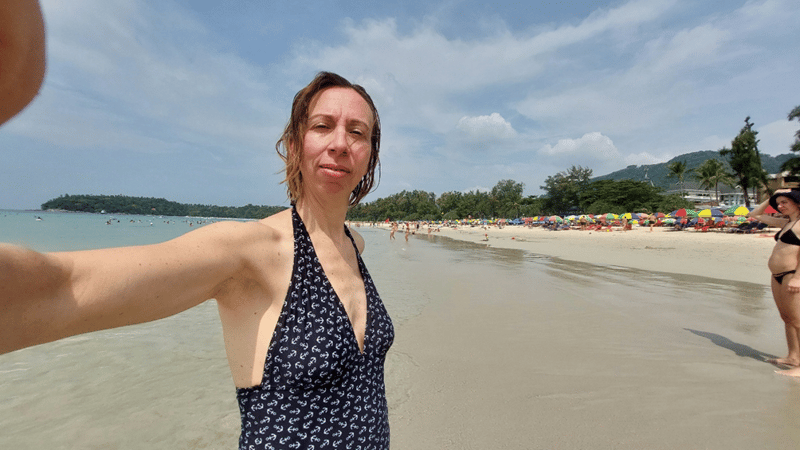
We based ourselves at Kata Beach, which is already considered outside the main chaos. And yes, compared to Patong, it is calmer. But calmer doesn’t mean quiet. It still felt dense, busy, polluted, constantly in motion.
We explored Nui as well, where the beach feels more contained, almost Mediterranean in scale. It was pleasant, more human—but still crowded. Still noisy. Still very much part of the same system.
We also ventured out by boat, including a day trip to the Phi Phi Islands. Beautiful water, soft sand, classic postcard scenery—and yet, the same pattern repeated itself. People everywhere. Always people.
If You’re Tired of Beaches, Look Elsewhere
If the beach fatigue sets in—and it will—Phuket does offer alternatives. Temples, pagodas, viewpoints, hills. Places where the island’s spiritual and geographic layers still offer some breathing room. The problem is logistics.
If you have a car, you’re fine. You can reach quieter spots early, move around freely, escape faster. Without one, everything becomes complicated. Taxis are everywhere, but they add up quickly, and spontaneity disappears. Every detour has a cost. Every attempt at silence requires planning.
How to Get There
Getting to Phuket is straightforward, which is a big part of why it became so popular. Phuket International Airport is one of the busiest airports in Thailand, with direct flights from Bangkok and many international cities across Asia, the Middle East, and Europe. From Bangkok, flights take about 1.5 hours and run constantly throughout the day. For most travelers, flying is by far the easiest and fastest option.
It’s also possible to reach Phuket by land from the mainland via the Sarasin Bridge, followed by a drive south through Thailand. Long-distance buses connect Phuket to Bangkok and other major cities, but travel times are long and rarely worth it unless you’re already on a road-based itinerary.
Once on the island, transportation becomes more complicated. Phuket is large, and public transport is limited. There are local songthaews and buses, but they are slow and inflexible. Taxis are widely available but relatively expensive by Thai standards, and ride-hailing apps don’t always offer consistent pricing. If you plan to explore beyond your immediate area—especially temples, viewpoints, or quieter corners—renting a car is the most efficient option. Without one, moving around Phuket requires planning, patience, and a willingness to pay for convenience.
The Honest Conclusion
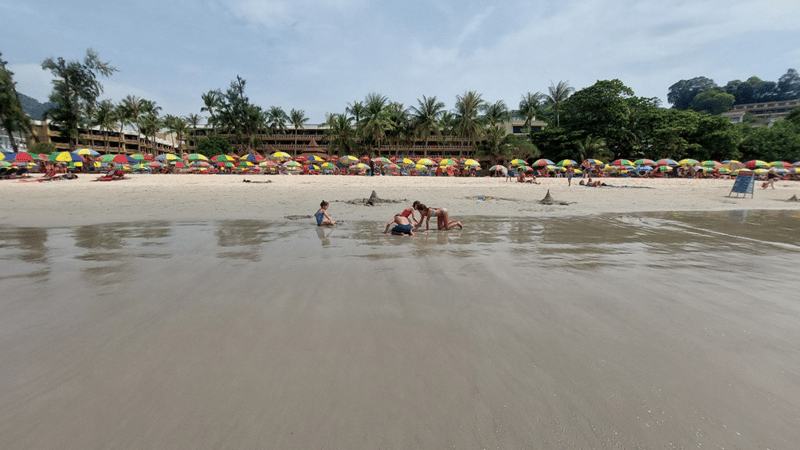
Phuket is beautiful. There’s no denying that. The sea, the light, the vegetation—they all deliver. But the effort required to carve out moments of peace is real, and sometimes exhausting. If what you want is solitude, simplicity, or the illusion of an untouched island, Phuket is not the right destination. Personally, I don’t think I’d return—not because it’s bad, but because it asks for too much work to feel calm. If you come, come informed. Come knowing that paradise here is layered with noise, movement, and compromise. And if you do manage to find a quiet moment, treat it like what it is in Phuket: a hard-won, temporary victory.