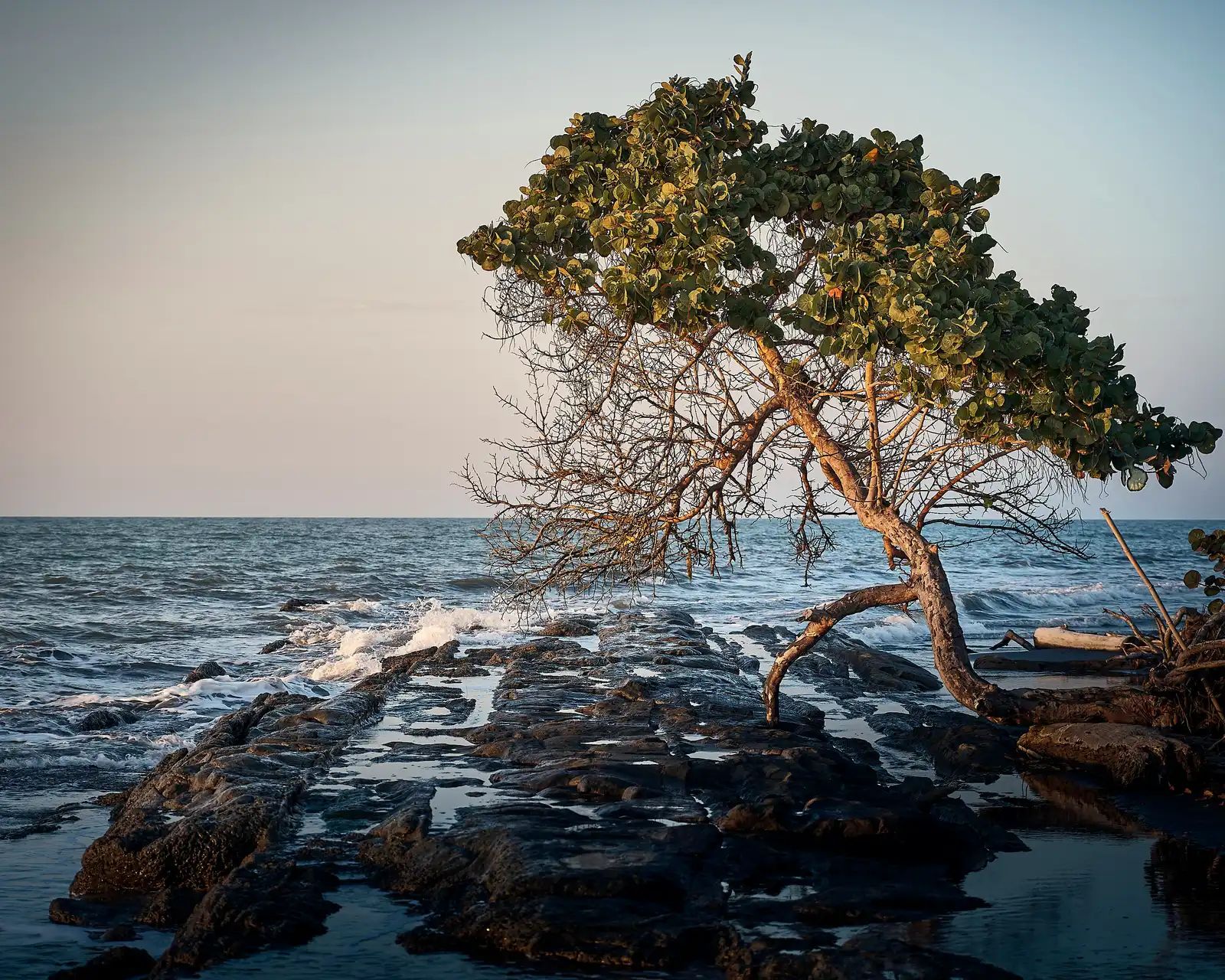
Coastal communities face growing risks from intense storms and rising seas, yet mangrove forests have long offered a natural line of defense. A recent study now gives scientists a clearer way to forecast exactly how much these coastal trees can weaken the waves that accompany severe weather. The findings matter because older models often fall short when conditions turn rough.
Roots That Quiet the Water
Mangrove stands sit where land meets sea, their tangled roots forming a living barrier. When waves push through this network, much of their energy dissipates before they reach the shore. The result is lower wave heights and reduced flooding risk for nearby land. This buffering effect has been observed for years, but most measurements came from calm days. During storms the picture grows more complex. Turbulence and other forces make it harder to track how much protection the trees actually provide.
Why Old Forecasts Fell Short
Researchers have known that mangroves reduce wave power, yet translating that knowledge into reliable storm predictions proved difficult. Existing models worked reasonably well in mild weather but struggled once winds and waves grew extreme. Stijn Temmerman of the University of Antwerp noted that these models “do not always perform so well to predict the wave attenuation by mangroves during storms.” The gap leaves planners with incomplete information when they need it most. Climate-driven changes are increasing the frequency of powerful weather systems, and more than 87 million people felt the effects of climate-related disasters in 2025 alone. Better forecasts could help communities prepare for the worst outcomes.
What the New Approach Adds
The study focuses on capturing the extra variables that appear only during high-energy events. By accounting for turbulence and other storm-specific factors, the updated method improves estimates of how much wave energy mangroves remove. The work stays grounded in field observations rather than assuming perfect conditions. Still, limits remain. Data collection during actual typhoons or hurricanes stays challenging, and some uncertainty persists around the most extreme scenarios. The researchers emphasize that the new tool narrows the gap without claiming perfect accuracy.
Looking Ahead for Coastal Planning
Improved predictions could guide decisions on where to protect or restore mangrove forests. Coastal managers gain a sharper sense of how much natural defense exists before storms arrive. That knowledge supports targeted efforts rather than broad assumptions. The human stakes are clear: better forecasts mean more realistic expectations for flood risk and infrastructure needs. As climate pressures continue, refining these models offers one practical step toward safer shorelines.