If you’ve ever glanced at a headline warning Americans away from Mexico and then seen a friend post beach photos from Tulum the same week, you’re not imagining a contradiction. Mexico is one of the only countries in the world where the United States government refuses to hand out a single, tidy safety grade. The United States government does not issue one blanket safety rating for the whole country. Instead, the State Department grades each of the 31 states plus Mexico City individually, and the gap between neighboring states can be dramatic.[1]
That distinction matters enormously for anyone planning a trip. At the national level the U.S. State Department lists Mexico at Level 2, but the country is unique in that the advisory is split state by state, with six states currently sitting at Level 4 while popular tourist hubs like Yucatán and Campeche remain at Level 1.[1] Understanding why that split exists, and which regions fall where, is the difference between planning a smart itinerary and canceling a trip you never needed to cancel in the first place.
How the State Department’s Four-Level System Actually Works
The framework itself is simple even if the map underneath it looks complicated. Level 1 means exercise normal precautions, the same standard advice given for Canada and most of Western Europe.[2] From there it climbs: Level 2 means exercise increased caution, Level 3 means reconsider travel, and Level 4 means do not travel.[3]
What trips people up is assuming the country-wide number tells the whole story. Mexico remains one of the most visited destinations for U.S. travelers in 2026, yet the country sits under a Level 2 advisory that masks sharp differences in risk from state to state.[4] A resort town two hours from a Level 4 state can be operating under conditions closer to a major European city than to the crime patterns driving that neighboring warning.
The Six States Under the Strictest “Do Not Travel” Label
At the top of the risk ladder sit six states that have held the government’s most severe designation for years running. Six states remain under a Level 4 “Do Not Travel” advisory: Colima, Guerrero, Michoacán, Sinaloa, Tamaulipas and Zacatecas.[1] These aren’t random picks. In these high-risk areas, security forces struggle to maintain control, and cartel factions often target both locals and foreigners, and the U.S. Department of State has strongly advised against visiting these states, noting that the violence is intense and unpredictable, putting travelers at serious risk, with local authorities having limited capacity to provide security or offer assistance in emergencies.[5]
Two of these states illustrate the pattern well. The Pacific coast state of Guerrero and the northern border state of Tamaulipas have seen troubling increases in violent crime, often linked to drug cartels.[5] Guerrero is a particularly tricky case for travelers because it contains famous beach destinations that predate the current warning; the advisory doesn’t necessarily mean every square mile is equally dangerous, but it does mean the state as a whole carries risks the government isn’t willing to downplay.
The Level 1 Outliers: Yucatán and Campeche
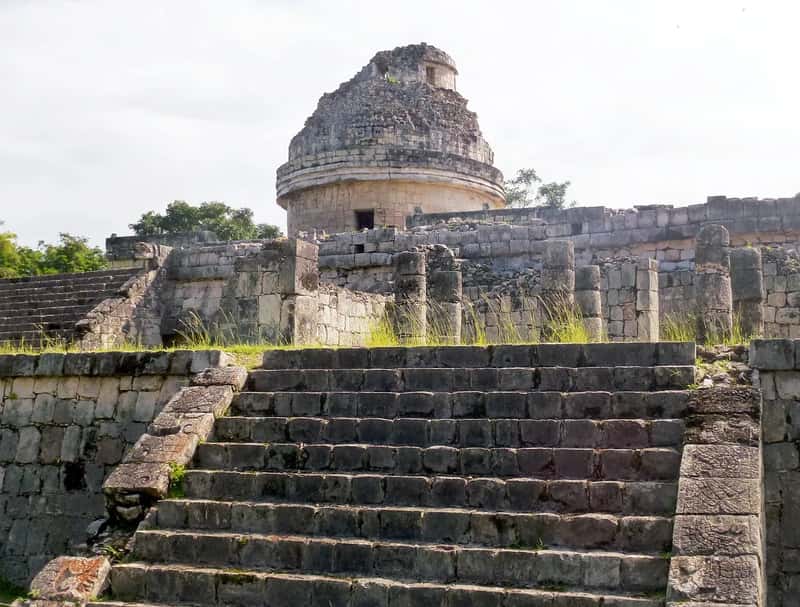
At the opposite end of the spectrum, two states have essentially been given a clean bill of health. A State Department map shows the highest-concern areas include Sinaloa and Zacatecas, which carry “Do Not Travel” designations, while the Yucatán and Campeche regions carry no warning at all.[6] These two states sit quietly at the bottom of the risk scale while getting far less attention than their flashier neighbor, Quintana Roo.
The reasons come down to a mix of geography, governance, and lower organized-crime presence relative to states along drug trafficking corridors. As of June 2026, only two Mexican states have been assigned a “level 1” advisory, Yucatan, the neighboring state to Cancún’s Quintana Roo, and Campeche.[7] For travelers who want the lowest possible advisory tier without sacrificing colonial architecture, cenotes, or Mayan ruins, cities like Mérida and Valladolid have become the quiet favorites of people who do their homework before booking flights.
Why Cancún and the Riviera Maya Sit at Level 2, Not Level 1
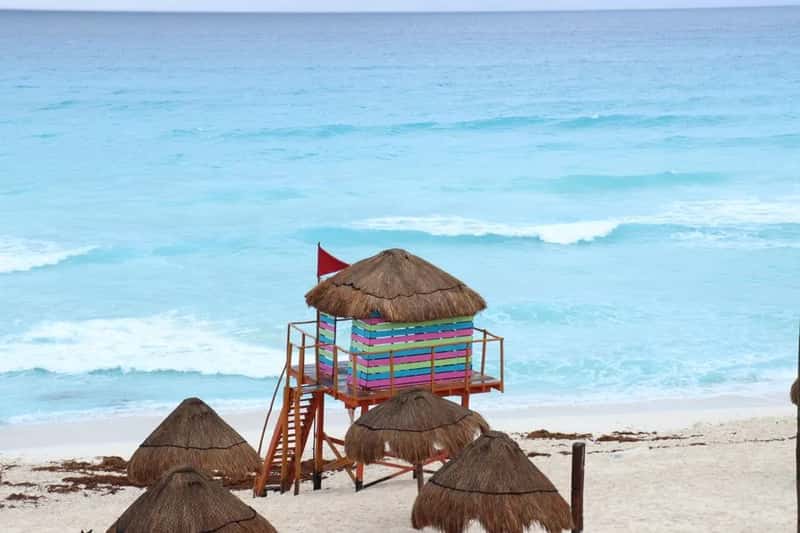
This is the detail that confuses the most travelers. Quintana Roo, home to Cancún, Tulum, Playa del Carmen, and Cozumel, is not rated at the safest tier, yet it remains the single most visited state in the entire country. The US State Department rates Quintana Roo at Level 2, Exercise Increased Caution, the same level as France, Germany and the UK.[8] That comparison isn’t spin; it’s the literal same numeric tier applied to some of Europe’s most visited nations.
The nuance worth understanding is what’s actually driving that rating. Cartel activity in Quintana Roo is real, with incidents including the 2022 shooting at a beach club in Puerto Morelos and unrest at Cancun airport in February 2026 that briefly disrupted operations, but the pattern across every incident is the same: the violence is targeted between rival criminal organisations, not at tourists, and when tourists have been hurt, it has overwhelmingly been because they were near the location of a targeted attack, not because they were the target.[8] That’s an important distinction for risk assessment, even if it doesn’t erase the discomfort of reading about violence near a place you’re about to vacation.
The Middle Tier: States Where “Reconsider Travel” Means City-by-City Judgment
Between the extremes sits a cluster of Level 3 states that require more homework than a simple green-light or red-light answer. States like Baja California, Chihuahua, Durango, and Sonora fall into this category, along with parts of Jalisco outside its resort zones. US officials also advised US citizens to “reconsider travel” to Baja California, Chihuahua, Durango, Guanajuato, Jalisco, Morelos and Sonora.[9]
What makes these states genuinely tricky is that they often contain both legitimate danger zones and thriving, well-patrolled tourist enclaves within the same borders. The Level 3 states travellers most often ask about carry carve-outs commonly cited in advisory language, and the practical guidance is to build itineraries around lower-advisory states like Yucatán, Quintana Roo, Campeche, Mexico City, and Oaxaca city to stay inside the advisory comfort zone.[10] Puerto Vallarta, for instance, sits in Jalisco, a Level 3 state overall, yet the resort corridor itself is treated very differently from the state’s rural interior.
What’s Actually Driving the Violence Behind the Warnings
None of these ratings exist in a vacuum. They track real, documented patterns of organized crime activity tied largely to drug trafficking routes and territorial disputes between cartels. The states have been plagued with drug cartel activity, with turf wars between cartels having torn apart Tamaulipas, while Sinaloa is home to the cartel of the same name.[11] That historical context helps explain why these particular six states have remained on the Level 4 list since the ranking system was introduced.
Perspective matters here too. Mexico is unusual not because the average risk is exceptionally high, but because the variance between states is; a traveller who restricts their itinerary to Level 1 to 2 states is operating in roughly the same statistical risk band as a traveller in Costa Rica or Belize, while the same traveller who routes through Sinaloa, Tamaulipas, or rural Michoacán is in a fundamentally different category.[12] That single insight probably does more to explain Mexico’s advisory system than any other single fact.