Remember when a family vacation meant piling into the station wagon for a road trip to the coast, staying in a budget motel, and calling it a win? Those days feel like ancient history. The middle class in America has always been defined by certain markers: homeownership, reliable healthcare, and yes, the ability to take an annual vacation without financial anxiety. In 2025, that last marker is crumbling faster than anyone expected. What it means to be middle class has shifted dramatically, and nowhere is that change more visible than in how, where, and whether Americans can afford to travel.
The numbers tell a story that many families already know in their bones. While social media feeds overflow with pristine beach photos and European adventures, the reality for most middle-income households looks starkly different. Inflation has squeezed travel budgets from every angle, hotels have largely abandoned the affordable market segment, and what used to be a modest getaway now requires serious financial planning or debt. This isn’t just about economics, though. Travel has become a new class divider, a visible line separating those who can still afford to explore from those priced out entirely. Let’s dive into what’s really happening with middle-class travel in 2025.
The New Middle Class: Income Realities That Define Who Can Travel

Middle-class income in major U.S. cities now ranges from roughly $49,500 to $148,500, based on a median household income of $74,225. Yet here’s the thing: earning six figures doesn’t feel like middle class anymore in many parts of America.
A six-figure salary once signaled comfort, sometimes even abundance, but today, in many high-cost regions, it places families squarely in the middle or even in the lower middle class income range once housing, childcare, and groceries are factored in. Massachusetts tops the list, where households need between $66,565 and $199,716 to be considered middle class, with the upper boundary increasing by nearly $11,000 from the previous report. The squeeze is real, and it’s fundamentally changing how American families approach their vacation plans.
Travel Budgets in 2025: Spending More While Feeling Poorer
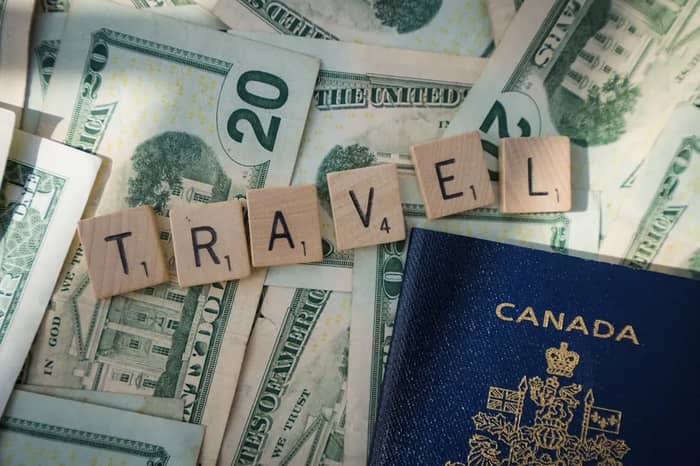
The average 2025 travel budget for Americans is $10,244, which is nearly double the average budget in 2024 of $5,300. Let’s be real, that sounds like progress until you realize inflation has eaten away at what those dollars actually buy. The cost of travel is up 20% since 2019.
Rising costs across the board are leaving less discretionary income in Americans’ pockets, and market analysts note that when looking at spending priorities, families must decide where travel fits in when they have other expenses. Middle-income households are caught in a particularly tough spot. Inflation has been particularly strong among essentials like food, shelter, and clothing, which have more significantly impacted middle and lower-income households, while high-income households tend to be insulated from these price gains by budget flexibility and wealth effects.
The Great Domestic Shift: Why Middle Class Americans Are Staying Closer to Home

Lower-income households appear more inclined to vacation within the U.S. this year than in 2024, while more middle and higher-income households are venturing overseas. The divide is stark and revealing. Among middle-income households earning between $40,000 and $125,000, 69% are planning trips, but among low-income households, a full 31% say they are not taking a vacation this year, meaning nearly half of these consumers are on the sidelines when it comes to summer travel.
Vacasa found that 87% of respondents plan to stay in the U.S., though only 17% of trips will be a local staycation, while 74% of travelers will embark on a road trip. The road trip renaissance isn’t exactly by choice. People are traveling more by car and doing more road trips as an attempt to save costs in terms of transportation, choosing nearby destinations, meaning they are not going overseas and are more likely to travel domestically while cutting short the length of trips, according to Florida State University professor Becky Liu-Lastres.
The Missing Middle: How Hotels Abandoned Affordable Travel

The U.S. lodging industry has largely abandoned affordable midscale options for middle-class travelers, leaving mostly budget or premium choices, driven by real estate pressures, brand strategies, and rising operational costs that have led to the decline or transformation of traditional locally owned motels and mid-market chains. This is a crisis nobody’s talking about enough.
What’s been hollowed out is what used to be the backbone of American middle-class travel: the drive vacation built around clean, decent, local lodging at a price that doesn’t feel like a financial stunt. You’re either booking that questionable motel off the interstate or shelling out for a boutique experience that costs more per night than your weekly grocery bill. There’s precious little in between, and it’s quietly dismantling the American tradition of affordable family vacations.
International Travel: The New Upper Class Marker

Most Americans, 52%, agree that taking multiple domestic trips is a mainstay of the middle classes, while less than half believe taking more than one holiday within the U.S. per year is an upper class thing to do. International travel? That’s increasingly viewed differently. The number of international leisure trips booked by middle-class Americans declined by an estimated 17% in 2024, as the high costs of airfare and overseas travel became increasingly unaffordable.
Income is even more strongly related to travel than age, with two-thirds of upper-income Americans having traveled to at least five countries compared with just 9% of Americans with lower incomes, according to Pew Research. Half of Americans will travel internationally in 2025, but that statistic masks deep income disparities about who’s actually boarding those planes.
Inflation’s Toll: The Real Price of Getting Away

Among households earning under $100,000 a year, more than four in five are changing their holiday travel plans due to inflation, which is more than the roughly three in four households with annual incomes above $100,000 who are also doing things like driving instead of flying and traveling for less distance or time, though a clear majority of Americans are changing plans no matter their income. It’s not just about tightening belts anymore. It’s about fundamentally rethinking what a vacation looks like.
Airfares increased 2.7% in September alone, marking the third straight monthly rebound higher, bringing fares to 3.2% above last year. Meanwhile, the cost of food and beverages in restaurants soared by over 30%, and rising costs for housing, groceries, and power leave less discretionary income. Even families earning $120,000 in 2025 often describe the same feeling: we make good money, so why does it still feel tight?
Travel as Class Performance: The Social Media Effect

Here’s something uncomfortable but true: travel has morphed from simple rest into performance. Honestly, social media hasn’t just documented vacations, it’s turned them into staged displays of status that pressure families to spend more and go farther just to prove their place. High cost of living is the leading dampener on travel plans, with nearly three in five Americans saying it made them cut back, while similar proportions say they simply can no longer afford traveling, or their circumstances have changed.
The pressure is particularly acute for millennials and younger generations who see curated vacation content daily. The generation most likely to have travel plans affected by inflation is millennials at 86%, with Gen Zers and Gen Xers following closely behind at 84% and 83%, respectively. Every hotel booking has become a quiet referendum on who belongs and who’s priced out.
Where Middle Class Families Are Actually Going

Within Bank of America card data, the top states for those vacationing at home are California, Florida, New York, and Texas, with road trips seemingly a favorite. Domestic destinations still dominate, but the nature of these trips has shifted dramatically. Coastal escapes are the top pick, with 56% of travelers opting for beach destinations, up from 50% last summer, while national parks at 29% and lakes at 27% are also in high demand.
Millennials and Gen Xers, high-income earners, and families with children are the most enthusiastic travelers this summer, as these groups have more clarity in their plans and stronger travel preferences. Still, many are improvising creative solutions. Some families have discovered that staying closer to home hasn’t been entirely negative, forcing them to explore local treasures and natural spaces they’d previously overlooked while chasing expensive destination vacations.
The Two Americas of Travel: Luxury Booms While Middle Class Struggles

The industry these days is a tale of two different markets, with luxury travel setting records at the high end while lower and middle-income vacationers are squeezed and still want to travel but are feeling the pain of rising costs, according to Phocuswright senior analyst Lorraine Sileo. The contrast couldn’t be sharper.
Affluent consumers, households earning over $200,000 per year, are having an outsized impact on global travel trends despite broader economic slowdowns and affordability challenges, and this consumer segment is significantly influencing global travel trends, accounting for up to a quarter of all travel spending despite being a small percentage of the population. Meanwhile, middle-class families are cutting trip lengths, driving instead of flying, and using credit card points just to afford a basic getaway. The American dream of accessible family vacations is quietly slipping away, replaced by a system where meaningful travel increasingly requires upper-class income.
Being middle-class in 2025 means navigating a travel landscape that wasn’t designed for your budget anymore. It means watching your income technically qualify as middle class while your vacation options feel decidedly limited. The definition might say you’re doing fine, but the hotel prices, airfares, and restaurant bills tell a different story. What does your travel budget actually get you these days?