My grandfather arrived in Florida with a cardboard box of expectations and a suitcase full of hope. He had the beach house, the golf shirt, the whole dream. Within three years, he was miserable. I thought he was just being difficult. Then I moved there myself – and understood completely.
Florida sells a fantasy. It’s good at it. The postcards, the tax perks, the endless sun. Honestly, the pitch is almost impossible to resist when you’re tired, overworked, and dreaming of something simpler. The problem is what happens after you unpack.
1. The Sunshine State Is No Longer a Retirement Bargain

The story used to be simple: move to Florida, pay no state income tax, stretch your savings, enjoy the warmth. That math just doesn’t work the way it once did. Florida is no longer the retirement haven it once was, according to a recent Bankrate survey that placed it eighth on a list of the best states to retire in the country.
Bankrate’s analysis, which considered affordability, overall well-being, the cost and quality of health care, and crime rates, found that Florida ranked eighth for the second year in a row. It was outranked by states most retirees never even considered. Let that sink in.
A GOBankingRates study determined just how much savings retirees would need before retiring in every state. Florida, unfortunately, is on the higher end of that spectrum, with an annual cost of living minus Social Security income of $36,829 and a minimum savings needed for 20 years of retirement at $736,588.
Expensive housing isn’t the only thing repelling retirees from the state. Inflation and stock market dips have also negatively impacted their financial situation. In response, seniors are seeking more affordable places to call home.
2. Home Insurance Has Become a Financial Nightmare
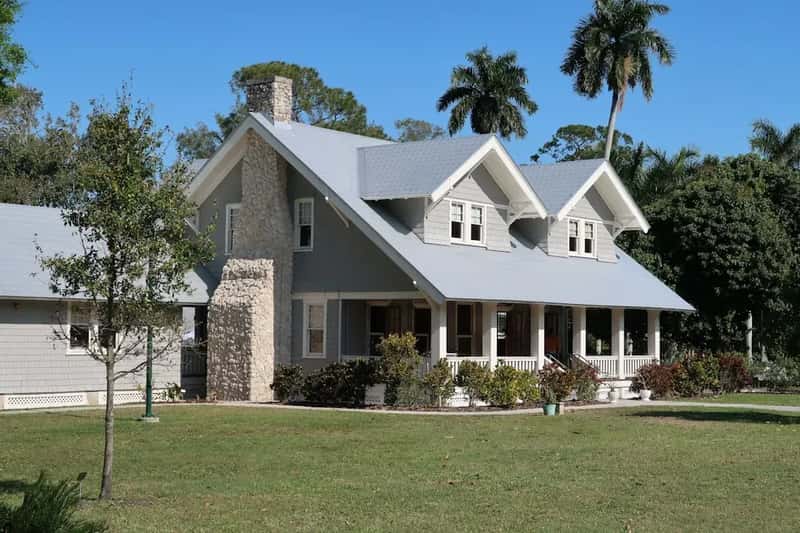
If there is one single issue that has quietly destroyed the Florida retirement dream, it’s homeowners insurance. It’s not just expensive. It’s in a category all by itself. Florida residents are paying the highest home insurance rates in the entire country. Data from Insurify found that the average annual home insurance premium nationally was $3,259 in 2024, while Florida was more than four times that amount at $14,140.
A nine percent increase was projected for Florida in 2025, adding an extra $1,320 to annual premiums and raising average annual costs to $15,460. That’s not a mortgage. That’s just insurance. For a house you supposedly already own.
Florida drivers pay nearly half more than the national average for car insurance due to high accident rates and rampant litigation fraud. Between house and car, a retired couple can easily spend $1,500 a month just on premiums. That’s a mortgage payment for a house you supposedly already own.
3. Condo HOA Fees Are Crushing Fixed-Income Retirees

Thousands of retirees in Florida chose condos for simplicity. Smaller space, no lawn, lock up and leave. That logic now has a brutal asterisk attached to it. The rising costs of homeowners association fees and home insurance are weighing so heavily on the Sunshine State’s retirees that many risk becoming homeless. Condo HOA fees have jumped by roughly 60 percent in the region since 2019, in part due to new regulations passed following the tragic Surfside collapse and also due to rising insurance costs.
In Tampa, HOA fees jumped 17.2 percent year-over-year as of July 31, 2024, reaching a median of $614 per month. Orlando and Fort Lauderdale followed closely, with fees rising 16.7 percent and 16.2 percent, respectively. These aren’t luxury towers. These are ordinary condo buildings.
Many buildings, even those without amenities, now have HOA dues exceeding $1,000 a month. With special assessments getting tacked on, a lot of condo owners who are retired and on a fixed income are being forced to sell and relocate because they cannot keep up with the payments.
Thousands of buildings are now legally required to fully fund decades of deferred maintenance immediately. The result is that condo HOA fees are suddenly surging, with owners waking up to special assessment bills for $50,000, $80,000, or even $100,000 per unit, due in weeks, not years.
4. Hurricanes Are No Longer Just an Inconvenience

There’s a certain attitude older Floridians develop after their first few hurricane seasons. A kind of weathered shrug. “We’ve dealt with worse.” The problem is that the storms are not getting smaller. In September 2024, Hurricane Helene hammered Florida and the Southeast, killing more than 230 people, making it the deadliest hurricane to strike the U.S. since Hurricane Maria ravaged Puerto Rico in 2017. Some estimates put the economic impact as high as $200 billion, making it the costliest storm in U.S. history.
Climate anxiety is no longer an abstract concern. It is a line item in retirement budgets. An uptick in outbound moves has been tied to the 2024 and 2025 hurricane seasons, when repeated storms, evacuations, and rebuilding costs forced homeowners to confront how fragile their plans could be.
Looking at National Centers for Environmental Information data, Florida has experienced 94 separate weather-related events with more than $1 billion each in damage between 1980 and 2024. Tropical cyclones top the list and account for over 93 percent of total costs. Weather-related events have caused between $300 and $450 billion in damage in this period, with nearly 39 percent of those costs occurring just from 2022 to 2024.
5. The Heat and Humidity Are Physically Dangerous for Seniors

Nobody in the brochure is sweating through their shirt at 8 a.m. trying to walk to their mailbox. The Florida summer is brutal in a way that is genuinely hard to describe until you’ve lived through it. The reality is that 2024 and 2025 were the hottest years on record. For seniors, this heat is not just uncomfortable. It is physically dangerous.
Climate data shows that human-caused climate change has made excessive heat at least five times more likely, representing what scientists classify as an exceptional climate change event. During severe heat events, 17 million people in Florida will experience at least one day of such extreme heat.
Florida’s utility companies have secured rate hikes through 2029 to pay for grid hardening. When you combine higher rates with the need to run air conditioning around the clock, you face what some are calling a “cooling tax” that eats away at Social Security checks. It’s a cost that never stops.
In the summer of 2023 alone, there were 84 heat-related deaths in Florida, according to an Associated Press analysis of Centers for Disease Control and Prevention data. That number is not an abstraction. Those are real people who moved there to enjoy their retirement.
6. Property Taxes Hit New Arrivals Especially Hard

Here’s a quirk of Florida’s tax system that catches retirees completely off guard. The state has a property tax cap called “Save Our Homes” that limits assessed value increases for existing homeowners. Sounds great, right? Florida’s “Save Our Homes” cap limits how much the assessed value of a primary residence can rise each year. But if someone buys a house next to a long-term owner, their taxes reset to full market value. While a long-term owner might pay $10,000, the new buyer could easily pay $25,000 or more for the exact same county services.
An October 2024 Redfin report found that Florida is home to three of the five major U.S. metros where property tax bills have increased the most since 2019. The typical homebuyer in Tampa now pays $250 more per month for property taxes, nearly 57 percent more than they would have paid in 2019. Meanwhile, the median monthly property tax payment in Jacksonville is $228, and $367 in Miami.
The tax benefit that drew people to Florida in the first place was always the “no income tax” headline. Don’t confuse “no state income tax” with “no taxes at all.” State and local taxes in Florida can take a real bite out of retirement savings. The combined state and local sales tax averages 7.00% in Florida, according to the Tax Foundation.
7. The Condo Market Is Collapsing – Taking Retirement Savings With It

Many retirees moved to Florida thinking their condo was a safe, appreciating asset. The data in 2025 tells a different story. In August 2025, the median sale price for a Florida condo was $285,000, down 8.1 percent from a year earlier and 14 percent below the July 2023 peak. This marks the largest August year-over-year decline since 2010.
The number of condo listings in Florida increased by 28.2 percent in January compared to the previous January, and by only 11.1 percent in the nation overall. That’s a lot of people trying to get out at the same time. As key safety compliance deadlines approach, condo owners in South Florida are rushing to offload their aging properties before being trapped with a potentially very high bill. One report found over 20,000 condo listings in Palm Beach, Broward, and Miami-Dade Counties in the second quarter of 2024, up from around 8,300 in the same period of 2023.
The impact of rising fees is being felt across Florida’s condo market, where sale prices have started to decline as buyers become increasingly wary of growing ownership costs. Jacksonville saw the largest drop, with condo prices falling 6.6 percent year-over-year. Tampa and Fort Lauderdale also experienced significant declines, and even in Miami, condo prices decreased by 2.2 percent.
8. Overcrowding Has Quietly Eroded Quality of Life

Florida attracted retirees because it felt spacious and relaxed. That was then. Between the extreme weather, hot humidity, rising costs, and overcrowding, Florida is no longer the go-to state it once was. The highways, the hospitals, the beaches – all of it has strained under the pressure of explosive population growth.
Florida saw a net influx of more than 77,000 new retirees in recent data, more than three times the influx to any other state. In total, more than 28 percent of the state population is aged 60 and older. That is an enormous concentration of people all trying to access the same roads, the same doctors, and the same beaches simultaneously.
Lakeland, for example, is close to both Tampa and Orlando, making it seem ideal for variety. Yet it features the third-worst commute of any city in the United States. It sounds absurd until you’re the one sitting in traffic on a Tuesday afternoon, going nowhere fast, wondering why you gave up your neighborhood back home.
9. Retirees Are Already Leaving – The Data Is Clear

It’s not just personal stories. The migration numbers confirm that something has fundamentally shifted. The PODS Moving Trends Report from 2025 showed that the push of people moving to Florida is lessening. From 2021 to 2023, Florida had six or more cities in the top ten moved-to cities, whereas in 2024, only two Florida cities made the list – while another two were the most commonly moved-out-of cities.
Many of these people are described as “half-backs,” retirees from the Northeast who moved to Florida, realized the math didn’t work, and moved halfway back, settling in states like Tennessee, North Carolina, and Georgia. These states offer four seasons, lower insurance risks, and a cost of living that more aligns with a fixed income.
The largest portion of Florida’s outmigration is to Tennessee, North Carolina, and Georgia, all of which have lower median home listing prices. Those aren’t random choices. They’re careful, deliberate recalibrations by people who did the math and decided Florida was no longer worth it.
For generations, Florida symbolized the American retirement fantasy, a place where savings and sunshine were supposed to last forever. Now a growing share of older Americans are quietly rewriting that script, swapping crowded beaches and rising insurance bills for cooler mountains, inland lakes, and smaller cities that promise a calmer, cheaper next chapter.
10. The Psychological Toll Is Real – and Underreported
Nobody talks about the emotional side of this enough. You make a massive life decision. You move across the country. You sell your house, leave your community, uproot your entire routine. Then it doesn’t work. That is a heavy thing to carry. Climate risk keeps coming up in interviews and surveys. One detailed look at the “anti-Florida movement” pointed to the 2024 and 2025 hurricane seasons as a turning point, with repeated storms and flooding making some retirees question whether they want to spend their seventies and eighties in high-risk coastal zones at all.
The physical and financial toll of preparing for storms, buying supplies, evacuating, and paying storm deductibles creates a chronic anxiety that puts a damper on the peace of mind you worked so hard to earn. That’s not retirement. That’s a seasonal stress test with an uncertain outcome.
Underneath all these state-by-state shifts is a more fundamental recalculation of risk. Detailed reporting on people leaving Florida makes clear that climate anxiety is no longer an abstract concern. It is a line item in retirement budgets. My grandfather used to call it the feeling of being “on borrowed time.” He meant the weather. I think he meant something deeper.
Florida isn’t broken. It’s beautiful in ways that are genuinely hard to replicate. But “beautiful” doesn’t pay an HOA bill. It doesn’t cool down a dangerous August heat index. It doesn’t rebuild your savings after a Category 4 hurricane. My grandfather knew something was wrong before the data caught up to him. Turns out, he was just ahead of the curve.
What would you have done differently – would you still take the Florida leap knowing all of this? Tell us in the comments.