Northern Egypt – Fossils recovered nearly a century ago from a limestone formation have now been identified as a previously unknown crocodile species that lived about 45 million years ago. The bones come from the same rock layers that supplied material for the Great Sphinx at Giza. Researchers reached this conclusion after reexamining the specimens with modern imaging techniques. ([1])
Reassessment After Decades
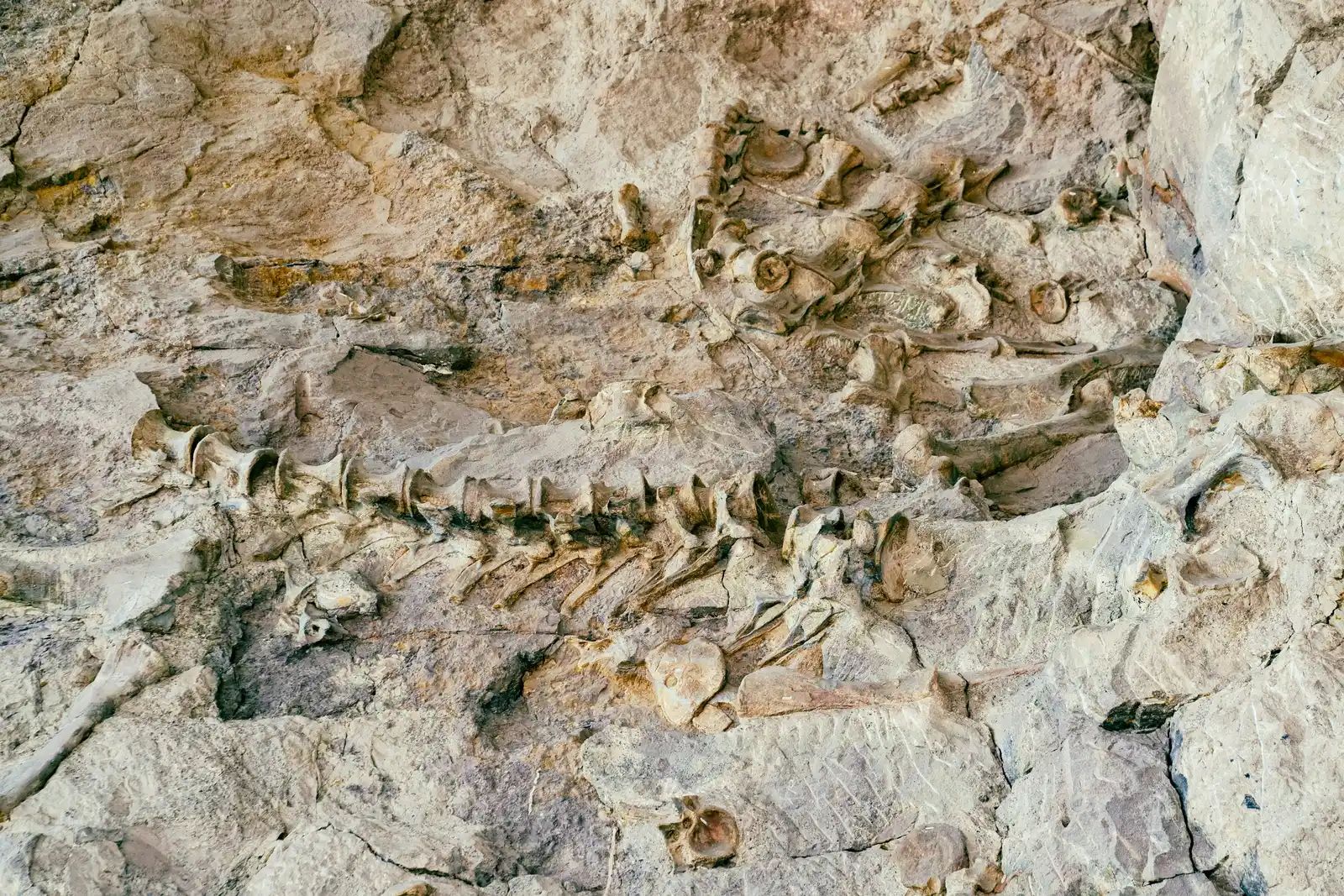
The fossils were collected in the 1920s from the Mokattam Formation and initially placed in the genus Tomistoma, the same group as the living false gharial. That assignment rested on superficial similarities in snout shape. An international team later applied CT scans to examine internal skull features that earlier studies could not access. Those scans revealed consistent differences in bone structure and proportions that separate the ancient animal from both living false gharials and other known fossil forms. The work was led by Paul Burke of the Swedish Museum of Natural History, with collaborators from the United Kingdom, Germany, and Egypt. The revised description appears in Royal Society Open Science.
Life in an Ancient Sea
At the time the crocodile lived, northern Egypt lay beneath a warm, shallow sea. The long-snouted predator likely hunted fish and other marine prey in those waters. Its remains settled into seafloor sediments that eventually hardened into the limestone later quarried by ancient Egyptians. The nearly complete skull shows adaptations typical of gavials, a group of long-snouted crocodilians that once ranged across many continents. Modern gavials survive only in limited parts of Asia. The new fossil adds evidence that the group was more widespread and diverse during the Eocene epoch.
A Name Tied to the Sphinx
The species received the name Herugavialis cairensis. The first part honors the Egyptian god Heru, whose falcon form some scholars link to the Sphinx itself. The choice also nods to the specimen’s missing snout tip, which echoes the famous damage to the monument. Philip Mannion of University College London noted the deliberate parallel in the naming decision. The species name cairensis refers to Cairo, the modern city nearest the discovery site. Such naming conventions help connect scientific finds to their cultural and geographic context.
Broader Questions Remain
The study clarifies one piece of gavial evolution but leaves open how widely this lineage spread through the ancient Tethys Sea region. Additional fossils from the same formation or nearby sites could refine the picture. Researchers continue to examine other museum collections that may hold similar overlooked specimens. The case also illustrates how new technology can unlock information from material collected long before current methods existed. What once appeared to be a familiar species now stands as a distinct branch on the crocodilian family tree. Further work may reveal whether Herugavialis represents an early step toward later gavial forms or a separate side branch that left no living descendants.