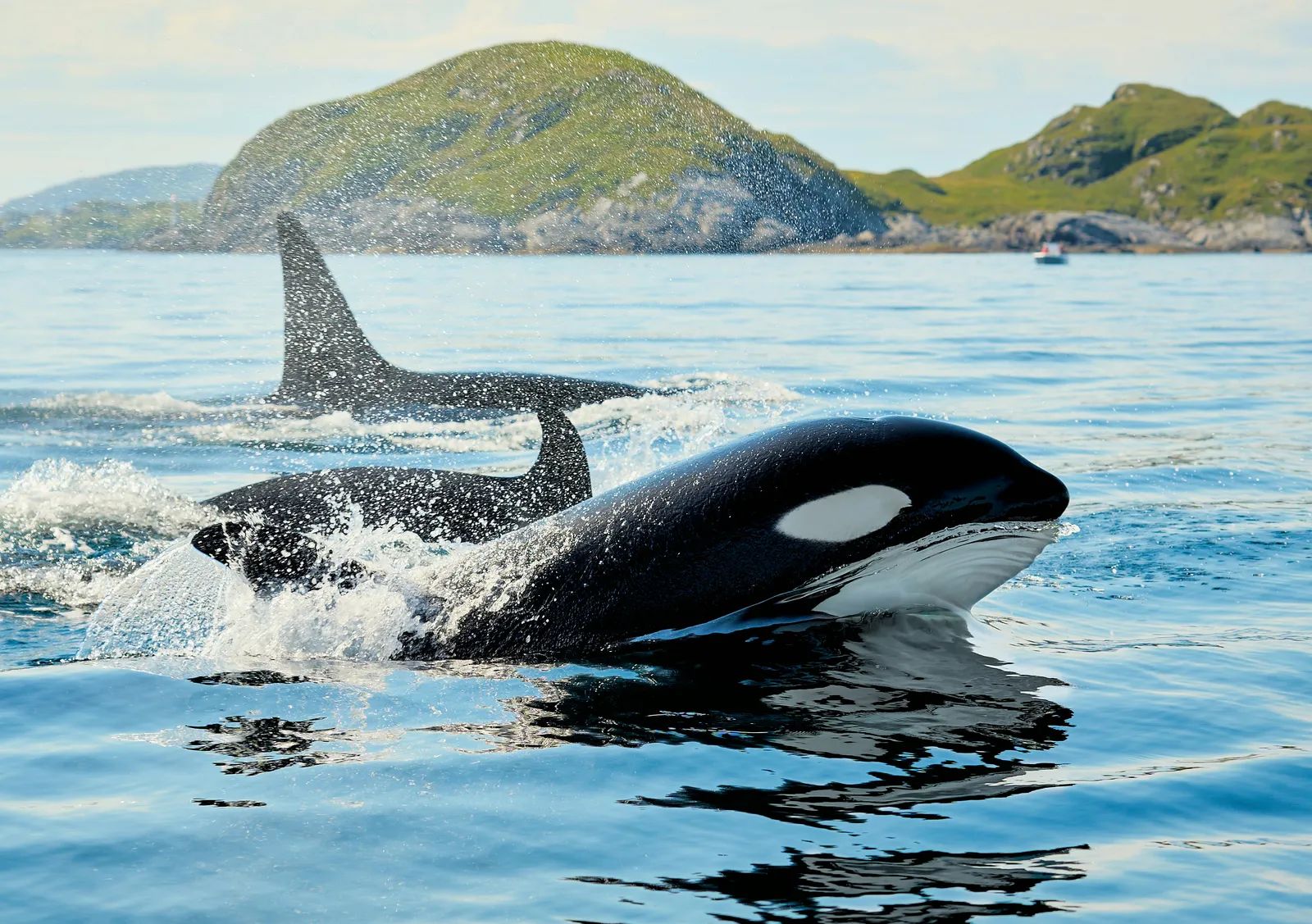
Marine researchers have documented two separate instances in which orcas rammed into large sunfish with enough force to cause the bony fish to burst apart. The behavior stands out because sunfish are not typical prey for these apex predators, and the sheer violence of the collisions has no clear parallel in known orca hunting patterns. The source of the observations remains limited to brief reports, leaving the motivation behind the acts unresolved. ([1])
Details of the Recorded Events
Each sighting involved an orca striking a sunfish at high speed. The impact was powerful enough to shatter the fish’s heavy body, scattering pieces through the water. Sunfish, also known as mola mola, can reach substantial sizes and possess thick, disc-shaped bodies covered in tough skin. Despite their bulk, they proved no match for the force delivered by the orca.
Observers noted that the orcas did not immediately consume the remains in the usual manner associated with feeding. Instead, the encounters ended quickly after the collision. These details emerged from field notes rather than extended video analysis, which limits what can be confirmed about the sequence of actions.
Leading Theories Under Consideration
One possibility is that the orcas were attempting to break the sunfish into smaller, more manageable portions for sharing with other members of their pod. Orcas frequently cooperate during hunts, and dividing large prey can be part of that process. Yet the explosive outcome suggests the strikes exceeded what would be needed for simple portioning.
Another explanation centers on play or boredom. Orcas are known for complex social behaviors and occasional interactions with objects or animals that do not serve an immediate survival need. In the absence of clear feeding or defensive signals, the collisions could represent exploratory or recreational activity. Researchers emphasize that both ideas remain speculative until more data become available.
Challenges in Studying the Behavior
Sunfish inhabit open ocean waters where consistent observation is difficult. Encounters are infrequent, and the animals move quickly, reducing opportunities for repeated documentation. Equipment limitations and the unpredictable nature of marine fieldwork further complicate efforts to capture high-resolution footage or acoustic recordings that might reveal context.
Without additional sightings, distinguishing between feeding, play, or another unknown driver stays nearly impossible. The current record consists of isolated events rather than a pattern that could support broader conclusions. This scarcity of evidence keeps the scientific discussion at the level of informed speculation.
Next Steps for Researchers
Teams plan to monitor regions where both orcas and sunfish overlap in greater numbers. Increased use of drones, hydrophones, and long-term tagging could provide the repeated observations needed to test existing ideas. Collaboration across research groups may also help pool rare sightings into a more useful dataset.
Each new record will be examined for consistent details such as time of day, group composition, and any follow-up actions by the orcas. Over time, these incremental findings could narrow the range of plausible explanations or reveal an entirely different purpose. The process underscores how even well-studied species like orcas can still produce surprises in the wild.