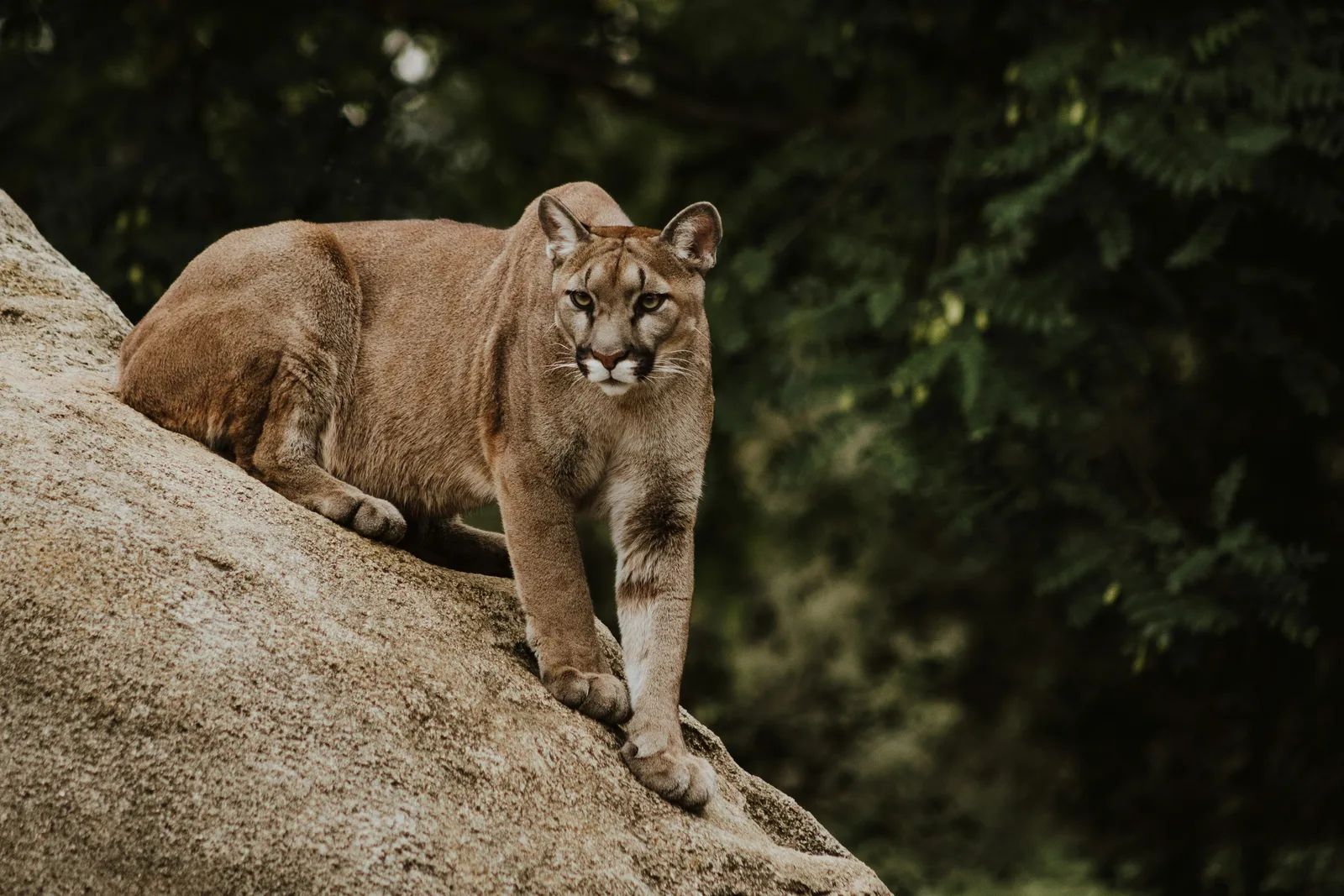
A mountain lion walking past the Hollywood sign at night created one of the most striking images of urban wildlife in recent memory. The photograph of P-22, taken by Steve Winter, placed a wild predator directly against one of the world’s most recognizable landmarks and drew widespread attention to the challenges facing animals in fragmented habitats around Los Angeles. National Park Service biologist Jeff Sikich had initially doubted the idea of mountain lions in Griffith Park, yet the evidence soon proved otherwise. ([1])
The Photographer’s Long Pursuit
Steve Winter committed more than a year to securing the image. Remote cameras were stolen on multiple occasions, and technical failures repeatedly disrupted the effort. Winter persisted through these setbacks, adjusting placements and equipment until conditions aligned. The resulting nighttime shot showed P-22 moving under the sign with a tracking collar clearly visible around his neck. The image quickly circulated beyond wildlife circles. It offered a clear visual contrast between the developed cityscape and the presence of large predators that still navigated the remaining open spaces. Public interest grew rapidly once the photograph appeared in major outlets.
From Skepticism to Discovery
Jeff Sikich, the National Park Service biologist familiar with the area, had seen no prior signs of mountain lions in Griffith Park. When Winter first suggested setting cameras for such a shot, Sikich considered the proposal unrealistic. P-22’s appearance changed that assessment and confirmed that at least one individual had found a way to survive in the isolated park. The discovery highlighted how wildlife can persist in unexpected locations despite surrounding development. Tracking data later revealed the limited range available to P-22 and the barriers created by roads and neighborhoods.
A Symbol for Habitat Connectivity
P-22 became closely linked to efforts to build the Wallis Annenberg Wildlife Crossing over U.S. Route 101. The structure aims to reconnect habitat patches separated by one of the busiest freeways in the region. The photograph helped communicate the need for such crossings to a broader audience that might not follow conservation policy debates. Advocates used the image to illustrate the daily risks faced by animals attempting to move between remaining natural areas. The crossing project gained momentum in part because the story of P-22 made the issue tangible for residents and visitors alike.
Part of a Larger Body of Work
The P-22 photograph appears in the book Big Cats by Steve Winter and journalist Sharon Guynup. The volume collects nine reporting projects that examined big-cat conservation challenges around the world. One additional project detailed in the book involved a year-long investigation into Thailand’s Tiger Temple, a tourist site later linked to illegal wildlife trafficking and ultimately closed by authorities. Winter and Guynup discussed these stories in a recent conversation with Mongabay Newscast host Mike DiGirolamo. Their accounts show how individual images and investigations can influence both public awareness and policy responses over time. The photograph of P-22 continues to serve as a reference point whenever Los Angeles considers new measures to support wildlife movement. It stands as a reminder that even heavily urbanized landscapes can still host surprising natural encounters when space and connections remain available.