A passport used to be a straightforward symbol of national strength, and for much of the twentieth century, an American one sat near the top of that hierarchy without much competition. That is no longer the case. Tiny nations with populations smaller than a mid-sized American city now open more doors than the passport carried by roughly 340 million Americans, and the gap has been widening for years rather than narrowing.
The story behind this shift is less about decline in any dramatic sense and more about diplomacy, reciprocity, and the quiet accumulation of visa-waiver agreements that some smaller, nimbler nations have pursued far more aggressively than Washington has.
Singapore sets the global standard

Singapore currently holds the top spot on the Henley Passport Index, and its lead is not a narrow one. In the June 2026 edition of the Henley Passport Index, Singapore remains in first place worldwide, with access to 192 destinations without needing a visa in advance. That is a city-state of about six million people, smaller than many American metropolitan areas, sitting comfortably above the United States.
The scale of that lead becomes clearer when you compare it directly to the American score. Singapore, at No. 1, offers visa-free access to 12 more countries than America. Singapore’s rise did not happen overnight either; it reflects two decades of steady bilateral agreements built specifically around trade and travel access.
The United Arab Emirates’ extraordinary climb

No country illustrates the diplomacy-equals-mobility argument better than the UAE. The biggest success over the past two decades, however, is the United Arab Emirates passport. According to Henley’s analysis, the UAE has recorded the largest improvement in the history of the index, adding 153 visa-free destinations since 2006. That is not a modest improvement, it is essentially a complete transformation of the passport’s global standing.
The UAE, a federation with a population smaller than New York City’s, has climbed from obscurity into the top tier of world travel documents. It has climbed from 62nd place to second, a position it now shares with Japan and South Korea, whose citizens can access 188 destinations without obtaining a visa in advance. The strategy behind it has been consistent: courting visa-waiver deals as part of broader trade and investment relationships rather than treating travel access as an afterthought.
Sweden and the Nordic advantage
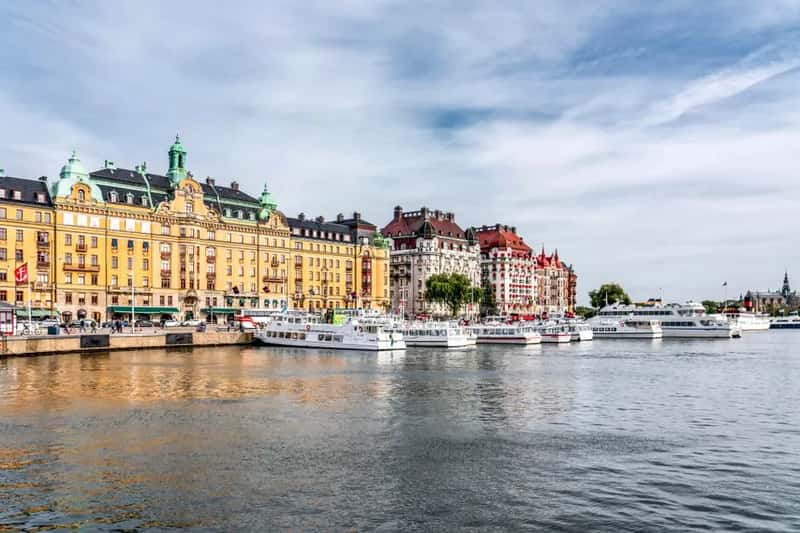
Sweden, a country of roughly ten million people, currently sits comfortably ahead of the United States in the rankings. Sweden follows in third place with 187 destinations, keeping Europe firmly represented among the top-ranked passports. That single-country ranking, separate from the larger European bloc just behind it, says something about how consistently Nordic nations have maintained strong diplomatic reciprocity.
Just below Sweden sits a cluster of other European nations, several of them small by any measure. Several European passports in fourth place also gain one destination, moving from 185 to 186. The consistency of this European advantage, spread across countries with vastly different population sizes, suggests it is regional cooperation and treaty-making rather than economic scale that drives the numbers.
Liechtenstein: a microstate with outsized reach

Liechtenstein has a population of roughly forty thousand people, smaller than many American college towns, yet its passport regularly outperforms the American one. Earlier in 2026, the country was grouped in a tier offering broader access than the United States enjoys. Australia, Latvia, Liechtenstein, United Kingdom: Passport-holders from these four countries enjoy visa-free access to 182 destinations worldwide.
What makes Liechtenstein’s position notable is that it is not an independent negotiator in the traditional sense. As a member of the European Economic Area and closely tied to Switzerland, it benefits from a dense web of regional agreements that a country its size could never negotiate alone. The lesson is that alliance membership can matter more than raw diplomatic weight.
Malta’s place among the elite

Malta, an island nation of roughly half a million people, sits in a tier of countries that consistently rank ahead of the United States. At No. 6 are Croatia, the Czech Republic, Estonia, Malta, New Zealand and Poland. For a country smaller in population than many single American counties, that is a striking position to hold.
Malta’s advantage traces back largely to its European Union membership, which automatically extends the bloc’s collective visa-waiver network to its citizens. It is a reminder that passport power is rarely earned entirely on a country’s own terms. Membership in the right club can matter as much as bilateral negotiation.
The Baltic states: Estonia, Latvia and Lithuania
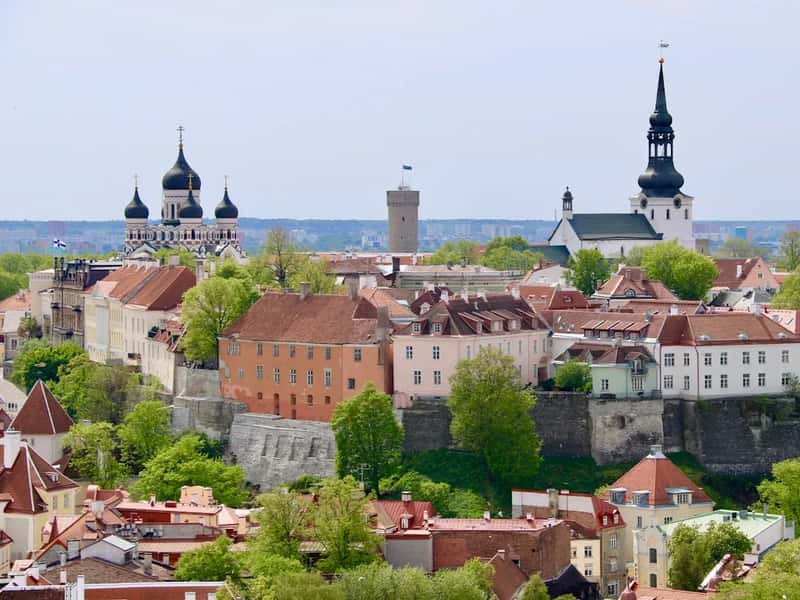
The three Baltic nations, none of them home to more than two million people, have each carved out passport rankings well ahead of the United States. Lithuania sits in a notable tier alongside two other nations. Canada, Iceland, Lithuania: These three countries have visa-free access to 181 destinations.
Latvia sits a notch higher, grouped with countries offering slightly broader access. Australia, Latvia, Liechtenstein, United Kingdom: Passport-holders from these four countries enjoy visa-free access to 182 destinations worldwide. Estonia’s position, tied with Malta and New Zealand in the sixth tier, rounds out a genuinely consistent Baltic performance that has held steady for years rather than spiking briefly.
Slovenia, Slovakia and Croatia’s quiet rise

These three countries rarely make headlines for their global influence, yet each has quietly built a passport that outperforms the American one. Slovenia and Slovakia were grouped together in a tier that, at the time, ranked above the United States. Fifth place, with a score of 184, is held by Hungary, Portugal, Slovakia, Slovenia and the United Arab Emirates.
Croatia, meanwhile, sits in the same sixth-place cluster as Malta and Estonia, a position it has held with relative consistency. None of these countries carries the geopolitical weight of a major power, yet all three benefit from the same underlying mechanism: European Union membership converts collective diplomatic leverage into individual travel freedom for even the smallest member states.
Why the American passport has lost ground

The United States has not simply stood still while other nations improved; in some respects it has actively lost access. Brazil has reinstated visa requirements for Americans and now requires a $80 eVisa. The added charge creates a direct cost for travelers who need permission before departure. China presents a similar problem, and it is not a minor one for American travelers. China presents another gap. The United States remains one of the few top-tier passports whose holders still need a formal visa to enter China.
The reciprocity gap runs both ways, which matters more than it might first appear. The United States ranks 73rd on the Henley Openness Index. It allows only 46 other nationalities to enter without a visa, a much narrower opening than the access its own citizens receive abroad. That relative closedness has consequences, because many of the countries the US restricts have simply responded by tightening their own entry rules for Americans in turn.
The bigger picture
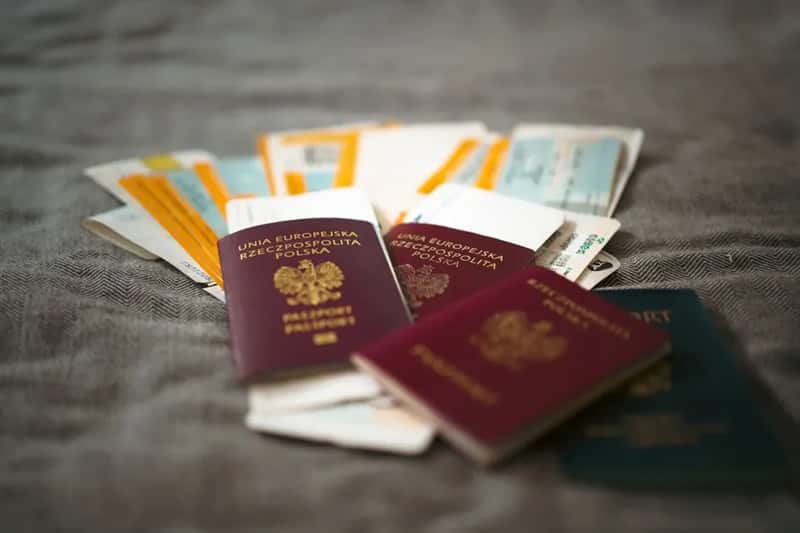
None of this means American travelers are suddenly stranded. A passport ranked tenth still opens the vast majority of the world, and the practical difference between visiting 180 countries visa-free versus 188 rarely changes anyone’s vacation plans. What the numbers do capture is a slower, structural story about which countries have spent the last two decades actively building reciprocal travel relationships and which have not.
Small countries like Liechtenstein, Malta, and the Baltic states did not out-negotiate the United States through sheer diplomatic muscle. They did it by joining larger blocs, maintaining calm foreign relations, and letting collective agreements do the heavy lifting. It is a quieter kind of power, but the numbers suggest it works just as well as size ever did.