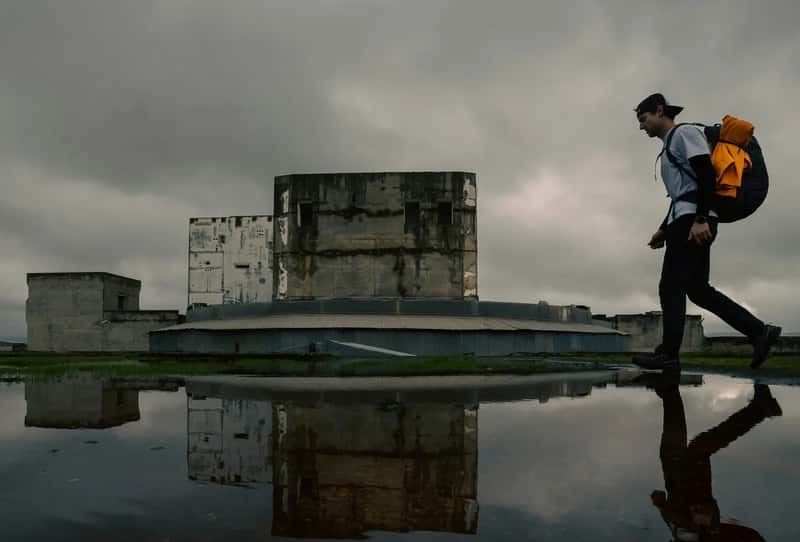
The building is hollow.
You are not.
You press your palm against the wet, peeling wall and something in your chest exhales – a breath you have been holding since you were nine years old.
Everyone else walks past condemned buildings and sees danger. A hazard. A teardown waiting to happen. You walk past and feel, inexplicably, recognized.
That is the identity gap. The distance between the person who smiles at the dinner table and the person who quietly catalogs every hairline fracture in the plaster above the mantle. Between the child who said “everything is fine” and the adult who books weekend trips to ghost towns and crumbling hospitals and rooftops that have not known a living body in twenty years.
1. The Fluency of Decay
You learned a second language as a child.
Not French. Not Spanish.
The language of hidden damage.
The child in the unpredictable home is constantly scanning the environment for perceived danger – becoming acutely aware of subtle changes that others never even register. A tone of voice that shifts by half a degree. A silence that lands two seconds too long. You became fluent without a teacher, without a textbook, without anyone even acknowledging that there was something to learn.
Abandoned buildings speak the same dialect.
Sagging ceilings. Floors that flex wrong. Rust blooms on steel beams like old bruises that never fully healed.
You do not need a guide. You feel suspended between the world you know and a vanished reality still inscribed in rotting floorboards and dusty windowsills.
It is the first place you have ever felt fully bilingual.
2. The Architecture of Witnessing
There is a particular kind of child who notices what adults are too tired, too proud, or too scared to address.
They notice the damp patch on the bedroom ceiling that no one names. The argument behind the closed kitchen door that everyone pretends happened somewhere else. The grandmother who flinches when the front door opens too hard.
Childhood emotional neglect happens when a child’s emotional needs are consistently ignored, overlooked, or dismissed. When those needs go unmet, the nervous system adapts – children become hyper-aware of the moods of others, constantly scanning for signs of danger, emotional or physical.
That child grows up.
They do not stop scanning. They cannot.
They simply redirect that ancient, exhausting attentiveness toward buildings – where, at last, the damage is allowed to be visible. Undeniable. Where no one insists the ceiling is fine.
3. The Permission of Ruin
An abandoned place does not gaslight you.
It does not insist it is structurally sound. It does not set a place at the dinner table and expect you to compliment the meal while the roof quietly caves in above your head.
In a fast-paced, modern world, abandoned places offer a rare escape from the hustle of daily life, providing a sanctuary of solitude and silence – a space to disconnect from the noise. This sense of isolation can be therapeutic, allowing some to find peace and reflection in these abandoned realms.
But for the childhood witness, it is deeper than therapy-grade silence.
It is permission.
Permission for the damage to exist without a cover story. Permission to stand inside a collapsing thing and not be required to call it beautiful or functional or fine.
You spent your whole childhood in rooms that were falling apart but could not say so out loud. An abandoned building says it for you.
4. The Ghost You Are Looking For
Urban explorers are often asked: aren’t you afraid of ghosts?
The answer is almost always no. There are no ghosts here. But the obsession with ruined, forgotten spaces is rooted deep in the wiring of the human brain.
What they do not say – what they may not yet have words for – is this:
You are not looking for someone else’s ghost.
You are looking for yours.
We ask ourselves: “What will remain of my life when I’m gone? Will people one day walk through my old apartment and wonder who I was?” But if you grew up in a house where your inner life was structurally unsound and ignored, the question shifts. You walk through someone else’s ruin and ask: would anyone have noticed? Would anyone have come back for me?
The peeling wallpaper is a stand-in. You know it. You go anyway.
5. The Witness Who Became the Explorer
I want to tell you something specific.
The first time I stood inside a genuinely abandoned building – a water treatment plant three hours outside the city, fog still low over the rusted catwalks – I did not feel afraid. I felt the specific, bone-level relief of someone who has finally arrived somewhere honest.
Every cracked gauge. Every collapsed catwalk. Every room that had clearly been something important once, now just wind and mold and the sound of my own footsteps.
Nothing here was pretending.
For many, there’s a deeper psycho-emotional resonance in standing where past lives once thrived. I understand that now in the language of psychology. But at the time, I understood it only in the body. In the particular loosening of the jaw. The unclenching of hands I didn’t know were fisted.
I had grown up being told the house was fine. I had grown up being the only one who noticed it wasn’t. And here, finally, was a house that agreed with me.
6. The Hypervigilance That Became a Compass
Here is what no one tells you about growing up hypervigilant.
It does not feel like a wound. It feels like a superpower.
Maltreated children become better prepared to identify threatening situations through hypervigilance of emotions – more sensitive to anger, more attuned to fear in those around them, because both sensitivities could help them identify threat quickly.
You became the world’s most efficient reader of subtext. Of body language. Of structural integrity.
An abandoned building is nothing but subtext.
Every room is a sentence. Every staircase is a paragraph about weight and time and what happens when no one maintains a thing they once claimed to love. Because the nervous system has been trained to expect instability or emotional danger, many adults find it difficult to fully relax, even in calm or positive environments. Safety may feel unfamiliar, and chaos may feel normal.
And so you navigate ruin with uncanny grace. Because you always have.
7. The Mastery That Was Never Offered at Home
There is something else happening when you step across the threshold of a broken building.
You are competent here.
Exploring abandoned places can offer a sense of competence and mastery, as individuals navigate challenging environments and uncover hidden histories.
As a child in a dysfunctional home, you noticed everything and could fix nothing. As little children, hypervigilance felt like protection from disasters – but the truth is that the child did not have the power to prevent harm. That power was purely in the hands of the adults.
You cataloged the cracks. You told no one. No one asked.
But in a derelict building, your attentiveness has consequence. Your skill matters. You test the floor with one boot before committing your weight. You read the rust pattern on a ceiling joist and decide whether the room is safe. You make the call. You have the power.
For the first time, the hypervigilance saves you instead of just exhausting you.
8. The Document and the Testimony
Beyond the adrenaline, urban exploration provides an opportunity to connect with history and appreciate spaces in their rawest form. Explorers often document their findings through photography and storytelling, preserving the legacy of abandoned places before they are lost to time.
But notice what that impulse really is.
It is testimony.
The child who witnessed dysfunction and was not believed grows into the adult who documents ruin with a strange, missionary urgency. Who photographs the water stain. Who maps the collapsed wing. Who insists, with a camera or a notebook or a carefully captioned social media post: this happened here. This was real. I was here. I saw it.
Explorations bring people face to face with the detritus of human life, abandoned alongside the buildings that house them – family photos, medical records, the intimate residue of lives not cleanly closed.
You are bearing witness to what the adults in charge failed to document, failed to acknowledge, failed to grieve.
You are doing what was never done for you.
9. The Body Knows the Address
Psychology calls it somatic memory.
The body keeps its own archive.
Chronic stress shrinks the hippocampus, impairing memory and context for emotions, while enlarging the amygdala for hair-trigger alerts. Adults relive childhood chaos in boardrooms or bedrooms, their coping mechanisms on autopilot.
But here is what the research doesn’t say in plain language:
The body also keeps its own map of belonging.
Some bodies have been trained, from an early age, to recognize safety in controlled ruin. In spaces where the damage is honest and external rather than concealed and relational. Where the danger has already done its worst and left a legible scar instead of a smiling, insisting lie.
Abandoned places offer a unique space for personal reflection. There’s a quiet, sacred quality to them that provides an escape from the constant movement of the world.
Your body is not broken for feeling at home here. It is calibrated. It is still protecting you the only way it knows.
10. The Foundation You Are Still Looking For
The deepest truth is this.
You are not drawn to abandoned buildings because you love decay. You are drawn to them because they are the only structures that have ever been as honest with you as you were required to be with them as a child.
A neglected child often grows into an adult who questions their value, mistrusts their instincts, or struggles with inner criticism – which can lead to self-sabotage, imposter syndrome, or difficulty making decisions. You were trained to distrust your own perception. Trained to doubt the evidence of your own eyes and your own trembling hands pressed against walls that everyone else insisted were solid.
But you were right. You were always right.
Sooner or later, every abandoned site forces us to reckon with the fact that life is fleeting. We will all eventually leave our possessions and spaces behind. But these remnants serve as a reminder of the enduring impact of human actions – the traces we leave behind, even after we are gone.
You leave traces too. In every rusted room you documented. In every threshold you crossed when everyone around you chose the more comfortable, paved, well-lit street. You were the child who noticed. You became the adult who goes back.
Not to fix it. You learned early that some foundations cannot be fixed. You go back to bear witness. To say, in the language of cracked plaster and blown-out windows and weeds growing through the ballroom floor: I see you. I always saw you. You were real, and you happened, and you mattered enough for someone to walk back through the dark to say so.
There is a particular kind of grief that lives in the body of someone who was the only witness in a house full of people.
It does not look like crying. It looks like lacing up boots on a Saturday morning. It looks like a camera bag. It looks like a two-hour drive to a place no GPS will acknowledge. It looks like standing in the hollow chest of a building that the rest of the world has written off, and breathing – really breathing – for the first time all week.
Maybe what you were always searching for, in every broken doorway and every moss-eaten staircase, was not a ruin at all. Maybe you were searching for the version of your childhood home that finally told the truth – the one that wore its damage on the outside, where you could see it, touch it, and walk away from it still knowing, with absolute certainty, that you had not imagined a single crack.