The road opens at dawn.
Nobody knows where you are.
Your phone has a signal. You haven’t checked it in three hours.
Somewhere between the last rest stop and the next state line, something loosens in your chest. Something you forgot was clenched.
We call it a road trip. But that’s not really what it is. It is a controlled disappearance. A rehearsed vanishing. The modern person’s most honest confession: that the version of themselves they perform daily is exhausting, and they desperately need to put it down, even for two hundred miles. They need silence.
1. The Noise Tax
Every day, you pay it without noticing.
The cost of being alive in 2026 is noise. Not just the auditory kind – though that is relentless – but the cognitive kind. The constant, ambient hum of other people’s urgency pressing against the walls of your skull.
The primary catalyst driving travelers toward silence is the pervasive state of burnout experienced by modern professionals. The constant stream of emails, messages, and social media updates creates a state of cognitive overload, preventing the brain from entering a restorative state.
The road trip is, at its core, a noise tax refund.
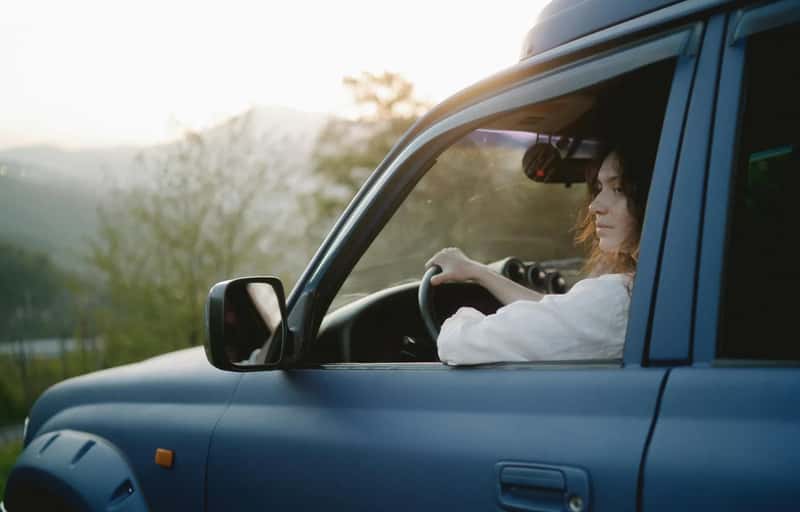
It is the one environment where the phone can ring and you can watch it ring without flinching. Where the notification arrives and dies without consequence. Where the landscape outside your window is more compelling than anything on any screen, and you don’t have to justify choosing it.
In an era of nonstop notifications, 24/7 connectivity and multitasking, the brain has fewer opportunities to truly rest. Mental fatigue accumulates quietly and can manifest as irritability, anxiety, insomnia, or burnout.
The solo road trip is not a luxury. It is a refusal. A firm, quiet, deeply personal refusal to keep paying that tax.
2. The Group Tour Bargain
Here is what the brochure doesn’t say.
Group tours are efficient. Beautifully, ruthlessly efficient. They compress experience into digestible units. Fourteen countries in eleven days. Breakfast at eight, departure at nine, photo opportunity at ten. You are moved through the world like a package through a sorting facility – handled, delivered, stamped.
And you arrive home having seen everything and absorbed nothing.
The current trend of solo travel highlights a complex need that group travel, by its very architecture, cannot satiate – the need for experience that belongs entirely and exclusively to you. Not curated for collective enjoyment. Not softened by the presence of familiar faces. Raw, unmediated, and yours alone.
There is a specific grief in returning from a group tour with someone else’s highlights reel. A vague, unnameable disappointment. A sense that you were present but not there. That you watched the destination from behind glass, like an exhibit, while the real country – the one that smells like gasoline and bread and something you can’t identify – waited just outside the itinerary.
The solo road tripper doesn’t see more. They see differently. That is the bargain.
3. The Dopamine Trap
Your nervous system has been hijacked.
Not by malicious forces. By design. The architecture of every app, every platform, every device in your pocket is calibrated to keep you in a state of low-grade, permanent anticipation.
From a psychological perspective, the move toward silent travel is an attempt to combat the “dopamine loop” created by smartphones. Every notification triggers a small release of dopamine, keeping the user in a state of high alert and constant anticipation. By removing these triggers, silent travel allows the nervous system to downregulate.
When you merge onto an empty highway before sunrise, with nothing but a gas station coffee and three hundred miles of asphalt ahead, you are doing something medically significant. You are interrupting the loop.
The first hour is withdrawal. The second hour is relief. By the third hour, you start to remember what it felt like to think in complete sentences. By the fourth, you start to remember who you were before the loop began.
That is not a metaphor. That is neuroscience. And it costs less than a therapist.
4. The Silence Architecture
Silence is not the absence of sound.
That is the most important distinction that nobody teaches. True silence – the kind you can only find on a road trip at mile marker 84 with the windows down and the radio off – is a presence, not an absence. It has weight. Texture. It presses gently against you and asks questions you’ve been avoiding.
Silence provides an opportunity for introspection, allowing us to process our thoughts and feelings without judgment. This practice can lead to better emotional control, reduced anxiety, and a more balanced mental state.
Research indicates that spending time in silence can stimulate brain growth by creating new cells in the hippocampus, the region associated with memory formation and emotions. Additionally, silence has been found to lower blood pressure and reduce stress by decreasing cortisol levels.
The road builds this architecture for you.
Mile after mile of enforced quiet. The landscape does not need anything from you. The horizon asks nothing. The exit signs offer options without demanding choices. For someone who lives inside a relentless grid of demands and obligations, this is not merely pleasant. It is revolutionary.
5. The Identity Checkpoint
I drove from Memphis to Marfa alone in the winter of a year I’d rather not name.
No podcast. No curated playlist. Just the flat geometry of West Texas opening in front of me like a question I’d been afraid to read. I expected the silence to feel empty. Instead, it felt like a room I’d been locked out of for years. I stayed in that room for eleven hours. I said very little. I thought a great deal. I arrived in Marfa different in a way I still can’t fully articulate.
There’s the identity clarification that happens when you remove yourself from every role you usually play. On the road, alone, the roles dissolve. You are not the employee, the partner, the parent, the friend, the version who shows up to things. You are the person driving. That is enough. It turns out, for many of us, that person is the truest version.
Without the noise of familiar routines or the influence of others, solo travel creates space to ask deeper questions. The road makes that space physical. You can see it stretching in front of you. That is not metaphor. That is the actual gift.
6. The Quietcation Economy
The market has noticed.
What was once the preference of solitary introverts is now a measurable economic signal. “Hushpitality” or the “quietcation” describes the number one trend named in Hilton’s 2026 Trends Report, with global research showing respondents’ number one leisure travel motivation in 2026 is “to rest and recharge,” at 56%.
Skyscanner’s “solo” filter jumped 83% globally year-on-year, and Hilton says over a quarter of travelers – 26% – plan to travel alone in 2026, while nearly half report adding solo travel days to their itineraries.
This is not a niche preference. This is a cultural reckoning.
A generation of people who were sold on connectivity as the highest good are discovering that the bill for that connectivity comes due in the form of anxiety, dissociation, and a creeping inability to be alone with themselves for more than four minutes. The solo road trip is the counter-cultural act. The quiet protest. The market doesn’t create the need for silence. It just confirms that the need is undeniable.
7. The Autonomy Principle
Nobody tells you when to stop.
This sounds trivial until you have lived several years inside an architecture of constant external permission. Until you have asked, implicitly or explicitly, for approval before every small deviation from the expected. Then the ability to pull over at an unmarked scenic overlook – for no reason, at no appointed hour, answerable to no one – becomes an act of radical self-reclamation.
When we travel solo, we are free to decide how much time we spend in one place and do not need to worry about another person and their needs. It is possibly the only opportunity where we are released from obligations and expectations from others.
What predicts comfort with solitude, instead of introversion, is something deeper – a dispositional autonomy, a tendency to act in congruence with one’s own values rather than external pressure.
The road trip enforces this. Every turn is yours. Every delay is yours. Every sunrise you happen to catch through the windshield belongs to no itinerary, no group consensus, no compromise. It belongs exclusively to the moment of your attention. That is not a small thing. That is, for many people, the most alive they will feel all year.
8. The Psychological Reset
The clinical term is not romantic. But it is accurate.
Contemporary life often involves rigid routines that, while providing stability, can contribute to psychological stagnation and burnout. Solo travel disrupts these patterns, creating what researchers term a “psychological reset” – interrupting rumination patterns, providing mental distance from chronic stressors, and allowing cognitive and emotional resources to replenish.
The road trip is a particularly effective delivery mechanism for this reset because it requires enough low-level engagement – navigation, fuel, the sensory flow of moving landscape – to silence the rumination without demanding the performative attention that social travel requires.
Away from your usual routines and relationships, you’re free to tune into your own thoughts without interruption. You might notice how your mood shifts when you’re not constantly reacting to others. Or how your creativity sparks when your mind isn’t crowded with noise.
The highway is not the backdrop for the reset. It is the mechanism. The movement is the medicine. The white dashes ticking past are a metronome for something deep in the brain that finally, finally exhales.
9. The Performance Fatigue
You are always being watched.
Not by a specific person. By the aggregate. By the feed, the thread, the story, the status. The modern self is a performance without a backstage. There is no dressing room. There is no place to sit in your costume and be no one for a while. Every space is documented. Every experience is available for reaction.
When guests are removed from the pressure to respond instantly to professional demands or social obligations, they are better able to engage in mindfulness and reconnect with their immediate physical environment. This shift allows for a transition from passive consumption of a destination – where the primary goal is often to document the trip for social media – to active presence.
The solo road trip breaks the fourth wall of the performance.
There is no audience for the stretch of highway you’re crossing at noon on a Tuesday. Nobody is watching you eat a gas station sandwich in a parking lot outside a town with a population of 400. Nobody cares. The liberation of nobody caring is immense. It is the closest most of us will come to actual privacy in 2026.
10. The Heaviest Mile
Here is what nobody says at the end of a solo road trip: I wish I’d had someone to share that with.
They say: I need to do that again. Alone.
Solitude is not the same as loneliness. Many solo travelers discover that the time spent alone – walking aimlessly through a new city, sitting with a coffee watching local life – is the experience they value most.
Longer trips tend to produce deeper benefits, including identity clarification and the kind of perspective shift that persists after you return. The most important factor isn’t duration but quality of solitude: a three-day trip where you’re genuinely alone with your own experience will deliver more than a two-week trip where you’re constantly in contact with people back home via your phone.
This is the heaviest mile. The one where you realize that the silence you were chasing was not outside you. It was buried under everything you had agreed to carry. The noise of obligation. The weight of other people’s expectations, absorbed over years of polite compliance. The road doesn’t give you silence. It removes the layers under which your own silence was waiting.
That is what makes it irreplaceable. That is what no group tour, no all-inclusive, no curated experience can replicate: the specific, earned quiet of a person alone with the fact of their own existence, moving through space without explanation.
We talk about travel as something we do to the world. We go places. We see things. We collect the evidence of having been present. But the solo road tripper knows something different. They know that the journey is doing something to them. Slowly. Quietly. Mile by unhurried mile.
The modern world is very loud about what you should want, who you should be, and how quickly you should arrive there. The open road is the only place left that does not have an opinion about your pace.
Find the empty highway. Turn off the music. Let the silence ask its questions.
You already know the answers. You just haven’t been quiet enough to hear them yet.