Travel spending has a way of sneaking up on people. You budget for the flight and the hotel, feel good about the number, then watch it grow as baggage fees, insurance, and a rental car get added one line at a time. If you’re mapping out trips for the rest of 2026 or into next year, it helps to know what the real numbers look like right now, not the rough estimates from a few years back.
The good news is that comfortable travel is still very much achievable. The less comforting news is that the price tag for that comfort has shifted in several directions at once, some up, a few surprisingly down. Here’s a category by category look at what things actually cost this year.
Flights are pricier than they were a year ago

Domestic airfare has climbed noticeably. The average cost of a domestic plane ticket is $428 as of the first quarter of 2026, the most recent period for which there is data from the Department of Transportation.[1] That’s not a small jump either. That’s up from $404 in the previous quarter and about $31 higher than the average price recorded in the first quarter of 2025.[1]
International flying carries a much bigger price tag, as you’d expect. The average cost of an international economy-class plane ticket is $1,217, according to FCM and Corporate Traveler, and the cost of international airfare fluctuates more than domestic plane tickets depending on destination, since it costs much more to fly to Japan from the United States than it does to fly to Canada.[1] Premium cabins tell a slightly different story though, since deal-focused travel sites have been finding surprisingly reasonable premium economy fares to spots like Paris and Tokyo when travelers book flexibly and watch for sales.
Checked bags now cost meaningfully more

If you haven’t checked a bag in a while, brace yourself. The first checked bag now costs $45, while a second bag is $55 on most domestic routes.[2] That’s a jump across nearly every major carrier, and it happened fast. If you’ve flown in the past few months, you already noticed something’s off, checking a bag used to cost $35, and now you’re staring at $45 or $50 at the counter, wondering when that happened, because nearly every major US airline has quietly raised its checked baggage fees in 2026.[3]
The reasoning behind the hikes traces back to fuel costs more than anything else. Jet fuel averaged nearly $4.88 per gallon in major US markets in early April 2026, up from roughly $2.50 before the conflict began.[3] Airlines have also figured out that fees are an easier lever to pull than base fares, since airlines prefer raising baggage fees over airfares partly because bag fees are not subject to the 7.5% federal excise tax applied to[3] ticket prices. A third bag will really sting, since that fee jumped by fifty dollars at several carriers.
Hotel rates are stable, though the picture depends on who you ask

Hotel pricing data is genuinely mixed right now, which is worth flagging rather than smoothing over. One tracker found that average U.S. hotel and motel room rates are down 1.8% over the past year, according to NerdWallet’s travel cost index, meaning travelers can generally expect to pay less for the same hotel room this year than they did last year.[4] A more recent update from the same source tells a different story, showing average U.S. hotel and motel room rates are up by 2.9% over the past year, meaning travelers can generally expect to pay more for the same hotel room this year than they did last year.[5]
Either way, the broader trend over time points upward. Compared to 10 years ago, hotel room rates have jumped 21.1%, while overall travel costs have surged 37.1%, according to NerdWallet’s data.[4] For a rough planning number, in 2026, the average hotel cost in the USA ranges between $150 and $250 per night for standard mid-range stays, with a national baseline average of roughly $171 per night for single occupancy.[6] That baseline shifts a lot by city, and high-demand markets such as New York City and San Francisco frequently exceed $300 to $500 per night, whereas smaller cities and suburban locations offer options starting under $100.[6]
Rental cars are one of the few categories holding steady

Car rentals are quietly one of the calmer line items in a travel budget this year. In 2026, the average cost of renting a car in the United States runs between $55 to $95 each day, with economy cars priced from about $45 a day and SUVs and nicer cars fetching $150 or more.[7] That’s a manageable range, especially compared to the swings seen in airfare and baggage fees.
Industry forecasts back up the sense of stability. In 2026, average daily rental rates are around $48 per day globally, up about 2.8% year over year under baseline conditions.[8] Booking timing still matters quite a bit, and rental fleets behave differently than hotels or airlines. Comparing one week versus three months out, Hertz saw roughly a 23.6% discount and Thrifty roughly 28.0%, among the largest gaps[8] when travelers booked further ahead. If you want extra protection on the vehicle, expect to pay separately for it, since rental car insurance can cost around $10 to $50 per day or more, depending on the vehicle, rental company, type of insurance, and location.[9]
Travel insurance costs more if you’re older, but it’s not expensive for everyone

Age turns out to be the single biggest factor in what you’ll pay for travel insurance. Travelers 77 and older paid an average of $782 for coverage in 2026, more than six times what Generation Z travelers paid at $119.[10] That gap is dramatic, but it reflects real risk differences insurers are pricing around health and medical claims tied to age.
For most people, the math comes down to a percentage of what you’ve already spent. Insurance companies price your policy as a percentage of your total trip cost, then adjust that number up or down based on your age, trip length, destination, and any optional coverage you add, and for most travelers that works out to about 4% to 10% of what you paid for flights, hotels, cruises, tours, ground transportation, and other prepaid trip expenses.[10] On the higher end, a 75-year-old pays 11% or more for the same trip, or $552[11] on a five thousand dollar vacation. Destination plays a role too, since Canada and Western Europe have baseline rates near $200, and India, Brazil and Morocco cost $275 to $290 for the same coverage.[11]
Cruises come with their own insurance math

Cruising has its own pricing dynamics, partly because trip costs tend to run high and get paid upfront. Squaremouth data shows the average cruiser spends $7,908 or more on their cruises.[12] Because so much of that is prepaid and nonrefundable, insurance for cruises tends to be priced with real weight behind it.
The specifics scale directly with how much the cruise costs and how long it lasts. For cruises of $1,000 to $3,000, the cost for cruise insurance averages $163, rising to $275 for cruises between $3,001 and $5,000, $379 for cruises between $5,001 and $7,000, $509 for cruises between $7,001 and $9,000, and $1,253 for higher-end cruises over $9,000.[13] Trip length matters just as much, since short cruises of four to seven days average $185 in insurance cost, cruises of eight to 14 days average $390, and long cruises of 15 to 30 days average $853.[13] It’s a meaningful add on, but one that’s directly tied to protecting money you’ve already spent.
Jet fuel is the thread connecting most of these increases
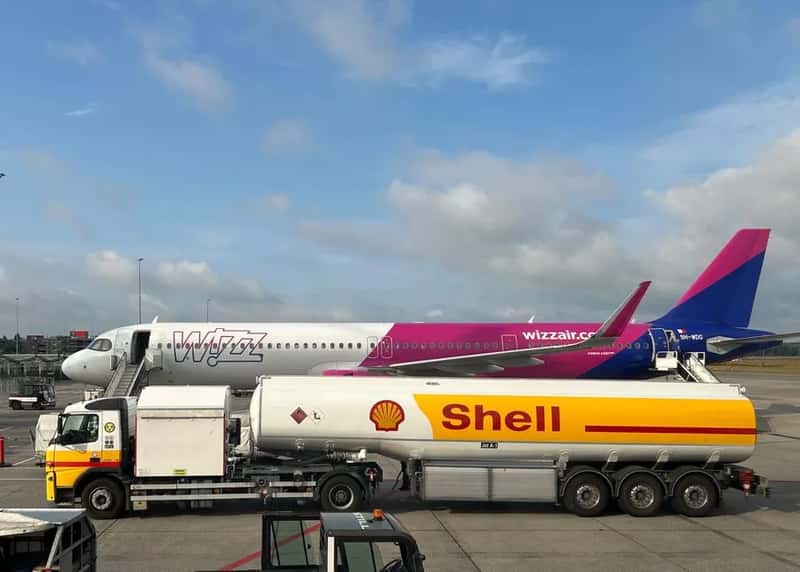
A lot of this year’s price movement traces back to one thing sitting underneath almost every airline decision. Bureau of Transportation Statistics data show scheduled airlines paid an average $3.40 per gallon for aviation fuel in July 2026, compared with $2.34 a year earlier, an increase of 45.4%.[14] That’s not a minor shift for an industry where fuel is one of the largest operating costs.
The dollar impact at scale is enormous. Total airline fuel expenditure reached around $5.89 billion in July, versus approximately $4.12 billion in July 2025.[14] Analysts note the practical effect for travelers isn’t just about seeing higher sticker prices right now. The important traveler takeaway is different, airlines are operating against a far more expensive fuel backdrop, leaving less room for prolonged fare discounting on weaker or less competitive routes.[14] In other words, don’t expect the usual seasonal sales to be quite as deep this year.