You see the ship slide in, the gangway open and the shore excursion lines form, and it all looks effortless. It isn’t. Behind that calm moment, a ship’s agent, who acts on behalf of the owner or operator, has been managing the port call from start to finish: the paperwork, the tugs, the ambulances and the awkward phone calls.
This list draws on agent contracts, government clearance guides and industry explainers. Some of the 15 situations below are routine. Others involve a hospital bed, a stranded sailor or the hardest call a port agent can make, and the most surprising ones are still waiting near the end.
#15 – The Paperwork War That’s Won or Lost While You Sleep
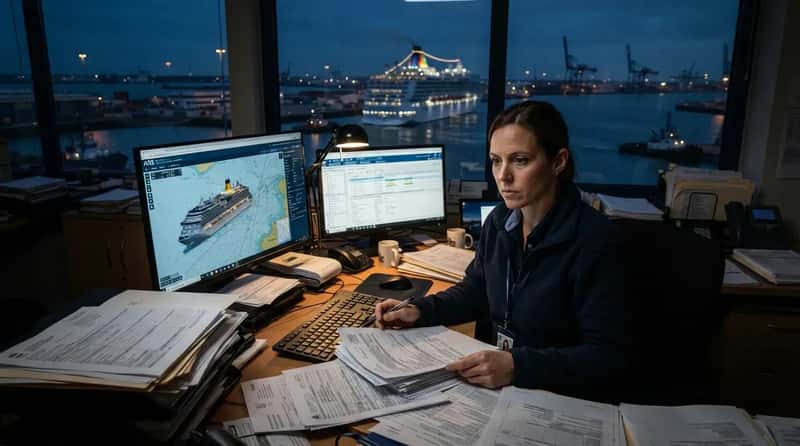
Your port day can be decided before your alarm goes off. One industry roundup says vessel agents submit required documentation to customs authorities 24 to 48 hours before arrival. Agents also pass the ship’s ETA to the port, terminal and authorities, and file pre-arrival notices, including security information required under the ISPS Code.
If something is expired or mismatched, the problem lands squarely on the agent. The same source says there is no second office to escalate to. The agent fixes it or the ship doesn’t clear.
But the paperwork is only the opening act, and #14 is where things get tense…
#14 – The Gangway Stays Shut Until One Officer Says Yes
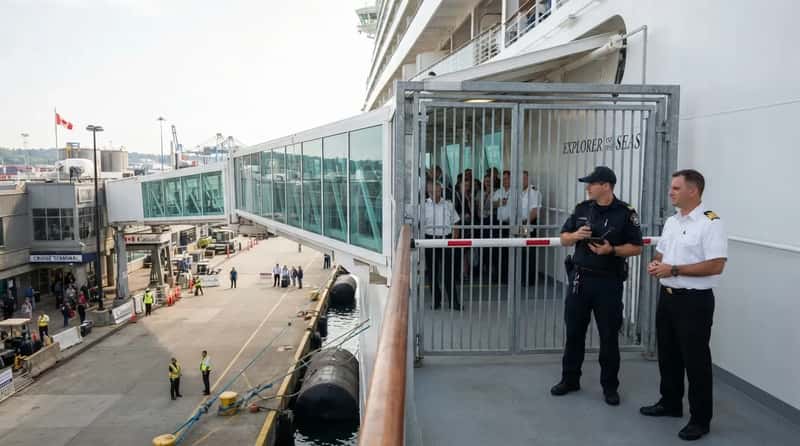
Nobody walks off a ship just because it has docked. Canada’s border agency is blunt about it: until clearance has been granted, no one may embark or disembark the vessel without CBSA authorization.
Agents are the people who make that moment smooth. They clear the ship with customs, immigration and health on arrival, and coordinate berthing with the pilot and terminal. The Canadian guide adds that clearance is not to be assumed, even when every immigration requirement has been met. One roundup puts it more bluntly: one error and the gangway stays up.
Still, clearance is routine compared with the logistics ahead in #13…
#13 – The Tugs and Pilots You Never See Booked
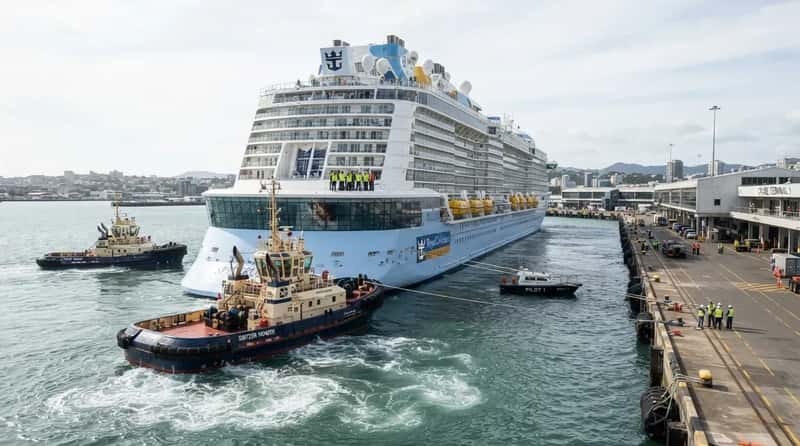
A ship that size can’t park itself. Before arrival, the agent orders the pilot and tugs and confirms the berthing window. If that window slips, the cost is real, because delays can mean significant financial losses for shipowners and charterers.
Many travelers assume the cruise line does all of this itself. In practice, big lines hire agents under contract. Royal Caribbean Group’s agreement even covers relocating an agent to join the vessel at a previous port, to oversee en-route clearance. That applies where the agency has no local representation.
At a Glance
- The agent orders the pilot and the tugs before the ship arrives.
- The agent confirms the berthing window with the port and terminal.
- One industry roundup says customs paperwork goes in 24 to 48 hours ahead.
- A slipped window can mean significant financial losses for owners and charterers.
Next up is a health check that can quietly hold a whole ship in place…
#12 – The Health Check That Can Freeze an Entire Port Day
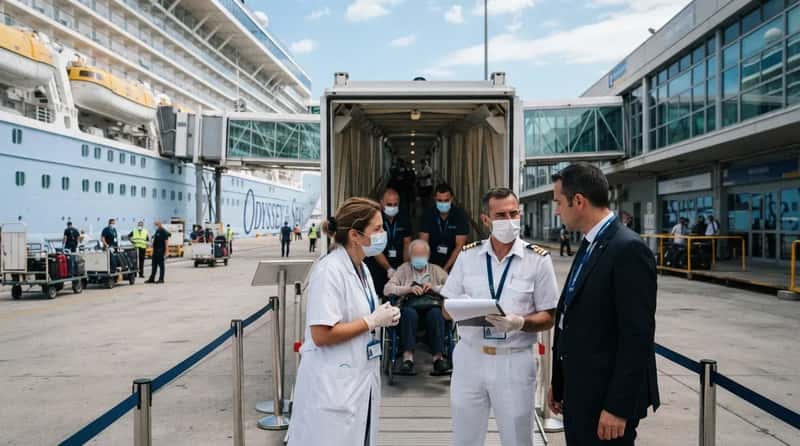
Illness aboard is a port-clearance issue, not just a ship issue. Port health inspections, including checks for illness aboard, are part of the clearance process. Wilhelmsen lists free pratique (permission to enter and deal with the port) among the cruise services its agents handle.
It goes further when a passenger needs to leave the ship. Royal Caribbean’s contract says that if the medical reason may involve a disease or illness of public health concern, the agent should obtain approval from the local port health physician or public health agency. Getting a sick guest off the ship can need sign-off from local public health.
And that’s just one country’s rules. Wait until you see #11…
#11 – Five Rulebooks in a Single Week
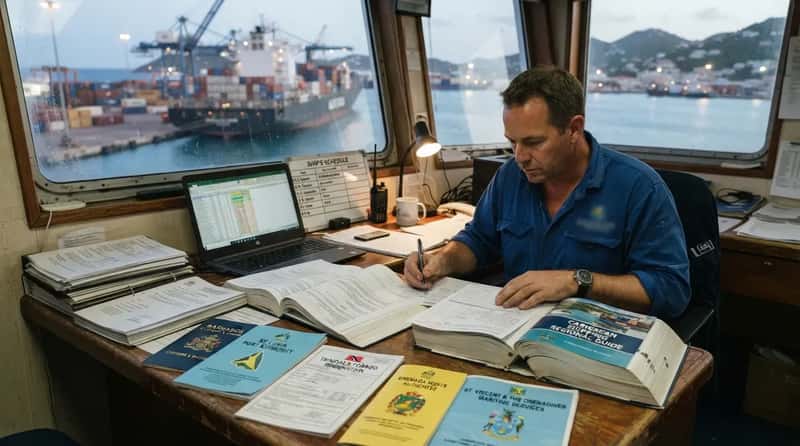
Every port plays by its own rules. What clears easily in one country can trigger a full inspection in the next. That makes an agent’s local knowledge worth more than any app.
One roundup says an agent working a Caribbean itinerary might deal with five different regulatory regimes in a single week, each with its own forms and unwritten expectations. Those unwritten expectations are where experience matters most. Agents have to balance local regulations, client expectations and the realities of port congestion. Passengers just see a ship that arrived on time.
But the daily grind gets stranger when parts and cash enter the picture in #10…
#10 – The Engine Part That Shows Up Like Magic
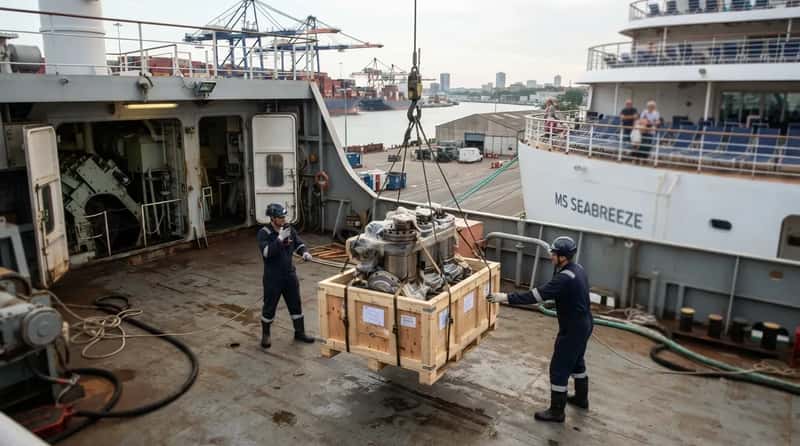
Ships don’t carry everything. Agents arrange stores, provisions and spares through a ship chandler, plus fresh water and bunkers. Spare-parts logistics sit on the same menu as crew change, immigration requirements, cash to master, medical attendance and supplies delivery.
One roundup sketches a typical agent’s day: a morning clearing customs documents, an afternoon sourcing a spare engine part, and an evening coordinating a medical evacuation. That is all in one shift. The passengers on the pool deck never hear about any of it.
Then there’s the odd little errand in #9…
#9 – Cash Delivered to the Captain Like a Secret Errand
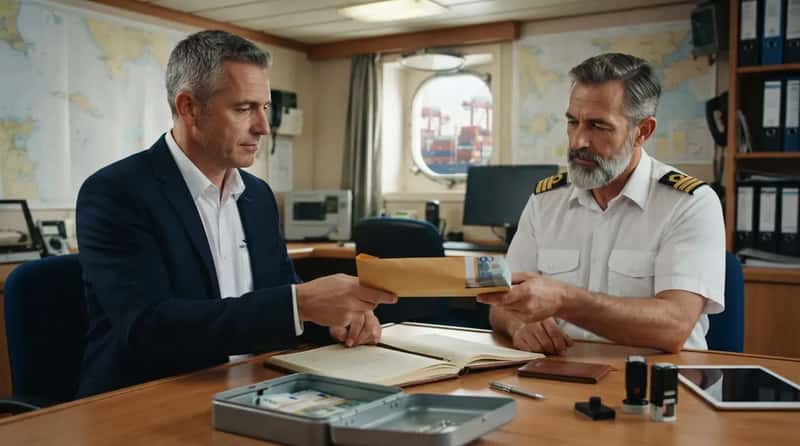
“Cash to master” sounds like a spy-movie line. It’s actually a standard agent service. Husbanding agents handle crew changes, stores, spares, repairs and cash to master, and the money goes to the captain, not to passengers.
Cruise contracts spell it out. Royal Caribbean Group’s agreement says the fee includes full processing, customs clearance, and delivery of cash to master to the ship as requested by the cruise line or vessel’s officers. Cash delivery is bundled with customs clearance in the same fee. It’s another job done entirely behind the scenes.
Fast Facts
- “Cash to master” means money delivered to the ship’s captain.
- It sits alongside crew changes, stores, spares and repairs on a husbanding agent’s menu.
- Royal Caribbean Group’s contract bundles it with full processing and customs clearance.
- The cruise line or the vessel’s officers make the request.
Crew logistics get even trickier in #8…
#8 – One Delayed Flight Can Wreck a Crew Change in Minutes

Swapping crew isn’t a handshake on the dock. The agent arranges transport between the airport and the vessel, liaises with immigration and port authorities, and handles customs formalities for crew baggage. Everyone must finish clearance on time.
Then something goes wrong. A delayed flight, a missing document or an unexpected port restriction can derail a crew change within minutes. The agent is the person on the ground who can escalate, negotiate and fix it in real time. That is the whole point of the job.
And if there’s no dock at all, the problem gets bigger in #7…
#7 – The Crew Swap That Needs a Boat Nobody Mentions
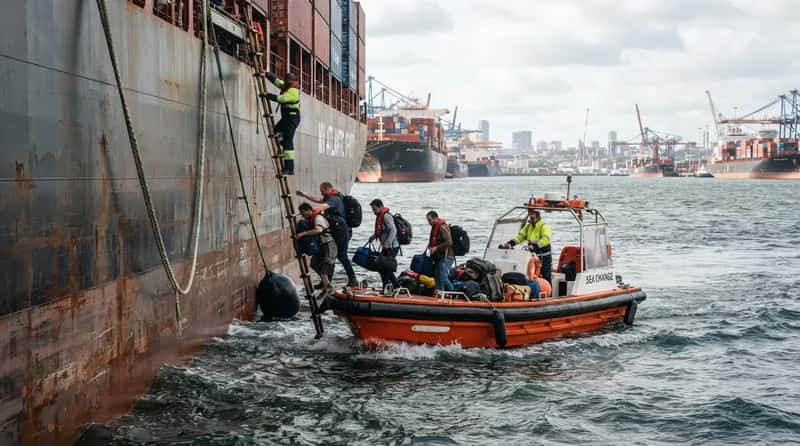
Not every ship gets a berth. When a crew change happens at anchor, the agent has to organise launch services, which takes lead time and coordination with local authorities. One late boat can unravel the whole schedule.
Health and biosecurity rules add another layer. If the vessel arrives from a country with specific health or biosecurity protocols, the agent needs to know in advance to arrange the right clearance. Even shore passes are in the agent’s hands. Seafarers rely on agents for shore passes, medical help and logistical support when changing crew.
But it gets more personal at the hospital in #6…
#6 – The Hospital Visit Where Language Is the Real Problem

Getting to a hospital is only half the battle. The crew member has to explain symptoms clearly, and if language is a problem, the port agent should arrange a translator. A treatable problem can get worse if nobody understands it.
Agents are expected to know the local medical scene. Ports usually have approved doctors, dentists, hospitals, clinics and pharmacies familiar with seafarer requirements. The agent should know how to arrange treatment during working hours and out of hours. Care can range from a routine consultation to medical evacuation or repatriation.
But what happens when the ship leaves and the patient stays? See #5…
#5 – The Crew Member Left Behind When the Ship Sails

Ships have schedules, and they don’t wait. If a crew member is still hospitalized after departure, the agent must stay in contact with the hospital, the crew member, the shipowner, the ship manager, the P&I Club, immigration authorities and the consulate where necessary.
Paperwork matters here too. The crew member should have a passport, seaman’s book, personal effects, funds where required, and repatriation documents. The agent can end up as the only link between a hospitalized sailor and a ship that has already left. That’s a lonely spot to be in a foreign country.
But there’s one duty few people expect on the list, and it’s #4…
#4 – The Stowaway Problem Nobody Talks About
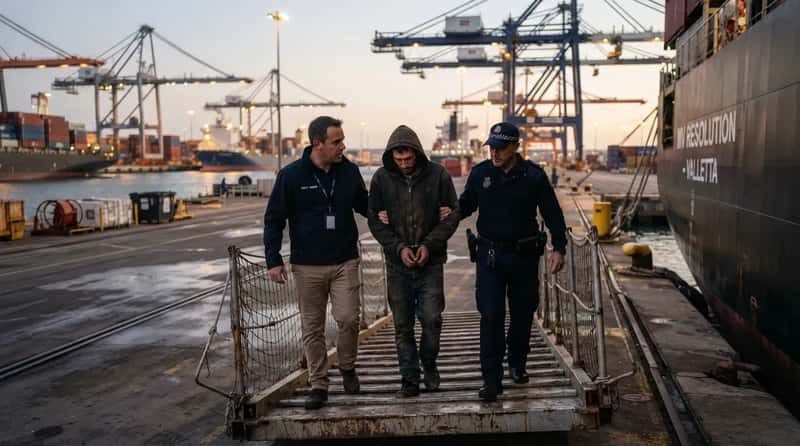
It sounds like old-time fiction, but it is still on the agent’s list. One industry roundup includes coordinating stowaway discovery and repatriation among the agent’s duties. The details vary by country, port and case, and they rarely become public.
Agents are the right people to call because they already liaise with local authorities and coordinate emergency services. Whatever the situation, someone has to manage the authorities, the paperwork and the travel home. Agents describe themselves as the first responders ashore: when emergencies arise, they respond first.
Why It Stands Out
- Stowaway discovery and repatriation appear in one industry roundup of agent duties.
- Agents already have working lines to local authorities.
- They also coordinate emergency services, so the first call often goes to them.
- The details change by country, port and case, and few ever go public.
The next one affects passengers directly, and it’s #3…
#3 – The Passenger Who Can’t Just Call the Ship

You can’t ring a vessel from a foreign hospital. The port agent is the number that bridges the gap between a passenger in crisis and a ship already pulling away from the dock. Another roundup calls the agent your emergency contact with the vessel if something goes wrong while you’re off exploring on your own.
One traveler on a cruise forum shared a real example. The port agent in Puerto Vallarta took care of getting their passports stamped when they had to leave a Disney cruise early so a relative could have emergency surgery. The agent handled the border formalities so the family could focus on the surgery. It’s one personal account, but it shows how the role works.
But the full medical process is even more complex in #2…
#2 – The Medical Emergency Plan Already Waiting at the Dock
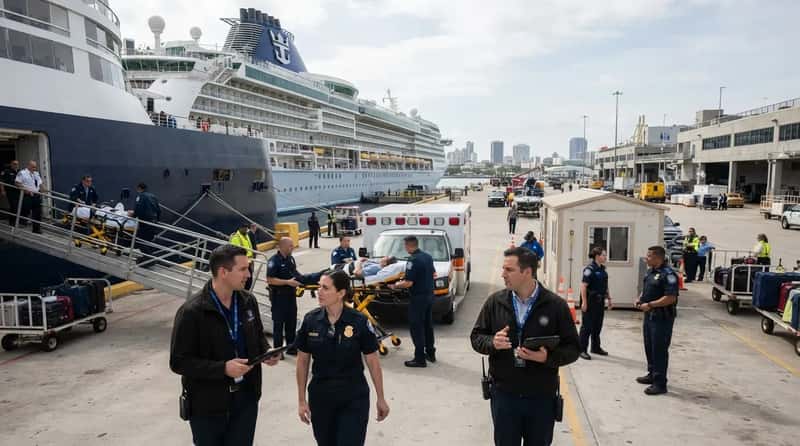
When someone is seriously ill, a plan is already in motion. Royal Caribbean’s contract describes a CARE team of professionals under medical direction who support guests and crew disembarking due to a medical emergency or other crisis. The agent is the shore-side partner.
The agent arranges emergency medical transportation and coordinates medical parole, re-parole and customs and immigration clearance for disembarking crew, guests and relatives. Even a patient being rushed off a ship still has to clear immigration. When an air ambulance is needed, the agent helps coordinate, while the cruise line orders, quotes and negotiates rates.
And then comes the hardest situation of all, in #1…
#1 – The Hardest Call: When Someone Dies Far From Home
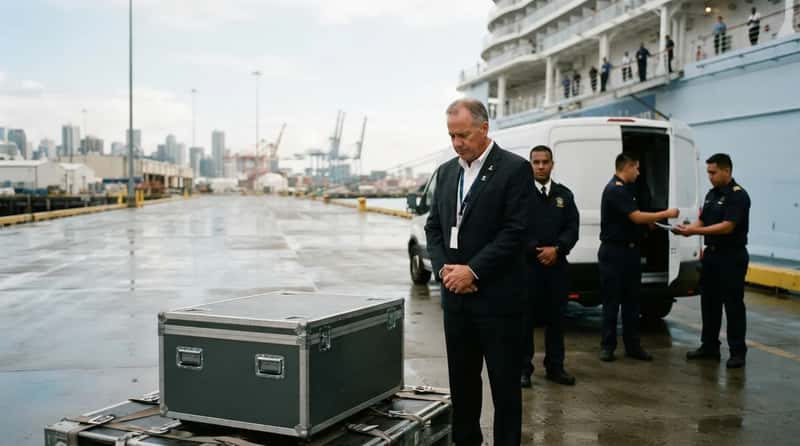
This is the part of the job nobody wants to talk about. Royal Caribbean’s agreement tells agents to assist with deceased crew or guests, including the funeral home, local authorities, and clearance or repatriation of remains. It’s one of the toughest tasks a port agent can face.
Industry guidance asks for extra care. If a crew member dies, the agent should identify the person’s religion, family requirements, consular procedures, local law, repatriation rules, and funeral or body transportation requirements. Respecting the person’s beliefs and family wishes is part of the job. Few passengers ever know it happened.
Worth Knowing
- Royal Caribbean’s agreement covers the funeral home, local authorities and clearance or repatriation of remains.
- Agents are asked to identify the person’s religion and the family’s requirements.
- Consular procedures, local law and repatriation rules all come into play.
- Funeral and body transportation requirements must be worked out too.
So the next time your ship docks right on schedule, remember that somebody probably worked through the night to make it happen. Paperwork was filed before dawn, clearance decided when the gangway opened, and in the hardest cases, someone stood beside strangers far from home.
When an agent does the job perfectly, nobody notices. That is what makes the work so easy to overlook, and so hard to forget once you know about it.