Your attention span is not lost.
It was stolen.
Ten seconds at a time. A thousand times a day. For years.
And somewhere between the swipe and the scroll, the version of you who could sit still – who could follow a thought to its end, who could watch rain without filming it – quietly left the room.
We live in an age that has monetized your restlessness. Every platform, every algorithm, every autoplay function is engineered around a single neurological truth: short-form videos work by giving the brain fast, frequent bursts of dopamine, the chemical that supports reward and motivation. When the brain constantly receives these tiny rewards, habits start to form. Each swipe becomes a signal that something new and exciting might be waiting, which trains the brain to keep checking for the next hit. You are not weak. You are conditioned.
You remember being someone who could read for an hour. Who could drive without a podcast. Who could sit with a feeling long enough to understand it. Now you reach for your phone when the microwave has eight seconds left. That person didn’t disappear. They’re just buried under a decade of algorithmic sedation.
The Fractured Baseline
Before we talk about repair, we have to be honest about the damage.
This isn’t hyperbole. This is neuroscience.
Heavy use of TikTok and similar short-form media is associated with shorter attention spans, poorer academic performance, and abnormal white matter in the brain linked to behavioral control. White matter. The connective tissue of thought itself.
The data shows that higher levels of use are most consistently linked to poorer attention span and reduced inhibitory control, meaning frequent users tend to display more difficulty focusing on tasks and suppressing impulsive reactions.
This is the fractured baseline. This is where most of us are starting from. Not broken. But significantly, measurably altered. The first step in closing the Identity Gap is admitting the gap exists at all.
The Dopamine Machine
You didn’t choose this. Let’s be clear about that.
As users scroll rapidly from one video to the next, the brain learns to expect quick, high-reward stimuli, which conditions it to favor brief attention bursts over sustained concentration. This type of cognitive engagement can impair users’ ability for tasks that require prolonged focus, as the brain becomes attuned to processing in short, fragmented bursts.
The mechanism is elegant in its cruelty. Repeated exposure to fast-paced, highly stimulating content may desensitize users to slower, more effortless tasks. Activities that require sustained concentration, such as reading or complex problem-solving, may become more difficult as the brain adapts to the rapid-fire rewards of the video feed.
The slot machine doesn’t care about the player. Neither does the algorithm. The only difference is that the slot machine has a sign on it that says “gambling.”
The Architecture of Quiet
Now here is where it gets interesting. And hopeful.
Psychologists have a name for the exact antidote to this kind of neurological erosion. They call it “soft fascination.” And it turns out the activities that deliver it most reliably are the quiet, unhurried, seemingly unproductive ones we’ve been quietly abandoning for years.
Attention Restoration Theory proposes that spending time in natural settings or even viewing natural scenes helps people recover from directed attention fatigue – the mental tiredness that occurs when sustaining deliberate focus on tasks. Natural environments often evoke a state known as soft fascination that allows the mind to rest and reflect, supporting later task performance.
Stephen and Rachel Kaplan argue that directed attention is often taxed in stimulating modern environments. Soft fascination facilitates restoration and involves effortless attention on gentle, interesting stimuli in the environment, similar to mind-wandering but still directed outward. This is the architecture of quiet. And it is the blueprint for rebuilding.
The Rewired Birdwatcher
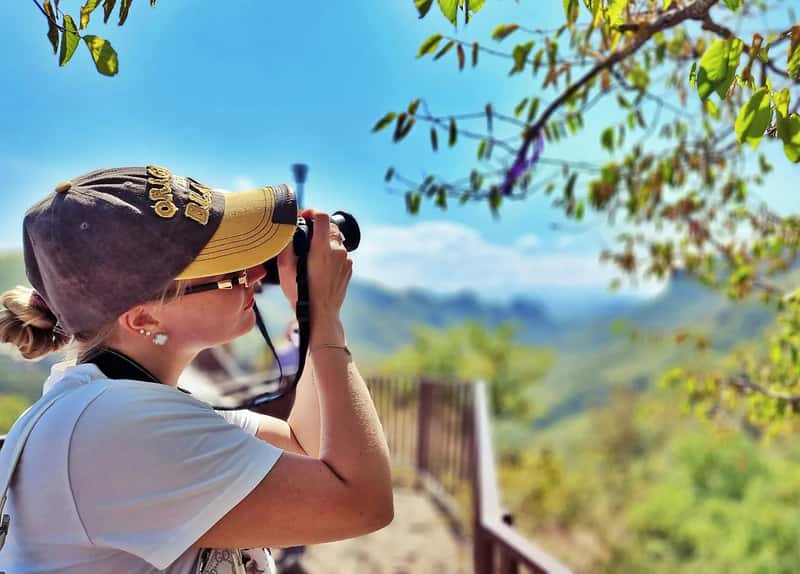
Let’s talk about what a pair of binoculars actually does to a brain.
A 2026 study published in the Journal of Neuroscience found that expert birdwatchers don’t just enjoy their hobby – they actually have measurably different brain structure in regions tied to attention, perception, and memory. These brain benefits appear to persist into old age, offering a potential buffer against cognitive decline.
Birding “combines fine-grain identification, visual search and attention to the immediate environment and sensitivity to motion, pattern detection, building these elaborate conceptual networks of different related species.” And you have to remember what you’re seeing and compare it to internal templates, the images stored in your brain.
Every single one of those cognitive processes is the direct opposite of what 10-second video clips demand. This isn’t a coincidence. This is the counter-program.
The Forager’s Brain
Foraging operates on the same frequency as birdwatching. But it adds something else.
Touch. Smell. The specific weight of a mushroom in your palm. The way a wild garlic leaf bruises when you fold it between your fingers.
Sensory foraging encourages individuals to actively engage with the natural environment, enhancing sensory integration. By consciously seeking out sensory experiences, individuals can counteract the sensory deactivation associated with depression, fostering a more balanced, present, and grounded state of mind.
I remember the first time I went foraging after a particularly severe six-month period of compulsive scrolling. Standing in a damp woodland in early morning, trying to identify a chanterelle from a false chanterelle, I became aware of something strange: I had forgotten how to be bored. Not in a good way. I had lost the ability to tolerate a single second of non-stimulation. Out there, with no signal and a field guide, I had to relearn patience from scratch. It was uncomfortable. And it was the most cognitively honest thing I had done in years.
Sensory foraging promotes mental clarity and freedom by alleviating persistent thoughts and shifting focus toward curiosity. The shift from anxiety to curiosity. That transition alone is worth more than any wellness app subscription.
The Soft Fascination Switch
Here is the core mechanism. Understand it, and everything else makes sense.
Your brain operates in two fundamental attentional modes. The essence of Attention Restoration Theory lies in the distinction between two types of attention: directed attention and involuntary attention. Directed attention is the effortful, top-down focus you use for work, screens, deadlines. Involuntary attention is what gets gently activated when you watch leaves move.
The restorative attentional mode is soft fascination, which is a form of involuntary attention or effortless attention. In this mode, directed control is not necessary because factors such as a “nice” environment can guide behavior – little effort is needed.
Soft fascination contrasts with hard fascination, which fully captures attention and affords little reflective capacity. Scrolling is hard fascination. So is doomscrolling, rage-clicking, and binge-watching. They feel passive. They are, neurologically, the opposite.
Hushed hobbies flip the switch.
The Cognitive Reserve Account
Think of your brain as a bank account. Every swipe is a withdrawal. Every quiet hour in nature is a deposit.
Expert birding requires a synergy of attention, perception, and memory that leads to measurable structural remodeling of the brain, offering benefits that last into old age.
Birding may help build cognitive reserve – the brain’s ability to defend itself against aging and adapt to damage. Cognitive reserve. That is the scientific term for the buffer between who you are now and who you could become if you keep depleting without ever replenishing.
While the study doesn’t claim to “prevent” disease, it shows that complex hobbies build cognitive reserve. This means that even as the brain ages, it has a stronger, more efficient structure to rely on, which can help maintain sharp thinking for longer.
Hushed hobbies are the deposit. They are the long game. In a culture obsessed with 10-second returns, they are the radical act.
The Non-Instrumental Hour
Here is what makes these hobbies psychologically different from every other self-improvement practice.
You cannot optimize them.
Birdwatching occupies a cognitive sweet spot that’s almost paradoxical: it demands attention without demanding effort. It rewards patience without punishing failure. You can’t optimize it. You can’t win at it. There’s no leaderboard, no streak to maintain, no algorithm learning your preferences and feeding you a more efficient version of the experience.
This matters more than it sounds. The modern brain is deeply uncomfortable with non-instrumental time – hours that produce no measurable output. But the research suggests this discomfort is precisely the symptom, and the discomfort itself is precisely what the hushed hobby is designed to dissolve.
Birdwatching activates a specific cognitive pattern that researchers call soft fascination, and it’s a pattern that almost nothing else in modern life reliably triggers.
The Identity Realignment
The deeper story here is not really about birds or mushrooms.
It is about reclaiming the version of yourself who can be present without performing presence.
What birdwatching produces – without using the clinical language – is a phenomenon psychologists call decentering: the ability to observe your own thoughts and emotions from a slight distance. It’s a core mechanism in mindfulness-based cognitive therapy, and it turns out that activities requiring sustained external attention in low-threat environments naturally produce it.
Decentering. Not emptying the mind. Not fixing the mind. Simply stepping back from it. Watching it the way you watch a warbler on a branch – with interest, without grip.
Spending more time in nature is increasingly linked to improved overall brain health, as is getting off our digital devices. Birdwatching may help people to destress, a key tool given that chronic stress is linked to cognitive impairment and harm to healthy brain wiring.
The Identity Gap closes here. Quietly. Without announcement.
The Long Silence That Heals
There is a moment in every hushed hobby where the noise stops.
Not the external noise. The internal kind. The ticker tape of notifications that runs even when your phone is face-down. The background hum of algorithmic anxiety. The strange exhaustion of having been constantly stimulated while feeling, somehow, completely empty.
Stimulating the use of involuntary attention by being in contact with the natural environment, which is inherently rich in soft fascination stimuli – sunsets, light reflections, windblown leaves – is an effective way of regenerating directed attention and ensuring good cognitive functioning.
For individuals with trauma and depression, nature walks reduce rumination – the repetitive, negative thought patterns that worsen mood. By providing a low-stimulation environment, nature creates space for mental clarity and emotional balance.
A brain imaging study published in the Journal of Neuroscience found that experienced birders had hallmarks of brains younger than their chronological age. Younger. Not just better-functioning. Structurally, measurably younger. That is not a metaphor. That is a scan.
And yet the most important thing about the long silence isn’t what it does to your neurons. It’s what it does to your sense of self. Out there in the early morning, watching something that doesn’t know you exist, doesn’t need you to perform or produce or respond – you remember, faintly, that you are a creature with a body and a span of attention and a life that exists outside a screen. That the world is textured and slow and full of things that will never go viral.
The fractured brain doesn’t heal in a dramatic moment. It heals in accumulated silences. In the weight of a field guide. In the specific green smell of a forest after rain. In the way a wren tilts its head before it sings, and how you were actually there, in that moment, quiet enough to notice.
Perhaps the most radical thing you can do in the age of the 10-second clip is to spend an entire morning watching something that moves at its own pace, on its own terms, with no interest in keeping you engaged.