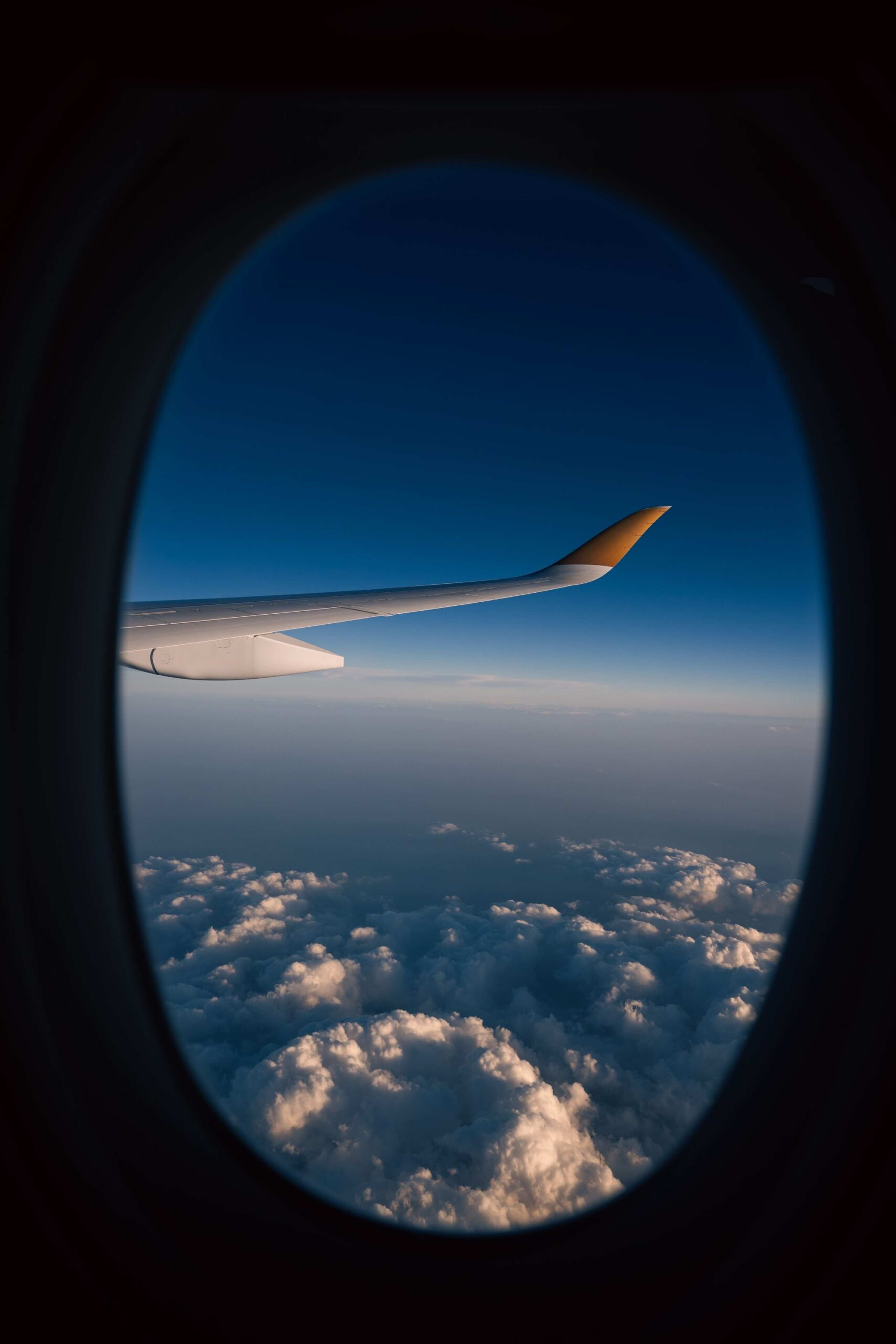
The flight boards at 5 AM.
You booked it at midnight, in the dark, while the apartment felt too loud inside your own skull.
You didn’t choose the destination for the architecture.
You chose it because it is cold. Bone-deep, lung-burning, thought-silencing cold.
There is a particular kind of person who stands in an airport departure hall heading for Iceland, or northern Norway, or the Siberian edge of somewhere nobody goes in January – and they are not there for the Northern Lights. Not primarily. They are there because something inside them is running at a temperature the ordinary world cannot reduce. They are there because warmth, comfort, and the familiar geometry of home have all failed to turn the heat down. And they have, consciously or not, reached for the only thermostat that seems to work. There is a name for this in psychology. It lives at the intersection of emotional avoidance, identity disruption, and the surprisingly sophisticated way the body uses external sensation to manage internal states it cannot otherwise process.
The Temperature of Unfinished Grief
Grief doesn’t announce itself politely.
It arrives as restlessness. As irritability. As a low, persistent hum behind the eyes that no amount of sleep or wine or weekend plans will quiet.
Those experiencing grief or trauma may use escapism as a refuge, providing a temporary escape from painful emotions. And what is a flight to the Arctic if not the most committed form of escapism available to a person with a credit card and a breaking point?
The cold destination offers something grief cannot find at home: a valid, external reason to feel numb. The body has to focus on not dying. The mind is briefly relieved of its other duties.
When facing thermal stress, the cognitive system sharpens focus on temperature-related information and resources. This heightened attention to thermally relevant cues comes at the expense of other, less critical tasks.
In other words: the cold forces a cognitive evacuation. The grief has to wait outside. You booked that ticket for exactly this reason, even if you told yourself it was about the fjords.
The Neurochemistry of Running Away
Here is the part nobody puts on the travel blog.
Cold doesn’t just feel numbing. It is chemically numbing. And your nervous system knows this, even when your conscious mind doesn’t.
Cold-water immersion triggers the release of important hormones and neurotransmitters, such as dopamine, serotonin, cortisol, norepinephrine, and β-endorphins, which are all linked to modulation of the neural responses to stress and other emotion-related circuits affected in depression, anxiety, and posttraumatic stress disorder.
Your body is not passive in this. It is an active collaborator in the escape plan.
Plasma norepinephrine and dopamine each increased five-fold during immersion in the coldest water. Five-fold. That is not a subtle recalibration. That is a system override.
The person booking that Tromsø cabin in November at 11:43 PM is not being irrational. They are self-medicating with geography. And the body, which has been carrying the emotional heat long before the mind admitted it, already knows the prescription.
The Identity Gap
There is a concept in psychology that explains the compulsive nature of cold-destination travel with uncomfortable precision.
If there is a gap between who you are and who you want to be, escape can soften the sting of that reality. Rather than taking action to close the gap, you numb the pain of seeing it. Over time, the gap grows – and your need for escapism has to grow with it.
The cold traveler is often someone living inside that gap.
They have a version of themselves in mind – resolved, unhurried, emotionally clear – and the ordinary Tuesday keeps disproving it. So they go somewhere where ordinary Tuesdays are structurally impossible. Somewhere the cold strips everything back to survival. Somewhere identity is temporarily suspended, because everyone in a blizzard is equally small.
The gap doesn’t close. But in the white silence of a Nordic winter, you can briefly stop seeing it.
The Exit Strategy Disguised as a Bucket List
We have given emotional avoidance extremely good branding.
We call it “adventure.” We call it “challenging yourself.” We call it “getting out of your comfort zone.” And sometimes it is those things. But escapism in psychology is any behaviour used to avoid difficult feelings and emotions – feelings that are part and parcel of being human, including disappointment, guilt, loss, and sadness.
The extreme cold destination is the most socially acceptable exit strategy available.
Nobody questions it. Nobody says, “Are you sure you should be going to Greenland in February, or should you be having that conversation you’ve been postponing for eight months?” They say, “Oh my God, that sounds incredible. Send photos.”
Indicators of using travel to escape in an unhelpful way include: if you tend to book trips when you are overwhelmed, if you are someone who tends to avoid dealing with problems and emotions, and finding that you don’t reach any new insights or perspectives on your situation when you return from your trip.
Read that list slowly. Then check your search history from the last time something fell apart.
The Psychological Hibernation
There is a phenomenon documented in Antarctic research that anyone who has ever spent a winter in a remote, frozen place will recognize viscerally.
Psychological hibernating may represent an adaptive way of coping with the harshness of over-wintering, and therefore be associated with psychological resilience in this context.
I have been that person. I spent two weeks in northern Iceland in the dead of January, allegedly for a writing project. The temperatures were brutal. The days were four hours long. I barely spoke to anyone. And I understood, sitting in a geothermal pool surrounded by steam and ice and absolute silence, that I had not come to write. I had come to hibernate. I was running an internal temperature – a particular combination of professional failure and relationship ambiguity – that I could not reduce at home. The cold gave me permission to go quiet. To stop performing functionality. To exist inside my own freeze.
It helped. And it also helped nothing. Both things were true simultaneously.
The Cortisol Trade
Here is the transaction the cold-destination traveler makes, usually without knowing it.
They swap one kind of stress for a more manageable kind.
Cold exposure triggers the body’s natural stress response, which can help build psychological resilience over time. This controlled stress exposure may improve the ability to handle everyday stressors more effectively.
The emotional heat at home – the relational fractures, the career dread, the grief you haven’t named yet – produces a diffuse, directionless cortisol that has nowhere to go. The cold produces cortisol with a clear purpose: survive this temperature. That is a trade the nervous system will gladly accept.
Increases in cortisol during cold exposure may reflect psychological stress, as this effect decreases with repeated exposures. The body habituates. It learns. It stops treating the cold as a crisis. And something in the psyche, watching this process, begins to wonder if the other crisis could also be habituated. Could also become manageable. Could also, eventually, not feel like the end of everything.
That is the real gift the cold is offering. Not numbness. A lesson in what stress looks like when you can see it coming.
The Silence Addiction
Cold destinations are quiet in a way that warm ones are not.
Cold weather sharpens the senses, making outdoor experiences more vivid and grounding. The crunch of snow underfoot, the crispness of the air, and the stark beauty of bare branches against a pale sky all demand attention.
And for a person whose internal world is loud – whose mind runs hot with replayed conversations, unresolved arguments, futures they’re afraid to examine – that external silence is not just pleasant. It is medicinal.
Snow absorbs sound. Anyone who has stood in a snowfield knows this in their bones. The world becomes muffled. The inner monologue, which has been screaming for months, is momentarily outcompeted by the sensory reality of cold.
These sensory details encourage a connection to the natural world and mindfulness. This mindfulness and appreciation for the season can counteract the hustle and distractions of an overloaded life to offer a much-needed mental repose.
The cold-destination traveler is not seeking adventure. They are seeking quiet. They have simply learned that quiet costs less and requires less explanation when there is also a glacier involved.
The Thermostat Theory of Emotional Regulation
Psychology has long understood that physical sensation and emotional state are not separate systems.
Thermal signals and thermoregulation play a significant role in determining higher-order cognitive and emotional functions, such as regulating sleep patterns and activity levels, monitoring physical well-being, regulating emotions, and even social interactions.
The body does not distinguish cleanly between “I am cold because I am standing in a Finnish forest at minus twenty” and “I am cold because I am emotionally shut down.” Both produce similar neurological signatures. And crucially, both can be used to modulate the other.
Regular cold exposure can help regulate the balance between the sympathetic fight-or-flight and parasympathetic rest-and-digest nervous systems, promoting better emotional regulation.
The person who chases extreme cold is running an intuitive experiment in thermoregulation. They are using the body as a dial. Turn the external temperature down. Watch the internal temperature follow. The science, it turns out, confirms what the unconscious already knew when it booked that February flight to Svalbard at a price that made no financial sense.
The Return Problem
No column about cold-destination travel as emotional management would be honest without addressing the return.
Because the cold does not follow you home.
Even if travel is used as escapism, familiar problems and emotional distress that one attempts to escape through travel will tend to return once back home.
The apartment is the same temperature it was when you left. The unread message is still unread. The relationship conversation you went to Iceland to not have is still waiting, exactly where you left it, wearing the same expression it had when you checked in your bag.
Relying on travel to reset your brain or escape everyday stress can prevent you from developing emotional resilience and problem-solving skills for your current situation. In the long run, life’s stressors will continue to build.
They compound. That is the cost of the cold. Not the flight. Not the frostbite risk. The compound interest on everything you went there to not feel.
The Permission Slip
And yet.
None of this is condemnation. That is the crucial thing to understand, the thing that gets lost when psychology is applied to travel like a verdict.
Moderate exposure to cold has been observed to foster emotional adaptation, enhancing psychological resilience. Additionally, psychological resilience interacts with factors such as social support and emotional regulation, collectively shaping an individual’s ability to adapt successfully to cold conditions.
The cold gives something real. It gives the body a language for what the mind cannot yet articulate. It gives the nervous system a rehearsal for the hard thing that is waiting at home. It offers, in the white brutality of a frozen landscape, a strange kind of permission: to be overwhelmed by something that isn’t personal. To feel small in a way that is about the mountain, not about you.
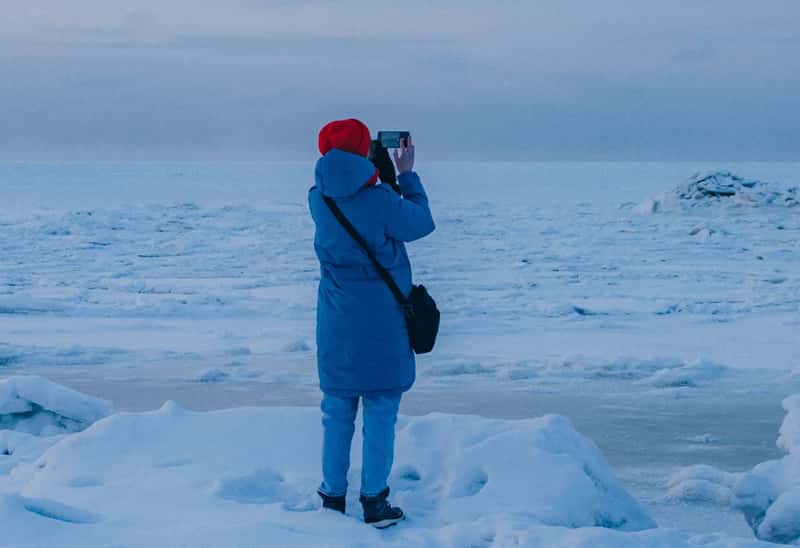
Escapism involves more than simply avoiding stress; it also reflects aspirations for personal growth, creativity, and renewed well-being. The person standing at the edge of a frozen sea is not weak. They are not broken. They are doing what humans have always done when the internal weather becomes unlivable: they are searching for a climate that matches the instruction to survive.
The cold destination says: you are allowed to feel nothing for a while. The body is busy. The mind can rest.
What comes after the rest – that is the real journey. The one without a boarding pass. The one that begins in the same apartment you left, but with a nervous system that has been reminded, by minus twenty degrees and a silence so complete it had weight, that it knows how to endure.
The cold was never the destination. It was the practice run.
And somewhere between the frozen coastline and the familiar chaos of your own front door, the gap between who you are and who you are trying to become got, perhaps, a single degree smaller.
That is enough. For now, in this season, in this version of yourself – that is enough to keep going.