You download the map three weeks early.
You trace every line with your fingertip.
You learn the transfer stations like a mother tongue.
You haven’t booked the hotel yet. But you know exactly which exit to take from Gare du Nord.
Nobody talks about this. The pre-travel ritual that looks like preparation but smells like something older. Something with no luggage tag. The “competent traveler” who isn’t really preparing for a city – they’re preparing for the feeling of not knowing where they are. And that feeling, for some of us, never felt like adventure. It felt like danger.
This is the Identity Gap. The distance between the person who boards the plane looking calm, with color-coded itineraries and offline maps and three backup transit apps – and the child who once stood on a street corner, genuinely afraid of what being lost might cost them. The traveler you present to the world is organized, seasoned, a little intimidating at the baggage carousel. But underneath the carry-on wheels and the noise-canceling headphones, there is a nervous system that learned, very early, that an unknown route was not a mystery to be savored. It was a threat to be neutralized.
1. The Memorized Map
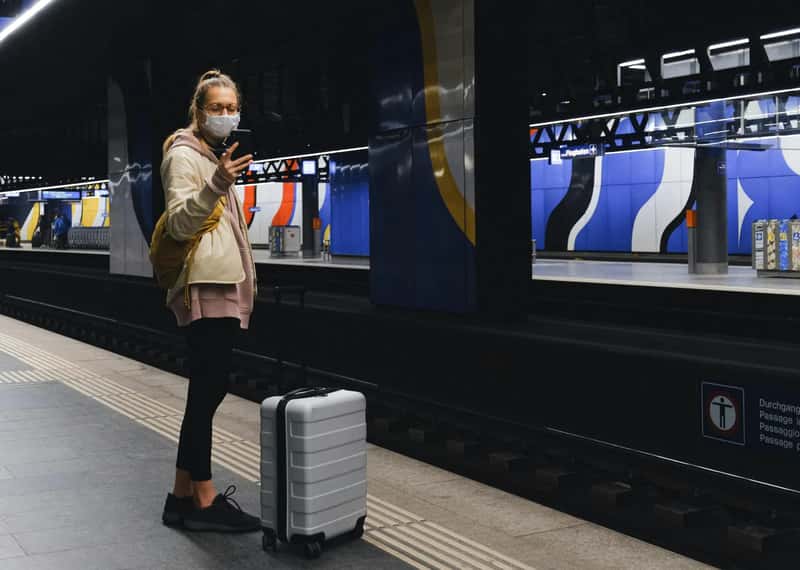
It starts before you land.
The metro map appears on your phone screen like a foreign language you’re determined to master before the exam. You zoom in. You study interchange points. You rehearse the journey from the airport to the city center like a soldier rehearsing an extraction route.
Most people call this being “organized.”
Psychology calls it something more layered. For some, childhood trauma results in an intense focus on the external environment, with constant scanning for threats and attempts to control their surroundings. The map isn’t just a map. It’s a perimeter check. It’s the thing your nervous system demands before it will allow your body to board the plane at all. The act of memorization is the act of preparation – and preparation, for a child who grew up in chaos, was the only form of safety available. You aren’t studying a city. You are, in the quietest and most private way, trying to make the world small enough to survive.
The tragedy is that nobody ever told you that you could just… land. And figure it out.
2. The Wired Child
Think about where this started.
Not in an airport. Not on a platform. In a house, or a neighborhood, or a school – somewhere that should have been safe but wasn’t quite. Adverse experiences during childhood leave a lasting imprint on the developing brain and nervous system. When a child grows up in an unsafe environment, their brain adapts to prioritize survival, often at the expense of long-term well-being.
That adaptation wasn’t a flaw. It was genius.
The child who learned to read a room – who noticed when the air shifted, when the mood in the kitchen changed, when footsteps on the stairs meant something – that child was running complex threat-assessment algorithms before they knew what an algorithm was. As we grow up, our brain develops in a way that’s responsive to our environment. And a brain that develops inside unpredictability becomes, eventually, a brain that cannot tolerate not-knowing. Even on vacation. Even on a weekend city break with friends who are perfectly happy to wander.
You can’t just wander. You never could.
3. The Baseline State
Other people call it anxiety. You call it Tuesday.
The constant low-grade hum of alertness. The sense that something could go wrong if you stop paying attention for even a moment. For children exposed to ongoing trauma, this heightened state of alertness becomes their baseline, leading to trauma and heightened alertness even in safe environments. This hyper-awareness often manifests as emotional reactivity after trauma, where minor stimuli are interpreted as threats.
In a new city, that baseline doesn’t quiet. It amplifies.
The unfamiliar platform. The announcement in a language you don’t speak. The moment the doors close and you’re not sure if this is your train. For most travelers, this is mildly inconvenient. For someone whose nervous system learned that disorientation equals danger, it is a five-alarm physiological event. Heart rate up. Palms wet. The quiet, cold certainty that you should have studied the map more carefully. That this is somehow your fault.
The map was never about the city. It was about keeping that alarm from sounding at all.
4. The Exit Strategy
You always know where the door is.
In every restaurant. Every conference room. Every packed train car in a foreign country. You locate it within seconds of sitting down, without being aware that you’re doing it. You always want to make sure you have a way to escape, so you scan your environment for the closest exits.
This is not paranoia. This is architecture.
You built this structure over years, inside a childhood that required it. The exit strategy isn’t a travel habit – it’s a survival blueprint that you carry everywhere, like a passport you never actually need to show. In a new city, the metro map is the exit strategy made explicit. Every line is a potential escape route. Every station name is a landmark in a geography of safety you’re quietly constructing the moment the wheels touch the tarmac. You don’t explore cities. You secure them. And nobody – not even your closest travel companions – ever quite understands why you need to walk the route once before you can enjoy the restaurant at the end of it.
5. The Control You Earned
I remember standing in a subway station once, in a city I didn’t know, with a phone that had just died.
I felt it immediately – not confusion, but a very old and very specific kind of fear. The kind that lives in the chest cavity, below the sternum, slightly to the left. It wasn’t about the train. It was about being eight years old in a neighborhood where not knowing where you were meant something consequential. Where a wrong turn wasn’t an adventure – it was a cost you’d pay later, or someone else would pay on your behalf.
I’d memorized most of that city’s metro map before leaving home.
The dead phone didn’t matter. I knew the way. And that knowledge – held silently in my body like a rehearsed prayer – was the only thing that kept the eight-year-old quiet. Growing up, the lesson was that safety meant never being caught off guard. Never being unprepared. Thirty years later, in a foreign city, the lesson still runs the show.
6. The Identity Costume
The “seasoned traveler” is a character we wear.
The capsule wardrobe. The airport lounge composure. The practiced nonchalance of someone who “just loves to explore.” But underneath the costume is a more honest identity: someone for whom the act of being in an unknown place activates ancient, body-level protocols. Children who grow up in environments where they must constantly be on guard due to unpredictable or threatening circumstances may carry these learned behaviors into adulthood. These experiences can result in a heightened sensitivity to perceived threats, even when the person is no longer in an unsafe environment.
Travel is the perfect disguise.
Nobody questions the hyper-prepared traveler. Nobody looks at the offline maps and the backup credit card and the hotel address written in three places and thinks: this person is carrying something heavy. They think: this person is competent. Responsible. The kind of person you want on your trip. The costume works so well, for so long, that we sometimes forget we’re wearing it. We mistake the hypervigilance for a personality. We call ourselves “Type A” and move on.
We do not ask why being Type A in an airport feels, specifically, like relief.
7. The Amygdala at Gate 14
There is a neurological story running beneath all of this.
Your brain has a component that functions as a threat-detection system. Disturbing events activate the amygdala, a structure in the brain responsible for detecting threats. It responds by sending out an alarm to multiple body systems to prepare for defense. The sympathetic nervous system jumps into action, stimulating the release of adrenaline, noradrenaline, and stress hormones that prepare the body for a fight-flight-or-freeze response.
In a child raised in chaos, this system runs hot. Always.
A 2023 study published in Nature Neuroscience highlighted how childhood trauma influences the long-term development of the prefrontal cortex. The study found that individuals with a history of childhood trauma show altered connectivity between the prefrontal cortex and the amygdala, leading to heightened states of hypervigilance even in non-threatening situations. A departure lounge is not threatening. But your amygdala – shaped by years of genuine threat – doesn’t check the travel itinerary before it decides how to feel. It fires based on old data. And old data says: you need to know where you’re going before you take a single step. The map isn’t irrational. It’s your brain doing exactly what your brain was trained to do.
8. The Illusion of the Wanderer
You envy them. The people who just… land.
No map. No research. No fourteen browser tabs about which metro card to buy. They walk out of the airport into a city they’ve never visited, hail something, go somewhere, get slightly lost, laugh about it later over a drink they stumbled upon. Growing up with developmental trauma creates a pattern where travel brings transitions, unpredictability, and unknowns – and each of those brings its own additional burden to an emotional system that is, for trauma survivors, already overloaded.
You don’t envy their lack of preparation. You envy their lack of history.
Getting lost, for them, is a texture. A story. A charming anecdote about the time they ended up in the wrong arrondissement and found a perfect little bistro. For you, getting lost is a physiological event. The body responds before the mind catches up. Your heart already knows the old rule – know where you are, always, or pay the price – before your rational brain can remind it that you’re a grown adult in Paris, not a child in a place that didn’t feel safe. The wanderer isn’t braver. They’re just less haunted.
9. The Productivity Disguise
It looks like competence from the outside. It always does.
Research shows that hypervigilance, often stemming from trauma, can lead to behaviors that mimic productivity, such as constant scanning for threats and overanalyzing situations, which may appear as competence until it leads to exhaustion. The over-researched trip. The minute-by-minute itinerary. The knowledge of every bus route, every backup option, every contingency plan for a missed connection. To the outside eye, you are the best travel companion alive. Organized. Calm. On top of everything.
But exhaustion comes for you in hotel rooms, doesn’t it.
When the door closes and the day is over and there is, finally, nothing left to prepare for. The body doesn’t know how to release it all at once. The exhausting part isn’t the work itself. It’s that your brain never gets to rest. You lie there, in a foreign bed, running through tomorrow’s logistics – not because you haven’t prepared enough, but because the act of preparing is the only language your nervous system speaks when it’s trying to tell you it loves you. It’s trying, in the only way it knows, to keep you safe.
10. The Soft Cartography of Healing
Here is what nobody tells the hyper-prepared traveler.
The map was never the problem. The problem – the tender, human, aching problem – is that you needed it at all. That somewhere between the ages of five and fifteen, the world presented itself to you as a place where not-knowing carried real consequences. In the context of childhood trauma, hypervigilance develops as a survival mechanism. For children in unstable or harmful environments, being attuned to danger may help them avoid harm. And you were smart enough, and brave enough, to pay attention. To learn the routes. To never be caught without an exit.
That was not a personality flaw. That was survival.
A meta-analysis synthesizing data from over 50 studies concluded that trauma-related alterations in brain regions contribute to ongoing difficulties in emotional regulation and stress response. These findings underscore that behaviors stemming from trauma are not personal failings but rather survival strategies. The metro map is a survival strategy. So is the offline download. So is the rehearsed route. And healing – real, quiet, unglamorous healing – is not the moment you stop preparing. It is the moment you understand why you started.
It is the moment you allow yourself to board the train without having memorized every stop. Not because the stops don’t matter. But because you finally – finally – trust that if you miss your station, you will find your way back.
There is a version of the hyper-prepared traveler who becomes, over years of slow and patient work, someone who can sit on a foreign train and watch the city slide past the window without cataloguing every landmark as a potential anchor point. This version of you still downloads the map. Maybe always will. But the grip is different. The breath is different. The map is information, not armor.
And there is a version of the child – the one who stood somewhere once, genuinely unsure if being lost would cost something – who is watching you through every departure gate, every platform, every moment you square your shoulders and walk into an unfamiliar place like you own it. That child is not a liability. That child is the reason you made it this far.
The city you are flying into tonight does not know your history. The metro doesn’t know what you survived to be the person standing on its platform. But your body knows. And somewhere between the terminal and the first train and the hotel room where you finally exhale, there is a quiet conversation happening – between who you had to be and who you are becoming. You don’t need a map for that journey. You’ve already been finding your way.