You left without charging your phone.
On purpose.
The street names blur into each other like a language you almost speak.
You are not panicking. You are breathing. You are reading the angle of light on the pavement and deciding – quietly, privately – that you still know how to do this.
Here is the gap nobody talks about: the space between who we are when someone is watching and who we become when the signal drops and the voice goes silent and all that’s left is the body moving through space on its own authority. The gap between the person who was told they’d never navigate life on their own terms and the person who just found a side street that doesn’t exist on any algorithm. The gap between needing permission and simply going.
1. The Cognitive Cartographer
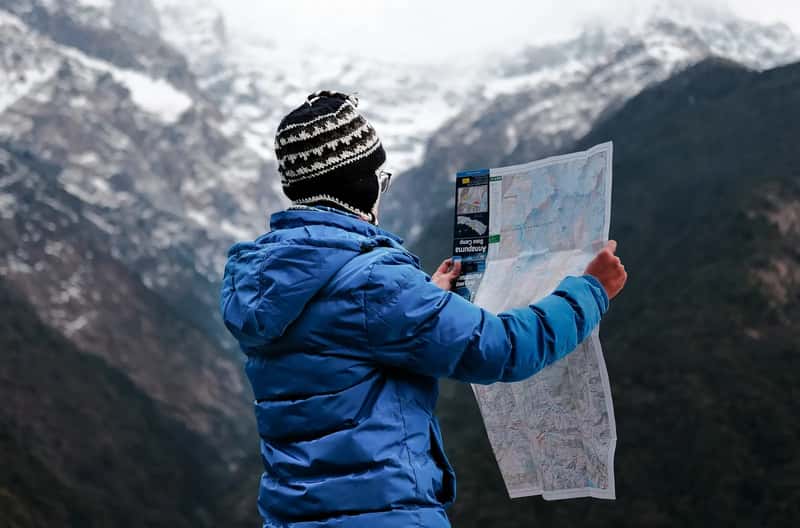
There is a word for what you are doing when you refuse the GPS.
You are building.
Your brain is constructing an internal mental representation of your surroundings – what psychologists call a cognitive map – storing and updating it in real time as you move. This is not a small act. This is architecture. This is the quiet, bone-deep intelligence of a mind that refuses to be a passenger in its own body.
The brain uses allocentric navigation to build a big-picture understanding of the environment – a full “cognitive map” of the world around you. That is what you are doing when you look up instead of down at a screen.
When we reach for GPS and follow turn-by-turn directions, we aren’t relying on the cognitive maps our brains can create – we lean toward egocentric navigation instead. The person who told you you’d never make it was handing you a device. You handed it back. You chose the harder, richer, more human mode of knowing where you are.
That is not stubbornness. That is architecture. That is proof.
2. The Hippocampal Gamble
Your brain is a muscle. And right now, yours is doing pull-ups.
Research shows that grey matter in the hippocampus increases with spatial experience. Studies of London taxi drivers found their hippocampi to be abnormally large – a result directly tied to the intricate streets they were required to memorize.
Think about that. The brain physically expands in response to navigational effort.
Research observed an important effect of GPS use over time: greater GPS use since initial testing was associated with a steeper decline in hippocampal-dependent spatial memory.
The people who told you that you’d never make it were, inadvertently, protecting their own shrinking maps. Smaller worlds. Narrower corridors. Fewer exits. Every time you choose to navigate without assistance, you are refusing that narrowing. You are keeping the doors open inside your own skull. The science isn’t sentimental about this. It is cold and clean and entirely on your side.
3. The Surrender Refusal
Surrender is a specific word.
Not lend. Not share. Surrender.
Spatial navigation – once a process performed exclusively by the human brain and perceptual system – has now been surrendered to technology. In doing so, we also surrendered our agency.
The person who refuses the map until they are genuinely, irreversibly lost is refusing that surrender. Not out of pride. Out of something older and harder to name. A sense that the route belongs to you. That the decision of where to turn is a fundamentally personal act. The act of choosing your own route is not a small thing. It is, psychologically speaking, one of the oldest and most fundamental expressions of selfhood.
The doubters wanted you to surrender. You kept walking. The road noticed, even if they didn’t.
4. The Anxiety Inversion
Everyone assumes the person without a map is the anxious one.
They have it backwards.
The GPS dependence scale measures whether people feel anxious when driving without GPS – whether they tend to get lost without it and feel comfortable only when using it. That comfort is a trap. The anxiety belongs to those who cannot move without the voice. The person who walks without the signal isn’t reckless. They are recalibrated.
Cognitive psychologist Mary Hegarty of UC Santa Barbara says to let go of your fear of getting lost, be observant, and practice keeping “a sense of direction in your head as you travel.”
Anxiety is not proof of danger. It is proof of unfamiliarity. The navigator who walks through that unfamiliarity without collapsing is not proving they are fearless. They are proving something quieter: that fear is not a stop sign. It is a weather condition. You learned to walk in weather. That is the point.
5. The Drift State
I once spent three hours in a city I did not know, in a country where I did not speak the language, with a dead phone and the vague smell of the sea to my left.
I was not lost. Not exactly. I was between coordinates. I was, to use a precise clinical term, drifting.
In 1950s Paris, a group of artists and theorists began doing something that looked, from the outside, like simply walking around. They called it the dérive – the drift. People develop subconscious relationships with spaces. The dérive was designed to access those relationships directly, to let the city’s psychological textures determine the route.
I found a cafe. I found a wall with a mural that looked like a dream I had at seven years old. I found a man selling figs who pointed me toward the harbor without me asking. The algorithm would have routed me past all of it.
The drift is not inefficiency. The drift is data. Rich, irreplaceable, identity-shaping data that no satellite can collect on your behalf. The doubters call it wandering. The drifters call it research.
6. The Confidence Compound
Self-reliance is not a trait. It is a practice. And like all practices, it compounds.
Successfully navigating on your own builds confidence, especially in unfamiliar environments. Each successful journey reinforces the brain’s ability to trust its memory and problem-solving skills. This boost in confidence can translate to other areas of life, creating a mindset that is ready to tackle challenges with a calm, focused approach.
The person who told you you’d never make it was betting against this compound. They didn’t understand that every self-directed turn is a deposit. That every time you choose instinct over instruction, you are increasing the balance of a very specific and very powerful account: the account of trusting yourself under pressure.
By the time you are truly, fully lost, that account is substantial. You are not starting from zero. You are drawing on a reserve they didn’t know you were building. That is the quiet, long game of the map-refuser. You were never reckless. You were investing.
7. The Infantilization Escape
There is a clinical term for what happens to a brain that is never allowed to navigate alone.
Researchers call it technological “infantilization” – a long-term damage that makes modern navigators less capable of navigating space without the aid of navigation systems than before, bearing the potential to become even more dependent on technology.
Dependent. The word lands like a quiet diagnosis.
Technology thus erodes our spatial cognitive abilities, instead of guiding or incentivizing them – impacts that reach into independence, autonomy, and quality of life.
Every person who doubted your ability to find your own way was, consciously or not, nudging you toward this state. Toward the child-like dependency on a voice from the machine. The map-refuser is not being difficult. They are performing a kind of daily resistance therapy. A refusal to be made smaller. A refusal to be led through life by a voice that does not know your name. That resistance is not a personality flaw. That resistance is a neurological act of self-preservation.
8. The Problem-Solver’s Instinct
Being lost is not a failure state. It is a problem-solving state.
And some people are extraordinarily good at it.
Getting truly lost – experiencing that subjective disorientation – forces you to find effective means and methods to reorient yourself and recover the situation. This is not passive. This is active cognition under pressure. This is the exact same neurological toolkit that solves problems in conference rooms, in relationships, in every context that matters.
Self-navigation trains the brain to make quick, effective decisions. Navigating without assistance builds mental flexibility, helping us handle unexpected changes more easily.
The person who told you you’d never make it was measuring your ability to follow a route. They were never measuring your ability to create one. Those are different skills. The second one is rarer. The second one is the one that carries you through the seasons of life when the map genuinely doesn’t exist yet. You have been practicing for that moment longer than anyone knew.
9. The Memory Anchor
The navigator without a map is reading the world differently.
They are not consuming the environment. They are memorizing it.
Landmarks play a critical role in helping us remember routes and form lasting memories. When we use landmarks to navigate, we actively engage our brain in noticing details, remembering locations, and creating a mental map of our surroundings – practice that strengthens the hippocampus and improves long-term memory.
The blue door on the corner. The bakery that smells of cardamom. The leaning lamppost on the block where the road narrows. These become anchors. Permanent fixtures in the internal atlas that no battery can drain and no software update can delete. Landmarks act as “anchors” in our mental maps, helping us remember key points along a route. When we use landmarks for navigation, our brains store these points as reference points, making it easier to recall directions and find our way back.
The doubters remember the wrong things. They remember the times you were uncertain. The map-refuser remembers everything. The route. The light. The smell. The exact texture of the decision. That is not a liability. That is a life, fully filed and indexed, accessible in the dark.
10. The Return
And here it is. The heaviest point. The one that doesn’t carry a trick or a technique.
The act of finally reaching for the map – when you are truly, completely, unambiguously lost – is not defeat. It is mastery.
The goal is to get comfortable with getting lost and moving through the world without a map. And when the map finally appears in your hands, you read it differently than someone who never put it down. You read it with the full, hard-won knowledge of where you have been. You read it as a confirmation, not a correction. The map doesn’t rescue you. It meets you.
Researchers recommend getting lost on purpose – where you have a vague sense of where you are but need to work out how to get somewhere familiar without using GPS. This type of navigation works on the plastic cells of the hippocampus and helps us build new connections in our brains. Every solo leg of the journey was neuroscience in motion. Every unassisted corner was a new synapse fired, a new connection made, a new layer added to the architecture of a mind that knows how to recover.
The people who doubted you were looking at the wrong metric. They saw someone without directions. They missed the person who was learning, in real time, how to generate them.
There is a particular silence that happens when you finally recognize a street. Not because your phone told you where it was. Because you found it yourself, through some combination of memory and light and the particular gravity of knowing you have been here before. That silence is not relief. It is recognition. The world confirming what you suspected: that you were capable of this all along.
The people who said you’d never make it were speaking from their own narrowed maps. Their own shrinking hippocampi. Their own dependency dressed up as wisdom. They couldn’t have known they were wrong, because they stopped testing themselves long before the test arrived. They outsourced the navigation and, with it, something harder to name – some essential confidence in the body’s ability to find its own way home.
You didn’t. And every street you found without assistance, every landmark you committed to memory, every moment you stayed in the discomfort of not-yet-knowing – all of it was proof accumulating quietly, without audience, without applause. The only evidence that matters is the kind you carry inside you: the knowledge that you have been lost before, in worse places, with less, and you found your way anyway.
The map was always the last resort. That was always the point.