The airport is quiet at 3 AM.
You are not.
Your bag is already packed. Has been for days.
Not because you are organized. Because you are ready.
There is a difference – and it lives in the dark, in the gap between who you tell people you are and who you actually become the moment a door opens and you could, theoretically, walk through it and not come back.
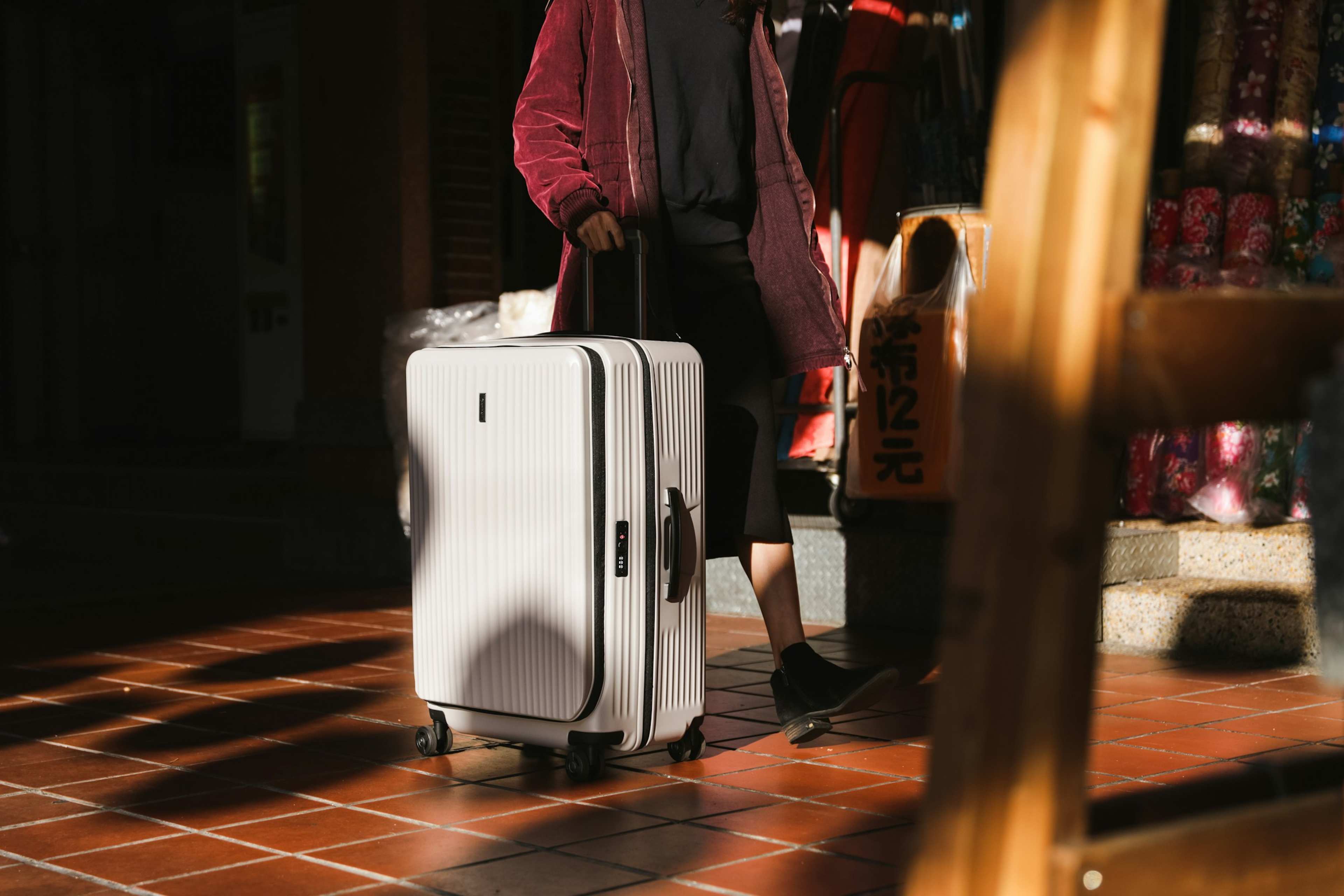
The rolling suitcase is a commitment. It announces arrival. It telegraphs intention. It says: I am here. I am staying. Watch me come. The person who refuses it – who slings a worn duffel over one shoulder, who moves through terminals like smoke – is making a different announcement entirely. One that most people around them can’t quite hear.
It isn’t about luggage. It never was.
It is about the silent architecture of a personality built around one quiet, consuming need: the need to be able to leave. Fast. Clean. Without a sound.
1. The Tethered Fear
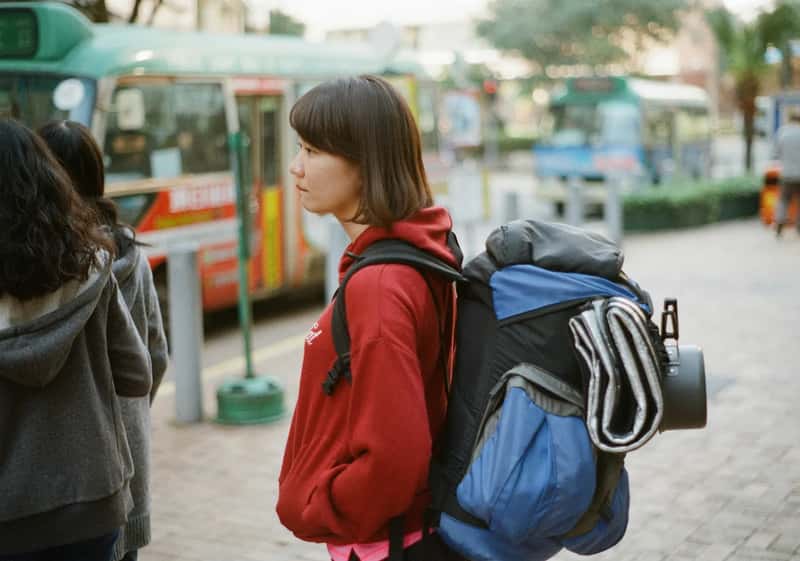
Here is the first truth: wheels represent tethered travel – the body is present, but the mind remains elsewhere.
For the person who refuses the rolling suitcase, this is not metaphor. This is diagnosis.
To them, wheels are a leash. The rattling sound on airport tile is the sound of something being dragged behind you. Something heavy. Something that has your name on it.
The duffel bag person has already internalized a core belief: that being light is the same as being free. That freedom is not a destination but a readiness – a posture maintained at all times, even on vacation.
Psychologists call this hypervigilance. The body stays in a low-grade state of alertness, always scanning, always calculating the nearest exit. In some ways, you stay in a state of vigilance, looking for clues that others might ask for too much, or take too much, or exhaust you.
The bag is not a bag. It is an evacuation plan you carry on your back.
The weight of it is real, and they carry it willingly – because to them, weight on the body is infinitely more bearable than the weight of being stuck.
2. The Autonomy Architecture
There is a personality type that builds its entire interior life around one organizing principle: self-reliance.
Not as a virtue. As a survival strategy.
Avoidant people strive to create and maintain independence, control, and autonomy in every arena of their lives – and that mandate bleeds into the way they pack a bag, the way they choose a seat, the way they refuse to check luggage they could carry themselves.
The rolling suitcase requires help. It requires ramps. It requires people to move aside. It requires a certain faith that the infrastructure of the world will accommodate you.
The duffel bag person does not extend that faith. It is very important to them to feel independent and self-sufficient. They prefer not to depend on others, or have others depend on them.
Every zipper they close is a small act of sovereignty.
Every flight they board without checking a bag is a quiet declaration: I owe the world nothing. Not even my luggage.
3. The Identity Minimalist
Strip it back. Strip it all back.
The refusal to use a rolling suitcase is often the visible symptom of a deeper minimalism – not of things, but of identity. These people maintain a deliberately lean self-concept, one that travels light on labels, affiliations, and permanence.
This type of minimalist tends to value efficiency, competence, and practicality. But beneath that efficiency is a colder truth: the less you carry, the less you have to explain. The less you have to explain, the less anyone can hold against you.
The rolling suitcase is a statement of self. It says: I have enough things to need wheels. It implies roots. It implies a closet somewhere, a life that required this much material.
The duffel bag says nothing. And that silence is the point.
These people have learned that a minimal footprint is the best camouflage. You cannot be tracked if you leave nothing behind. You cannot be defined if you carry only what fits on your back.
Identity, for them, is something they hold loosely – like a passport in a front pocket, ready to be shown and quickly pocketed again.
4. The Control Equation
Control is the currency of the anxious mind.
And the airport is where anxiety goes to become visible. The very nature of travel is just fundamentally tricky for people who have a hard time going with the flow – you are going somewhere new and different, where you won’t be able to predict or control everything.
The rolling suitcase disappears into a cargo hold. It leaves your hands. It enters a system you cannot monitor, cannot touch, cannot rescue if something goes wrong. For the person wired around control, this is not an inconvenience.
It is a small, specific horror.
So they refuse. They carry what they have. They keep it close. They are no-nonsense people who are organized, don’t like much outside interference, want to be in control of their own lives. They are smart, and not fast to trust or confide in others. They do not like to be caught off guard.
The bag that never leaves their shoulder is the bag they can always account for. In a world designed to surprise you, that certainty is worth every aching muscle.
5. The Exit Strategy
I will tell you something I rarely tell anyone.
For years, I could not board a flight with a checked bag. The thought of it – of my things being somewhere else, of waiting at a carousel that might spin and spin and produce nothing – made my chest tighten in a way that had nothing to do with the bag itself.
I was afraid of being delayed. Of being slowed down. Of needing to stand still and wait when every instinct I had was tuned to the frequency of go.
That is the exit strategy. It is not a plan, exactly. It is more like a readiness – a low hum in the nervous system that says: if this becomes too much, I can leave. The bag on your shoulder is proof of that readiness. It is the physical form of an emotional escape route.
When their attachment style is triggered, they might feel the need to escape. The bag is already packed. The exit is already planned.
The rolling suitcase, with its clatter and its size and its cargo-hold dependence, is the opposite of an exit strategy. It is an arrival strategy. And some of us are not yet ready to arrive.
6. The Serendipity Seeker
There is a romanticism here, too. Let’s not deny it.
Not everyone who refuses a rolling suitcase is running from something. Some are simply running toward – toward the unplanned, the unscheduled, the beautiful accident that only happens when you are light enough to pivot.
The most rewarding travel has enough breathing room for serendipity, the uniqueness of the locale, and a nuanced appreciation of journey.
The rolling suitcase anchors you to an itinerary. It presupposes smooth surfaces, cooperative weather, confirmed hotel rooms. It assumes the journey will go according to plan.
The duffel bag person has abandoned that assumption. They have made peace with detours. Often adventurous nature-seekers, they always appear ready to set up for the night just about anywhere.
The serendipity seeker knows something the planner does not: the best moments of any journey are the ones you couldn’t have packed for. You find them precisely because you aren’t burdened by the weight of what you thought you’d need.
The bag is small. The life inside it is not.
7. The Emotional Suppressor
Watch how they move through the terminal.
They don’t cry at departures. They don’t linger at gates. They move with a deliberate, practiced efficiency that looks like confidence and is, on closer examination, something more complicated.
Avoidant individuals use strategies that suppress or minimize emotional experiences to avoid intimacy and vulnerability. They specifically suppress emotions like fear, sadness, anger, and shame, which might trigger attachment needs.
The rolling suitcase is a theatrical object. It makes noise. It demands space. It announces its own presence in a crowd. For the emotional suppressor, this is unbearable.
They want to pass through space like it owes them nothing. Like they were never quite there.
Luggage packing is a highly personal act, and only you know how little you can get away with before your anxiety levels spiral out of control.
For the suppressor, the minimum viable bag is the minimum viable emotional footprint. Less visible. Less detectable. Less here.
The bag doesn’t rattle. Neither do they.
8. The Vigilant Scanner
Something interesting happens in the brains of people who habitually refuse rolling luggage.
They scan. Constantly. They are reading the room – every room – for information about what might go wrong, who might need something from them, what the fastest route to an uncomplicated exit might be.
On a broader level, they avoid any situations where they feel controlled by someone else, and they are always scanning the environment to make sure that no one controls them.
A rolling suitcase requires a path. A clear one. It requires that other people make room, that corridors be wide, that escalators be available. It requires a certain faith in the environment.
The vigilant scanner extends no such faith. They want options. They want to be able to go left or right or back or through the side door without consulting a wheel.
Travel doesn’t reveal who we really are – it reveals who we think we deserve to be when normal social constraints loosen and consequences feel distant.
And what the scanner believes they deserve is the right to move. Unimpeded. At any moment. In any direction they choose.
9. The Committed Non-Committer
Ask one of these people about their plans.
Watch the pause.
The committed non-committer has a profound, almost philosophical resistance to the fixed plan – the hotel reservation that can’t be changed, the return ticket that locks a date, the rolling suitcase that implies you are bringing enough to stay awhile.
They might pull away from conversations, cancel plans unexpectedly, or “ghost” their partners. They do the same with itineraries.
The rolling suitcase is a promise. It says: I am staying long enough to need this. The duffel bag is a hedge. It says: I could be gone by morning.
They find themselves feeling panicky at the thought of committing to a relationship or being dependent on others, even when it’s a healthy partnership. There is always a fear of getting overwhelmed or being compromised by the other.
Translate that from relationship language into travel language and you have your answer. The bag is small because the commitment is conditional. The trip is booked because the exit is guaranteed.
They will enjoy the destination. They just won’t let it own them.
10. The Wound That Wanders
Here it is. The heaviest one.
Beneath the minimalism, beneath the autonomy, beneath the serendipity and the control and the vigilance – there is a wound. An old one. The kind that was inflicted before language, before memory, before the self was fully formed enough to defend itself.
Avoidant attachment often stems from early childhood experiences. When caregivers consistently fail to respond to a child’s emotional needs, the child learns to suppress their feelings to avoid disappointment and rejection. This behavior becomes a coping mechanism, leading to a dismissive or avoidant attachment style in adulthood.
The child who learned that staying in one place meant waiting for something to go wrong became the adult who keeps a bag by the door.
The child who learned that needing people was dangerous became the adult who boards a plane with only what they can carry.
Avoidant attachment is not a character flaw. It’s a protective strategy the nervous system learned early on.
The refusal of a rolling suitcase, in its deepest form, is an act of self-protection so old and so automatic that the person doesn’t even recognize it as a choice. It simply feels like preference. Like style. Like the way they’ve always done it.
But every duffel bag slung over every shoulder tells the same quiet story: I have been somewhere it was not safe to be still, and I learned my lesson well.
What the duffel bag people rarely tell you is that the running is exhausting. That the vigilance costs something. That carrying your own weight – refusing to put it on wheels, refusing to let the infrastructure hold it – adds up over years in ways that show in the eyes before it shows anywhere else.
There is a difference between being light and being free. You can be light and still be trapped – trapped in a loop of exits and departures and fresh starts that all begin to feel identical after a while. What makes attachment theory so compelling isn’t just the categories themselves. It’s the realization that the patterns you carry into adult relationships often feel invisible, automatic, and deeply personal, even when they’re quietly driving outcomes you never intended. The same is true of the patterns you carry through airports.
The rolling suitcase will be there when you’re ready. No one is asking you to check in forever. No one is asking you to stop moving. Only – occasionally, when the light is right and the destination feels safe – to let something else carry the weight for a while.
Maybe the bravest trip you ever take is the one where you arrive without planning the exit first.