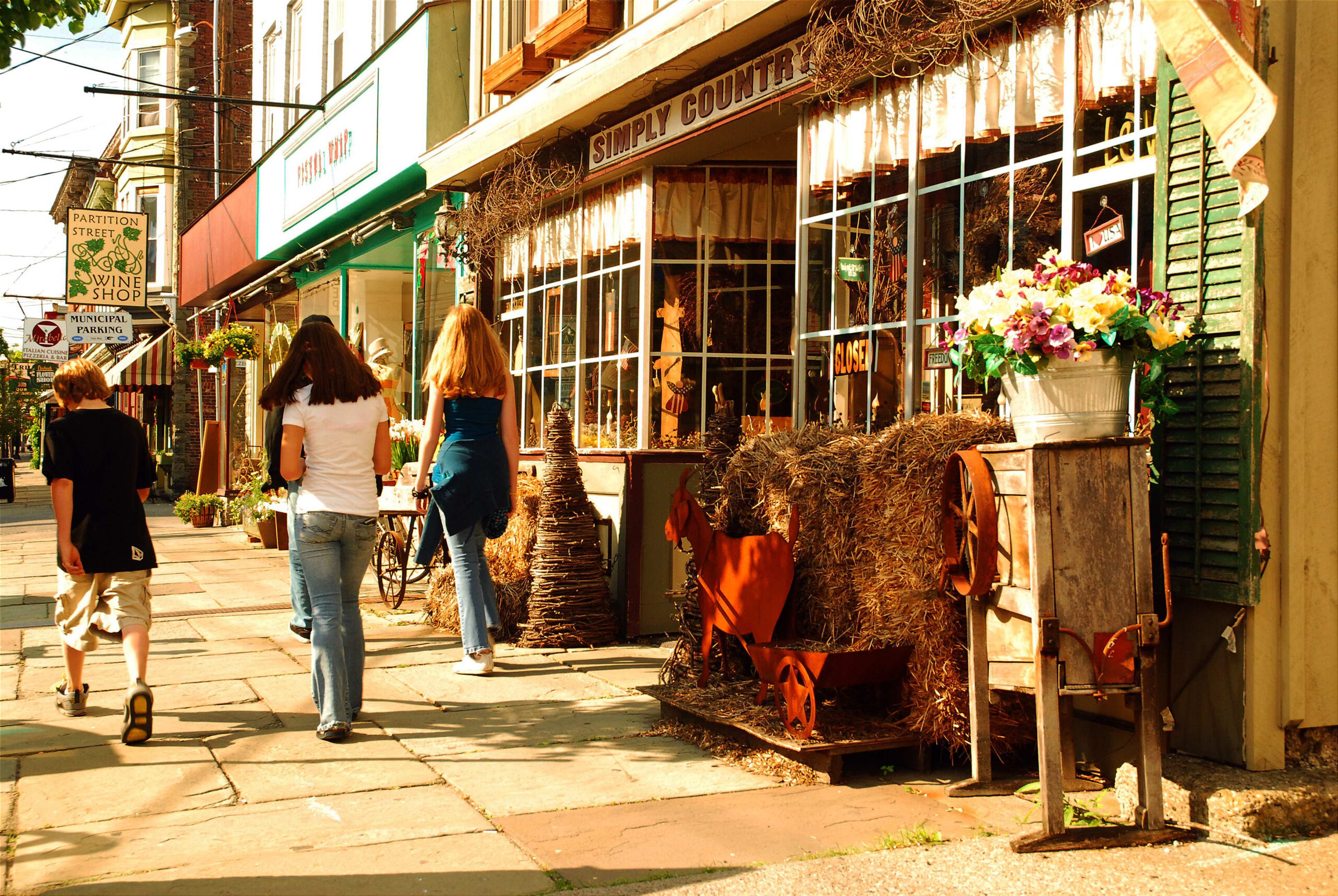
You land somewhere new.
You already know what you won’t be wearing.
No fanny pack. No map lanyard. No white sneakers that announce your arrival before you do.
The decision was made before you packed. Before you even booked the flight. It was made somewhere in the architecture of who you need the world to believe you are.
There’s a gap between the traveler you perform and the traveler you actually are – wide-eyed, disoriented, quietly reading every sign twice. Worrying about looking like a tourist is just a specific situation in which we fear being judged, and traveling to a foreign land may magnify that fear of social judgment. The outfit is armor. The armor has a psychology. And the psychology runs deep.
1. The Costume of Competence
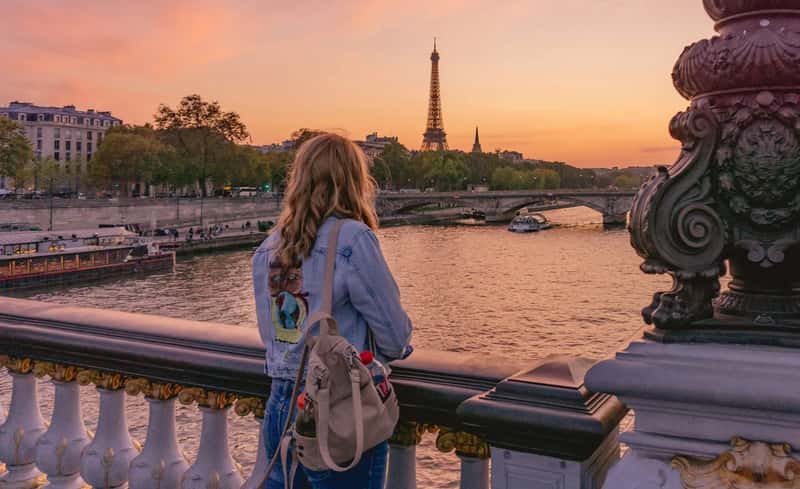
Before you leave the hotel room, you make a choice.
Not about comfort. About projection.
Research proposes that people infer four types of information from dress: social identities, mental states, status, and aesthetic tastes. In a foreign city, every single one of those dimensions is on the table simultaneously.
The tourist who refuses the fanny pack isn’t refusing an accessory. They’re refusing an assigned identity.
They’re refusing to be read as someone who doesn’t know where they’re going. When a person dresses in a way that is clearly calibrated to the context they are entering, it signals awareness of what the occasion requires – and that communication has psychological effects on the interaction.
The traveler understands this, even if they never say it out loud.
Competence is a costume. And they packed it deliberately.
2. The Goffman Effect
Erving Goffman called it the front stage.
The performance you give when others can see you. Every street corner in a foreign city is a stage you didn’t audition for.
Drawing on Goffman’s theorisation, self-presentation is defined as individuals’ actions to control, shape, and modify the impressions other people have of them – and that performance is “socialised, moulded, and modified to fit into the understanding and expectations of the society in which it is presented.”
In a place where no one knows you, the performance feels more urgent, not less.
You have no reputation here. No history. No one who can vouch for you. All you have is what you’re wearing and how you walk.
Social identity refers to how people are defined and regarded in social interactions, and individuals use impression management strategies to influence the social identity they project to others – an identity that influences their behaviour in front of others and the outcomes they receive.
The tourist outfit collapses that performance. And some people would rather be uncomfortable than collapsed.
3. The Vulnerability Ledger
Here is what “tourist gear” actually signals to the primal brain: I am unfamiliar here. I do not know the rules. I am open to being taken advantage of.
That’s not irrational.
Supporters of the experiential perspective consider vulnerability an omnipresent feeling of threat and fear of harm, which is embedded in lived experience.
Travel, almost by definition, is a lived vulnerability.
From potential bodily harm and unfamiliar circumstances to a high degree of dependence on others, travel vulnerability rooted in lived experience has the potential to be transformative.
But transformation requires a willingness to be seen as someone in process.
Most of us don’t want that. We want to look like we arrived already finished.
The polo shirt and the inconspicuous backpack are a kind of lie. A necessary, psychologically expensive lie.
4. The Knowledge Signal
There is something profoundly specific at the heart of this refusal.
It isn’t about looking poor or underdressed. It’s about looking like you don’t know.
Psychologically, having more knowledge can increase an individual’s personal control over uncertain scenarios. When travelers think that they have more knowledge than others, and thus a greater ability to prevent and control risks, they are more likely to participate in tourism activities with confidence.
The traveler who refuses the tourist map is performing knowledge they may or may not possess.
According to knowledge-attitude-behavior theory, knowledge is the basis of changes in attitude, and tourism knowledge directly affects tourists’ psychology and decision-making practices, through the arousal of confidence and willingness to act.
The fanny pack tourist wears their uncertainty visibly.
The other traveler hides it inside a linen shirt and a casual indifference to landmarks.
Same fear. Different wardrobe.
5. The Identity Gap – A Personal Note
I remember walking through a market in a city I’d been to exactly once before.
I’d left my guidebook at the hotel. On purpose.
I was wearing something that said: I belong here, or close enough.
And I got lost. Badly. Stood at an intersection for eleven minutes pretending to check my phone while I was actually trying to find north by the position of the afternoon sun.
The refusal to look like a tourist didn’t make me more capable. It made me lonelier in my lostness.
Identity has come to be recognised as fluid and socially constructed, and our sense of who we are is significantly tied to our personal stories and experiences. Holidays can present opportunities to be versions of ourselves that don’t get to shine during our normal lives.
In that intersection, I was neither version. I was the gap between them. Performing a local. Feeling entirely foreign.
6. The Social Judgment Engine
The fear isn’t only about criminals or scammers, though that’s the rational explanation most people reach for.
The fear is social. Specifically, it is the fear of being evaluated as naive.
People can become socially anxious when they are motivated to make a desired impression on others but doubt that they can do so successfully.
Now place that person in an unfamiliar city.
Multiply the anxiety by every stranger on every street.
Leary and Kowalski’s foundational review of impression management highlights that people can become socially anxious precisely when they are motivated to make a desired impression but doubt their ability to do so successfully.
The tourist outfit becomes the symbol of that doubt made visible.
Rejecting the outfit is a rejection of the anxiety itself. Or at least, an attempt at one.
The engine keeps running either way.
7. The Camouflage Instinct
There is something ancient in this behavior.
Something that predates airports and Instagram aesthetics.
From clothing to body language to how you speak and what travel gear you pack, you can camouflage your tourist identity – and the ability to camouflage in order to blend in is a survival skill used by every species.
The traveler who blends in is the traveler who feels – however briefly – safe.
Not physically safe, necessarily. Psychologically safe. Safe from the gaze that marks you as Other.
When thresholds of social categorization are exceeded, tourists may be more easily seen as invading a place – an effect that may be reinforced through critical media reporting.
Nobody wants to be the invasion.
So they dress like they belong. They hold the map inside their head, or their phone, or they simply walk with direction they don’t entirely feel. The camouflage is emotional, not just visual.
8. The Prestige Architecture
Here is the layer that sits beneath the survival instinct.
Below the fear of judgment. Below the anxiety about competence.
Prestige.
Positive self-representation grows more and more important in the process of individualisation, and the tourist experience is increasingly rendered an activity for self-definition and a medium to enhance social prestige by strategic positive self-presentation.
The experienced traveler – the one who looks local, moves efficiently, orders in the right language – is a figure of social status.
Souvenirs and travel markers reflect an individual’s identity, showcasing their power, energy, and social status.
The logic extends to the body, the clothing, the posture.
Every element of travel presentation is a broadcast. The anti-tourist-gear traveler is broadcasting fluency. Cultural literacy. Worldliness worn lightly.
Whether they feel it or not is almost beside the point.
9. The Cognitive Dissonance Machine
Here is the uncomfortable part.
Most people who refuse tourist gear still behave like tourists.
They still stop on the sidewalk. They still take photographs of food. They still mispronounce things and apologize.
Cognitive Dissonance Theory proposes that tourists strive for consistency between their beliefs, choices, and experiences – and if their experience does not match their expectations, they may feel uncomfortable and dissatisfied.
The gap between the identity they’re projecting and the experience they’re actually having creates a quiet internal friction.
Research identifies a category of self-presentation responses labeled “the person I fear I could be” – reflecting experiences where clothing had failed to achieve a desired look or resulted in a negative self-presentation.
The tourist who refuses to look like a tourist and then gets hopelessly lost is living inside that category.
The machine runs on the gap between aspiration and reality.
10. The Weight of Temporary Selfhood
This is the heaviest one. The one that takes a moment to sit with.
Travel is one of the only modern contexts in which the self is fully temporary.
No one here knew you yesterday. No one here will think about you tomorrow. Identity theory posits that individuals possess multiple self-identities, each associated with distinct roles, goals, attributes, and social contexts – and tourist identity refers to the specific role identity that becomes activated when individuals mentally construe themselves as a “tourist.”
And that activation – that moment when the tourist self flickers on – feels like a diminishment to people who have built an identity around being knowledgeable, in-control, and unreadable.
Individuals are motivated to project a desirable image that may or may not reflect their beliefs about who they are.
The tourist gear refusal is, at its most essential, a refusal to let the temporary self be seen.
It is a refusal to be caught in the moment of not-knowing. Of being new. Of being, just for a few days, someone who needs a map and doesn’t know which bus to take and has never tasted the thing on the menu they just ordered.
Travel often takes you out of your comfort zone, forcing you to adapt to new situations and environments – and in the process, you learn more about yourself: your strengths, weaknesses, fears, and desires.
That is the gift buried inside the vulnerability. But you can only receive it if you stop performing fluency long enough to actually feel the disorientation.
There is a particular kind of loneliness that comes with traveling in disguise. Not the loneliness of being in an unfamiliar city, but the loneliness of being in an unfamiliar city while pretending you aren’t. The map you won’t unfold. The question you won’t ask. The landmark you walk past three times because you won’t admit you’ve been circling it.
The psychology underneath the packed-away fanny pack is not vanity, exactly. It’s something more tender than that. It’s the deep human need to be seen as capable – and the equally deep human terror that, when stripped of your context, your job title, your neighborhood, your history, you might not be. That on a cobblestone street in a city that doesn’t know your name, you might just be another person who got lost.
Which, of course, is exactly what you are. And exactly what everyone around you is, too, in their own quiet way – navigating something new, pretending at fluency, hoping the performance holds. The fanny pack never mattered. It was always about the fear of being found out. And the strange, singular peace that waits on the other side of letting yourself be.