The bag is packed before you’ve decided where you’re going.
The destination doesn’t matter. The distance does.
You’ve been running a temperature no thermometer can read.
It’s not the flu. It’s not fatigue. It’s the specific, suffocating heat of a life that no longer fits the shape of the person living it.
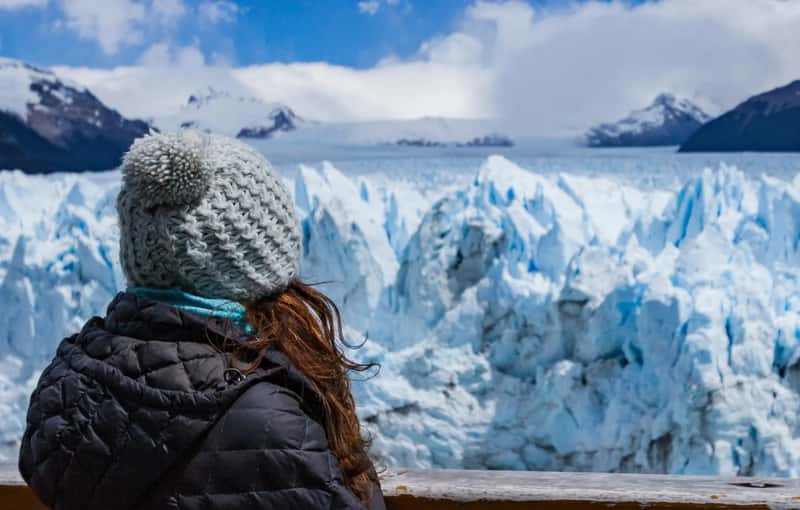
There’s a particular kind of traveler who doesn’t book warm beaches. They book Tromsø. They book Reykjavik. They book Patagonia in the dead of its winter. They book cold – not for the scenery, but for something they cannot name over dinner. They’re chasing an environment brutal enough to drown out the noise inside. They want the cold to do what they can’t: shut it all down.
1. The Fever Nobody Sees
Every emotional crisis has a body temperature.
It’s not measurable. But it’s real.
Scientists have long studied the link between weather and mood, and the results are clear: climate influences not only our emotions but also our sleep, behavior, and overall mental health. But here’s what the research doesn’t say outright: some of us aren’t passive victims of climate. We’re actively hunting for one.
When the internal environment becomes unbearable – when grief, anxiety, or a slow-building existential dread runs hot and loud – the mind starts scanning for an external override. Something physical. Something overwhelming enough to redirect the nervous system.
The emotional fever is real. The racing thoughts at 2 a.m. The chest tightness that medication barely touches. The sense that your own home has become the loudest place you’ve ever been.
Brutal cold is its antidote. Not its cure. Its antidote.
You don’t book a flight to Iceland because you love volcanic rock. You book it because you need something bigger than you. Something indifferent. Something that will hold you down, physically, until the fever breaks – even if just for a week.
2. The Somatic Override
The body can only process one emergency at a time.
This is the quiet genius of cold-seeking travel. When you’re standing in minus-fifteen degrees at the edge of a fjord, your nervous system has exactly one priority: survive this. Not the email. Not the relationship. Not the version of yourself you’ve been failing to become. Just this. Just the cold.
The intense sensory experience of cold water immersion acts as a circuit breaker for negative thought patterns, forcing present-moment awareness that disrupts rumination and anxiety.
That’s not a metaphor. That’s neuroscience.
The traveler who seeks brutal cold is, consciously or not, engineering a somatic override. They are using the body’s most ancient alarm system – cold shock, the threat of hypothermia, the primal demand to generate heat – to cut the signal running the internal fever.
You can’t ruminate when you’re too cold to think clearly. The cold makes the decision for you. And for a certain kind of exhausted mind, that surrender isn’t frightening. It’s the first real relief they’ve felt in months.
The destination isn’t the point. The sensation is the prescription.
3. The Escape That Wears Adventure’s Clothes
We have a cultural agreement to admire the cold traveler.
We call them brave. We call them adventurous. We double-tap their frost-bitten Instagram posts. We don’t ask what they’re running from – because the aesthetic is too compelling. The parka. The silence of the tundra. The aurora reflected in eyes that look, finally, at peace.
But psychology is less polite than Instagram.
Escapism in psychology is any behaviour that we use to avoid difficult feelings and emotions. These feelings are part and parcel of being human and so we all have to learn ways of dealing with feelings like disappointment, guilt, loss, and sadness.
There are many occasions when projecting dissatisfaction onto one’s environment can be a way of avoiding the true causes of that distress, which are manifold. These causes may include existential crises, major losses, feelings of loneliness or disconnection, unfulfilling work, or chronic stress.
The cold destination is the costume that escapism wears when it wants to look heroic.
That doesn’t make it wrong. It makes it human.
But it’s worth sitting with the question: are you going toward something? Or are you going away from the version of yourself that needs more than a plane ticket to feel okay?
4. The Neurochemistry of Freezing
Here’s where it gets genuinely fascinating. The cold traveler isn’t just emotionally self-medicating. They’re neurochemically self-medicating – and the dosage is significant.
Cold-water immersion triggers the release of important hormones and neurotransmitters, such as dopamine, serotonin, cortisol, norepinephrine, and β-endorphins, which are all linked to modulation of the neural responses to stress and other emotion-related circuits affected in depression, anxiety, and posttraumatic stress disorder.
The numbers are staggering. Studies show that cold exposure can increase dopamine levels by up to 250%. Dopamine is the “feel-good” neurotransmitter responsible for motivation, focus, and reward. This surge can provide a sustained lift in mood and energy without the crash associated with stimulants.
And it gets more specific. Norepinephrine – which can increase by up to 530% with cold exposure – is a key player in attention, alertness, and focus. This acute increase helps to sharpen your mental state and enhances your ability to concentrate.
So when the cold-seeker emerges from a glacial plunge looking quietly transfigured, they’re not performing serenity. Their brain has genuinely been chemically altered. The fever has been interrupted – from the inside out.
The problem is that interrupted is not the same as healed.
5. The First Person Moment
I need to stop here for a second.
I have stood at the edge of a frozen lake in northern Finland at 5 a.m., in the absolute dark of a February that had no intention of becoming morning, and I have felt – for the first and only time that winter – completely, unreasonably calm.
I was not calm at home. At home, I was whatever the opposite of calm is. A low-grade emergency. A thing with too many thoughts and nowhere to put them.
But out there, next to ice that had no interest in my problems, I was simply cold. And being simply cold was the most uncomplicated I had felt in eighteen months.
I told myself I was adventurous.
I was not adventurous. I was exhausted. And the cold was the only thing strong enough to hold the exhaustion still long enough for me to breathe inside it. That’s the thing nobody puts in the travel brochure. If there is a gap between who you are and who you want to be, escape can soften the sting of that reality. Rather than taking action to close the gap, you numb the pain of seeing it. That frozen lake was not a destination. It was a pause button wearing a very beautiful coat.
6. The Identity Gap at Altitude
There’s a specific psychological phenomenon that cold destinations exploit almost perfectly.
Call it the Temporary Self.
When you are in a place where nobody knows your name, your failures, your patterns, or your history, you get to be a rough draft. Not the final edition. Not the one with all the corrections written in the margins. Escape Theory posits that individuals engage in behaviors to avoid negative self-perceptions when their identity falls short of personal or societal standards.
The cold amplifies this. In harsh environments, social performance collapses. There is no pretending in a blizzard. You are reduced, magnificently, to what you actually are: a warm creature trying not to freeze. The psychological armor – the LinkedIn version of you, the curated self – is irrelevant when the wind is moving at sixty kilometers per hour.
This stripping away is what the cold traveler is actually purchasing. Not the flights. Not the gear. The temporary permission to not be themselves. The identity gap – the space between the performed self and the real one – narrows when survival is the only agenda on the table.
The problem arrives on the return flight home, when the gap reopens exactly where they left it.
7. The Silence Addiction
Snow absorbs sound. This is physics.
But for the emotionally overwhelmed, it is something closer to mercy.
Things are just harder to do in extreme cold; muscles tighten up, our blood thins, and the mind slows down. That is the beauty of it. There is a profound and underrated seduction in environments that demand slowness. Modern life is a noise machine. Notifications, obligations, the relentless metric of being perceived. The cold landscape has none of that. It is indifferent. It does not need you to perform.
Psychologists recognize that regular cold exposure can help regulate the balance between your sympathetic (fight-or-flight) and parasympathetic (rest-and-digest) nervous systems, promoting better emotional regulation.
What this means in human terms: the silence of a cold landscape isn’t just aesthetic pleasure. It is a nervous system intervention. The body, forced out of its sympathetic overdrive by the physical demands of cold, begins to genuinely rest – sometimes for the first time in years.
Cold-seekers are often silence addicts who haven’t yet learned that the silence lives inside them too. They just haven’t been able to find it at home.
8. The Baumeister Warning
Roy Baumeister has a theory about escape. It’s not flattering. But it’s honest.
Escape Theory, introduced by Roy F. Baumeister in 1990, is a pivotal framework within social psychology theories that elucidates why individuals engage in behaviors to flee from negative self-perceptions when their identity fails to meet personal or societal expectations. Unlike physical escape, this psychological escape involves shifting attention to the immediate environment to avoid confronting unflattering aspects of the self, often leading to undesirable behaviors with short-term relief but long-term consequences.
The cold destination is one of the most socially acceptable applications of this theory.
Nobody stages an intervention for someone who goes to Greenland. Nobody pulls a friend aside and says: “We’re worried about how much time you spend in sub-zero temperatures.” But the underlying psychology – the flight from an identity that has become unbearable – is structurally identical to less celebrated escape routes.
Psychological theory has long recognized that avoidance reduces distress in the short term while amplifying vulnerability across time.
This is the Baumeister warning in plain language: the relief is real. The cost is compounding interest. Every time you escape rather than face, the thing you’re escaping gets fractionally larger. The fever doesn’t break by being ignored. It metastasizes.
9. The Scandinavian Paradox
Here’s what confuses the narrative: cold doesn’t uniformly destroy people. Some cultures have learned to live inside it without breaking.
Research suggests that despite minimal daylight, the prevalence of SAD is not significantly higher in Scandinavian countries compared to areas with less extreme winters. This finding has been linked to cultural and behavioural adaptations that help mitigate the impact of prolonged darkness.
The Danes call it hygge. The Norwegians live by friluftsliv – the philosophy of open-air life, regardless of conditions. These aren’t survival strategies. They’re identity frameworks. The cold is not the enemy. The cold is part of the self.
Being outside in the winter is really important to embracing the season. Dr. Kari Leibowitz, who spent a year researching winter mindset in Tromsø – a city over 200 miles north of the Arctic Circle – found that the relationship to cold determines almost everything. People who frame winter as something to endure suffer. People who frame it as something to inhabit thrive.
This is the paradox the cold-seeking traveler stumbles into accidentally. They come for the numbing. They sometimes find, instead, a model for living differently. A culture that has reconciled with difficulty rather than fleeing it. They return home carrying something they can’t quite name – a faint blueprint of a self who doesn’t need to run.
Most of them book another flight before they figure out what to do with it.
10. The Thing You Carry Home
The most devastating truth about cold-destination travel is this: the fever follows you to the airport.
Taking a ‘holiday from the self’ often fails. But even if successful, the relief is temporary; familiar problems and emotional distress that one attempts to escape through travel will tend to return once back home.
You’ve stood on a glacier. You’ve watched the northern lights perform their slow, luminous indifference above you. You’ve felt, in the marrow of your cold-shocked bones, something that resembled peace. And then you landed. And the baggage carousel turned. And the familiar smell of your apartment hit you like a verdict.
This cycle can lead to a state of chronic emotional numbing. While it may feel safe in the short term, it leaves you disconnected from your own life, your relationships, and your ability to find true joy. Instead of healing, you are simply postponing the pain.
This is the heaviest point. The cold was real. The relief was real. The neurochemical reset was real and measurable and documented in peer-reviewed journals. But the emotional fever that sent you searching for an environment brutal enough to match it? That is also still real. Sitting in your apartment. Right where you left it. Patient as permafrost.
The destination was never the destination.
There’s something worth holding gently: the impulse to seek brutal cold is not a flaw. It is a signal. A sign that the interior landscape has reached a temperature the ordinary life can no longer regulate. That something in you is running so hot, so persistently, that you’ve started scanning the globe for something cold enough to match it. That is not pathology. That is a person doing the best they can with the tools available.
The question – the quiet, difficult, adult question – is whether the cold destination is a doorway or a detour. Whether the temporary numbness is giving you the space to eventually face the fever, or whether it’s becoming the only language your nervous system still trusts. Escapism in the form of self-suppression stems from motives to run away from unpleasant thoughts, self-perceptions, and emotions, whereas self-expansion stems from motives to gain positive experiences through the activity and to discover new aspects of self. Both can wear the same parka. Only you know which one you’ve packed.
One day, maybe, you’ll stand at the edge of something frozen and realize that the silence you’ve been traveling thousands of miles to find is not the absence of noise around you – but the one that’s been waiting, quietly, inside you all along.