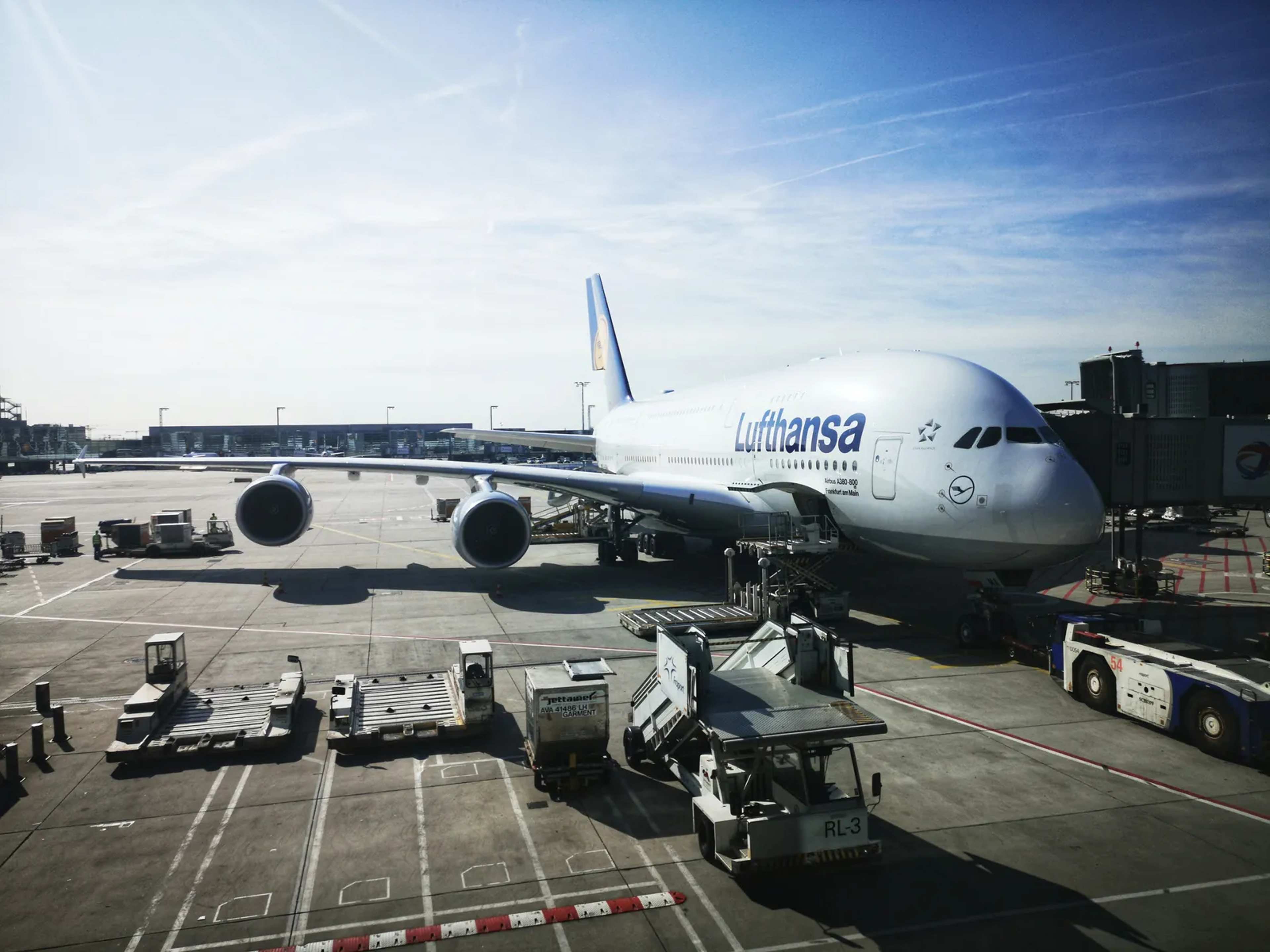
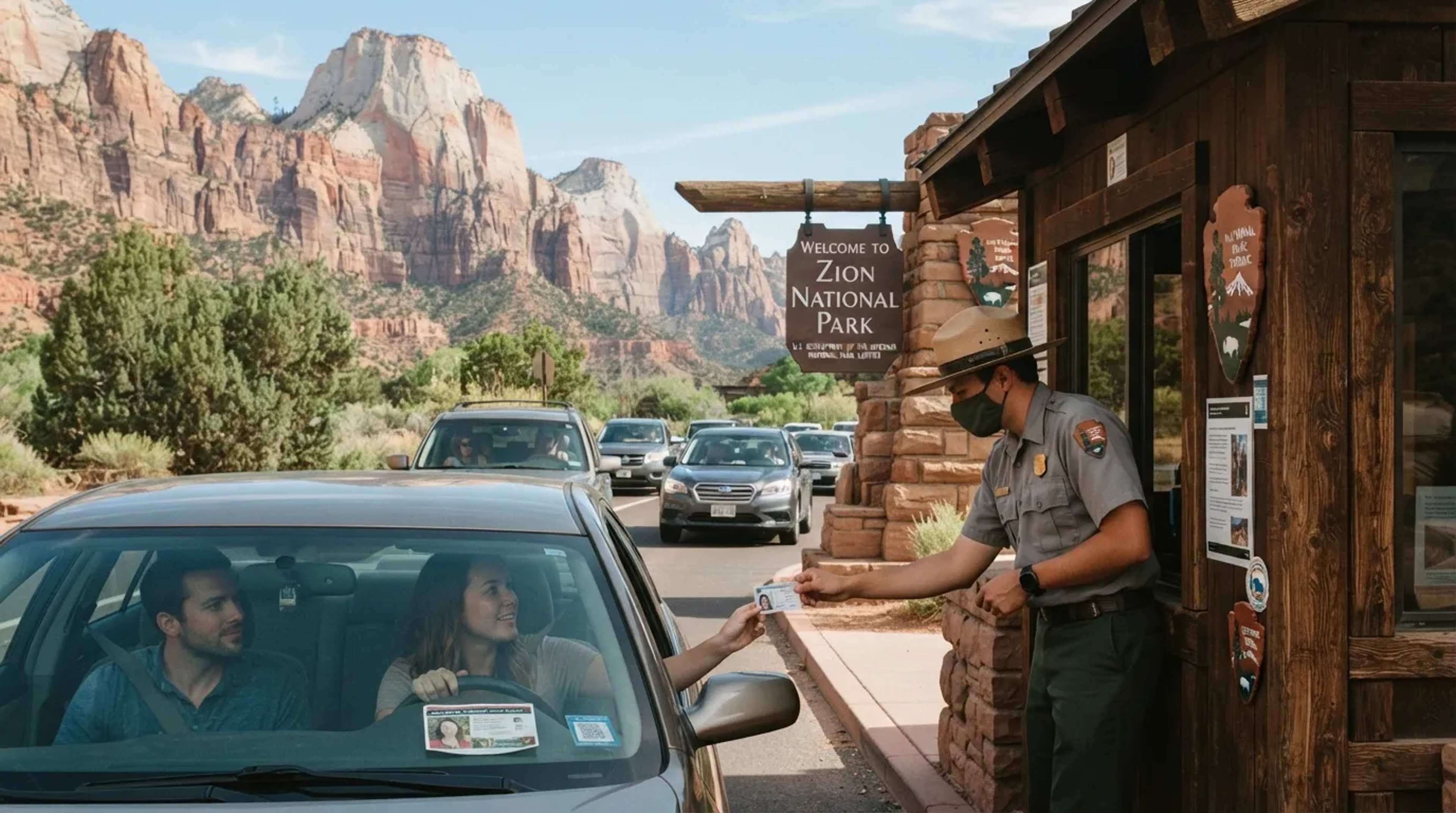
You book the ticket at midnight.
Not because there’s a deal. Because you can’t sit still anymore.
The destination isn’t a city with a skyline. It’s a place where the road simply stops. Where the map runs out of language.
You tell people it’s about adventure. About needing a break.
But here’s the thing about the traveler who keeps going further – not richer, not more connected, not more rested, just further – there’s a gap between who they perform at dinner parties and who they are alone at a gate in an airport that smells like recycled air and burnt coffee. One version is polished. The other is still searching. What the end-of-the-road seeker is really building, every time they go further, is practice. Practice at recognizing a limit. Practice at stopping. Practice at standing at the edge of something and not trying to go further. Practice at saying: this is where I am. This is enough.
1. The Temporary Identity

Nobody knows your name at the end of the road.
That is not a tragedy. For some people, it is the first breath they’ve taken in years.
Travel offers a rare chance to shed familiar roles and explore different sides of ourselves. Away from the expectations of home, people often feel freer to experiment – with new styles, habits, or even ways of thinking. But for the end-of-the-road seeker, this isn’t a perk. It’s the whole point.
The temporary identity is not a lie. It is a pressure release valve.
At home, you are someone’s colleague, someone’s ex, someone’s disappointment. Out here – at the lip of a cliff road in Iceland, or the last ferry stop in the Outer Hebrides – you are just a person standing in wind. No backstory required.
The psychological weight of your permanent identity doesn’t disappear. It just pauses. And for a mind that has always felt too large for its own container, that pause is everything.
You aren’t escaping who you are. You’re testing whether who you are can survive without the scaffolding.
2. The Exit Strategy
Most people plan vacations. End-of-the-road seekers plan exits.
There is a difference. Vacations are about reward. Exits are about relief.
In our modern world, many people feel overwhelmed by the stress and pressures of daily life. Work, relationships, and other responsibilities can create a sense of monotony and confinement. Travel offers an escape from this monotony.
But the end-of-the-road traveler isn’t just escaping monotony. They’re escaping the sensation of a life without edges.
When your interior world is vast – when your thoughts arrive in waves that never seem to break on any particular shore – the mind begins to crave a physical perimeter. A wall. A coastline. A sign that says, simply: this is where it ends.
The exit strategy is never really about the destination. It is about the sensation of approach. The narrowing of options. The road getting smaller until you are forced to stop.
For someone who cannot stop their own thoughts, geography does what willpower cannot. It creates a border.
3. The Dopamine of Finality
There is a specific high that comes from arriving somewhere most people never go.
It is not pride, exactly. It is something quieter and more chemical.
The mere act of planning a trip creates a surge of dopamine, the neurotransmitter that plays a pivotal role in learning, mood enhancement, and our overall enthusiasm for life. This chemical reward begins long before you pack your bags. But for the end-of-the-road pilgrim, the dopamine hit isn’t in the planning. It’s in the arrival at the last possible place.
Finality is intoxicating when your regular life feels perpetually unfinished.
Most things in modern existence don’t end. Emails cascade. Relationships blur. Careers morph without conclusion. But a road that physically stops? That is a completed sentence. That is punctuation in a life that has felt like one long, breathless run-on.
The brain registers that finality as resolution. And for a certain type of mind, resolution – even geographic resolution – is addictive.
4. The Neuroplasticity of Nowhere
Your brain changes when it goes somewhere unfamiliar. This is not metaphor. It is biology.
When we step into unfamiliar territory, something remarkable happens inside our heads – a profound neural awakening that forms the foundation of travel transformation. Your brain loves novelty, and travel delivers it in abundance. Neuroplasticity – the brain’s ability to form new neural connections – flourishes during travel experiences.
But here’s what the research doesn’t fully articulate: the brain changes most dramatically at the edges.
Not at the well-worn tourist trails. Not at the curated Instagram coordinates. At the places where the infrastructure gives out and you are left to improvise. Where you must be fully present because there is no script, no Google review, no expectation. Only the raw fact of where you are.
For a person whose inner life is relentlessly noisy, the cognitive demand of navigating true remoteness performs a kind of hard reset. The background hum of existential anxiety quiets – not because it is solved, but because the foreground is suddenly and completely full.
Nowhere, it turns out, is the most restorative address.
5. The Weight of Your Own Map
I need to be honest with you for a moment, because this one is mine.
I have stood at the end of a gravel road in the north of Norway, in October, in the dark, watching the last light dissolve into a sea that had no interest in my presence whatsoever. And I felt, for the first time in months, like I could breathe without auditing the breath.
I had not traveled there for beauty. I had traveled there because every other direction in my life felt open in a way that was quietly terrifying. Too many possibilities. Too many unlived versions of myself crowding the room.
Solo travel dramatically reshapes one’s identity by shedding attachments and inner roles. But what the psychology doesn’t always say plainly is this: some of us go alone to the edge not to find ourselves, but to finally stop being found by every version of ourselves we are afraid to disappoint.
The end of the road is the only place where the map of your own potential stops expanding for just long enough to let you rest inside what already exists.
6. The Identity Audit
Every destination is a mirror. End-of-the-road destinations are the unforgiving kind – no filters, no flattery.
When you strip away comfort, familiarity, and the social performances that fill ordinary days, something clarifying happens. As we venture into the unknown, we often encounter parts of ourselves we hadn’t fully explored before. Whether it’s navigating a foreign city or hiking through a wild landscape, these experiences challenge us, helping us grow and evolve. In many ways, we use travel to experiment with different aspects of our identity. We might try new activities, speak a different language, or find ourselves in a setting where we’re not defined by our usual roles.
At the end of the road, there are no roles left to perform.
The identity audit is not comfortable. It is necessary. And it cannot happen in familiar rooms.
It requires the friction of an unfamiliar bed, a language you don’t speak, a silence so complete it becomes a question. The audit asks: who are you when nobody is watching? Who are you when the WiFi is gone and the persona you’ve cultivated online is completely irrelevant?
The answer, when it comes, tends to arrive quietly. A feeling rather than a thought. Something true and a little uncomfortable. Something that was there all along.
7. The Sensation-Seeking Spectrum
Not everyone who travels to remote places is running from something. Some are calibrated differently at a neurological level.
Psychological traits such as openness to experience, extraversion, and a need for stimulation can influence how strongly a person feels the desire to travel. People who score high in “openness” tend to seek novelty, enjoy new experiences, and are generally more likely to be adventurous travelers. These individuals may be more susceptible to wanderlust because they are constantly searching for ways to expand their horizons.
But the end-of-the-road seeker is not simply high on the openness scale. They are chasing something more specific: contrast.
A life that feels overwhelming in its boundlessness craves the sensation of a hard edge. The sensation-seeking is not about adrenaline. It is about definition. The thrill is not the danger. The thrill is the feeling of arriving at a place that finally tells you: stop here.
That stop point is information. It tells the nervous system that limits exist. That not everything is infinite. That the world, unlike the mind, has endings built in.
And for one long, quiet moment, that is enough.
8. The Reverse Culture Shock of Coming Home
The hardest part is always the return.
Not the journey. Not even the loneliness of a remote place. The hardest part is standing in your own kitchen three days after returning and feeling like a stranger in a room you’ve inhabited for years.
Your identity may have expanded during travel, but your environment at home may not have changed. The discomfort signals growth and the need to intentionally integrate your new experiences into daily life.
But for the end-of-the-road traveler, the discomfort runs deeper than growth. It runs into grief.
At the edge of things, you were defined by your location. The border was clear. Here. Not there. Land. Water. Road. No road. The clarity was physical, geographical, immediate.
Back home, the borders dissolve again. The life reasserts its boundlessness. The to-do list regenerates. The roles return. The noise recommences. And the traveler begins, almost immediately, to research the next departure. Not out of restlessness. Out of remembering what it felt like to stand somewhere finite and feel, briefly, whole.
9. The Self-Reliance Ritual
Getting yourself to the end of the road is not easy. That difficulty is part of the prescription.
The crossing of new boundaries builds self-reliance; obstacles in travel and strangers in new places are proof of one’s own judgment.
For a person who feels overwhelmed by the vastness of their own potential – by the endless number of choices a boundless life presents – the concrete, logistical challenge of reaching a remote place is a gift. Each decision is small and specific. Buy the ferry ticket. Learn which road is passable in October. Find the guesthouse with no website.
The ordinary mind is paralyzed by infinite options. The self-reliance ritual of remote travel removes options one by one until only the essential choices remain. And in that narrowing, something extraordinary happens: competence returns.
Not confidence. Competence. The knowledge that you can solve the problems directly in front of you. That your judgment, stripped of audience and social approval, is enough.
It is a quiet discovery. But it is one of the most important things a person can bring home from the edge of a map.
10. The Border That Was Always Internal
Here is the heaviest truth.
The border you are looking for at the end of the road – that clean, physical line between the known and the unknown – is not really a geographic feature. It was always psychological. It was always yours.
Borders not only as separator but also as deep connector of meaning are explored and reintroduced in ways that go far beyond the simple definitions accessible in dictionaries. The end-of-the-road destination is a physical metaphor the mind builds around a need it cannot otherwise articulate: the need for edges in a life that has always felt dangerously, exhaustingly open.
The boundless life is not a blessing in disguise. For many people, it is a quiet form of suffering. Too many paths. Too many identities available. Too many versions of the future that feel equally possible and equally incomplete.
Psychological research today shows that when one has the ability to get out of their comfort zone, it actually helps one build a stronger sense of self. But the comfort zone for this type of person is not safety. It is the suffocating softness of infinite choice. The edge of the road breaks that open.
The border they seek outside themselves is training for the border they must eventually build within.
The road does not cure anything. It does not resolve the identity. It does not silence the interior noise permanently, or untangle the complexity of a life that sprawls in too many directions at once.
But it offers something rarer than a cure. It offers a moment of physical proof that edges exist. That the world, built from rock and salt water and gravel and abrupt coastlines, has decided on its own limits regardless of what you decide about yours. And in that impersonal, geographic declaration – this far, no further – something in the nervous system finally hears what years of therapy, journaling, and career pivots couldn’t quite transmit.
You stand there at the end of the last road, in the wind, with nothing ahead but horizon and the sea, and the life behind you feels – just for a moment – like something with a shape. Something that could, conceivably, be held. You turn back eventually. You always do. But you carry that shape with you, folded quietly somewhere between your ribs, and you spend the rest of the journey home deciding, slowly, whether you’re finally ready to live inside it.