You booked the flight at 11 PM.
Not because you had a plan. Because you couldn’t stand your own living room anymore.
The walls knew too much. The routines had become a sentence. And somewhere on a map, there was a place – white, flat, indifferent – that didn’t know your name, your title, or the version of you that shows up to family dinners wearing a performance of adequacy.
There’s a gap we don’t talk about enough. It’s the space between who you think you should be and who you genuinely are. Most people paper over that gap with productivity, relationships, Netflix, noise. Some people – the ones this piece is really about – paper over it with geography. They buy tickets to places that offer nothing to hide behind. No signal. No social cues. No audience. Just horizon.
The Mask You Forgot You Were Wearing
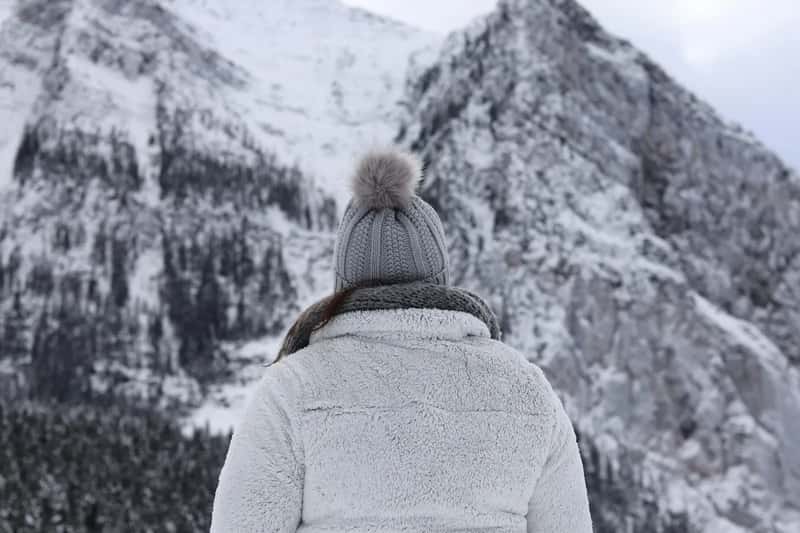
You’ve been performing for so long, you forgot there was a curtain.
Carl Jung described the persona as the social face an individual presents to the world – “a kind of mask, designed on the one hand to make a definite impression upon others, and on the other to conceal the true nature of the individual.”
That mask starts early. It develops in childhood as we learn that certain traits are rewarded while others are punished. We develop a false self-image according to our growing awareness of social norms and expectations.
By adulthood, the mask is immaculate. Pressed. Professional. Tireless.
The danger arises when the persona becomes so ingrained that you begin to identify with it completely, neglecting your inner world. This is the point where the social camouflage starts to obscure your authentic self. When you are no longer aware of the mask, or when you believe the mask is you, you lose touch with your true desires, feelings, and innate potential. This can lead to a profound sense of emptiness, dissatisfaction, and a feeling of being inauthentic, even to yourself.
And then one day, you type “Salar de Uyuni” into a search bar and feel something cold and clean move through your chest.
That’s not wanderlust. That’s a pressure valve opening.
The Landscape as Mirror
The tundra doesn’t care who you told people you were at your last performance review.
The country feels grand and limitless, stretching to the horizons of the broad sky. And in that limitlessness, something strange happens. The curated self – the one with the LinkedIn tagline and the practiced smile – has nothing to attach itself to. No social scaffolding. No one to perform for.
One of the most significant insights from environmental psychology is that place shapes identity – and identity, in turn, shapes how we engage with place.
It is a two-way negotiation. But in a salt flat, the landscape wins.
The salt flats offer the odd sensation of standing on a blank piece of paper. That’s not a travel metaphor. That’s a psychological fact. In a place where visual input is reduced to white and sky, the internal noise of your constructed identity loses its grip. The mirror doesn’t show your job title. It shows your face. The real one.
Transforming space into place is a key activity on an existential level. Our brain enables us to visualise and memorise places that are “good.” And for a certain kind of person – the one suffocating quietly under their own persona – good means empty. Good means honest.
The Small Self Emerges
Psychology has a name for what happens when you stand in the vast and white.
Awe can be understood as a “small self” experience – when we encounter something vast or beautiful, it evokes a sense of humility and interconnectedness.
That diminishment isn’t a loss. It’s a relief. The self you’ve been protecting, polishing, hauling around – it becomes briefly, mercifully smaller than the world.
Awe is a complex emotion arising from the perception of vastness. Several subjective components of awe have been identified, including a sense of connection and self-diminishment, making it a self-transcendent experience. That diminishment – that feeling of the self becoming briefly smaller than the world – is not a loss. It is a relief.
Research proposes that the emotion of awe awakens self-transcendence – reaching beyond one’s self-boundary – which in turn invigorates pursuit of the authentic self, alignment with one’s true self.
This is the thing nobody tells you about the people who book flights to nowhere.
They aren’t running away. They’re running toward the only version of themselves they can still trust.
The Silence That Thinks for You
Low-stimulus environments do something to the human brain that crowded cities simply cannot.
As our five senses are far more sensitive to changes or anomalies in a bleak or desolate environment rather than a busy one, we have the heightened ability to think in terms of the abstract where imagination and reality tend to merge. In general, if we are bombarded with stimuli, we cannot delve deeper into our own minds to discover those subtleties and hidden meanings which are so important for us to develop and advance our own knowledge.
The tundra doesn’t interrupt. It listens.
The world of the bleak and desolate is a better environment for our minds to open out and probe deeper into our surroundings, enabling us to explore ourselves through introspection.
That’s not poetry. That’s neuroscience. Overloaded minds cannot hear their own signal. Strip the noise, and the signal returns. Strip the noise completely – flatten it to salt and wind and sky – and what returns isn’t just signal. It’s the part of you that got buried in the inbox years ago.
Without the usual distractions, travelers have the time and space to reflect. For many, the quiet moments spent gazing at the vast expanse of ice become some of the most meaningful parts of the journey.
The Identity Gap: A Personal Note
I want to tell you something I’ve never quite put into clean sentences.
The first time I stood on a truly empty landscape – wind coming across like a slow sentence, nothing on the horizon but more horizon – I realized I had been performing my own life. Not living it. Performing it. For an audience that existed mostly in my own head.
The flatness had a quality I wasn’t prepared for. It wasn’t peaceful, exactly. It was demanding. It said: There’s nothing here to hide behind. So who are you?
Self-discovery is the conscious process of exploring your identity, purpose, and values. It is an act of awareness – of observing your thoughts, feelings, and behaviors without judgment, to understand what truly drives and fulfills you. It bridges the gap between who you think you should be and who you genuinely are.
That bridge. I found it somewhere around the middle of nowhere.
And I understood, standing there, that the flatness wasn’t empty. It was clarifying. Like a lens that removes everything false.
The Restoration That Actually Restores
We’ve been sold a version of rest that doesn’t work.
Scrolling isn’t rest. Another coffee shop isn’t rest. A weekend in a city isn’t rest. These are substitutions – lower-grade stimuli for higher-grade stimuli. The exhaustion remains.
Attention Restoration Theory – developed by environmental psychologists Rachel and Stephen Kaplan – proposes something quietly radical. It suggests that certain natural environments possess restorative properties. That they restore our depleted capacity for directed attention.
Environments serve as tools for emotional self-regulation. Research by Korpela and colleagues found that people deliberately seek out natural environments to process personal circumstances, reflect on goals, and find solitude.
The salt flat is not a vacation. It is a recalibration.
Compared to ordinary nature, extraordinary nature demonstrates more significant recovery and emotional improvement effects. The extraordinariness of natural landscapes can be evaluated across five dimensions: awe, remoteness, mystery, complexity, and uniqueness. As the extraordinariness of natural landscapes increases, the recovery effect also improves gradually.
You didn’t just need a break from your schedule. You needed a break from your self. The extraordinary landscape was the only thing extreme enough to give you one.
The Invisible Crowd You’re Always Playing To
Modern life is loud with invisible observers.
Today’s hyperconnected world bombards us with comparisons, algorithms, and ideals that make it harder to hear our own inner voice.
You are always being watched. By your followers. By your colleagues. By the version of yourself that monitors how you’re performing against the image you’ve decided to project. Most people suffer from inflation of the persona, meaning that they over-identify with their “social mask” to the detriment of other important areas of the psyche.
The tundra has no audience. That’s the radical thing. There is no one there to confirm your identity or deny it. No one to perform adequacy for. In the desert, no one knows your job title. No one knows your mortgage. Your family history. The version of you that shows up to holiday dinners wearing a performance of adequacy. You are simply a person moving through a vast space.
That anonymity isn’t loneliness. It’s oxygen. It’s the first breath you’ve taken outside the performance in years.
The Evolutionary Ache
Part of this is ancient. Older than Instagram. Older than identity politics. Older than the concept of a career.
Psychologists attribute the pull toward remote destinations to our evolutionary history, where survival often depended on seeking out new territories and resources. While modern life rarely demands such exploration, the desire remains ingrained in our psyche.
The human-landscape relationship has an “inborn” basis, going back to the survival needs of primitive humans. Their environment called for perceptual capabilities and predispositions that today – on a psychological level – are still in operation. They are explained by the so-called Savannah theory, based on the idea that humans continue to prefer the open, mildly flat landscapes, with good access to water which is also in direct view, a clear way to detect predators, and a safe place to avoid them.
Something in your nervous system was built for open ground and visible horizons.
The cubicle, the notification, the open-plan office – none of it speaks that language. The salt flat does. The tundra does. The body recognizes it before the brain has finished forming a sentence about it. You arrive. And something eases. Not because it’s beautiful, necessarily. Because it’s honest.
The Person Whose Identity Doesn’t Fit the Container
Here is the thing that most travel writing refuses to say plainly.
The person drawn to extreme landscapes is, very often, a person whose identity does not fit the container it’s been handed. This is identity work disguised as recreation.
Whether encountered in professional burnout, identity crises, relationship difficulties, or the simple exhaustion of maintaining masks, the Persona archetype invites reflection on the relationship between social role and authentic self, calling us toward integration that serves both individual authenticity and collective participation.
You booked the ticket because the container didn’t fit anymore. Because you had outgrown the performance without having anywhere to perform the real version of yourself. Because the gap between who you are in public and who you are in the silence of 3 AM had grown so wide that only a landscape as vast as the gap could hold both truths simultaneously.
Beginning from the notion that self is constructed, the relationship with place informs identity development. The salt flat isn’t just a destination. It’s a mirror for the construction project you’ve been avoiding.
The Transformation That Travels Home With You
Here is what doesn’t get mentioned in the trip report.
The effect can cause changes in the observer’s self-concept and value system, and is sometimes transformative.
The self-transcendent experience can cause long-term changes in personal outlook, and can influence peoples’ very sense of self.
You don’t come back the same. Not because the trip was magical. Because something in the absence of noise finally gave your actual self enough room to stand up. And once a self has stood up in the white silence of a salt flat, it’s difficult to convince it to crouch back down behind a persona that no longer fits.
The more the shadow is repressed, the more psychological distress is built up. In the worst cases, these hidden sides may burst forth, like a spring under pressure, suddenly and violently, creating issues in one’s life. The tundra gives the shadow a controlled exit. A dignified one. In the open, under the cold sky, without an audience, the shadow gets to just be part of the person. Not a threat. Not a crisis. Just the rest of you, finally walking alongside.
Through stress reduction, resilience building, and the cultivation of awe, travel creates emotional transformations that persist long after the journey ends.
You carry the flatness back with you. The interior horizon. The memory of a moment when no one was watching and you were, briefly, exactly who you are.
And here is what that changes: not the job, not the mortgage, not the difficult relationships waiting at arrivals. What changes is the quiet knowledge that the gap between who you perform and who you actually are is crossable. That there is a version of you that exists without the costume. That you have stood in the middle of nowhere and been, without apology, someone real.
That knowledge doesn’t shout. It doesn’t demand revolution. It just sits in the corner of your ordinary days, patient and still, like a white horizon you carry in your chest – waiting for you to stop performing long enough to remember what you found out there in all that beautiful, unforgiving space.