You book the flight at midnight.
Not because the deal is good.
Because staying still feels like slow erasure.
The volcano has been there for ten thousand years. Your inbox has been unread for three days. These are not equivalent problems – but your nervous system is starting to treat them like they are.
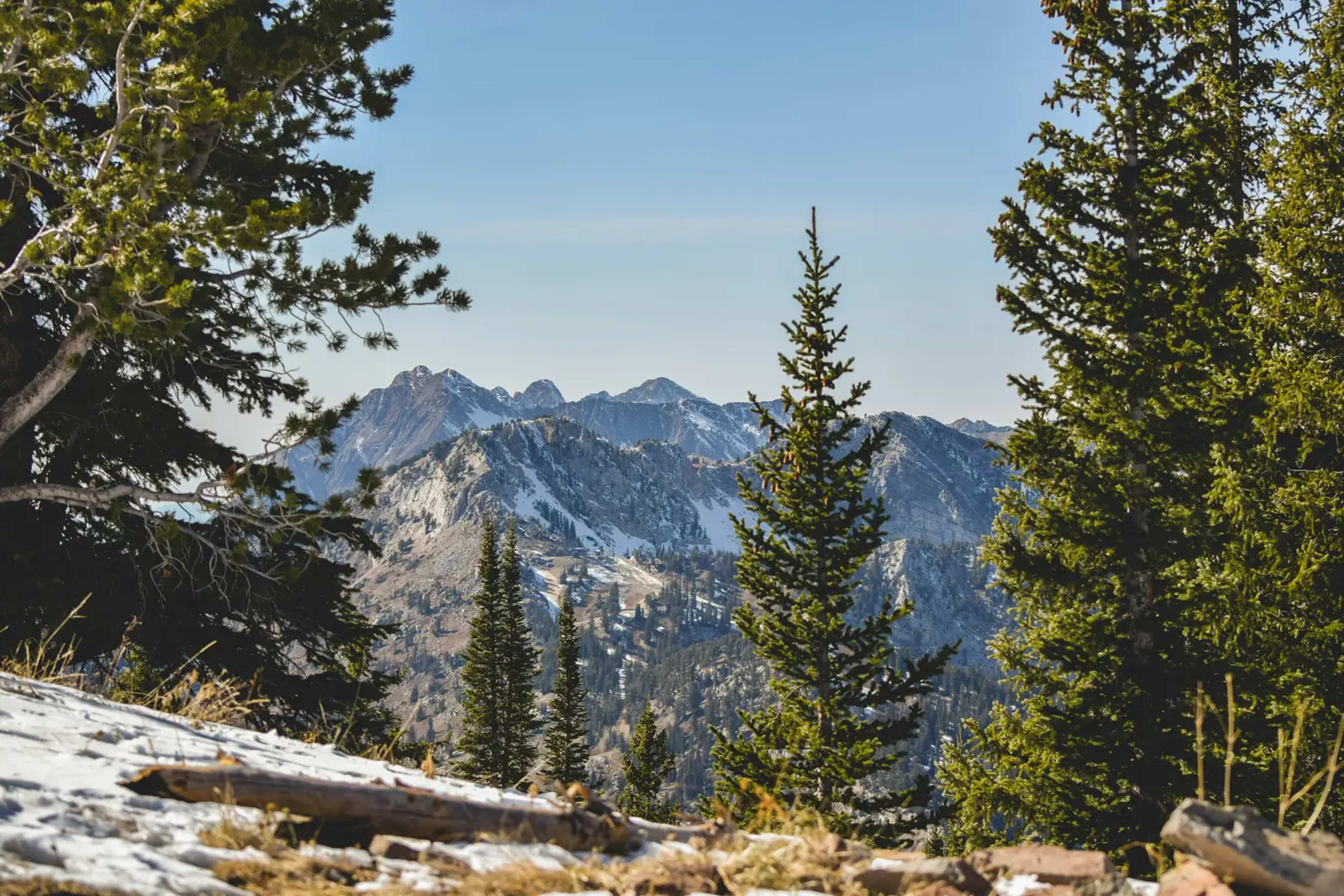
There’s a particular kind of person who stares at a photograph of the Grand Canyon and doesn’t think “how beautiful.” They think: yes, that’s the right size. Not the canyon. The feeling inside them that nobody at the Tuesday morning stand-up has ever once acknowledged.
The identity gap is the space between who you perform yourself to be from Monday to Friday – competent, measured, appropriately ambitious – and who you actually are when a landscape is too large for your ego to survive it intact. Most people spend their whole lives papering over that gap with routine. Some people buy a one-way ticket to a caldera.
1. The Vastness Equation

There’s a clinical term for what happens when you stand at the rim of something enormous.
Psychologists call it “perceived vastness.” It isn’t metaphor. It’s measurement.
In a landmark 2003 paper, psychologists Dacher Keltner and Jonathan Haidt characterized awe experiences by two phenomena: “perceived vastness” and a “need for accommodation.”
That second one matters. Accommodation isn’t comfort. It’s cognitive disruption.
An experience evokes a “need for accommodation” when it violates our normal understanding of the world. The volcano doesn’t care about your quarterly review. The canyon doesn’t know your title.
And something in you – the deepest, most honest register of you – finds that annihilating relief.
Vastness is defined as a stimulus or event that is appraised as much greater in physical size than the self, or is conceptually beyond regular levels of experience or frame of reference.
You haven’t been seeking escape. You’ve been seeking calibration.
The landscape is the instrument. You are what’s being tuned.
2. The Small Self Paradox
Here is the strange arithmetic of awe-seeking: you go to feel enormous, and you return feeling appropriately small.
This sounds like a bad trade. It isn’t.
Research has found that awe can create a diminished sense of self – an effect known as “the small self.” Some studies have shown that people draw physically smaller representations of themselves after being prompted to experience awe, compared to a control group.
Smaller. But not lesser.
Awe has been found to activate a sense of small-self, through which people feel humbler in the grand scheme of things – self-diminishment – and more connected to the greater whole.
The person who drives four hours into the desert at 4 AM isn’t punishing themselves. They’re performing a private recalibration that the office park simply cannot provide.
The paradox is this: feeling small, on your own chosen terms, is the most expansive thing a person can do.
You don’t lose yourself at the rim of a volcano. You finally find the scale that fits.
3. The Dismissed Interior
Most modern environments are designed to keep your interior life at a manageable volume.
The fluorescent office. The open-plan apartment. The commute measured in minutes.
None of these are built for a person who contains multitudes.
Extraordinary nature – such as volcanoes, glaciers, and starry skies – has been largely underexplored despite its potential to elicit stronger emotional and physiological responses.
That’s the clinical version. Here’s the honest one: your daily life may be systematically underestimating you – not your career potential, but your felt existence.
Awe is defined as an emotional experience that arises through an encounter with something that transcends one’s ordinary day-to-day experience, thereby challenging how a person thinks about themselves and the world around them.
The person who books a volcano trek isn’t running from their life. They’re running toward a mirror large enough to reflect the whole thing.
Everything they contain – the grief, the wonder, the unspoken ambition, the 3 AM thoughts – finally has a landscape proportionate to it.
4. The Accommodation Reflex
Something happens in the brain at the edge of something enormous.
It isn’t just awe. It’s a forced update.
In experiences of awe, the need for accommodation that arises as a result of encountering vast stimuli – core appraisals of awe – leads to a meaning-making process.
Meaning-making. Not sightseeing.
Experiencing awe may be adaptive because it encourages us to take in new information and adjust our mental structures around it, helping us navigate our world and increasing our odds of survival.
The person standing at the edge of a canyon isn’t being reckless. They’re being deeply, biologically rational.
Their psyche has recognized that the existing mental furniture no longer fits. The rooms of daily life are too small. The ceilings are too low.
Experiences of awe can lead people to seek meaning more generally about the trajectory of life.
That is the real itinerary. Not the flight path. The life path.
The canyon is just where you go to remember you have one.
5. The Authentic Self, Returning
I remember standing at the edge of a volcanic crater in the early morning – the air tasting of sulfur and cold – and feeling, for the first time in months, like the version of myself I recognized.
Not the version that met deadlines. The version that existed before deadlines existed.
Science has a name for this too.
The emotion of awe awakens self-transcendence – reaching beyond one’s self-boundary – which in turn invigorates pursuit of the authentic self, meaning alignment with one’s true self.
That morning at the crater, I wasn’t escaping. I was returning.
Experiencing awe allows individuals to expand their self-boundaries and view themselves as less separate or more integrated into the larger surrounding world.
The volcano didn’t give me anything I didn’t already have. It just removed every layer of performance I’d stacked on top of the real thing.
That is the gift of scale. Not inspiration. Subtraction.
The self that emerges from a landscape like that isn’t dramatic. It’s just true.
6. The Time Distortion Effect
Time moves differently in extraordinary landscapes. This is not poetry. This is peer-reviewed.
Awe seems to change our perception of time, with research showing that those who experience awe agreed more strongly with statements suggesting that time is plentiful than did people induced to feel happiness.
Time is plentiful. Sit with that sentence.
The person who feels perpetually behind – behind on work, on life, on becoming whoever they were supposed to become – stands at a canyon rim and suddenly, the deadline loses its teeth.
Awe has a demonstrated impact on perception of one’s body and of time.
This is not a side effect of travel. It is the primary mechanism of it.
You don’t go to the lava field to see lava. You go because your nervous system has been running on a clock set by someone else’s urgency, and the geological scale of the place resets it.
A million years of rock formation does not care about your launch date.
And for a moment, neither do you.
That moment is the entire point.
7. The Nervous System That Doesn’t Fit the Room
Not every person who seeks out volcanoes is running from something.
Some of them are simply calibrated at a frequency the ordinary world cannot broadcast.
Psychologist Marvin Zuckerman defined sensation-seeking as “the seeking of varied, novel, complex and intense sensations and experiences and the willingness to take physical, social, legal and financial risks for the sake of such experiences.”
The open-plan office was not designed for this person. Neither was the standing meeting.
People are drawn to extraordinary natural landscapes, and interactions with such extraordinary environments and phenomena can lead to beneficial psychological and emotional enhancements.
The enhancement isn’t incidental. It’s corrective.
Their internal scale – the emotional, existential, sensory capacity they carry – is simply too large for rooms with drop ceilings and recycled air.
The volcano is not a destination. It is a permission structure.
Permission to feel at the size you actually are.
Most people never ask for that permission. They just quietly shrink to fit the available space.
8. The Meaning Architecture
There is a specific hunger that travel feeds. It is not wanderlust.
It is the hunger for a life that holds together.
A sense of meaning has been associated with reduction of distress and depression, increases in personal growth, and greater mental and physical well-being.
The person who plans a canyon expedition in the middle of a professional crisis is not procrastinating. They are architecting.
Self-perception transcends the self, and what emerges is a sense of oneness with the broader universe. Similarly, it is associated with positive emotions like self-realization, and impulses toward honesty and goodness.
Honesty. Goodness. These are not soft words. They are structural ones.
The person who returns from a week in the volcanic highlands isn’t just tanned and rested. They are restructured. The hierarchy of what matters has been quietly, permanently reordered.
Awesome landscapes evoke emotions of “surprise” and “awe,” creating a desire for continued exploration and a heightened interest in such natural landscapes.
What they’re really looking for – beneath the logistics, beneath the Instagram story – is architecture. A reason. A shape for the days ahead.
9. The Humility That Doesn’t Hurt
Modern life offers very few opportunities to be genuinely humbled without being humiliated.
A volcano offers one.
When individuals encounter an entity that is vast and challenges their worldview, they feel awe, which leads to self-diminishment and subsequently humility.
Not the humility of failure. The humility of scale.
There is a difference. The first shrinks you. The second situates you.
Inducing awe led participants to present a more balanced view of their strengths and weaknesses to others and acknowledge, to a greater degree, the contribution of outside forces in their own personal accomplishments.
That balanced view. That acknowledgment.
This is what the high performer who can’t stop crying at the trailhead is actually processing. Not weakness. Context. For perhaps the first time in years, they are standing in a frame large enough to show them the whole picture – including the parts of themselves they’ve been too busy to examine.
The canyon does not judge what it reveals.
It simply reflects.
10. The Identity That Was Always There
This is where it gets heavy.
The person who keeps returning to extraordinary landscapes is not addicted to travel.
They are addicted to themselves – the version of themselves that only shows up when the scale is right.
Awe may focus our attention on the here and now, but research indicates that it also prompts us to think in more self-transcendent ways, shifting our focus from inward concern to an outward sense of universality and connectedness.
Inward concern to outward connectedness. The direction is everything.
Most modern anxiety moves inward. Compressing. Tightening. The self folding back on itself like a map no one can refold correctly.
The volcano unfolds you.
Awe helps broaden the self-concept by including nature and increase connectedness to nature. When your self-concept broadens, so does your tolerance for your own complexity.
The rage you couldn’t explain. The grief you kept rescheduling. The ambition that didn’t fit inside the approved categories. All of it suddenly makes sense at altitude.
Emotional response during a peak experience is described as a constellation of intense feelings, associated with terms like “wonder, surprise, awe, amazement, reverence, humility and surrender before something great.”
Surrender. That is the word that people who’ve never stood at a caldera misunderstand. They think it means defeat. It doesn’t.
It means: I have finally stopped fighting the size of who I am.
The canyon was never the destination. It was always the permission.
You carry something that your daily life has no container for – a scale of feeling, a depth of interiority, a need to mean something that the performance review cannot measure. So you take it somewhere that can hold it. You stand in front of something ancient and indifferent and enormous, and for once, your insides and your outsides match.
That is what the booking confirmation is really for. Not the coordinates. The correspondence – the rare, brief, bodily correspondence between the landscape of the world and the landscape of the self.
You will return. You will re-enter the fluorescent routine. You will answer the emails and attend the meetings and perform the version of yourself that the situation requires.
But somewhere in the back of your chest, behind the ribs, in the place that remembers the sulfur air and the impossible silence at the rim of something older than language – you will know the actual size of things.
And that knowledge, quiet as it is, changes every room you walk into.