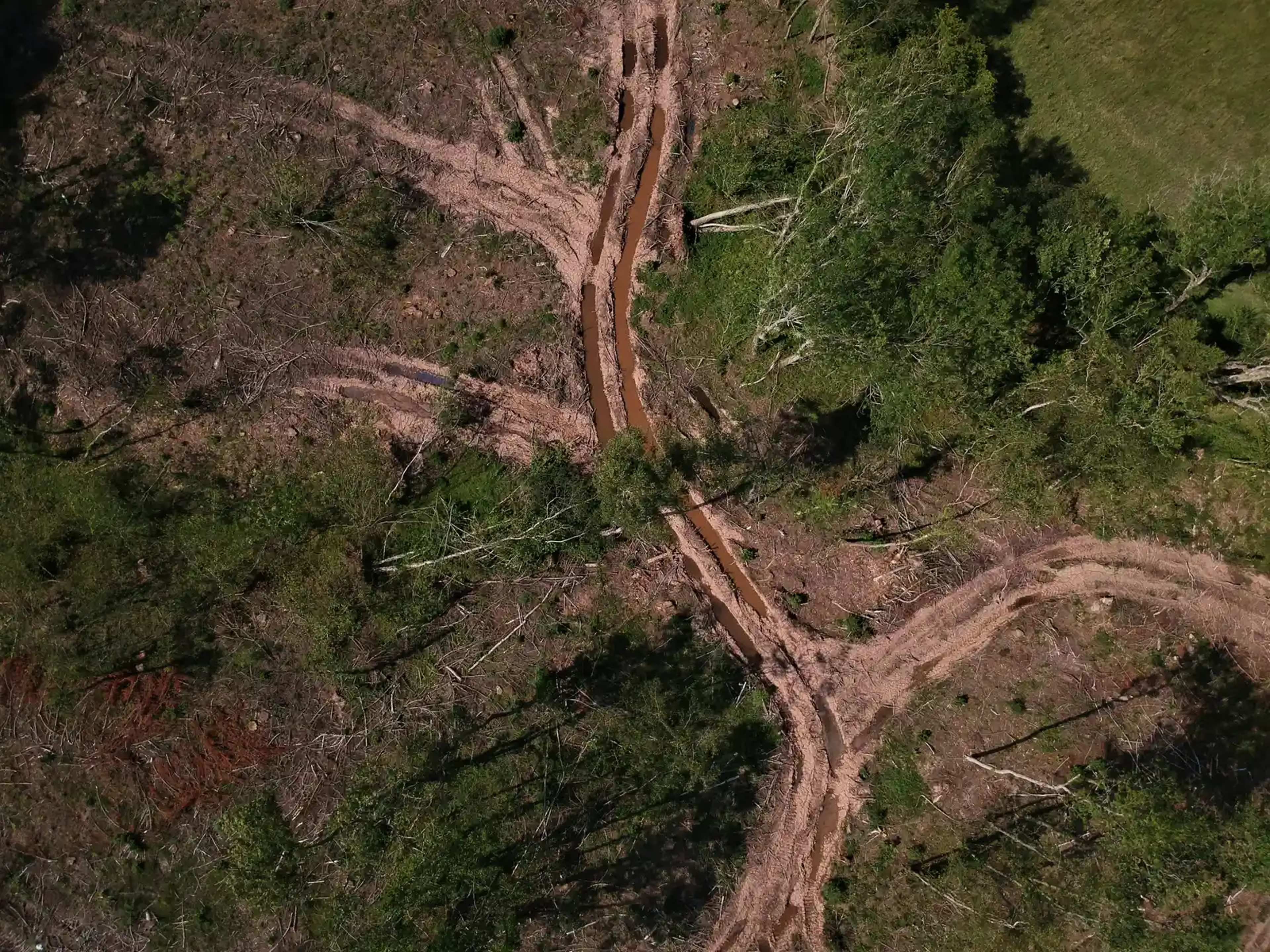
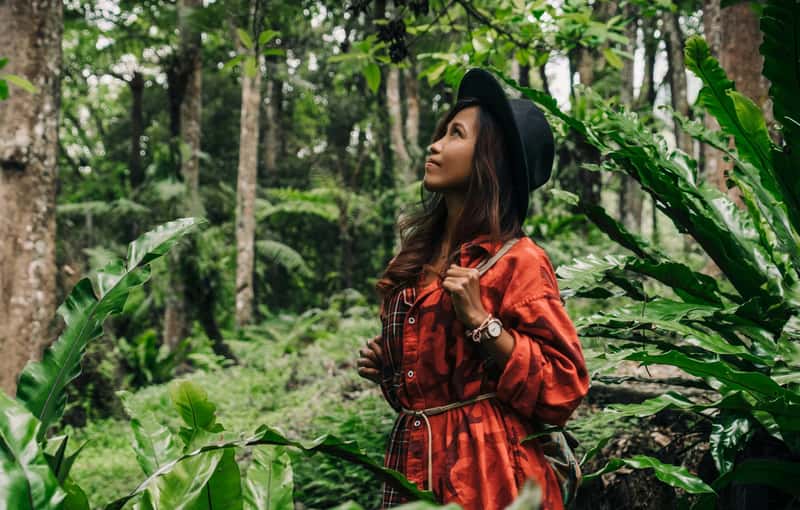
You are standing in a forest at dawn.
You do not know why you drove four hours to get here.
Your hands are dirty. Your phone has no signal.
And for the first time in months – possibly years – something inside you goes quiet.
This is the chasm between the version of yourself you maintain for the algorithm, the open-plan office, and the group chat – and the version that remembers, on some cellular level, that you were built for something rawer than this. The gap between the person who orders groceries on an app and the person whose hands still know, instinctually, how to forage, to track, to survive. We paper over that gap with productivity and convenience. We call it progress. But the body keeps the score. And lately, it is keeping it in the forest.
1. The Mismatch Was Always There
It did not start with smartphones.
It started the moment settled civilization decided that survival intuition was a liability, not an asset.
For most of human evolutionary history, our species lived as hunter-gatherers. Much of our cognition and behavior is adapted to this way of life. Given the magnitude of sociocultural, economic, and lifestyle changes over the last 10,000 years – especially the last several hundred – aspects of human psychology may be maladapted to modern ways of life.
That maladaptation is not an abstraction.
It is the low hum of dread you cannot name. The restlessness at 2 AM. The strange grief of sitting inside on a beautiful day, staring at a screen, unable to explain why you feel like something vital has been taken from you.
This process of maladaptation following changes in the physical or social environment is referred to as “evolutionary mismatch” and has been hypothesized to contribute to the high prevalence of mental disorders in industrialised societies.
The ancestral foraging trip is not a hobby. It is a diagnosis. And the forest is the prescription.
2. The Domestication Trap
We were tamed so slowly we barely noticed.
From the moment we are born, our parents begin a process of domestication that has been repeated for many generations – though we have been wild for 99% of human history. This domestication process requires us to suppress the things that make us most human: our innate awareness, our boundless passion and joy, our desire to live every moment of life fully and completely.
Think about what that means.
Not a single, dramatic rupture. Not a theft you could identify and report.
Just a long, quiet stripping. A generation-by-generation pruning of the instincts that once kept us alive.
There are millions of years of hunter-gatherer instincts inside each of us, and our natural wildness yearns to break free.
The foraging trip is, at its core, a jailbreak. A decision to stop apologizing for the animal that lives inside your civilized skin. To take it somewhere it can breathe.
3. The Nature Deficit Is a Wound, Not a Preference
Modern culture frames nature as a leisure option. A weekend activity. A nice-to-have.
Psychology disagrees.
An expanding body of scientific evidence suggests that nature-deficit disorder contributes to a diminished use of the senses, attention difficulties, conditions of obesity, and higher rates of emotional and physical illnesses.
This is not poetic. This is clinical.
Experts say that although humans are generations removed from the hunter-gatherer ancestors who spent the majority of the daytime hours outside, the human brain is still hardwired to respond positively to nature.
Ancestral foraging trips are, then, a form of neurological homecoming. A return to the operating environment the brain was designed for. The forest does not just feel good. It feels correct. That distinction matters enormously.
4. The Alarm System That Never Stopped Ringing
Your anxiety is not a flaw.
It is ancient software running on the wrong hardware.
Our ancient alarm system, designed to alert us to immediate dangers, is now triggered by social interactions, deadlines, and basic worries. This constant state of alert can lead to chronic anxiety disorders. In essence, our evolved trait of vigilance, which once protected, now results in an overactive stress response to non-life-threatening situations.
The tragedy is not that we are anxious. The tragedy is that we became anxious about the wrong things entirely. We are wired for predators. We are living among spreadsheets.
When you go foraging – when you kneel in the dirt to identify a plant, when you listen for water, when you navigate by light and smell – the alarm system finally has something real to do. The body stops catastrophizing. It starts working. And the relief that follows is not relaxation. It is recognition.
You remember what you were built for.
5. The First Time I Got It Right
I will tell you something I have not included in a column before.
I was burning out badly. Deadlines were a weather system I lived inside. The city felt like a machine I was feeding, rather than a place I inhabited. On a half-mad impulse, I joined a guided foraging walk in a scrubby patch of woodland outside the city – the kind of place that feels apologetic for existing beside a motorway.
Within twenty minutes, something shifted.
Not because the forest was spectacular. It was not. But because my attention, for the first time in years, had a specific and honest job to do. Find the thing. Smell it. Touch it. Know if it is safe. My nervous system, so accustomed to performing focus in a meeting room, suddenly discovered what actual focus felt like. Rooted. Present. Earned.
I brought home a small bag of herbs I could not have named a week earlier. I cooked them into something simple. And I ate at my kitchen table with a quietness inside me that no meditation app had ever managed to manufacture.
That silence was not peace. It was alignment.
6. The Psychology of the Earned Reward
Modern consumer culture has severed the chain between effort and reward.
We receive. We do not hunt.
Today, most of us purchase the things we use, and most of life’s necessities come at the push of a button. But when we do something as basic as provide heat by making fire with our own hands, we connect with life in a way that can never be approximated in our button-pushing culture.
The psychological weight of that cannot be overstated. The dopamine system evolved to reward search, discovery, and acquisition – not passive consumption. Foraging behavior involves searching for, acquiring, and consuming food, driven by internal needs and the surrounding environment. It is not just about finding food; it evokes emotional responses that can enhance well-being.
This is why the meal you forage tastes different from the meal you ordered. It is not the herbs. It is the loop – closed, whole, and ancient. The brain recognizes it. The body exhales.
7. The Identity Reclamation
Who are you when GPS fails?
Who are you when the delivery window closes and the shelves are empty?
For millions of people shaped entirely by convenience culture, this question produces a specific, creeping dread. Not just practical helplessness, but existential helplessness.
Rewilding – and ancestral foraging as part of it – is about aligning our activities and habits with our hunter-gatherer ancestry. It is about integrating ancestral ways of life into our daily habits, revitalizing ourselves and recovering from the demands of contemporary life.
The foraging trip is, therefore, an identity reclamation act. A decision to answer that dread with competence. To stop being a passive recipient of the world and become, again, someone who can read it, move through it, and take sustenance from it directly. This is not nostalgia. This is reconstruction.
8. The Rewilding of the Inner Ecosystem
Psychological rewilding goes deeper than woodland walks.
For years, many have witnessed – in group circles, on social media, with clients and within themselves – a collective mourning for loss of community and connection, a felt sense of impending ecological disaster, and desperate searches for experiences that will return many in Western culture to feeling whole, embodied, wild, free, and purposeful. Mostly these are subtle and unconscious pleas to reconnect, return, and reclaim untamed, intuitive, and unique parts of ourselves secreted away.
The ancestral foraging trip meets that plea directly. Not with language. Not with therapy-speak. With soil. With weather. With the specific intelligence of knowing which mushroom will nourish you and which will not – and trusting your own senses to tell the difference.
By allowing us to connect to the innate intelligence, intuition, and creativity within us, rewilding can spur intuitive, holistic self-care rooted in nature and connection, as well as mind, body, soul, and spirit wholeness.
9. The Rebellion in the Roots
Let us call the foraging trip what it actually is.
A quiet act of revolt.
Since the end of World War II, our cultural perspective has been subsumed by the corporate dictum of planned consumerism. There are now four generations who live within this corporate bias. And now, that bias is itself being re-shaped by artificial intelligence, the digital realm claiming ever more of our collective attention.
Our culture delivers the message that we are all flawed and that various products will fix our lives. We are subjected to advertising for foods, vehicles, prescription drugs, and an endless barrage of commercial offerings we’re told will fix us.
To walk into a forest with a basket and your own hands – refusing the supplement, the subscription, the curated wellness package – is to say: I already contain what I need. The rebellion is not loud. It does not carry a sign. But it carries a small knife and knows how to use it.
10. The Quietest Revolution Is Growing in the Ground
Foraging – the ancient practice of searching for and harvesting wild food – is experiencing a resurgence in popularity. As people seek more sustainable and adventurous ways to connect with nature, foraging offers a unique opportunity to discover the bounty of the natural world.
But the numbers only tell half the story.
The other half lives in what people report when they come back. Not just relaxation. Not just a nice weekend. Something more structural. A reorganization. Rewilding rests on one fundamental fact of modern life: evolutionary mismatch. While we are working hard to live our contemporary lives, we still retain the genes, physiology, and neurology of our hunter-gatherer ancestors – and this mismatch can create profound disturbances, psychologically and environmentally.
The foraging trip closes that distance, however briefly. It says: here is the environment your brain was built for. Here is the task your hands were shaped to do. Here is the reward you were wired to feel.
And the brain, finally, goes still.
There is something worth sitting with in the fact that the most radical thing millions of people are quietly choosing to do is simply return to what they already were. Not reinvention. Not optimization. Not a new version. Just a return to the version that existed before the domestication, before the algorithm, before the endless commercial message that you are broken and the product will fix you.
The forest does not ask you to perform. It does not offer a rating system. It is, by its nature, indifferent to your credentials and your calendar. And in that indifference – brutal and clean as it is – something in the nervous system finally, visibly relaxes. The performance ends. The animal that has been sitting in the waiting room of your life for years quietly steps forward and gets to work.
That work is simple. Find the thing. Know what it is. Carry it home. Eat it at a table without a screen. And notice, in the silence that follows, that you were never really lost – only stored, waiting for the right kind of ground to come back to.