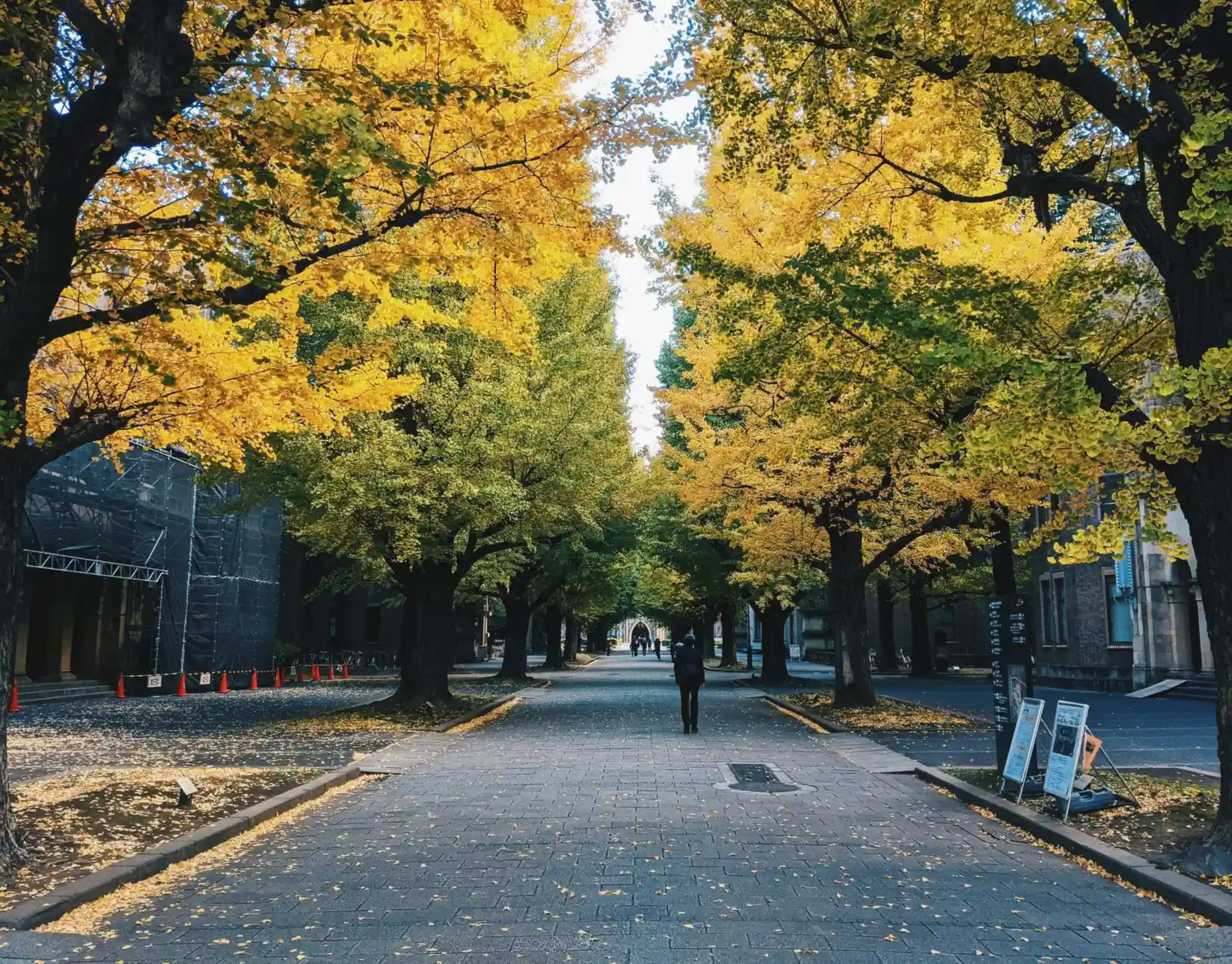
One bag. One zipper. One clean exit.
You move through the terminal like smoke.
No checked luggage. No one to wait for. No one waiting for you.
There is a version of this story that reads as freedom. Sleek. Optimized. Enviable. But beneath the merino wool base layer and the ultralight titanium spork, something else is packed. Something that doesn’t show up on the weight scale. Something you’ve been carrying since long before you ever bought a one-bag travel pack.
This is the chasm between who you curate – the frictionless, self-sufficient nomad with a 26-liter backpack – and who you actually are: someone who learned very early that other people’s needs were weight you could not afford to carry. The one-bag aesthetic is not just a packing philosophy. It is an autobiography compressed into a single compartment.
1. The Controlled Container

The bag has rules. Strict ones.
Nothing over 22 liters. No duplicates. Every item earns its place or it doesn’t come.
On the surface, this reads as discipline. As intelligence. As a traveler who has simply optimized the experience of movement.
But psychology offers a quieter reading. Emotional baggage refers to all those conflicts, unresolved traumas, or negative experiences from the past that remain latent and continue to have an impact on your well-being, your thinking, and the decisions you make. The traveler who controls the physical container with near-obsessive precision is often, unconsciously, trying to prove that they can control the emotional one too.
If the bag stays light, maybe so does the life around it.
If nothing extra enters the pack, nothing extra enters the dynamic.
The rules about what fits in the bag are rarely really about the bag. They are a dress rehearsal for a deeper, older belief: that letting too much in – too many people, too many needs, too many entanglements – will crush you under a weight you were never taught to carry.
The container is controlled. The container is safe. The container is, quietly, a psychological portrait.
2. The Temporary Identity
In transit, you are no one’s anything.
You are not someone’s partner. Not someone’s child. Not the person who owes a phone call, a visit, an explanation.
You are a boarding pass and a destination. The terminal does not know your history.
Solo travel dramatically reshapes one’s identity by shedding attachments and inner roles, with each independent decision – from routes to meals – conveying preferences. But there is a shadow side to that shedding. When shedding becomes the goal itself, the traveler isn’t building identity. They are erasing it. Deliberately. Reliably. Repeatedly.
The one-bag movement can drift toward performative minimalism – minimalism as identity rather than tool.
The temporary identity is seductive precisely because it is temporary. It cannot accumulate weight. It cannot be held accountable. The person who exists only in motion never has to answer for the person they are when still.
And that is the point.
Impermanence is not freedom. Sometimes, it is the most elegant avoidance strategy ever invented.
3. The Exit Strategy
You always know where the door is.
In every hostel, every Airbnb, every hotel room booked for three nights maximum. You have surveyed the exits before you have unpacked. And you barely unpacked anyway.
The moment a travel companion gets too close – too real, too needy, too human – there is an exit. A solo detour. A headphone insertion. A sudden interest in the museum no one else wants to visit.
The single bag is the exit strategy made physical.
It takes eleven minutes to be ready to leave. You have timed it. Not consciously, but functionally. That exit strategy didn’t appear from nowhere. It was engineered over years of small hurts, each one adding a new lock to a door that used to swing wide open.
This is the architecture of the one-bag traveler’s inner life: fast egress, minimum footprint, zero trace.
You disappear so cleanly that sometimes even you can’t find where you went.
4. The Passport as Shield
The passport is full of stamps.
You have been to more countries than most people have had difficult conversations. You know the transit codes for airports in cities no one you grew up with could find on a map. You speak enough of several languages to order coffee and decline commitment in fluent, polite terms.
The passport becomes proof that you need no one.
An avoidant attachment style is a pattern where individuals steer clear of emotional closeness and tend to minimize the importance of intimate relationships, often as a way to protect themselves emotionally. People with this style usually have a skeptical or negative view of others but maintain a relatively positive view of themselves. They often see others as unreliable or dishonest, while believing they are independent, capable, and don’t really need support from anyone else.
The passport is curated evidence of that narrative. Each stamp says: I was here. I managed. I needed nothing from anyone. I moved on.
The stamps are real. The evidence is real. The story it is used to tell is the part worth examining.
5. The Weight Obsession
I know this one personally.
I used to weigh my bag before every trip. Not because I was worried about airline limits. Because something about watching the number stay low felt like control. Felt like I was winning some unnamed game. I would remove a book to save 400 grams and then spend three hours in an airport bookshop, emotionally unwilling to sit with the absence.
What I was really weighing wasn’t the bag. It was the question of how little I needed. How few attachments I could prove I required. The lighter the pack, the more self-sufficient the story. And the more self-sufficient the story, the further from needing anyone I believed I was.
The problem begins when that baggage becomes too heavy and prevents us from moving forward. The problem appears when we cannot free ourselves from its emotional impact and allow it to rule our lives and decisions. The problem, therefore, is not the emotional baggage, but our inability to lighten it.
Obsessing over the physical weight is a performance staged for an audience of one: the version of yourself that is still trying to prove it doesn’t need to be held.
6. The Avoidant Architecture
There is a clinical framework beneath the romanticism.
This attachment style usually develops as a result of emotional rejection and neglect from primary caregivers in early childhood. For these individuals, avoidance and withdrawal become their strategy to protect themselves from experiencing more pain and abandonment.
The one-bag traveler rarely traces it back that far. They speak the language of freedom, not fear. They use words like “minimalism,” “intentionality,” “digital nomad.” They do not use words like “I was taught that needing people was dangerous.”
Avoidant attachment in adults may, from the outside, look like self-confidence and self-sufficiency. This is because the avoidant attachment style causes a low tolerance for emotional or physical intimacy and, sometimes, struggles with building long-lasting relationships.
The one-bag is the architecture of that avoidance made manifest.
Compact. Mobile. Unencumbered.
A home that cannot trap you. A life that cannot weigh you down. An existence that never, not once, asks you to stay.
7. The Romantic Itinerary
Every destination is planned. Every connection is not.
The one-bag traveler excels at brief, dazzling intimacies. The stranger on the night train who becomes a four-hour confidant. The hostel kitchen conversation that feels more honest than any relationship back home.
These connections are real. And they are also perfectly safe.
Avoidant attachment is a relational pattern in which closeness, dependency, or emotional intensity begins to feel threatening rather than soothing, especially as intimacy deepens. People with avoidant attachment often value autonomy highly and regulate stress by pulling back. They may feel most comfortable when connection is present, but not requiring sustained emotional engagement, accountability, reliable planning, or repair.
The night train arrives. The conversation ends. You both exit toward different platforms.
No follow-through required. No weight accumulated. The emotional ledger stays clean.
They may not feel secure in their sense of self and fear the way that a relationship will impact their identity. A fear of being trapped and missing out on other experiences could also indicate commitment phobia.
The romantic itinerary is always solo. Even when someone is sitting across from you.
8. The Self-Sufficiency Myth
You can fix a broken bag strap in a bus station in Tbilisi.
You can navigate a 14-hour delay in a language you learned from a podcast. You can book accommodation, negotiate price, solve problems, eat alone at the corner table without your phone as a prop.
This is real capability. It is earned. It is impressive.
And it is also a myth, in the way all myths are: not entirely false, but weaponized in the service of a deeper story.
At some point as children, people with an avoidant attachment style did not have all their needs met either physically or emotionally, so they learned not to rely on people. At an unconscious level, they assume they’ll be rejected physically or emotionally, so they protect themselves because otherwise they know they’ll get hurt. They have been taught that people are unreliable, so unconsciously they act accordingly. It is a coping mechanism that came out of fear and pain.
The self-sufficiency is the myth. The fear is the foundation.
The bag proves you need no one. But proof is only required when you’re still not sure.
9. The Loneliness That Doesn’t Show Up on Instagram
The photo is beautiful.
Golden hour. Ancient stone steps. One small bag resting against a crumbling wall. The caption says something about freedom. About unburdened movement. About the road.
What the caption doesn’t say:
The three-day silence. The sense that the city is full of people who will never know your name. The dinner eaten at speed because sitting alone in a restaurant for longer than necessary feels like an accusation.
While both insecure attachment styles are associated with increased loneliness, avoidant people have low motivation to overcome this state, as a result of which they remain isolated and lonely over time.
Every trip taken behind that door is a beautiful postcard sent from a prison you built yourself. The architecture is impeccable. The loneliness is structural.
The Instagram grid is curated. The loneliness is not.
It just travels light.
10. The Heaviest Thing You Carry
You have read the packing lists. You have debated merino versus synthetic. You have watched forty-seven YouTube videos on compression cubes and sub-100-gram rain jackets.
You have never once watched a video titled: “Why I can’t stop moving.”
The heaviest thing in your bag is invisible. It does not compress. It does not respond to organization systems or ultralight alternatives.
Emotional baggage refers to all those conflicts, unresolved traumas, or negative experiences from the past that remain latent and continue to have an impact on your well-being and even on your way of thinking, the decisions you make, and your behaviors.
What they fear most isn’t being seen – it’s being expected to give more than they can regulate.
That is the weight. That has always been the weight.
Not the gear. Not the people you left. Not even the places you couldn’t stay.
The weight is the belief – worn smooth by years of reinforcement – that being truly known by another person is the most dangerous form of travel there is. That intimacy is a checked bag. That love is luggage you cannot afford to carry and still move this fast.
People who have been betrayed or hurt in the past often develop a protective shell to prevent them from being hurt again. That armor unfolds in the form of emotional detachment. However, although building walls can protect us, it also prevents us from establishing deeper emotional bonds and, therefore, limits our ability to enjoy and share with others or even maintain lasting relationships.
Somewhere between the gear review and the next departure, there is a question that does not fit inside a 26-liter pack. It is too soft to be answered in a terminal. Too honest to be addressed in motion.
It sounds something like this: What would it mean to arrive, and choose to stay? Not in a city. In a life. In a relationship. In the kind of stillness that doesn’t require an exit strategy, that doesn’t demand you keep the bag by the door. Distance creates safety for reflection. Proximity raises the stakes. But the stakes are not the enemy. They are simply the proof that something matters. And mattering to someone – allowing someone to matter to you – is not weight. It is not a checked bag. It is not the thing that slows you down.
It is, in fact, the only thing that gives movement any meaning at all.
The bag will always be there, zipper-ready, by the door.
The question is whether you packed it out of love for the road, or out of fear of the room.