You’re standing in a foreign market at noon.
Your bag is too heavy. Your phone has no signal. Your name sounds wrong in someone else’s mouth.
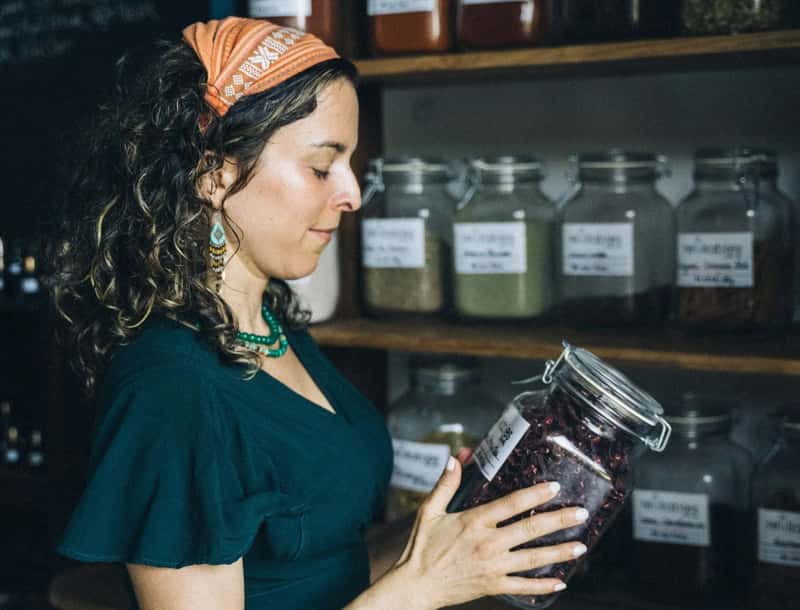
And yet – you lean into a jar of cardamom and breathe like your life depends on it.
It does.
Not metaphorically. Not poetically. Neurologically, emotionally, psychologically – it genuinely does.
The spice market is not a destination. It is a conversation between the adult who books the flight and the child who never really left the room they grew up in – the one who still needs, more than novelty, more than adventure, more than the next stamp in the passport, the simple animal comfort of a smell that means: you are not lost. you were always here. this is what you actually are.
1. The Temporary Identity
Every traveler builds one. A character for the road.
It is assembled quickly. From the boutique hostel aesthetic. From the knowing way you order coffee in a language you half-speak. From the way you say “I’ve been traveling for three months” as if that sentence explains something profound about who you are.
Due to a change in customs, traditions, and values, it can be challenging to maintain a sense of identity about a culture that feels now far in time and space. We may feel displaced – like we don’t belong anywhere. So we construct the Temporary Identity. It is a coping mechanism wearing a linen shirt.
The spice market disrupts it.
The moment you press your nose to a bundle of dried oregano or lean over a copper bowl of turmeric, the performance stops. Dissociation can feel like watching your life through a foggy window or operating on autopilot while your mind drifts somewhere else entirely. This disconnection from your surroundings, thoughts, or sense of self is more common than you might think.
The spice pulls you back in. To your body. To the moment. To something real.
The Temporary Identity cannot survive the olfactory system.
2. The Bypass
Other senses are polite. They wait their turn.
Sight, sound, and touch all travel through the thalamus – the brain’s relay station – before they are processed and filed. They are reviewed before they are felt. Smell signals bypass the thalamus and go directly to the olfactory bulb and then quickly to the amygdala and hippocampus.
This is not poetry. This is anatomy.
When you smell cumin at a Marrakech souk or star anise at a Bangkok market, the signal does not ask permission. It does not go through customs. The olfactory bulb has direct connections to the amygdala and hippocampus, the regions responsible for processing emotions and storing long-term memories. Other senses must first pass through the thalamus, the brain’s sensory relay station, before reaching memory-processing areas. But because smell bypasses this step, scents can trigger vivid, emotionally charged memories more quickly and intensely than other sensory cues.
The smell arrives before the thought. The memory rises before you name it.
You are not smelling cardamom. You are being returned – involuntarily, violently, tenderly – to somewhere you once belonged.
3. The Childhood Archive
The nose remembers childhood in a way the mind refuses to.
The olfactory bump appears already at the age of six to ten years. It is now well established that smells have a unique capacity to evoke memories of childhood. Not adolescence. Not early adulthood. The raw, unedited archive of being small.
Smell is the only fully developed sense a fetus has in the womb, and it’s the one that is the most developed in a child through the age of around ten when sight takes over. And because “smell and emotion are stored as one memory,” childhood tends to be the period in which you create “the basis for smells you will like and hate for the rest of your life.”
So when you stand in a foreign spice market obsessively inhaling things you cannot even name – you are not being eccentric.
You are rifling through an archive. You are searching for the smell that says: safe. known. home.
You are looking for the one that matches something already inside you.
4. The Displaced Inner Child
Psychology has a name for what you carry with you.
The inner child has been defined as “all the past hidden ages” within a person’s life journey, consisting of memories and emotional layers from each stage of development that influence the formation of identity. It is not a metaphor for weakness. It is not therapy-speak. It is the substrate of who you are beneath the itinerary.
Your inner child is a culmination of your childhood experiences and unresolved emotions. These inform your present-day beliefs, feelings, and reactions.
The chronic traveler – the one who cannot stay still, who itches in familiar rooms, who finds airports less frightening than dinner parties – is often operating from a displaced inner child. A child who learned early that somewhere else was safer than right here.
Many adults’ inner child has been denied, neglected, denigrated, dismissed, discredited, abandoned, or rejected. We are told by society to “grow up,” putting childish things aside. We have been taught that to become adults, our inner child – representing our child-like capacity for innocence, wonder, awe, joy, sensitivity, and playfulness – must be suppressed, stifled, overcome, squashed, or even killed.
The market is where the inner child finally gets to breathe.
5. The Involuntary Clinic
I was in Istanbul on a Tuesday I don’t remember choosing.
The Grand Bazaar had been crowded and transactional, and I had walked through it like a ghost. But then I turned a corner into a narrower passage – unlabeled, unhurried – and a woman was grinding dried rose petals behind a wooden counter. I stopped. I leaned. I inhaled for what felt like thirty seconds straight while she watched me with no expression.
Something released in my chest that I hadn’t known I was holding.
Later, I would understand what had happened. Grounding techniques help people to direct attention to the present moment and towards safety in the here-and-now. By practising specific techniques, people can learn to direct attention to their body and the senses. I had used the market as an involuntary clinic. The woman with the rose petals was, without knowing it, my therapist.
Introduce sensory stimuli like essential oils or textures to aid grounding. That is the clinical instruction. Therapists hand clients scented objects to interrupt dissociation and pull them back into their bodies. I had found the same intervention between a tea shop and a prayer rug vendor.
The displaced traveler finds their own clinics. The market is one of the oldest ones there is.
6. The Grounding Architecture
Sensory grounding is not accidental. It has a structure.
By practising specific techniques, people can learn to direct attention to their body and the senses through Sensory Grounding. These strategies work by helping clients shift their attention back to the present moment – whether through sensory input, cognitive reframing, or physical engagement with their environment.
The spice market is an architecture perfectly designed for this.
It overwhelms the dissociating mind with sensation. Color. Texture. Sound. Heat. And above all – smell. It makes abstraction impossible. You cannot drift very far into existential crisis when your nostrils are full of sumac and dried lemon.
Grounding techniques work by engaging the senses and occupying the mind in a non-destructive fashion. That is the clinical definition. The market is the non-clinical version. Chaotic, democratic, ancient, and free.
Most people already have developed sensory grounding resources without realizing that is what they were doing.
You were doing it every time you stopped at a stall and breathed.
7. The Identity Anchor
A displaced person needs something to hook themselves to.
Identity can be restored through memory, place, belonging, narrative, and agency. The spice stall offers, in one breath, three of those five: memory, place, and the sense – however brief – of belonging to something older and less anxious than your current life.
The Jungian analyst John Hill tells us that the loss of home is a quest for identity. “As home is intrinsically connected to a sense of self, its loss may have devastating effects on people’s lives.”
The traveler who cannot go home – or who has decided, quietly, that home no longer exists in the form it once did – builds anchors wherever they can. A specific coffee ritual. A particular song played on arrival. A beloved book carried to thirty countries. And the spice market. Always the spice market.
A review of the literature leads to the conclusion that odors that evoke positive autobiographical memories have the potential to increase positive emotions, decrease negative mood states, disrupt cravings, and reduce physiological indices of stress.
The anchor works. Science says so. Your nervous system already knew.
8. The Exit Strategy That Isn’t
Here is the dark version of the same truth.
Some of us travel not to discover the world but to escape a self that became too uncomfortable to inhabit. The movement feels like growth. It is dressed up as curiosity. But underneath – it is flight.
Dissociation is a psychological response to overwhelming experience, allowing individuals to psychologically distance themselves from experiences that would otherwise be too intense to process. It is a survival-oriented adaptation – part of the body’s evolved defense system.
Chronic movement can be its own form of dissociation.
Always a new city means never confronting the old self. Never unpacking. Never staying long enough to feel the particular loneliness that only arrives after three weeks in a place – when the novelty has burned off and what’s left is just you, sitting in a room, wondering why you are still not satisfied.
Due to a change in customs, traditions, and values, it can be challenging to maintain a sense of identity about a culture that feels now far in time and space. We may feel displaced – like we don’t belong anywhere. The Exit Strategy that was supposed to solve the problem becomes the problem itself.
The spice market is not the exit. It is the intervention.
9. The Body Comes Home First
Before the mind resolves anything. Before the journal entry makes sense. Before the therapy session finds its breakthrough.
The body comes home first.
According to Lowen, grounding is “feeling contact between the feet and ground… in a broader sense grounding represents an individual’s contact with the basic realities of his existence.”
You do not decide to be grounded. You are grounded – by a smell, a texture, a moment of involuntary, overwhelming present-tense reality. The body, before the mind, says: here. now. this.
The sense of smell has the capacity to automatically trigger emotional odor memories. Odor-evoked memories are exceptionally viscerally involving because the neuroanatomy of olfaction has a privileged and unique connection to the neural substrates of emotion and associative learning.
When you inhale cinnamon at a market stall in Oaxaca or Tbilisi or Penang – something in your nervous system stops running. Just for a moment. Just long enough to remember that you have a body, and the body has a history, and the history is not something you can outrun on a connecting flight.
Olfactory memories evoke a sense of “going back in time” in a way that no other sensory experience does. Smells can make you relive moments – you remember the details, relive the moods.
The displaced inner child does not need a destination. It needs a moment of recognition. The spice market provides exactly that – a recognition so old it predates language.
There is something both tragic and quietly beautiful about a fully grown adult in a foreign market, pressing their face toward a jar of dried herbs, eyes half-closed, transported. They look, to the uninitiated observer, like someone being eccentric. Like a tourist overacting delight.
But they are doing something far more essential. They are performing, without instruction, a technique that therapists prescribe in controlled environments for people in psychological distress. They are reaching, through the oldest neurological pathway the human brain possesses, toward a version of themselves that existed before they learned to perform, before they learned to run, before the first suitcase was ever packed.
Next time you stop at a stall and breathe without knowing why – don’t explain it away. Just stay there. Let the cardamom do what the cardamom knows how to do. The child inside you has been waiting, patiently, for exactly this kind of ordinary magic.