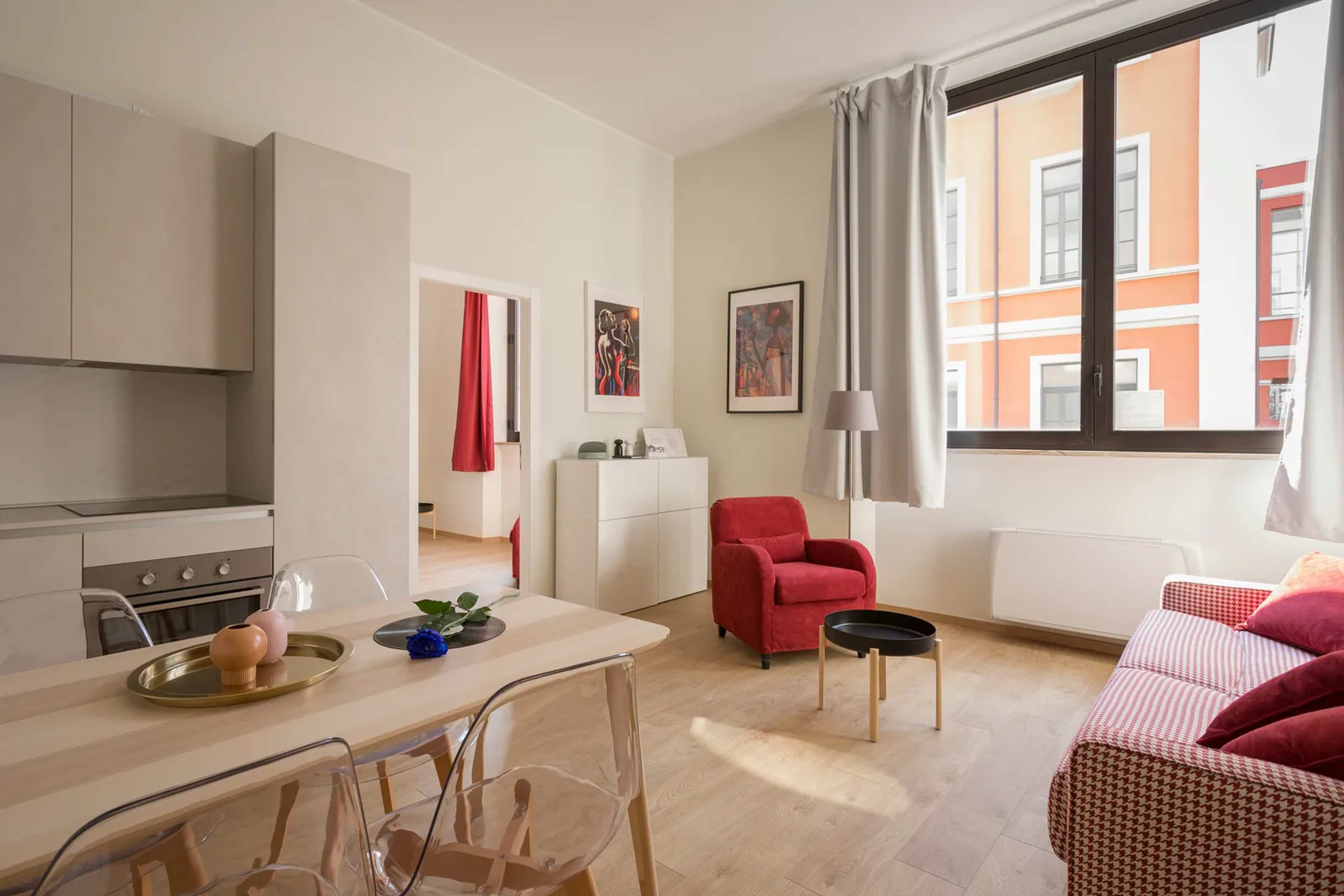
The bed at home is perfectly fine.
You know that.
And yet you cannot sleep in it.
You lie there, spine flat against a mattress that costs more than your first car, staring at a ceiling you’ve memorized like a crime scene. The notifications are off. The room is dark. But something won’t let you go – some phantom version of yourself, still at a desk, still in a meeting, still performing the role of a person who has everything under control. We exhausted ourselves so completely, so systematically, so culturally – that sleeping well in our own beds became something we have to travel internationally to remember how to do. The distance is not a preference. It is a diagnosis. The passport is not a travel document. It is a referral.
1. The Permission Economy
Here is what nobody wants to say out loud.
We need someone else to tell us it is okay to stop.
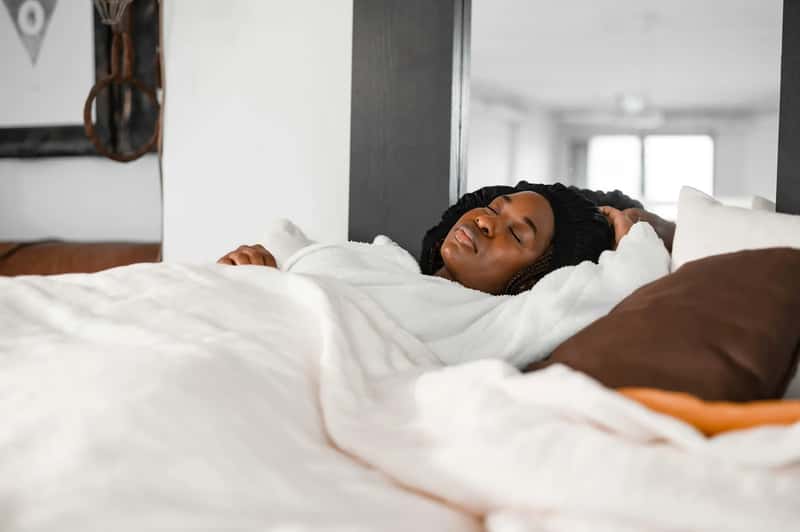
A lot of people feel like they’ve forgotten how to rest. Sleep tourism offers an escape with structure – it gives them permission to prioritize rest and introduces routines or tools they can bring home. That phrase is the whole story compressed into a sentence. Permission. We are paying thousands of dollars not for the thread count or the view. We are paying for absolution. We are paying a luxury resort to tell us, in the language of weighted blankets and circadian lighting, that we are allowed to stop. That stopping is, in fact, the point. The psychology underneath this is both ancient and devastating: we live in a culture so soaked in productivity worship that rest has become transgressive. Radical. Something you need a retreat package to justify. The hotel room is not the destination. The permission slip is.
2. The Public Health Confession
Sleep deprivation is no longer a personal failing. It is a diagnosis.
Chronic insomnia affects roughly 30% of adults worldwide, and the CDC calls insufficient sleep a public health epidemic, linking it to heart disease, obesity, diabetes, and depression.
Read that again.
A public health epidemic. Not a lifestyle quirk. Not a badge of honor for the ambitious. An epidemic – the same word we use for diseases that move through populations and hollow them out. More than one-third of U.S. adults reported worsening year-over-year sleep quality, according to the Sleep Foundation, with factors like stress, burnout, constant productivity, poor nighttime routines, and ongoing economic and social turbulence continuing to impact the issue. We have built a civilization that runs on depletion. Sleep tourism is not a luxury trend. It is a symptom. It is millions of people quietly admitting, through their booking confirmations, that the system has broken them – and they are trying, at $1,725 a trip, to piece themselves back together somewhere far enough from home that the guilt can’t find them.
3. The Tyranny of the Always-on Self
There is a version of you that never clocks out.
You built it yourself. You trained it. You posted it online.
The always-on culture of modern life has left many in chronic exhaustion. Work stress, late-night scrolling, and blurred boundaries between professional and personal time have made quality sleep elusive. What the psychology here reveals is darker than simple overwork. It is an identity crisis dressed in business casual. When your productivity becomes your identity – when being busy is your personality – then rest becomes a threat. Not just laziness. An existential threat. Who are you when you are not performing? The sleep tourist is someone who has answered that question the only way modern life allows: by traveling far enough away that the performing self loses the signal. The Bali version of you. The Santorini version. The one in the crisp hotel robe who doesn’t check email before 9 AM and means it.
4. The Geography of Guilt
Distance is the therapy nobody prescribes.
But it works. Or at least, it works enough.
Two-thirds of Americans report better sleep in hotels than at home, according to 2024 data from Hilton. The science of this is fascinating. Researchers call it the “first-night effect” in reverse – instead of sleeping worse in an unfamiliar place, the sleep tourist sleeps better precisely because the place is unfamiliar. There are no dishes in the sink in Kyoto. There are no school pickups scheduled at this Maldivian resort. According to travelers, the top sleep tourism destinations include Kyoto, Japan; Santorini, Greece; the Amalfi Coast, Italy; and the Maldives. These aren’t random. They are places that exist, in the Western imagination, as maximally “away.” The geography of guilt has a radius. And apparently that radius is approximately 5,000 miles.
5. The Identity Shift at 37,000 Feet
I have been that person on the flight.
The one who finally exhales somewhere over the Atlantic. Seat reclined three inches – the full, scandalous three inches – drink in hand, no laptop open, no deliverables due. And I remember thinking: this is the most rested I have felt in months. I was in a metal tube hurtling through the dark at 600 miles an hour, and I was more at peace than in my own bedroom. That said something about the bedroom. More accurately, it said something about the life inside the bedroom. The flight was not the rest. The flight was the transition. The moment where the old identity – the productive, useful, reliable one – hadn’t yet unpacked in the new location. I was, for those hours, nobody’s anything. Just a body in a chair, finally allowed to be tired.
That in-between state is what sleep tourism actually sells. Not the destination. The becoming.
6. The Burnout Industrial Complex
Here is the uncomfortable irony nobody in the industry discusses.
The sleep economy – a comprehensive term encompassing everything from mattresses to accessories to gadgets to devices – has hit $585 billion, says Statista. And now the sleep tourism market is its own staggering entry. The Sleep Tourism Market was valued at USD 74.54 billion in 2024, and is projected to reach USD 148.98 billion by 2030. Think about that structure. We built an economy that burns people out. Then we built a second economy to sell them recovery from the first. Burnout is the raw material. Sleep tourism is the product. The same culture that glorifies the 60-hour week and the “rise and grind” aesthetic then turns around and sells you a $300-per-night soundproofed room in Tuscany to recover from it. We are not solving the problem. We are monetizing the wound. And the wound, it turns out, is a growth market.
7. The Neuroscience of Escape
Your brain needs a new context to believe the old threats are gone.
This is not metaphor. This is neuroscience.
Sleep is when the body does its deepest housekeeping – flushing toxins, consolidating memories, and clearing out metabolic waste. According to neuroscientists, sleep deprivation now rivals alcohol in terms of cognitive impairment. When we remain in the same physical environment where stress was created – the same apartment, the same bedroom, the same side of the bed where we doom-scrolled at 2 AM – our nervous system retains the threat signature of that space. The amygdala does not consult the calendar. It reads the room. Literally. Which is why a hotel room in another time zone, with unfamiliar sounds and different light, can unlock something our home cannot. It’s not magic. It’s context collapse. The stressed self doesn’t know where it is. And for a few extraordinary nights, it quiets down enough to let the sleeping self take over.
8. The Luxury Disguise
We have wrapped our desperation in very expensive packaging.
Sleep tourism is a growing trend in wellness travel focused on achieving optimal rest and sleep patterns – think week-long sleep retreats, tech-free rooms, circadian lighting, personalized sleep coaching, and melatonin mocktails.
Melatonin mocktails.
There is something both poignant and darkly comic about a world in which we need a bartender trained in circadian biology to help us do the thing our bodies have been doing since before language. Travelers are willing to pay an average of $1,725 for a restful getaway, with 43% saying they’d pay more for a “sleep-enhanced” hotel room. The luxury label performs a specific psychological function. It transforms vulnerability into aspiration. You are not broken. You are discerning. You’re not desperate for rest. You are investing in your wellness. The five-star framing gives people an identity upgrade alongside the pillow menu. You get to be someone who takes care of themselves. Someone who has the resources and the self-awareness to prioritize rest. The shame of exhaustion, rebranded as the sophistication of recovery.
9. The Therapeutic Laziness Revolution
WGSN – a global trend forecasting company – named something remarkable as a top trend of 2025.
They called it “therapeutic laziness.”
Titled “therapeutic laziness” by WGSN, it’s a response to rising levels of burnout and anxiety that offers a guilt-free retreat that many consumers seek. The fact that we needed a trend forecasting firm to validate intentional rest – to give it a name, a category, a market position – is one of the most telling cultural details of our era. We required professional permission to lie in bed on purpose. Sleep wellness ranks among the fastest-growing segments in hospitality, with wellness tourism spending at 136% of pre-pandemic levels. The pandemic cracked open something we had been suppressing: the raw, animal need to stop. And instead of redesigning the systems that caused the collapse, we designed better mattresses and booked more retreats. Therapeutic laziness is not a trend. It is a distress signal. It is civilization sending up a flare. And the flare is shaped like a silk sleep mask.
10. The Thing We Refuse to Fix
Here is where we land. Here is the heaviest part.
Sleep tourism is a $74 billion industry built entirely on a problem we will not solve.
The always-on culture of modern life has left many in chronic exhaustion. Work stress, late-night scrolling, and blurred boundaries between professional and personal time have made quality sleep elusive. We know this. We have the data, the neuroscience, the burned-out doctors and the hollow-eyed teachers and the parents who haven’t slept properly in years. According to a 2024 survey by the GWI Sleep Initiative and Serta Simmons Hospitality Bedding, 91% of frequent travelers are willing to pay up to 10% more for sleep-enhancing accommodations. Ninety-one percent. That is not a consumer preference. That is a population under duress. And we have responded not by questioning the hours, the always-on demands, the culture of availability – but by building more retreats. More sleep camps. More melatonin mocktails. 56% of people say prioritizing sleep is a sign of privilege. That statistic should stop us cold. Because they’re right. In the world we’ve built, rest is a luxury. Recovery requires capital. And the people who cannot afford to fly somewhere quiet to sleep – they simply don’t sleep. They stay in the gap, permanently, with no escape hatch and no branded sleep kit waiting on the pillow.
That is the confession buried beneath all the breathable linen and circadian lighting and AI-guided wind-down routines. It is not that we discovered we love wellness. It is that we ran out of road.
And maybe the most honest thing sleep tourism reveals – more honest than any survey, any market report, any trend forecast – is this: we are a species that built a world it cannot rest in. We optimized every waking hour until the sleeping ones collapsed. We gamified productivity until rest felt like failure. We checked in, always, everywhere, until the idea of checking out required a booking confirmation, a cancellation policy, and a non-refundable deposit on our own exhaustion.
The bed at home is still perfectly fine. But somewhere between the last notification and the morning alarm, we forgot what it felt like to believe that.