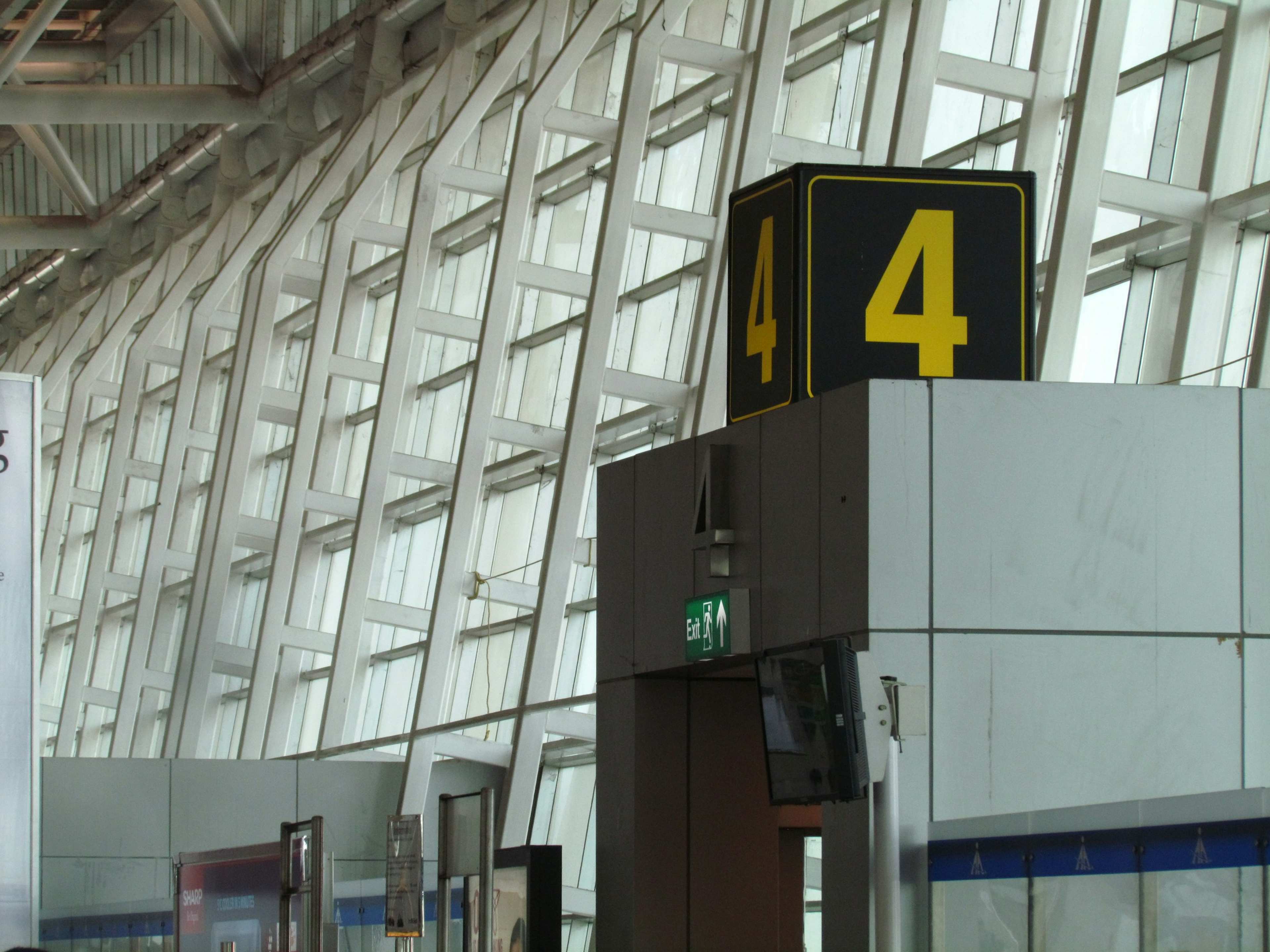
The gate closes at 6 AM.
You don’t feel tired.
You feel lighter.
Something loosens in your chest the moment the plane lifts off – some tight, performative knot that’s been there since the last time someone looked at you and expected something specific.
This isn’t wanderlust. This isn’t a love of passport stamps or boutique hostels or the intoxicating smell of foreign rain on hot pavement. This is something quieter. Something older. There is a version of you – a real one, unpolished, unauditioned – that only surfaces when no one who knows your last name is within a thousand miles. Freed from the expectations of others, we begin to ask: Who am I when no one is watching? That question isn’t rhetorical. For the serial solo traveler, it is the whole itinerary.
1. The Temporary Identity
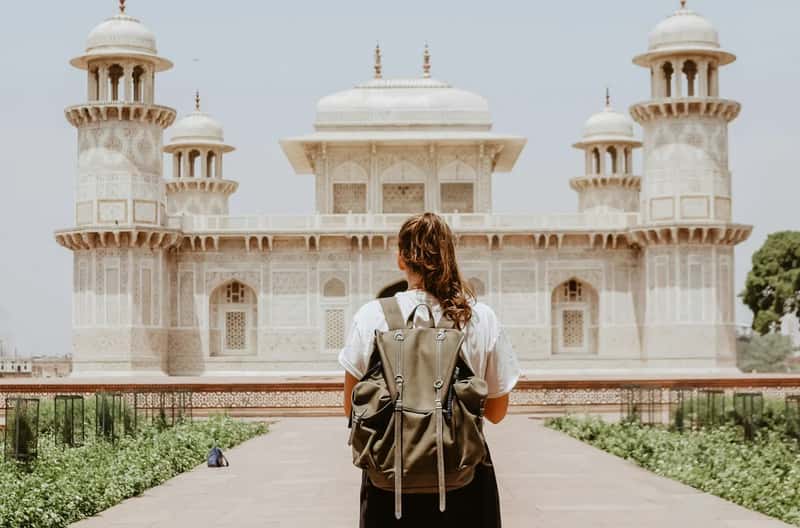
There is a specific freedom that lives inside temporary.
When you touch down in a city where no one has pre-loaded a version of you into their memory, you become editable. You are not yet the person who said that thing at the office party. You are not yet the son who never calls back, the ex who didn’t fight hard enough, the friend who has been “going through something” for eighteen months. You are, for a few radical days, a blank draft.
In a world where our identities are constantly shaped by work, relationships, and social media, solo travel offers a radical act of self-definition – dramatically reshaping identity by shedding attachments and inner roles.
This is not escapism in the clinical, avoidant sense. It is identity ventilation.
The self that has been compressed under the weight of other people’s perception finally gets room to expand. You try on a different posture at the café counter. You linger somewhere you’d normally rush past. You speak slower, move slower, and notice that neither the sky nor the stranger beside you requires anything from you at all.
The temporary identity is not fake. It may be the only identity that is fully honest.
2. The Social Mirror Problem
We are, most of us, watching ourselves be watched.
Psychologists call this the social mirror – the reflexive self-monitoring that happens when we are embedded in a familiar social web. Every conversation at home is also a negotiation. Every choice you make in front of people who know you carries the weight of their accumulated impressions of you. You are always, at some low hum of consciousness, managing the image.
Solo travel extracts you from a world of expectations and comparisons, letting the negative internal dialogue fall silent. In the silence, the process of self-discovery has space to take place.
Abroad, among strangers, that mirror goes dark.
There is no one to be consistent for. No narrative to maintain. The social pressure that quietly shapes every sentence you say at home – the pressure to seem stable, employable, lovable, together – evaporates at the boarding gate. What remains in its absence is something psychologists call authentic self-expression. What the solo traveler calls it is simpler: relief.
3. The Exit Strategy
Every solo trip begins as an exit strategy.
Not from life. From the role.
There is a role you play. You were cast in it gradually – by your family, your job title, your neighborhood, your relationship history. The role accumulated detail over the years until one day you realized you couldn’t remember who you were before the casting call. The role is not a lie, exactly. But it is not the whole truth, either.
Solo travel is considered an act of resistance to and freedom from social-cultural and political limitations, as well as an activity that brings increased self-awareness and renewed social identity.
The exit strategy is not permanent. Most serial solo travelers don’t want to disappear. They want to pause. They want the credits to roll on the current production just long enough to remember that they existed before the curtain went up. They book a flight not to abandon their lives but to find the part of themselves that predates the performance.
The exit, paradoxically, is how they find the way back in.
4. The Noise We Travel Through
Your home is louder than you think.
Not in decibels – in psychological noise. The ambient hum of obligation. The background frequency of comparison. The constant low-grade broadcast of other people’s expectations on every channel. You can’t hear yourself over it. You’ve forgotten you ever could.
Not being distracted by a second person or a group, you have access to more thoughts and sensations that may normally be blocked by others. This is important because it allows you to be more self-aware and attuned to yourself and your needs.
Solo travel introduces silence into that system. Not the silence of absence – the silence of subtraction. Every unnecessary social input removed. Every performance obligation suspended. What’s left is the signal beneath the noise.
That signal is you. The uninterrupted frequency of your actual preferences, actual pace, actual emotional weather. Embracing the freedom to change plans based on your mood is a core luxury of solo travel – and this practice in listening to your own desires strengthens self-trust. That is not a small thing. That is, for many people, a radical recalibration.
5. The Confession at the Train Window
I need to stop here and tell you something honest.
I have been on a train in a country where I didn’t speak the language, watching the dark outline of mountains move past a rain-fogged window at eleven o’clock at night. I had no plan for where I was sleeping. I had no one to text who would fully understand the specific quality of that silence. And I was, in a way that I cannot adequately defend or explain to anyone who hasn’t felt it, completely at peace.
Not because the situation was comfortable. Because it was entirely mine.
No one had expectations of that version of me on that train. No one was waiting for me to be impressive or useful or emotionally stable. I ate a sandwich I couldn’t identify and it was the best meal I’d had in months. Solo travel across unfamiliar cultural contexts can create the psychological conditions for listening to an inner voice rather than external expectation. That night on the train, my inner voice was the only voice. I finally heard what it had been trying to say.
The serial solo traveler isn’t running. They’re turning the volume all the way down so they can finally pick up that frequency.
6. The Psychological Architecture of “Unknown”
The brain does something fascinating in unfamiliar territory.
When your environment is new, your habits can’t auto-pilot you through it. You become, neurologically speaking, more present. The prefrontal cortex lights up. Decision-making becomes conscious rather than reflexive. You notice things – texture, smell, the exact quality of afternoon light on an unfamiliar street – that your habituated brain at home long stopped registering.
Away from routine and responsibility, adults often experience what developmental theorists call self-authorship – the ability to define one’s values and life direction from within rather than through external validation.
In that heightened state of presence, something important happens. You catch yourself making choices that have nothing to do with what anyone else would prefer. You stay in a museum an extra hour because you want to. You skip the famous restaurant because it doesn’t feel right. You sit on a bench for forty minutes doing nothing. As you travel solo, you can see how you operate when no one is looking. You have more time to look at the intentions behind your thoughts, words, and actions – and because you are outside of your normal life, you can see these intentions, assess them, and tweak them to create the life that you want.
The “unknown” is not a threat. It is a laboratory.
7. The Weight of Being Known
Being loved is a privilege. Being deeply known is a gift.
But being known also means being fixed. The people who love you have built a working model of you in their minds – a predictive map. They know your moods, your patterns, your recurring anxieties, your punchlines. That knowledge is tender. It is also a cage, low and invisible, made of soft hands.
When you’re free from the expectations and distractions of familiar environments and social circles, you have the space to reflect on your true desires, values, and goals. Solo travel offers time for introspection, helping you gain clarity about who you are and what you want from life.
Among strangers, you are not yet their working model of you. You can make a different first impression. Or no impression at all. You can be the version of yourself that is still becoming, rather than the version that has already been decided. Nietzsche believed that all human beings needed solitude in order to transcend societal expectations and discover who they truly are. The serial solo traveler has understood this intuitively, perhaps long before they ever articulated it. They are not afraid of being known. They are afraid of being known too early, too narrowly, and too finally.
8. The Loneliness That Teaches
There will be a bad night.
There always is. The restaurant where you sit at a table for one while the table beside you erupts in laughter. The moment, somewhere around 9 PM in a city that isn’t yours, when the novelty goes flat and something hollow opens up in your chest. The night you text three people simultaneously just to hear the notification sound.
The experience of being alone in unfamiliar places forces you to confront and process difficult emotions, from sadness to anxiety. Instead of avoiding these feelings, solo travel encourages you to sit with them, fostering emotional strength and resilience.
That loneliness is not a failure of the journey. It is the journey.
Without conversations filling one’s mind or a need to keep others happy, the solo traveler has ample opportunities to turn inward and examine the very thoughts, feelings, and motivations that drive them. It may be awkward, dredging up phobias, insecurities, or perhaps unresolved issues which could have gone unexamined in the busyness of life. But there is no way forward except to confront these things about oneself. The loneliness that stings at the restaurant table is information. It tells you what you’ve been suppressing. What you actually need. Who you actually miss, and why.
Most people never get that quiet long enough to hear it.
9. The Return Problem
Nobody warns you about the return.
You come home expanded. You’ve been reconfigured, slightly but meaningfully, at the cellular level of self-perception. You’ve eaten alone without shame. You’ve asked strangers for help and received it. You’ve navigated fear and novelty and absence and silence and come out the other side with a cleaner, truer read on your own preferences and values.
And then you land. And everyone at baggage claim needs the version of you that left.
It is not uncommon to experience culture shock when returning home – not from the place just left, but from all the self you have lost in the process.
The return is where the identity gap becomes most visible. The expanded self collides with the expected self. The people who love you want to hear about the food and the photos. They are not yet equipped – and this is no one’s fault – for the quieter news: that you are different, and the difference is not decorative. The lessons learned from solo travel often translate into everyday life, influencing the way you approach challenges, relationships, and decision-making. The question then becomes whether you have the courage to integrate what you found abroad into the life you returned to.
10. The Unfinished Self
Here is what psychology keeps trying to tell us, buried in the data on autonomy and self-determination and identity development:
You are not finished.
The self is not a fixed object. It is a process. A living document, always in revision. Solo travel’s psychological value lies not in escaping life but in engaging more fully with it – confronting challenges, embracing uncertainty, connecting across differences, and discovering one’s capabilities and values. The serial solo traveler has grasped something that most modern productivity culture conspires to obscure: the self requires unstructured space to evolve. Not a weekend retreat with a curated agenda. Not a group tour with nineteen other seekers. Actual solitude. Actual motion. Actual not-knowing.
Compared to merely being ‘alone,’ ‘solo’ is more of an active choice driven by a desire for autonomy and self-exploration. Travelling solo is the result of this active choice rather than a passive act of loneliness and helplessness – highlighting that ‘solo’ reflects agency rather than isolation.
The serial solo traveler does not book flights to find adventure. They book flights to find the unfinished parts of themselves – the raw edges, the unnamed preferences, the dormant voices that don’t get airtime in a life organized around other people’s needs. They are not running from intimacy. They are running toward integration.
They are trying to become someone worth coming home to.
There is a particular moment that every seasoned solo traveler knows. It happens somewhere unremarkable – a nondescript platform, a café with no English menu, a hotel room with the wrong pillow and the right silence. The noise of being perceived finally stops. The performing stops. And in the sudden stillness, something surfaces. Not a revelation. Not an epiphany with orchestration. Just a quiet recognition: oh, there you are.
That recognition is what gets booked, again and again, through the cheap flights and the rescheduled commitments and the concerned questions from people who wonder why you can’t just relax at home. It is not the destination that keeps being chosen. It is the condition – the unobserved, unjudged, unpredicted condition – that makes the truest version of yourself available. The passport is not the point. The anonymity is. The gap between who you are required to be and who you actually are narrows, briefly, beautifully, at altitude.
Maybe the question was never where are you going. Maybe it was always: who are you, when no one is watching – and how long has it been since you let them out?