The room glows at 2 AM.
You didn’t turn anything on. The light found you.
A phone. A notification. A dopamine tap on the shoulder that says: you’re still here, still needed, still visible.
You haven’t been quiet in years. Not really.
Even your silences are performed – a curated Instagram story of a cup of tea near a rain-streaked window, captioned with something about “rest.” But the caption required a filter. The filter required a decision. The decision required your last available nerve.
There is a version of you that existed before the feed. Before the scroll. Before your attention became the product being sold. That version isn’t gone. It’s just buried under approximately ten years of digital sediment – notification by notification, refresh by refresh. The identity gap isn’t between who you are and who you want to be. It’s between who you are online and who you become when every signal is finally, mercifully cut.
The Noise Has a Body Count
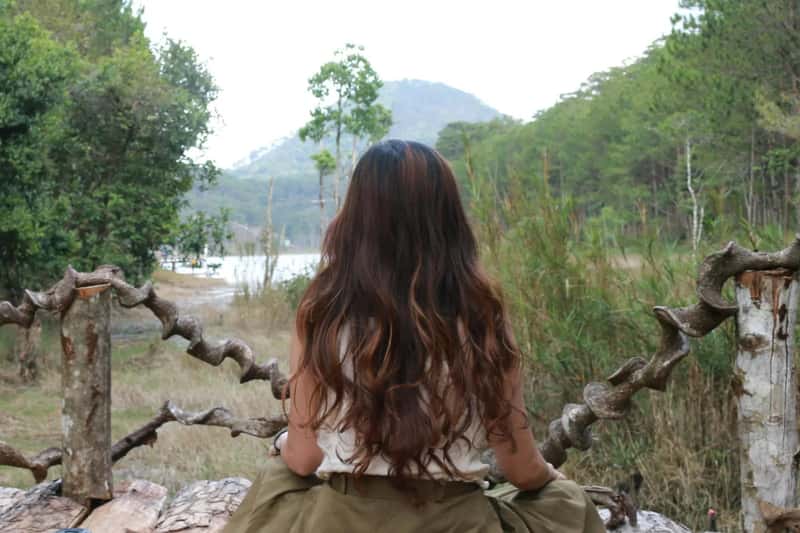
Digital drain – the mental, emotional, and social exhaustion that comes from excessive and continuous engagement with digital technologies – thrives on constant notifications, information overload, and the pressure to remain online, creating a state of cognitive fatigue that weakens concentration, reduces productivity, and heightens stress levels.
This is not hyperbole. This is neuroscience wearing a business casual shirt.
The digital world runs on dopamine, turning our natural desires for reward into a cycle of endless scrolling – a state of constant activity but little real rest, known as digital fatigue.
The brain was never designed for this volume. It’s running a decade-long sprint and calling it a lifestyle.
Overstimulation keeps the nervous system in a heightened state of arousal, racing thoughts and difficulty relaxing – and this is why after hours of screen time, many feel mentally exhausted but still restless: the brain is overstimulated but unsatisfied.
That feeling has a name. It just doesn’t have a cure you can download.
The Oxford Word of the Year Says Everything
In 2024, Oxford named “brain rot” its word of the year. That’s not an aesthetic. That’s a diagnosis.
“Brain rot” refers to the cognitive decline and mental exhaustion experienced by individuals – particularly adolescents and young adults – due to excessive exposure to low-quality online materials, especially on social media.
A generation raised on infinite scroll is now seeking infinite quiet. The irony is brutal and clean.
The behaviors attributed to brain rot – doomscrolling, zombie scrolling, and social media addiction – have deep ramifications in terms of mental health, emotional well-being, and one’s conception of self.
That last part. Conception of self. Who you believe you are when the algorithm has been curating your reflection for a decade.
A constant dopamine spike can desensitize the brain’s reward system, meaning you may need more stimulation to feel satisfied – which leads to shorter attention spans and mental fatigue.
The retreats filling their waitlists in 2026 are not a trend. They are a correction.
The Ancient Practice the Algorithm Can’t Touch
A dark retreat is a solo journey into absolute darkness – an advanced practice that hails from the Dzogchen lineage in Tibetan Buddhism.
It predates your phone by roughly fifteen centuries. It predates your anxiety by slightly less.
This is the modern version of a practice that goes back thousands of years – known to Buddhist, Taoist, and Christian adherents of old, as well as to citizens of ancient Egypt, 15th-century France, and the Kogi mamos of northern Colombia.
Every high-noise civilization eventually produces its counterweight.
As of February 2026, Condé Nast Traveller has called the dark retreat “2026’s most radical wellness trend.” Radical, yes. But also profoundly old. The radical part is that we forgot we ever needed it.
More and more techniques have recently been appearing that use darkness as a tool to alleviate stress – often in combination with noise cancellation, because together, darkness and silence create a sensory vacuum that puts a stop to visual and auditory stimuli, forming a favorable space for introspection.
The Neuroscience of Pitch Black
The dark room is not empty. That’s the first thing the brain learns when it stops receiving input from outside itself.
Being in darkness alters the chemistry of the brain, activating certain parts and deactivating others. Neurochemically, there is an increase and build-up of melatonin during the initial phase, which eventually tapers off around day three – at which point the body starts to produce neurochemicals including pinoline and DMT, producing images and visions coupled with insight, introspection, and a sense of “beingness.”
The brain, deprived of external data, begins processing its own.
Especially striking in sensory reduction research are findings concerning the brain’s default mode network (DMN), which is involved in mind-wandering or self-referential processes – and just as research with meditation shows this network shuts off when mental chatter is quieted, researchers found that connectivity within the DMN is greatly reduced after sensory reduction.
Less chatter. More signal. The original you, buffering back online.
The Weight of Being Watched
I need to tell you something personal here.
I spent three days at a silent retreat in the mountains of northern Portugal eighteen months ago. Not full darkness. Just silence, meals delivered without eye contact, and the slowly unbearable realization that I didn’t know what I thought about anything when no one was available to validate the thought.
By day two, I stopped performing for a room that wasn’t there. My shoulders dropped two inches. I cried once, briefly, for no reason I could name. By day three, I understood something I hadn’t been able to articulate in a decade of therapy: I had built an identity out of my reactions to other people’s content.
Take away the content. The identity goes soft at the edges. That softness? That’s where the real architecture lives.
The dark retreat asks a devastatingly simple set of questions: Who are you when no one is looking? How would you dance when no one is watching? How would you sing when no one is looking at you? Who are you when you’re not seeking other people’s approval?
The Status Inversion
In 2016, the status symbol was the loudest life. The most locations tagged. The most meetings attended. The most visible suffering.
In 2026, the status symbol is the longest disappearance.
Silent retreats in the U.S. are gaining momentum in 2026 as more travelers seek real restoration through stillness – because today’s world, from constant notifications to overflowing inboxes and the ever-present hum of modern life, keeps our minds always “on.”
The new luxury is not a hotel suite with a view. It is a room with no view. No windows. No screen. No self to perform.
Designed to sustain sensory reduction over days or weeks, allowing for profound psychological and spiritual processing that short sessions cannot achieve, true luxury darkness retreats are rare and require specialized, highly controlled environments.
The waiting list is long. The people on it are not seeking spirituality. They are seeking relief from themselves.
The Nervous System Has Forgotten How to Land
The fear of facing ourselves when external mirrors vanish. The nervous system that has forgotten how to rest. The ego that confuses doing with being. These are not abstract diagnoses. These are Tuesday.
You know the feeling. The inability to sit without reaching for your phone. The compulsion to fill every pause. The strange guilt of doing nothing.
Mental overstimulation is now the default mode due to constant alerts, multitasking, and infinite scroll – and chronic digital input rewires your brain, damages focus, and elevates stress.
The absence of sensory input calms the nervous system, helping participants achieve a state of deep relaxation – a state so foreign to the modern brain that many retreat participants describe it as the most frightening part of the process. Not the dark. The quiet inside the dark.
The nervous system has been running on emergency power for so long, it doesn’t recognize normal supply.
The Psychological Architecture of Darkness
According to depth psychology, the unconscious mind projects repressed content in the absence of distractions – and thus, the darkness, by eliminating all external references, activates deep self-integration: old memories surface, unresolved emotions emerge, hidden aspects of the self begin to appear.
The dark room is not a void. It is a mirror.
Dark retreats – a sensory deprivation practice rooted in Tibetan Buddhist tradition – have been studied within the scientific framework of chamber REST (Restricted Environmental Stimulation Therapy), where participants undergo complete immersion in darkness, removing external stimuli to enhance introspection and cultivate heightened mindfulness.
In a secular context, dark retreats are increasingly popular as therapeutic tools for stress relief and emotional regulation – with findings showing significant improvements in mindfulness following the retreat, with increased scores sustained at a one-month follow-up, indicating lasting benefits.
The results outlive the experience. That is rare in wellness. That is rare in anything.
The People Who Go and Who They Return As
While the practice has spiritual roots, guests attend for many reasons: burnout recovery, creative breakthroughs, processing grief or trauma, or simply wanting deep rest in a world of constant stimulation.
The common thread is not mysticism. It’s exhaustion.
The gap between how people arrive and how they leave is striking. The arriving language is cautious: “I didn’t know what to expect,” “ready to face my fears.” The departing language is something else entirely: “rebirth,” “soul planned,” “life changing.”
One yoga instructor who took a six-day dark retreat at Sky Cave described it as “the biggest thing I’ve ever done” – and said: “I met myself for the first time.”
Not the self she presented. Not the self she performed. The one underneath. The one that had been waiting.
The Thing You Cannot Instagram
In an era where everything is measured by likes, shares, and achievements, to simply sit in silent darkness with yourself is the boldest act of courage.
And the boldest act of resistance.
You cannot post from the dark. You cannot update your story from a room designed to erase your story. The experience cannot be monetized, filtered, or captioned. It simply happens to you – in the dark, in the quiet, without an audience.
Research hypothesizes that the disproportionate healing benefits of dark retreat stem from a return to a fundamental state of unaltered consciousness – while over 17,000 studies exist on mindfulness and diurnal meditations, dark retreat remains largely unexplored scientifically, despite its emergence from secrecy as public figures discover and share its remarkable benefits.
The science is catching up to the experience. The experience is catching up to the need.
And the need is this: to stop. Completely. Without apology. Without documentation.
There is something the modern brain does not know how to receive, and it is this: the experience of being nobody. Not in the tragic sense. In the liberated one. The dark retreat does not erase you. It returns you. Strips the algorithmic sediment. Leaves the original signal.
The people emerging from these rooms are not enlightened. They are not transformed into different people. They are, quietly and almost embarrassingly, just themselves again. It’s hard to describe what happens in silence, except to say it changes you – silence is both beautifully ordinary and profoundly extraordinary, stripping away the illusion that anything outside of you creates your experience. That is not a spiritual claim. That is a neurological one.
The ultimate 2026 status symbol is not the retreat itself. It is the willingness to be unreachable. To be unverifiable. To sit in the dark with your own unmediated thoughts and discover – slowly, in the quiet, without a single notification – that you were always enough signal. You just couldn’t hear yourself over the noise.