The hotel room is booked for one.
The champagne arrives. There is no one to clink glasses with.
You drink it anyway.
And for the first time in a very long time, that feels like enough.
There is a particular kind of person checking into five-star hotels alone these days. They are not sad. They are not recently divorced, not running from something obvious, not filling a void with thread counts. They are doing something far more precise, far more surgical. They are closing a very old wound – the one that said luxury is only valid when witnessed, that indulgence only counts when shared, that you are only deserving of fine things when someone else is there to confirm it.
Psychology has a name for what they are actually doing. It is called reparenting.
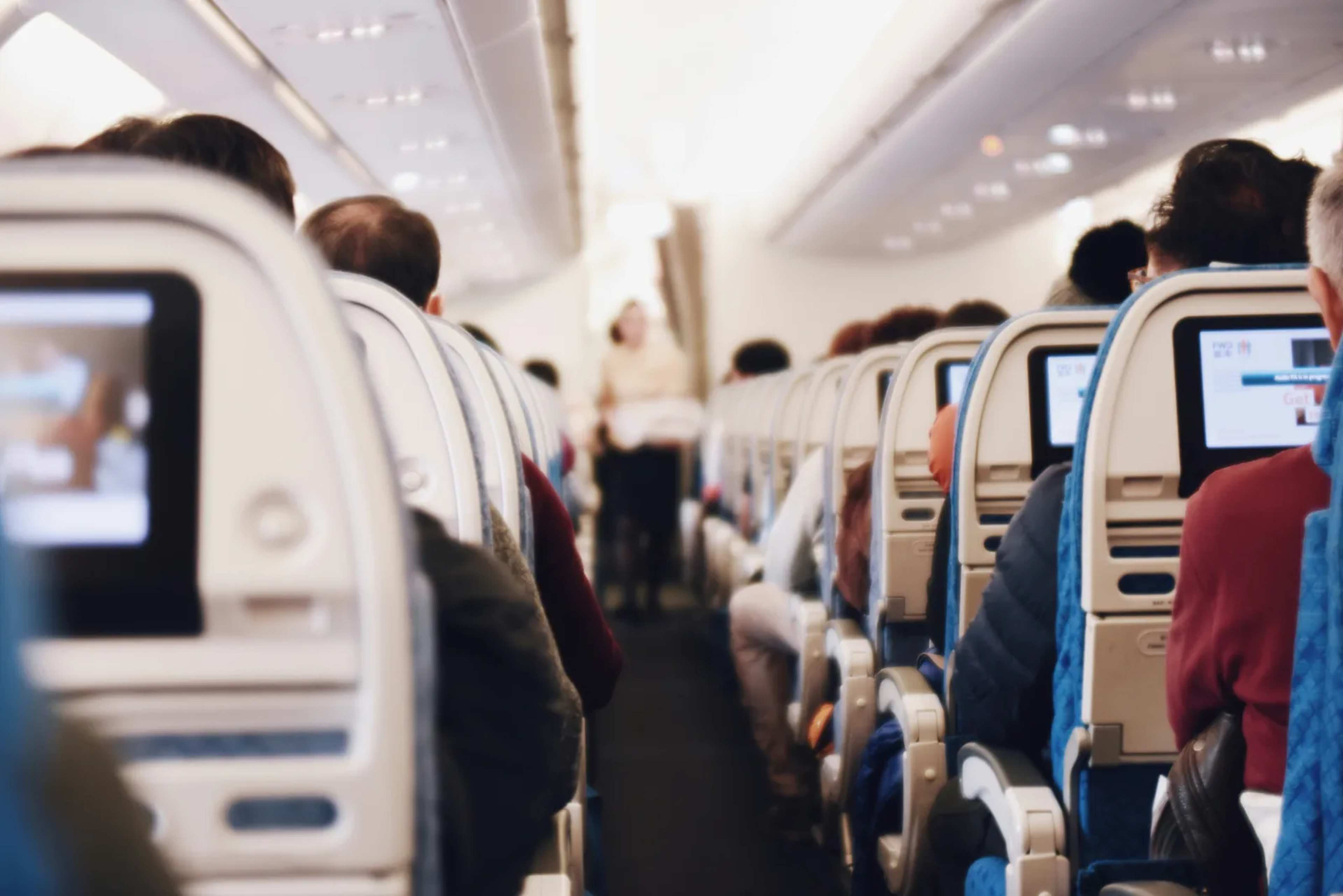
And it is happening at altitude, in business class, in the candlelit hush of a Michelin-starred dining room where the reservation says “party of one.”
1. The Permission Slip Nobody Gave You

In choosing to travel alone, something remarkable shifts – a permission you spent your whole life waiting to receive from others finally gets granted by the only person who actually had it all along: you.
That is the first wound reparenting addresses.
The word “permission.” We learn it young. Permission to eat dessert. Permission to take up space. Permission to want something extravagant without justifying it to a room full of people.
Low self-worth often originates in early experiences where your value felt tied to what you did rather than who you were – conditional love, comparison to siblings, or environments where affection had to be earned.
The solo luxury traveler is rewriting that contract.
They are saying: I do not need a reason. I do not need a companion. I do not need a special occasion to justify the suite with the sea view. The occasion is existing. The reason is me.
For the first time, they are allowing themselves to act on their inner compass rather than external expectations – reflecting the beginning of what psychologists call self-authorship: the shift from relying on external expectations to an inner voice.
2. The Audience Problem
Most of us were raised to perform our experiences.
The birthday dinner is for the table, not for you. The vacation photos are for Instagram before they are for memory. The upgrade matters more when someone notices you got it.
There is a version of travel entirely designed for the audience back home – the carefully curated photograph, the itinerary shared to Instagram before it’s lived, the group trip where half the experience is the collective narration of the experience.
But what happens when you remove the audience entirely?
What happens when no one is watching you order the most expensive thing on the menu?
Psychological research on self-validation shows that people who can affirm their own experiences without external input have stronger internal self-worth. They don’t need their ex to see them thriving in Bali. They don’t need their friends to comment on how brave they are. The experience itself is enough.
That is the reparenting moment. The experience itself is enough. You are enough. No witnesses required.
3. The Childhood Debt
Reparenting is giving your adult self what you didn’t get from your parents in childhood. Children depend on their parents for far more than basic needs – we need them to teach us how to set limits for ourselves, how to soothe ourselves, and how to treat ourselves with compassion.
Sit with that for a moment.
How to treat yourself with compassion.
Some of us were never modeled that. We watched our parents skip the good wine for guests and drink the bad wine themselves. We watched them take the small piece of cake. We absorbed the message: you are not the guest of honor in your own life.
As children, we accepted our worth without question. We didn’t constantly wonder if we were enough. Yet, as we grew, we began to question that core belief. Society convinced us that our worth is something to be earned, won, or proved.
The solo luxury traveler is paying back a debt. Not a financial one. A psychological one. They are giving themselves the treatment they were never shown they deserved.
4. The Social Mirror, Smashed
Here is something clinical, and quietly devastating.
At home, we constantly react to others – adjusting our energy for bosses, friends, and family. We rarely ask what we actually want. Going solo breaks this “social mirror,” providing a rare space where your needs are the only priority. By removing the pressure to perform or compromise, you stop living on autopilot and start reconnecting with your true identity.
The social mirror is exhausting.
It is also invisible until you step away from it.
You do not realize how much of what you eat, where you go, how long you linger, which seat you take – how much of all of that is determined by anticipating someone else’s comfort. Until suddenly, there is no one else. And the linen napkin lands in your lap and the sommelier is asking only you what you would like and the mirror is gone.
Without being distracted by a second person or a group, you have access to more thoughts and sensations that may normally be blocked by others. This allows you to be more self-aware and attuned to yourself and your own needs.
What you find, reflected back without distortion, is yourself. Raw. Unfiltered. Worthy.
5. The Table for One
I want to tell you about the first time I sat alone at a fine restaurant and did not immediately pull out my phone.
It was a small place in Lisbon. White tablecloths. One candle per table. The kind of quiet that feels earned. The waiter did not ask if I was waiting for someone. He simply handed me the menu with both hands, like a gift.
I ordered three courses. I ordered wine. I ate slowly. I watched the room.
I felt, for the first time in a long time, like the main character of my own evening – not a supporting player waiting for the narrative to involve me.
In restorative environments – whether overlooking the sea, walking through ancient cities, or dining alone under candlelight – emotional processing occurs naturally. Solo travel provides space to feel without interruption.
That uninterrupted feeling. That is not loneliness. That is what reparenting tastes like. It tastes like the second glass you poured for yourself, without asking if anyone else wanted more first.
6. The Self-Efficacy Engine
There is a psychological mechanism firing every time a solo luxury traveler navigates alone.
It is not glamorous. It is ancient and quiet and deeply powerful.
Every time you navigate something alone – a border crossing in a language you don’t speak, a medical inconvenience in a city where you know no one, a single table at a restaurant where every other diner is coupled or grouped – you make a deposit into an internal account. This is, perhaps quietly and without ceremony, building one of the most durable psychological resources a human being can possess.
Every time you solve one of these problems by yourself, your brain records a “win.” You are building self-efficacy – the deep knowledge that you are capable and resourceful. You move from a mindset of “I hope I’ll be okay” to “I know I can handle it.”
Each handled moment rewrites the old childhood record that said you were not capable enough to manage the fine things. That you needed supervision. That luxury required a chaperone.
The solo traveler proves, one upgrade at a time, that they do not.
7. The Identity Without Witnesses
There is a version of identity that only exists in relationship to others.
Parent. Partner. Employee. The funny one. The responsible one. The one who always compromises on the restaurant.
When we remove the social roles we carry at home – leader, partner, parent, executive – something powerful happens. Identity softens. Perspective widens. Clarity emerges.
And in that clarity, something uncomfortable and beautiful surfaces.
In those quiet transitional moments between countries – between one version of self and another – something begins to take shape: what identity feels like when no one else is watching.
The solo luxury traveler is not escaping identity. They are meeting it. Unedited. Unperformed. The version of you that exists when you are neither performing for love nor performing for approval is the truest version of you. And it turns out, that version chooses the good hotel.
8. The Nervous System Knows
This is not metaphor. This is biology.
Studies suggest that solo travel may produce even greater stress reduction due to increased autonomy and reduced social obligation stress. That phrase – “social obligation stress” – is doing enormous psychological work. It names the invisible tax that group travel levies on certain nervous systems.
The luxury element of solo luxury travel is not incidental. It is load-bearing.
In a luxury solo setting, where logistics are seamless and details are curated, the mind has space to expand rather than manage.
When your nervous system is no longer managing anyone else’s comfort, it begins, cautiously, to manage its own. The thread count matters because the body is finally being treated as if it matters. The private car matters because you have spent years in the backseat of someone else’s choices. The spa matters because someone had to go first, and it turns out, it could always have been you.
The third task of reparenting – perhaps the most important – is being able to intentionally give yourself the things you’ve been craving. As an adult, you are likely still dealing with unmet needs from childhood. Now you have the agency to choose or ask for support in meeting those needs. Reparenting yourself means you can select reparative experiences for yourself that make you feel good or help you grow.
9. The Novelty Imperative
Psychology does not consider newness to be trivial.
Some psychologists frame novelty as a basic psychological need, viewing new experiences in the context of self-determination theory – the idea that fulfilling basic psychological needs is essential to personal growth. Solo travel can be particularly conducive to novelty’s effects on personal growth because we have more time to pay attention to immediate experiences and reflect on them.
Every new destination is a laboratory for the self.
Every unfamiliar menu, every foreign morning light, every hotel lobby entered alone – these are not distractions from the self. They are provocations to it. They ask: who are you here, away from the roles, away from the history, away from the people who remember the worst version of you and hold it as the current one?
When you venture out alone, you’re thrust into an environment that challenges your sense of self and encourages introspection. This process of self-exploration often leads to a deeper understanding of personal values, beliefs, and aspirations.
And sometimes, what you discover is that you prefer the corner table. The late breakfast. The museum before the crowds arrive. Preferences, it turns out, are a form of selfhood. And selfhood, unwitnessed, is still entirely real.
10. The Worthiness That Was Always There
Here is the deepest truth the solo luxury traveler is circling, without always having language for it.
Unconditional self-worth is the sense that you deserve to be alive, to be loved and cared for, to take up space.
That is it. That is the whole thing.
Not “you deserve the suite because you worked hard.” Not “you deserve the tasting menu because you earned it this quarter.” Simply: you deserve to take up space. To be cared for. To be comfortable. To have things be beautiful around you. Not as a reward. As a baseline.
Reclaiming self-worth isn’t about becoming someone new. It’s about returning to the truth of who you’ve always been – before the doubt, before the pressure, before the story that said you had to prove yourself to be enough. It’s a process of unlearning the narratives that made you question your value, and learning to stand in the quiet power of your own presence.
Your worthiness is not something you need to chase – it has always been within you.
The solo luxury traveler did not find that truth in the five-star hotel. They brought it with them. The hotel just gave it a room to breathe in.
There is something happening in the quiet of these solitary rooms that no algorithm has fully mapped yet. The luxury is not the thread count. It is not the view or the private transfer or the name on the reservation. The luxury is the proof – slowly, room by room, meal by meal, morning by morning – that you were always the person who deserved to be here.
The child who was told to take the small piece, to wait their turn, to not make such a fuss – that child is still somewhere in the architecture of the adult ordering room service at midnight in a city where no one knows their name. And they are watching. And they are, finally, being taken care of by the only person who could ever have done it properly.
So the next time you see someone eating alone in an expensive restaurant, wearing no particular expression, looking neither sad nor performatively content – just present, just there, just quietly occupying their space in the world – know that you are watching someone do the most private and courageous kind of healing there is. And the next time that person is you, put the phone down, let the candle be enough light, and stay a little longer than you think you need to.