The engine turns over at 5 AM.
No one is watching.
No one is asking where you’re going.
And for the first time in months – maybe years – that terrifying silence feels like the closest thing to relief you’ve known.
There is a version of you that operates in the daylight of other people’s expectations. The one who answers emails before coffee. The one who nods at decisions already made. The one who has learned, through slow and invisible erosion, to translate their own instincts into the language of consensus. The Identity Gap – the chasm between who you perform yourself to be and who you actually are when no one is assigning tasks – is not a crisis. It is a quiet erosion. It accumulates. Invisibly. And one unremarkable Thursday, somewhere between the performance review that reviewed nothing and the roadmap you didn’t draw, you find yourself googling gas prices along a highway with no deliverable at the end of it.
1. The Temporary Identity
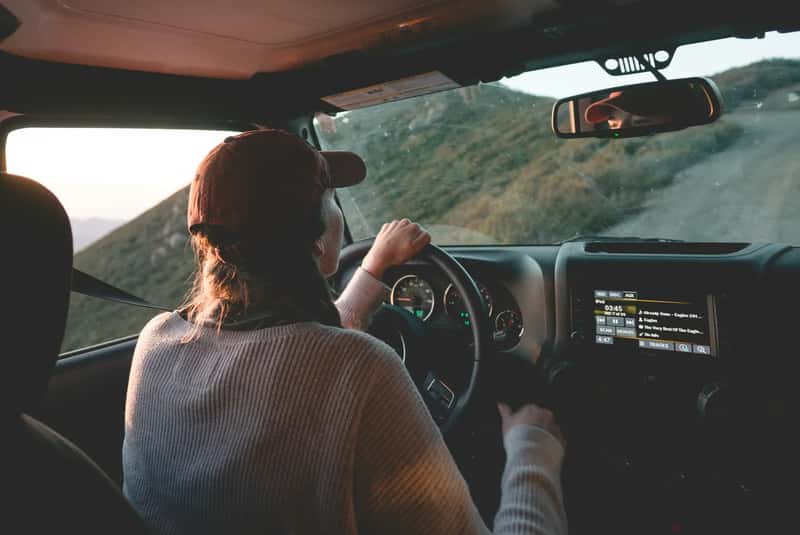
Here is what the open road does that nothing else can replicate.
It strips the costume.
Solo travel strips away the daily roles you play at home – employee, partner, parent – allowing your core identity space to breathe and be re-examined. On the road, none of those titles fit in the glove compartment. They don’t travel well. They were always tailored for someone else’s hallway, someone else’s boardroom, someone else’s version of who you should be arriving as.
The temporary identity is not a fake identity. It is the most honest one you’ve worn in years.
The “road self” is not a fantasy self. It is closer to the baseline self – the one beneath the performance, the one that existed before someone handed you a job title and a set of institutional expectations. It doesn’t require an audience. It doesn’t require approval. It moves through space because it chooses to move through space.
That is not a small thing. That is everything.
2. The Silenced Critic
The internal critic is loud in familiar rooms.
It knows every corner of your apartment. It knows which chair you sit in when you spiral. It has memorized the particular quality of 2 AM ceiling light and what it does to your sense of self-worth. But take it onto the interstate at dawn, windows down, and something strange begins to happen.
The noise softens.
The constant novelty of a solo trip pulls your attention to the present moment, quieting the internal “noise” of past regrets or future anxieties. The critic needs stillness to operate. It needs the familiar geography of your failures. Out here, the landscape keeps changing. The mile markers don’t know your name. The critic loses its grip somewhere around mile forty, and by mile ninety, you’ve forgotten to listen for it at all.
This is not escapism. This is neuroscience wearing a road atlas.
3. The Locus Reclaimed
Psychology has a name for what you’ve been slowly losing.
Psychologists have a term for what you’ve been losing. It’s called internal locus of control. The belief – visceral, pre-verbal, bone-deep – that your actions shape your outcomes. That you are the author. That causality runs through you, not around you.
The road gives it back in the most direct language available.
You choose the exit. You choose the gas station. You choose whether to stop for coffee or to drive through the fog until it lifts. These are small decisions. But after a decade of having the consequential ones made for you, small decisions feel like oxygen.
And oxygen, when you’ve been quietly suffocating, feels like a revelation.
4. The Exit Strategy
The road trip does not begin when you turn the key.
It begins three days earlier when you open a map and start running your finger along a line that isn’t your commute.
A 2015 report by the International Journal of Tourism Research found that internal feelings of freedom, escape, and bravery were found to be the strongest motivators for solo travelers, particularly female travelers. Not the destination. Not the landmarks. The feeling of escape itself – pre-verbal, pre-departure, already doing its work before you’ve packed a single bag.
The exit strategy is psychological long before it is logistical.
You do not prefer solo road trips because you are a particular personality type. You do not prefer them because of some nostalgic attachment to highway culture or a taste for solitude aesthetics. You prefer them because your nervous system is trying to tell you something your professional identity has been trained to ignore.
Listen. It’s been trying to say this for a while.
5. The First Miles (A Personal Note)
I want to be honest about something here.
The first hour is not cinematic.
The first hour is the internal critic at full volume – did you pack enough, is the route right, should you have stayed, is this self-indulgent, who are you to just leave? It sounds like every voice that ever taught you that wanting things for yourself was a character flaw. I’ve sat in that first hour more times than I can count. Hands tight on the wheel. Radio off because even music felt like distraction from the guilt.
And then – somewhere past the last exit of the city – the road does what the road always does.
It keeps going. And because it keeps going, so do you.
The mind, often loud with contingency plans and imagined criticism, goes unusually quiet. This is the first glimpse of autonomy – a shift from waiting for external permission to listening inward. That shift doesn’t announce itself with fanfare. It arrives like a change in elevation. You feel it in your chest before you name it in your brain.
6. The Nervous System Unlocked
Your body knows things your résumé does not.
Both Polyvagal theory and the window of tolerance model suggest our nervous system and body return to a sense of safety once the threat has passed. But here is the dark truth of modern life – most of us have been in low-grade threat mode for so long, we’ve stopped recognizing it as threat. We call it busy. We call it motivated. We call it the season we’re in.
The road trip is not a vacation. It is a physiological correction.
Without companions to immediately share frustrations with, you learn to sit with discomfort, process setbacks calmly, and find your own emotional equilibrium – a skill that reduces anxiety in other life areas. The body, given open space and forward motion and no agenda except the next horizon, begins to remember what baseline actually feels like. Not numb. Not braced. Just present.
This is not luxury. This is maintenance.
7. The Self-Authored Route
There is a specific kind of freedom that only the unpredicted left turn can offer.
No committee approved it. No meeting was held. You saw a sign for something and you turned, and the world did not end.
The solo road trip is an act of self-authorship because every choice – every back road taken, every unplanned stop, every hour driven in silence – is authored by you alone. No committee. No manager. No consensus required. The road is your first draft of a self that was always waiting to be written.
Self-authorship is not a motivational concept. It is a developmental one.
For the first time, you allow yourself to act on your inner compass rather than external expectations. This is the beginning of self-authorship – the shift from relying on external expectations to inner voice. Most of us were never taught that the inner voice was trustworthy. The road has a way of proving otherwise, one unplanned exit at a time.
8. The Identity Expansion
You will not come back the same.
This is not metaphor. This is documented psychological architecture.
Solo travel dramatically reshapes one’s identity by shedding attachments and inner roles. Each independent decision, from routes to meals, conveys preferences. The crossing of new boundaries builds self-reliance; obstacles and strangers are proof of one’s own judgment.
But here is what no one warns you about.
When you return to a structured life, with predictable surroundings and limited choices, an old sense of predictability may seem suffocating. The emptiness of returning from travel is not simple nostalgia. It may be a sign of a small expansion of your identity that can’t fully be embraced in your past context.
The road doesn’t make you restless. It simply shows you how large you’ve already become.
9. The Mindfulness That Arrives Uninvited
No one gets in the car to meditate.
But somewhere between the second tank of gas and the motel with the questionable continental breakfast, something clarifying happens.
Traveling alone encourages mindfulness and mental clarity, as you’re often more attuned to your surroundings without the distraction of conversation or companionship. Whether hiking through a forest, sitting in a quiet café, or exploring a city, solo travel provides ample moments of stillness and presence. This mindfulness can help alleviate stress and anxiety, allowing you to truly disconnect from the pressures of daily life.
The windshield becomes a frame. The mile markers become a rhythm. The present tense becomes the only tense that makes sense.
Taking a trip solo can help you process difficult emotions and make space for any decisions you need to make about your future. Not by forcing the answers. But by removing the noise long enough for your own signal to finally come through clean.
10. The Return Is the Real Destination
This is the heaviest point, because it is the truest one.
The road trip ends. It always ends. You drive back into the city you left. The apartment is exactly as you left it. The inbox has only grown. The calendar has not reorganized itself in your honor.
And yet.
What has changed is this: you have remembered what it feels like to be the one who chooses the direction. And that memory does not politely disappear when you hang up your car keys. It sits at your desk with you. It watches the Monday morning meeting with new, quiet eyes. It begins asking questions – gently, then insistently – about which parts of this life are still chosen, and which parts have simply been inherited by default.
This is where the real work begins. Not on the road. After it.
“Solo travel is not just about seeing the world; it’s about discovering who you are when no one else is shaping your choices.” And whoever that person is – the one that surfaces at mile marker 200, sunburned and slightly disoriented and more themselves than they’ve been in years – deserves to be brought home. Deliberately. Completely. Not left behind at the state line like a receipt from a gas station you’ll never find again.
The psychology of the solo road trip is not really about the road. It never was. It is about the distance between the self you perform and the self that survives when the performance has no audience. That distance – the Identity Gap – is where most of us spend our lives hovering, too crowded at home to see it, too busy to grieve it.
The open road is simply the one geography wide enough to hold both versions of you at once. It allows you to honor your inner voice, listen to the desires you have long muted, and discover that home is not a fixed physical place. Home is the moment you return to yourself – a groundedness you can carry within you, even in the most foreign place. The internal critic cannot outrun the sound of the open road because the open road is louder, older, and far more honest than any voice that learned to fear itself in a familiar room.
So you keep driving. Not because you’re lost. But because motion is the only language in which the truest version of you is still fluent – and some part of you, the quiet, bone-deep part that predates every title you’ve ever been given, already knows exactly where it’s going.