California carries the image of sunshine, ocean breezes, and endless opportunity. Yet underneath that glittering reputation, certain pockets of the state transform dramatically once the sky goes dark. California’s crime trends present a mixed picture. While preliminary data from 2024 indicated an overall decline in both violent and property crime compared to the pandemic peak, some specific categories and localized areas continue to face increasing challenges. Knowing which neighborhoods rank among the most dangerous after sunset isn’t about paranoia – it’s about making informed decisions. These four areas, backed by recent crime data, consistently appear at the top of every high-risk list for a reason.
1. Skid Row, Downtown Los Angeles
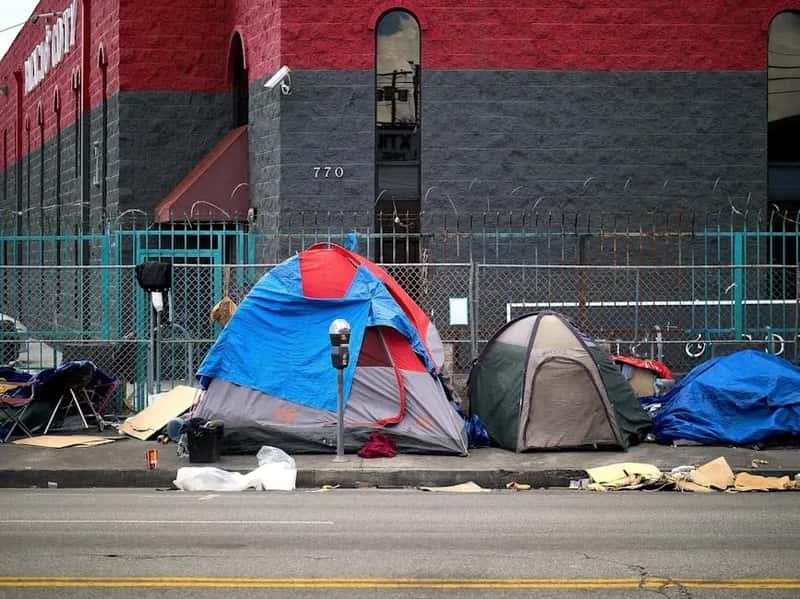
Downtown Los Angeles – especially the Skid Row district centered around San Pedro and 6th Streets – consistently tops lists for the highest crime rates in Los Angeles County. The numbers here are genuinely staggering. Crime Grade statistics show that Skid Row experiences a violent crime rate of 48.13 incidents per 1,000 residents annually, placing it in the 1st percentile for safety, meaning 99% of neighborhoods are safer. The property crime rate in Skid Row stands at 97.49 incidents per 1,000 residents per year, indicating a significantly higher rate compared to national figures. At nighttime, the situation intensifies considerably.
As of 2024, the LAPD has reported an increase in violent incidents, particularly at night. The streets are poorly lit, and the presence of large encampments can make navigating the area unpredictable. Visitors should avoid this part of downtown altogether unless absolutely necessary, especially after dark. Areas like Downtown LA and Skid Row experience rates exceeding 9,000 crimes per 100,000 residents – among the highest in the nation. That’s roughly triple the already-elevated citywide average, making it a place where the risk simply isn’t worth taking once daylight fades.
2. Watts, South Los Angeles
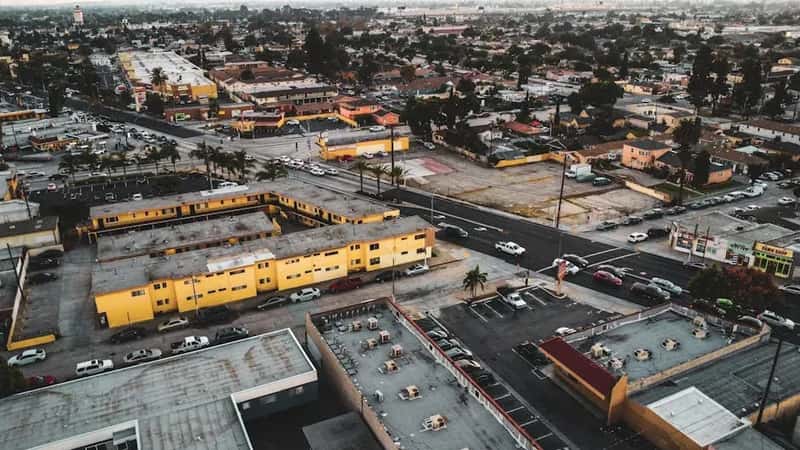
The Watts neighborhood, in South L.A.’s far southeast, is notorious for its history of poverty and gang violence. Home to landmark public housing projects including Nickerson Gardens, Jordan Downs, and Imperial Courts, Watts has worked to reduce crime but remains highly dangerous. The raw statistics reinforce that reputation fully. Watts’s violent crime rate is 367% higher than the national average – residents face roughly a 1 in 25 chance of being a crime victim each year. Murders, shootings, and assaults occur at alarming rates.
While daytime visits to see the Watts Towers are generally safe, the surrounding area can become dangerous after dark. Reports of gang violence and robberies remain concerning. In 2024, Watts was among the top neighborhoods for homicides. Property offenses are also above average, roughly 19% higher than the U.S. norm, with frequent burglaries and car thefts – though violent crime is the bigger concern. LAPD credits gang intervention programs for a 40% drop in homicides in some South LA zones, but these neighborhoods still rank among the most dangerous in California.
3. East Oakland, Oakland
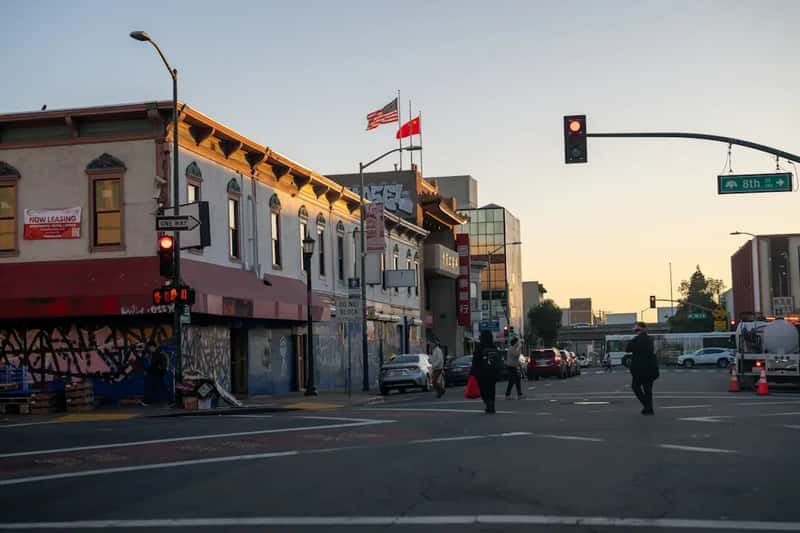
According to the latest Oakland crime rate data, Oakland remains one of the highest-crime cities in the United States. With a population of 435,042, the city reported 8,376 violent crimes, resulting in a violent-crime rate of 1,925 incidents per 100,000 residents. This is more than five times the national average of roughly 380 per 100,000. East Oakland specifically carries the heaviest burden. Despite a reported 19% decrease in violent crime in 2024, issues like aggravated assaults and vehicle break-ins remain a major concern, particularly in areas like East Oakland.
With a crime rate of 91 per one thousand residents, Oakland has one of the highest crime rates in America compared to all communities of all sizes. One’s chance of becoming a victim of either violent or property crime here is one in 11. After dark, the risk spikes even further. Higher-risk neighborhoods, particularly parts of East Oakland, West Oakland, and areas along major arterial corridors, experience elevated levels of violent crime, burglary, and motor-vehicle theft. Older infrastructure, heavier foot traffic, and fewer consistent community resources contribute to higher incident concentrations. Oakland’s challenge stems from chronic police understaffing – fewer than 700 officers for a population of 440,000 – concentrated poverty in specific neighborhoods, and ongoing gang activity.
4. Compton, Los Angeles County

According to NeighborhoodScout, Compton has a crime rate of 38 per 1,000 residents, placing it among the communities with the highest crime rates in the United States. NeighborhoodScout statistics also show that residents have a 1 in 37 chance of becoming a victim of property crime, which includes burglary, larceny, motor vehicle theft, and arson. Violent crime paints an equally grim picture. City Data reports that the violent crime rate in Compton is 619.9 per 100,000 residents, significantly higher than the U.S. average of 219.8.
Compton has a very high rate of violent crimes. Some of the most common examples include physical assault, shootings, and stabbings. It is particularly unsafe in the middle of the night. The city experiences a high incidence of homicides, robberies, and aggravated assaults. Despite successful initiatives to combat crime, Compton remains a hazardous place in 2024. While daytime visits to landmarks or events are generally safe, nighttime exploration should be avoided unless absolutely necessary. The disparity between day and night in Compton is real and well documented by local law enforcement data.
The broader statewide picture adds useful context to these local realities. For the first year since the pandemic, California’s overall violent crime rate decreased, from 508 crimes per 100,000 residents in 2023 to 481 in 2024 – a 5.3% drop. A decline in overall crime rates at the state level does not necessarily translate to improved safety in every city. According to Valley Alarm’s 2025 Los Angeles Crime Statistics Report, the gap between neighborhoods is stark, with roughly a 7.5-times difference in crime rates between the safest and most dangerous parts of the county. These four neighborhoods represent the places where that gap is felt most sharply – and where the hours after sunset bring the highest risk.