
For nearly two decades, the blue-and-white barricades of the Ho Chi Minh City Metro became a part of the city’s skyline just as much as the Bitexco Tower. To the nine million residents of Saigon, the metro was a “ghost project,” only being a promise of modernity that seemed perpetually stuck in the next calendar year.
Thankfully, as of early 2026, the city is finally moving forward: Line 1, now a veteran of its first full year of operation, and Line 2, officially breaking ground, are bringing Saigon from handlebar-heavy commutes to the sleek hum of the rails.
Line 1: From a 17-Year Wait to a Half-Million Holiday

The crown jewel of the system, Metro Line 1 (Ben Thanh – Suoi Tien), officially opened its doors on December 21, 2024. Stretching 19.7 kilometres from the historic Ben Thanh Market to the eastern gateway at Suoi Tien, it marked the end of a 17-year journey that began with its first approval in 2007.
The impact was immediate, as when Lunar New Year (Tet) of the Horse arrived in February 2026, the line recorded a staggering 500,000 passengers in a single holiday week. While the line serves as a vital artery for commuters, it has also become a cultural phenomenon; during its first year, it served over 20 million riders, effectively changing how Saigonese perceive their own geography. What used to be a gruelling 45-minute motorbike battle through the dust of Hanoi Highway is now a disciplined 20-minute glide.
Tourists probably think a 20 – 25 minute difference isn’t massive, but for locals, it can be a game-changer, for both those using the metro and those not.
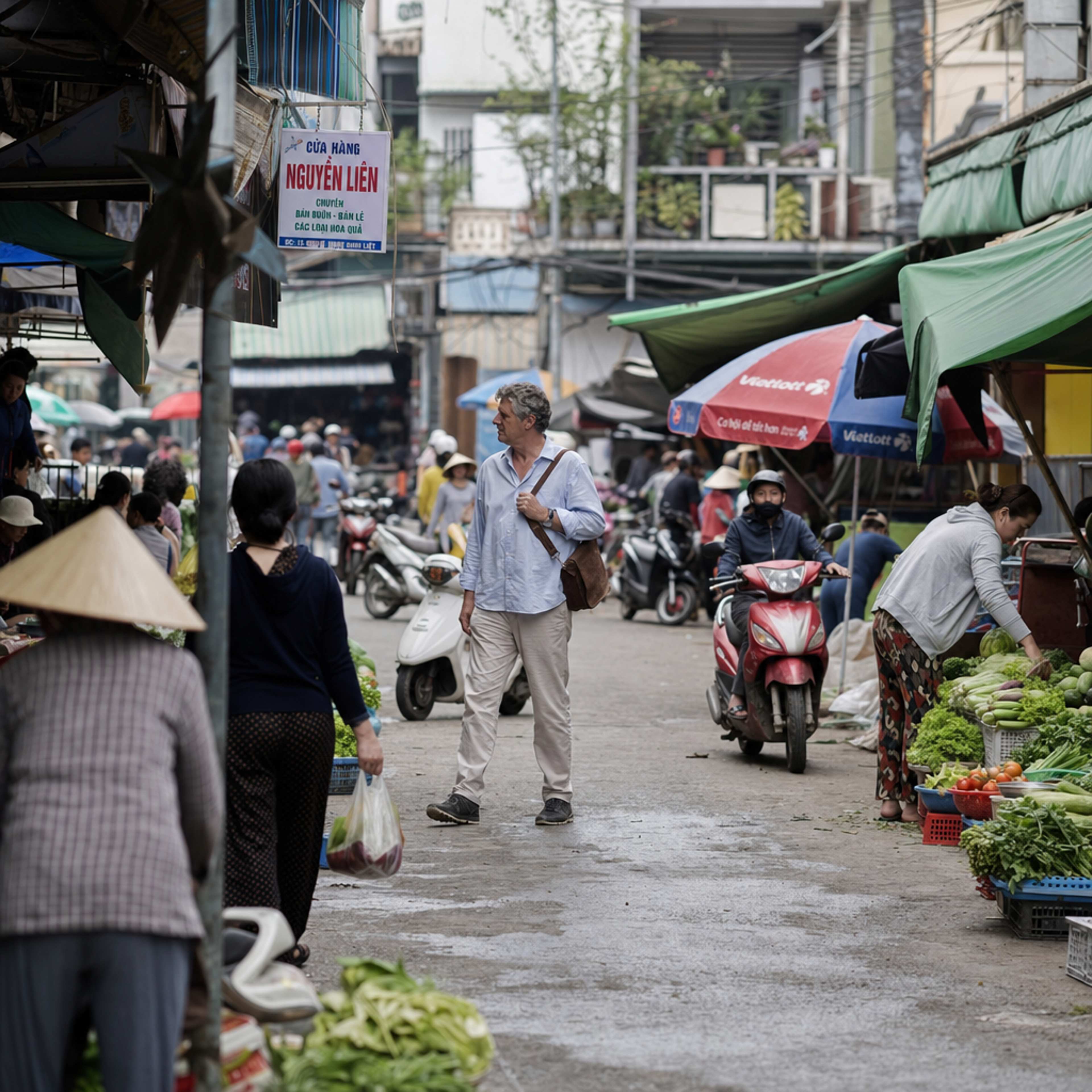
I often drive in and out of Saigon Centre for fun, or to get photos for these very articles, and the journey back, particularly during rush hour, can be a nightmare. What should be a breezy 25- 30 minute drive home can turn into a near 2-hour slog of breathing in exhaust fumes as you’re packed like sardines, desperately trying to creep your way forward as any space will be quickly swallowed up.
While the Metro will also likely be packed, it’s far better to be standing on an air conditioned platform or carriage than it is to be sweating profusely under your helmet, getting a headache from the lack of quality air, and if you think a car would sound preferable, then enjoy your near 3 hour journey home as cars move at a snails pace in the dence traffic.
The Cost of Progress: Delays and Financial Bloat

The road to the first ticket was paved with significant hurdles. When Line 1 was first envisioned, the price tag was estimated at roughly $668 million, but by the time the final bolt was tightened, that figure had ballooned to over $1.7 billion (roughly 43 trillion VND).
What caused the nearly two-decade wait? The reasons were a perfect storm of urban development challenges:
- Funding Disputes: As costs rose, the project required repeated approvals from the National Assembly, a process that moved at a glacial pace.
- Technical Faults: In 2020, the discovery of displaced bridge beams and “falling” elastomeric pads led to lengthy investigations and safety audits.
- Contractor Friction: Disputes with major contractors like Hitachi over “waiting costs” and technical defects in the signalling system pushed the final “completion” date for all minor works and warranties into late 2026.
- The Pandemic: COVID-19 halted the arrival of foreign experts and specialised equipment for nearly two years.
Note: Even though Line 1 is operational, it is technically under an “extended completion” phase until the end of 2026 to resolve lingering contractor complaints and finalise the warranty period.
Line 2: Learning from the Past
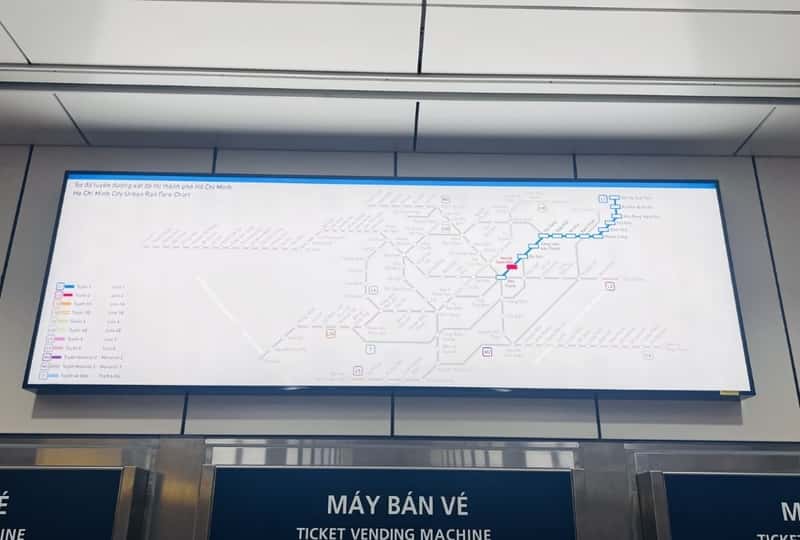
The city isn’t stopping at one line. On January 15, 2026, Ho Chi Minh City officially broke ground on Metro Line 2 (Ben Thanh – Tham Luong).
To avoid the “Line 1 Trap,” authorities have opted to fund this $2.34 billion project primarily through the state budget rather than relying solely on foreign Official Development Assistance (ODA). This move is designed to bypass the complex, multi-layered international bidding and disbursement rules that paralysed Line 1.
Line 2 technicals:
- Length: 11.3 kilometres.
- Complexity: Over 9 kilometres are underground-triple the underground portion of Line 1.
- Automation: It is planned to be fully driverless (Grade of Automation 4), a significant leap in tech for the region.
- Timeline: The city aims for a 2030 launch, a timeline that many hope is more realistic given that 70% of utility relocation was finished before the first shovel hit the ground.
The 2030 and 2045 Vision
Saigon’s master plan is nothing short of “Tokyo-esque.” Under Resolution 188/2025/QH15, the city has been granted special mechanisms to fast-track urban rail. The goal is to build a “backbone” of public transport that reduces motorbike reliance by 20% within the decade.
| Phase | Goal | Total Length |
| By 2030 | 6 Operating Lines | 187 km |
| By 2035 | 14 Operating Lines | 462 km |
| By 2045 | 19 Operating Lines | ~700 km |
The estimated cost for this total network is a staggering $44 billion. To fund this, Saigon is looking toward Transit-Oriented Development (TOD), which means they are essentially selling and developing the high-value land around metro stations to pay for the rails themselves.
Why It Matters

Beyond the balance sheets, the metro is reshaping Saigon’s physical environment. Real estate values along Line 1 in Thu Duc City have already jumped by 30%, as the promise of a “car-free” lifestyle becomes a premium commodity. This shift toward electric rail is more than just a convenience; it is a cornerstone of Vietnam’s ambitious commitment to achieve net-zero emissions by 2050.
Mathematically, the impact is hard to ignore: every full train car that whisks 900 people across the city theoretically removes 600 motorbikes from the road. While the net-zero goal remains a point of debate-with some critics labelling it “economic suicide” for a developing nation-the immediate, tangible benefit for Saigonese is the drastic improvement in localised air quality.
While sceptics often joke that electric vehicles simply shift pollution from your vehicle’s tailpipe to the power plant, there is a crucial distinction: by moving emissions away from the city’s densely populated core to centralised facilities, the metro eliminates the “ground-level” cocktail of carbon monoxide and fine particulates that millions of residents breathe daily, meaning that for the fist time in decades, you might finally be able to live in a city without the necessity of wearing a mask daily.
This transition does not just “move” the problem; it clears the urban lungs of the city, significantly reducing respiratory health costs and making the streets of District 1 and Thu Duc genuinely breathable for the first time in decades.
The “Saigon Metro” is no longer a punchline about delays. It is now a functioning, expanding reality. While the scars of the first line’s 17-year construction remain in the form of high costs and greying hairs for planners, the lessons learned have created a roadmap for a city that is finally ready to stop idling in traffic and start moving toward the future.