Florida has long held a near-mythical status in the American retirement imagination. Sunshine, beaches, no state income tax, and golf courses practically everywhere you look. For decades, the pitch was irresistible. But here’s the thing – what made Florida a retirement paradise is quietly unraveling, and the numbers tell a sobering story that more and more retirees are starting to pay attention to.
The real issue isn’t just comfort. It’s safety, financial stability, and long-term peace of mind. Florida landed at 41st in Bankrate’s 2025 Best and Worst States to Retire study, due to poor healthcare rankings, high insurance costs, and natural disaster risks. That’s not a minor footnote. That’s a flashing warning sign. So if Florida is off the table, where should you actually be looking? Let’s dive in.
Why Florida’s Climate Risk Has Become Impossible to Ignore
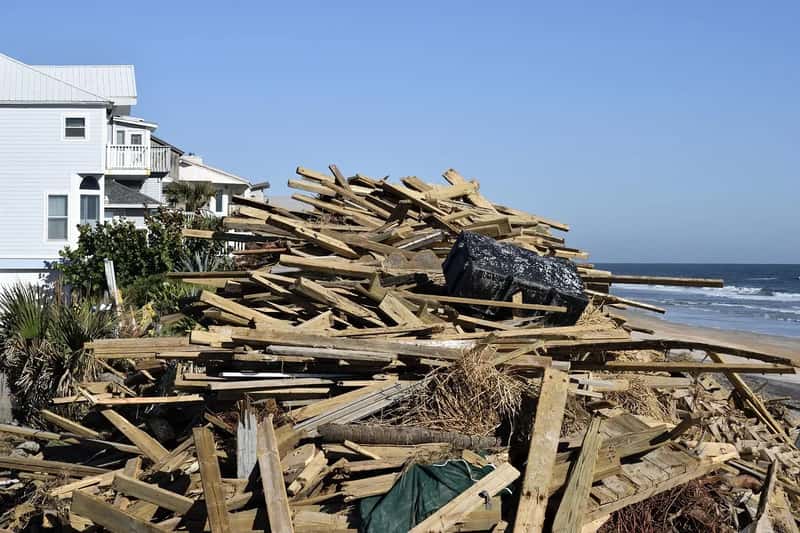
More than any other U.S. state, Florida is susceptible to damages from tropical storms, and climate change is projected to increase these risks. That’s not an opinion – that’s science. Think of Florida as a peninsula jutting directly into the path of every major storm system that rolls across the warm Atlantic and Gulf waters. It’s geography meets bad timing, and retirees are increasingly caught in the middle.
In 2024 alone, Florida witnessed Hurricane Helene and Hurricane Milton, both of which caused insurmountable damage to infrastructure, power lines, and took several lives. That same year, Florida’s property market started to struggle due to higher mortgage rates, increasing property insurance costs, severe weather, and slow job growth. Home insurance premiums in some Florida markets have doubled or even tripled. For a retiree on a fixed income, that’s not a small problem. It’s a budget catastrophe waiting to happen.
New Hampshire – The Surprise Champion

Nobody puts New Hampshire on a retirement mood board. No one posts dreamy Instagram photos with the hashtag #GraniteStateGoals. Yet here we are. According to Bankrate’s 2025 Best and Worst States to Retire Study, New Hampshire takes the top spot, unseating last year’s leader, Delaware, which fell to 11th overall. That’s a remarkable result, and honestly, the more you dig into it, the more sense it makes.
New Hampshire offers an ideal balance of scenic living, four true seasons, and lower climate exposure than much of the U.S. The Granite State sees fewer severe weather events, particularly wildfires, flooding, and heat-related emergencies, making it a naturally more climate-resilient option for homeowners. On top of that, New Hampshire’s tax on interest and dividends was fully repealed effective January 1, 2025, making it an even sweeter financial deal for retirees living off investment income. It’s hard to argue with that combination.
Vermont – Small State, Big Climate Safety
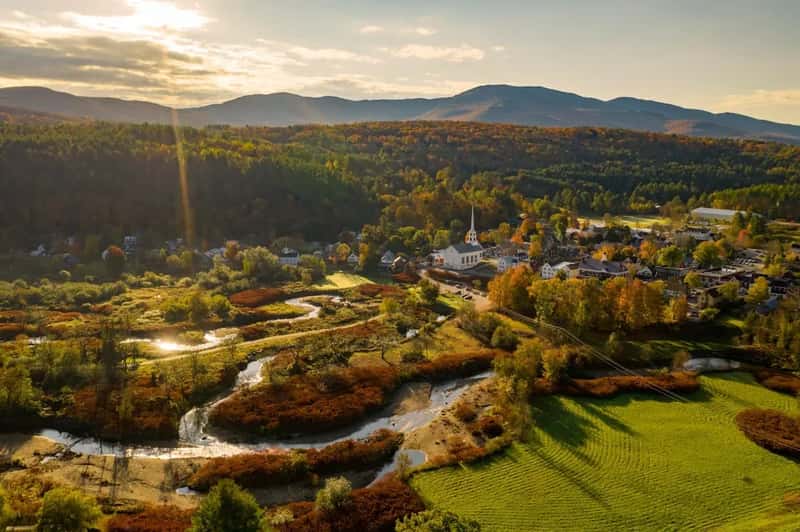
Vermont gets overlooked a lot. It’s cold, it’s small, and its population barely registers on national charts. Still, from a climate resilience standpoint, it is genuinely one of the safest places in the entire country to plant your retirement flag. The Northeast offers better prospects, particularly Vermont and New Hampshire, which rank as the two safest states from climate change. Vermont stands out as a haven – free from wildfires, extreme heat, and hurricanes.
Vermont topped the arts category with most venues per capita and was also the best state for healthcare. That combination of cultural richness and top-tier medical access matters enormously when you’re planning a long retirement. Yes, Vermont gets snow. Quite a lot of it. But for many retirees, swapping hurricane-season anxiety for a predictable New England winter is actually a very fair trade.
Delaware – Tax-Friendly and Naturally Low-Risk
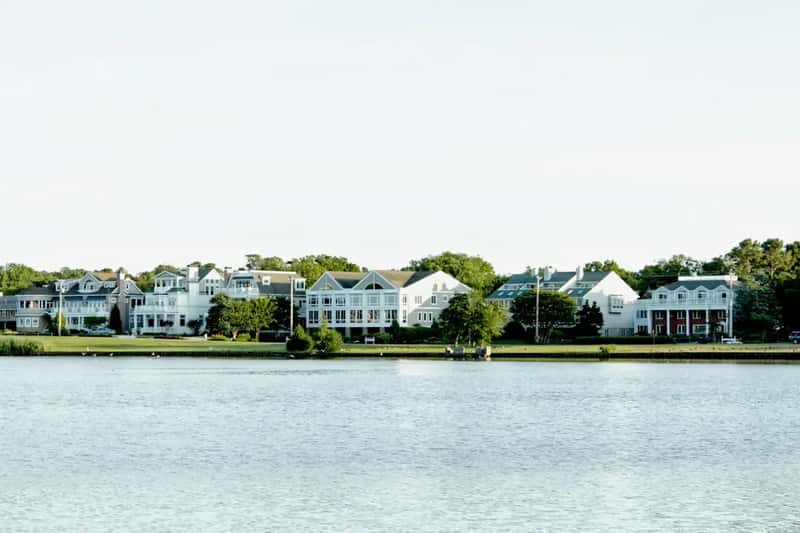
Delaware is easy to underestimate. It’s the second-smallest state by area, sandwiched between Maryland, Pennsylvania, and New Jersey. But what it lacks in size, it makes up for in quiet, steady reliability. Delaware took the top spot as the best state to retire in a prior Bankrate study, known for its low number of natural disasters, temperate climate, and tax-friendly status. Those qualities don’t disappear just because newer rankings shuffle the deck.
Delaware is a good option for retirees looking for a stable economy and a strong senior community. It’s one of the few higher-tax states in this group that still manages to keep its economy attractive to retirees. The coastline along the Delaware Bay is mild compared to Florida’s hurricane-battered shores. Honestly, it’s a bit like getting the coastal retirement lifestyle with significantly less storm drama attached to it.
Virginia – Four Seasons and Serious Flood Preparedness

Virginia sits in a genuinely interesting spot. It straddles the mid-Atlantic, giving retirees access to mountains in the west, a gentler coastline in the east, and vibrant small cities scattered throughout. The climate is moderate in the truest sense – four real seasons, without the brutal extremes you find farther north or the relentless heat-and-storm cycle of the deep South.
Maryland and Virginia consistently rank well thanks to renowned healthcare institutions, scenic beauty, and rich cultural heritage. From the tranquil Chesapeake Bay to the Appalachian Mountains, these states offer a backdrop for outdoor adventures and wellness activities. Virginia has also taken legislative steps to protect its communities, with state lawmakers introducing legislation specifically designed for flooding preparedness and resiliency. For retirees who want natural beauty without constant disaster anxiety, Virginia is a quiet powerhouse of an option.
Wyoming – Rugged, Affordable, and Surprisingly Calm

Wyoming is the kind of state that catches you off guard. Most people picture it as wild and remote – lots of open sky, bison, and Yellowstone. That part is true. What they don’t always realize is that Wyoming carries some of the lowest climate-related financial risk in the West. Wyoming is one of two Western states ranked in the top 10 of the Home Insurance Climate Stability Index. The average home insurance rate is just $1,740 per year, well below the national average of $2,584.
Wyoming stands out as one of the most affordable states to retire in. Retirees need approximately $574,000 in savings to live comfortably here, thanks to no state income tax and one of the lowest property tax rates in the country at just 0.58%. Compare that to Florida, where the state has some of the country’s highest insurance costs, and in recent years, many homeowners had to rely on the state’s insurer of last resort because private carriers left Florida or went bankrupt after major storms. The contrast is almost shocking when laid out side by side.
North Carolina – Diverse Landscape, Manageable Climate

North Carolina has been quietly climbing retirement rankings for years. It’s the kind of place that offers genuine geographic diversity – you can retire near the Blue Ridge Mountains and enjoy cool summers, or settle on the Outer Banks coast, or land somewhere in the Piedmont region with warm summers and mild winters. That’s essentially three retirement climates in one state, which is a rare thing. North Carolina has four distinct seasons, but without the harsh temperatures found further north and south. Thanks to the state’s diverse geography, residents can choose a climate that suits their taste.
North Carolina is home to several nationally recognized hospitals. Duke University Hospital in Durham is one of the top-ranking healthcare providers in the country, and UNC Hospital in Chapel Hill is known for its geriatric care and specialized medicine. That level of medical infrastructure is not something to take lightly in retirement planning. It’s the kind of safety net that matters far more than proximity to a beach, when you actually think about it.
Georgia – Warmth Without the Worst of Florida’s Risks

Let’s be real – plenty of retirees genuinely want warmth. A mild, temperate climate is a legitimate priority, not some shallow preference. Georgia gets that. It delivers real warmth, especially from spring through fall, without subjecting retirees to Florida’s relentless hurricane exposure and rapidly escalating insurance environment. Retiring in Georgia offers warm weather without the same extreme heat and humidity that most of Florida has. For those 65 and older, Georgia offers up to $65,000 in retirement income deductions, mild winters, and 676 retirement communities.
Georgia is considered one of the best places to retire due to its affordability, tax benefits, mild climate, outdoor recreation options, rich cultural attractions, and quality healthcare facilities. Retirees appreciate Georgia’s low cost of living, favorable tax policies, and diverse landscapes – from beaches to mountains – offering plenty of opportunities for leisure activities. Think of Georgia as Florida’s more composed, financially savvy neighbor – all the sunshine appeal, minus the insurance crisis and the storm surge maps.
Utah – Elevated Terrain, Lower Disaster Costs

Utah might sound like a counterintuitive choice for retirees, but give it a chance. Its high desert elevation and landlocked position naturally shield it from two of the most devastating climate threats – hurricanes and major storm surges. It simply cannot be hit by those events. Utah’s dry climate and elevated terrain help shield homeowners from hurricanes, major floods, and storm surges. Drought and wildfires remain a concern, especially in rural and suburban areas. Still, Utah consistently ranks better than many western states when it comes to natural disaster losses.
Four of the top 10 best states for retirees are in New England, and three are Western states: Idaho, Utah, and Wyoming. Utah’s presence in that elite group is no accident. It’s a state with a strong economy, a growing healthcare infrastructure, and breathtaking scenery that makes daily life feel genuinely magnificent. The red rock canyons alone are worth the conversation. It’s hard to say for sure whether Utah will maintain its edge as water scarcity in the West grows, but for now, it remains one of the most climate-stable and financially sensible retirement options in the country.
The Bigger Picture: What Today’s Retirees Actually Want

Something fundamental has shifted in how Americans think about retirement destinations. The old Florida dream was built around weather alone. Today’s retirees are weighing the full picture. Today’s retirees are weighing more than just warm weather when choosing where to live. Safety, healthcare access, affordability, and overall quality of life are playing a much larger role in the decision-making process. That is a genuinely meaningful cultural shift, and it explains why a state like New Hampshire now outranks Florida in the most comprehensive retirement studies available.
Natural disasters have inflicted nearly $750 billion in damages across the U.S. since the start of 2020, with some states suffering a disproportionate share. Over half of those damages affected three states – Florida, Louisiana, and Texas – whose proximity to the Gulf of Mexico has made them vulnerable to direct strikes from hurricanes, the most costly form of natural disaster. When you frame it that way, choosing a climate-stable state isn’t just a lifestyle preference. It’s arguably the smartest financial decision a retiree can make. The sun will still shine elsewhere. Just with a lot fewer insurance headaches attached.
What would you have guessed – that New Hampshire would beat Florida for the top retirement spot? Sometimes the most surprising answers are also the most sensible ones. What do you think about it? Tell us in the comments.