The terminal smells like recycled air and other people’s anxiety.
You already know where the nearest exit is.
You knew before you sat down.
You told yourself this trip would be different. That you’d finally let go. That this time, you’d actually get lost in the way travel writers promise – loose, unhurried, dissolved into the texture of somewhere new.
But your back is to the wall. Your eyes are on the door. And some low, ancient part of you is already running contingency plans for things that will never happen.
This is the identity gap. The distance between the person you pack for – curious, open, unguarded – and the person who actually boards the plane, shoulders tight, scanning the cabin like there’s something in here that needs finding before it finds you. The traveler you perform and the nervous system you actually carry. They are not the same person. They have never been the same person.
But knowing why this happens to you is the key to the solution. When you have all the answers to know your true inner self, this specific kind of hyper-vigilance will not hold you back anymore.
1. The Sentinel Self
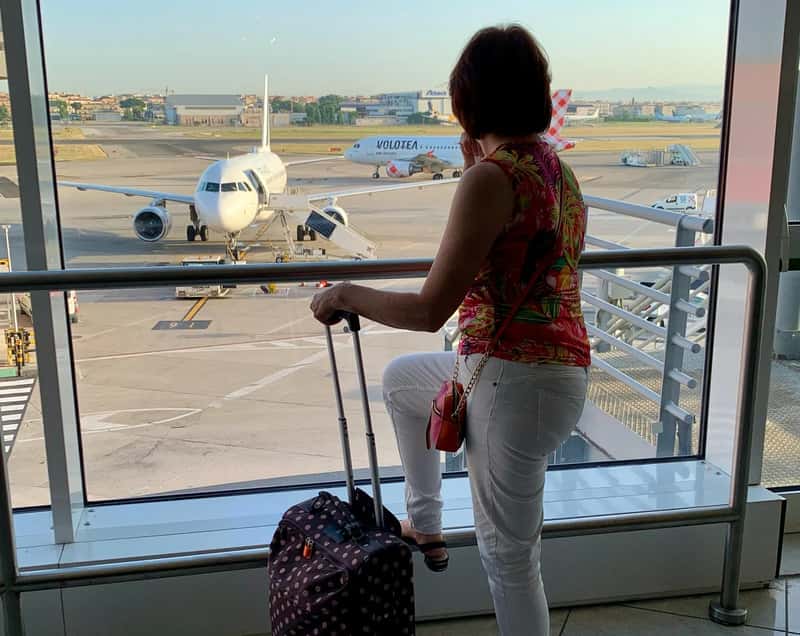
There is a version of you that never sleeps.
It doesn’t matter if you’re in a five-star hotel in Lisbon or a budget hostel in Chiang Mai. Hypervigilant symptoms operate as a perpetual scanning of the environment – searching for sights, sounds, people, behaviors, smells – anything reminiscent of threat or trauma. The Sentinel Self doesn’t take vacations. It got on the plane with you. It checked in first.
The cruel irony is that travelers are praised for awareness. For noticing things. For reading a room. But there’s a profound difference between curiosity and surveillance. One opens you to the world. The other locks you inside a glass box, face pressed against the pane, watching everything with the focused dread of someone who already knows how this ends.
You look like a keen observer. You feel like a security camera.
The Sentinel Self was built to protect you. It was built from something real. But it doesn’t know that the danger it was made for is no longer in the room.
And so it keeps scanning. Keeps logging. Keeps the exits in its peripheral vision, just in case.
2. The Feedback Loop Nobody Talks About
Here is the mechanism nobody explains at the departure gate.
Research suggests that anxiety spurs selective attention in your brain – and then it creates a feedback loop: you look for a specific threat and you get more anxious, which causes you to look for more threats. You arrive in a new city hoping for wonder. Instead, your brain serves up the exit sign above the restaurant door. The stranger who looked at you too long on the metro. The loose cobblestone that could mean anything.
This is not pessimism. This is neurology doing its oldest job.
Hypervigilance persists regardless of actual threat level – you can feel the same alarm sitting in your own living room as you would in a dark alley. It distorts perception, causing ambiguous situations to be misread as threatening, and minor stimuli to be exaggerated into major concerns.
The loop tightens. The world grows smaller. And the trip you took to feel free starts to feel like one more container you cannot fully inhabit.
You wanted expansion. You got escalation instead.
3. The Architecture of Alertness
Watch what you do when you walk into any room.
In practical terms, this means constantly scanning your environment – checking exits when you walk into a restaurant, watching strangers’ hands, tracking movement in your peripheral vision, reading facial expressions for signs of hostility.
It is automatic. It is instant. And for a long time, you probably thought everyone did it.
They don’t.
The person across the table from you at that café in Naples is simply eating pasta. They are not cataloguing the distance to the street. They are not noting that the door opens inward. They are just there. Present. Fully inside the experience.
You are there too, technically. But a significant part of your bandwidth is running a quiet security assessment on a loop, like background software that never fully closes. Difficulty concentrating on tasks happens because your attention keeps getting pulled toward scanning for threats. The pasta is good. You barely taste it.
The architecture of your alertness was built room by room, year by year. And it goes with you everywhere you go.
4. The Seduction of the Temporary
Travel should feel like relief. And sometimes – briefly – it does.
There is a particular freedom in temporariness. A hotel room holds no history. A new city holds no one who knew you before. You can be, for a few days, whoever the light makes you. The version of yourself that laughs more easily. The one who orders the thing on the menu you can’t pronounce. The one who gets genuinely, beautifully lost on a side street and doesn’t feel the cold creep of dread.
But hypervigilance makes your brain prioritize survival over presence. Even when you’re physically safe, your body stays braced. The seduction of the temporary only lasts as long as the nervous system allows it.
And then a car backfires. Or someone shouts two streets over. Or you realize you’ve walked too far and don’t know exactly how to get back.
And the brief, borrowed self dissolves. The Sentinel returns. You pull out your phone. You locate the exit. You breathe and tell yourself it’s fine.
It is fine. You know it’s fine. That almost doesn’t help at all.
5. The Body Keeps the Itinerary
I remember a trip to a coastal town I had looked forward to for months. I had a notebook. I had a carefully curated playlist. I had the precise romantic idea of myself walking along a sea wall at dusk, thinking luminous thoughts.
What I actually did was spend the first four hours figuring out the fastest route back to the train station. Just in case. Just to know. I never needed it. But not knowing it would have cost me something I can’t fully name – some internal tax the anxious brain levies on any moment of unstructured freedom.
Hypervigilance doesn’t just live in your thoughts. It shows up in your body, your relationships, and your daily life. It lives in the tight ridge of muscle across your shoulders. In the jaw that doesn’t fully unclench, even at sunset. In the way you read every email from home as a potential emergency while you’re supposed to be gone.
Trauma specialists recognize that hypervigilance isn’t a flaw – it’s a symptom. It’s your body doing its best to protect you based on past pain. But when the danger is gone, staying on high alert becomes exhausting and isolating.
The body keeps the itinerary. It just doesn’t always tell you what the itinerary is for.
6. The Performance of the Relaxed Traveler
You know this character.
You have played this character.
The relaxed traveler laughs easily at the lost luggage. They strike up conversations with strangers on trains. They sleep on overnight buses with their mouth open and their arms loose. They don’t compulsively refresh the flight status. They eat street food without calculating the nearest hospital. They are, in every visible way, exactly where they are.
Performing this character while your nervous system runs a silent threat assessment underneath is one of the most exhausting things a person can do. The profound exhaustion hypervigilance creates is relentless – your nervous system isn’t designed to maintain high alert indefinitely, and the constant physical tension, racing thoughts, and emotional stress drain your energy reserves even when you haven’t done anything physically demanding.
You perform ease. You perform openness. You perform the traveler who got lost on purpose and loved it.
Underneath, the Sentinel never stopped working the room.
7. The Geography of Safety
Some of us have never lived in a body that felt safe in a specific place.
Home is just the familiar danger. Travel is the unfamiliar one. You feel the same alarm sitting in your own living room as you would in a dark alley. Which means geography was never the variable. The variable was always internal.
This is a dark and clarifying truth.
No destination cures a dysregulated nervous system. No ocean view resets a threat-detection apparatus that has been on continuous duty for years. Your nervous system essentially learns to expect danger and struggles to recalibrate to normal levels of alertness, resulting in a persistent state of tension that affects your daily functioning, relationships, and overall quality of life.
You cannot travel far enough away from yourself to lose the internal cartography. You will always, somewhere in the first hour of a new place, find the nearest exit. Chart the fastest route. Build the invisible perimeter that makes the strange place survivable.
The geography of safety is not a place on any map you have ever held.
8. The Exhaustion Nobody Names
There is a specific tiredness that comes from this kind of living.
It is not the pleasant exhaustion of a long day of walking through ruins. It is not the satisfying bone-weariness of a good hike. It is the depletion of an internal system that has been running at capacity since before you can remember. Hypervigilance may bring about a state of increased anxiety which can cause exhaustion. And that exhaustion compounds. It layers. It makes the morning harder and the evening heavier.
Mentally, hypervigilance shows up as racing thoughts focused on potential problems or threats. You might catch yourself constantly asking “what if” questions and imagining worst-case scenarios.
You sit in a beautiful piazza in the early evening light. The swallows are doing their impossible thing above the rooftops. The wine is cold and correct. And some part of you – the tired, tireless part – is still running the room. Still asking the question you’ve been asking since long before this trip began.
What is coming, and from which direction?
The piazza doesn’t answer. It just stays beautiful, indifferently, while you stay vigilant.
9. The Identity That Travels
Who are you when no one who knows you can see you?
Travel is supposed to answer this question. The strip-away of routine and audience and obligation is supposed to reveal something essential. Something true. And sometimes – in a luminous, unexpected flash – it does. You catch a glimpse of the self who doesn’t need the perimeter. The one who can sit in an unfamiliar square without running the threat calculus.
But your system learned to survive by staying alert. Even now, years later, small cues can send your body into an old protective state – even when your conscious mind knows you’re safe.
The identity that travels is not just the curious self and the open self. It is also the braced self. The contingency self. The self who chose the seat closest to the aisle, who memorized the hotel’s stairwell location, who sleeps lightly in every unfamiliar room.
These selves are all you. All of them made the trip.
Hypervigilance is not a personal failing or sign of weakness. Rather, it’s a deeply understandable response to trauma that became stuck. The identity that travels carries all of its history. Even the parts you packed last.
10. The Exit You’re Actually Looking For
You have been finding exits your entire life.
In rooms. In relationships. In conversations that felt like they were about to close in. You developed a talent for it – a near-architectural sensitivity to the structure of any space you enter. Where the doors are. Which ones open outward. Which ones stick. Your nervous system is conditioned to react fast to potential threats. You are constantly looking for escape routes, analyzing people’s moods, or anticipating worst-case scenarios.
But here is what the exits have never led to: rest.
Every exit leads to another room. Another space to scan. Another perimeter to establish. Hypervigilance creates a feedback loop – high sensitivity to danger makes you notice things that trigger anxiety, and these triggers convince you to be even more vigilant. And so the loop continues, through every city, every hotel corridor, every unfamiliar street that looks exactly like the inside of your own careful vigilance.
The exit you are actually looking for is not architectural. It is not a door at the back of a restaurant or a fire escape on a side street in a city you’ll never live in. It is the moment – slow, uncertain, earned – when the nervous system begins to believe, really believe, that the current room is safe. That you are allowed to stop scanning. That the threat was real once, and isn’t now.
Hypervigilance isn’t who you are. It’s what you learned to survive. But your nervous system is not permanent – it can learn a new pattern.
That is the hardest journey. The one with no itinerary. No exit strategy. No back-to-wall seating. Just the quiet, radical act of staying in the room.
There is a particular kind of courage that looks, from the outside, like nothing at all. It looks like a person sitting at a table in a foreign city, shoulders dropped a half-inch lower than usual, not checking the door. Not running the calculus. Just sitting with the strange, difficult, unfamiliar sensation of being present without armor.
Nobody writes postcards about that moment. There’s no photograph that captures it. It doesn’t look like adventure. It doesn’t look like arrival. It looks like a person at a table, breathing, just barely trusting the room around them.
But it is the bravest thing some of us will ever do in any city we have ever visited – to notice the exit, to know where it is, and then, just this once, to turn away from it and stay.