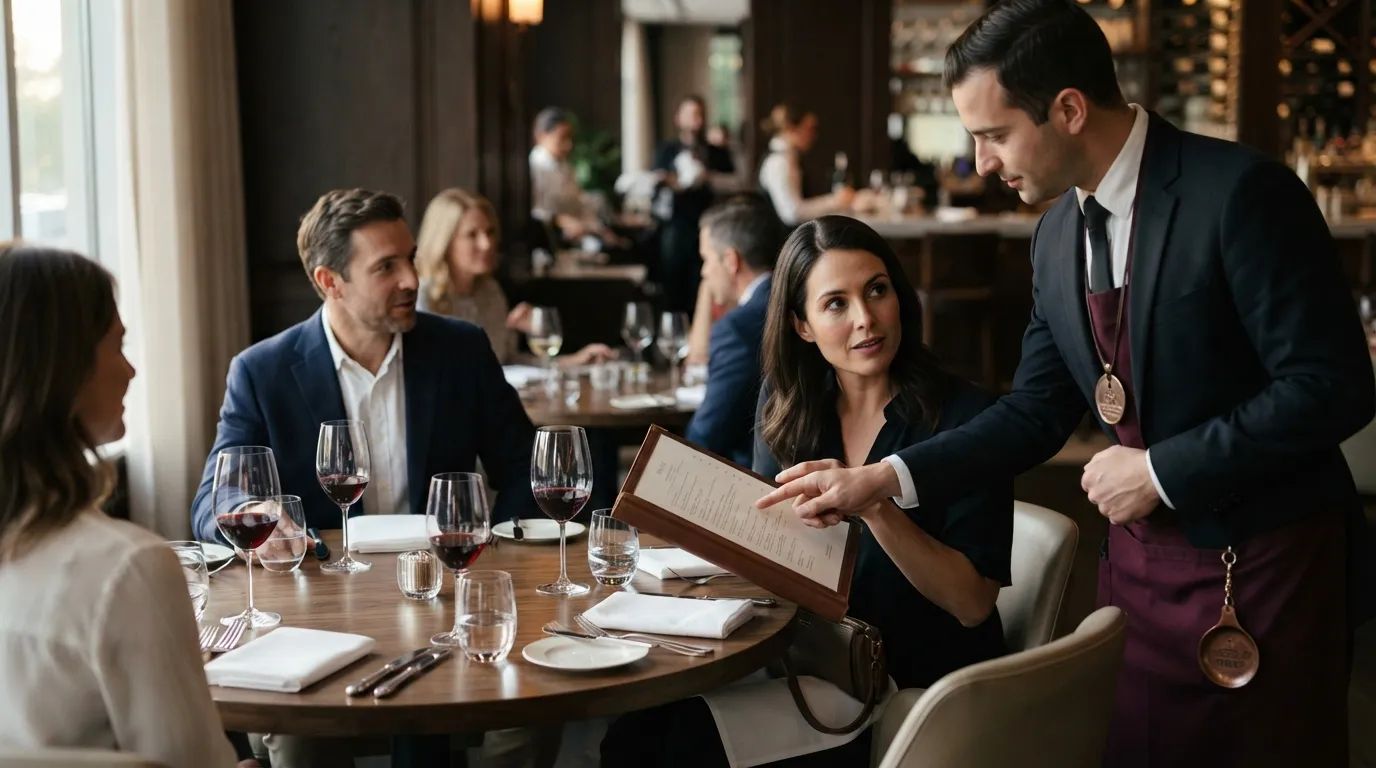
Most people assume a sommelier’s only job is pouring wine and reciting tasting notes. In reality, they’re running a silent read on your table from the second you sit down – posture, eye contact, who grabs the wine list first.
Most guests never clock any of it. Here are the 17 tells trained sommeliers actually watch for – and what each one gives away.
#17 – The First 90 Seconds Are Everything
You get about 90 seconds to watch a party get seated. In that window, a sommelier already has a rough plan for how to approach the table.
Most guests assume service hasn’t started yet. It already has.
In those seconds, sommeliers collect the clues that shape everything – the tone they’ll use, the price range they’ll suggest, even the greeting itself. It’s a quiet ritual most guests never notice.
- The clock starts before a word is spoken.
- Every detail between the door and the chair counts.
Fast Facts
- Fewer than 300 people worldwide hold the Master Sommelier title.
- The full diploma exam has a pass rate that often falls in the single digits.
- Candidates get a strict three-year window to pass every section or start over.
But that’s nothing compared to what we found about #16…
#16 – Who Sits at the Head of the Table
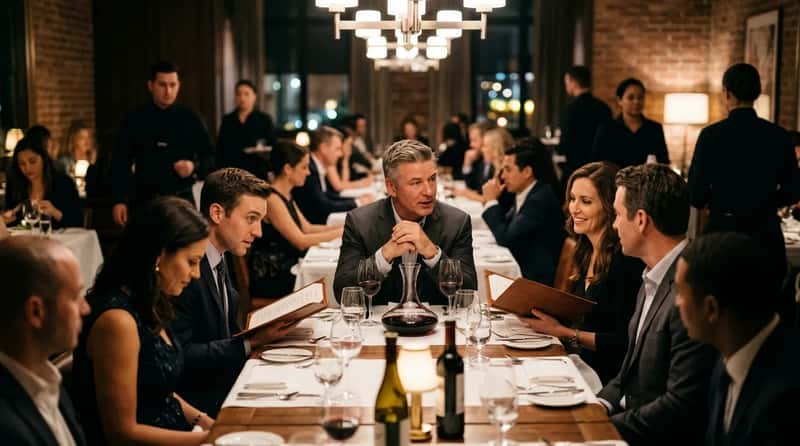
Seating isn’t random to a trained eye. A sommelier watches for confident posture, a curious glance at the wine list, and the one guest who quietly defers to someone else.
The host is usually easy to spot: the person who chose the restaurant, pulled out someone’s chair, or gave the server a confident nod. From the sommelier’s side, the host is whoever ends up ordering the wine.
Identifying that person fast decides the entire flow of service. Anchor to the wrong guest, and the whole table dynamic turns awkward – it usually shows in the order.
- Confident posture usually signals the decision-maker.
- Deferred eye contact usually signals a guest, not a host.
But that’s nothing compared to what we found about #15…
#15 – The Table’s “General Energy”
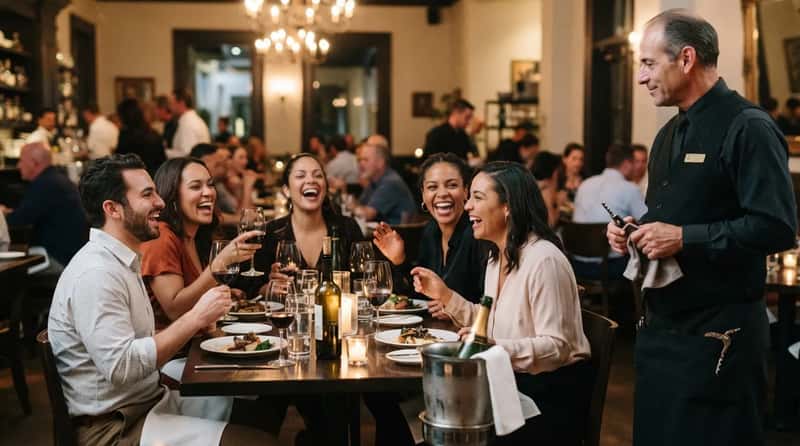
Clayton Fox, sommelier and wine director at R’evolution in New Orleans, calls this reading the room’s “general energy.” Is the table loud and celebratory, or quiet and serious?
That read changes everything. A celebratory table gets a completely different approach than a hushed business dinner.
Sometimes, Fox says, guests simply don’t want to talk wine at all – so he keeps things casual and skips the formality.
A skilled sommelier never approaches two tables the same way. Push a chatty recommendation onto a table that just wants to eat, and the night is already off track.
- Laughter and noise usually mean the table is open to exploring.
- Hushed tones and laptops mean keep it quick and efficient.
But that’s nothing compared to what we found about #14…
#14 – Reading the Mood Before a Word Is Spoken
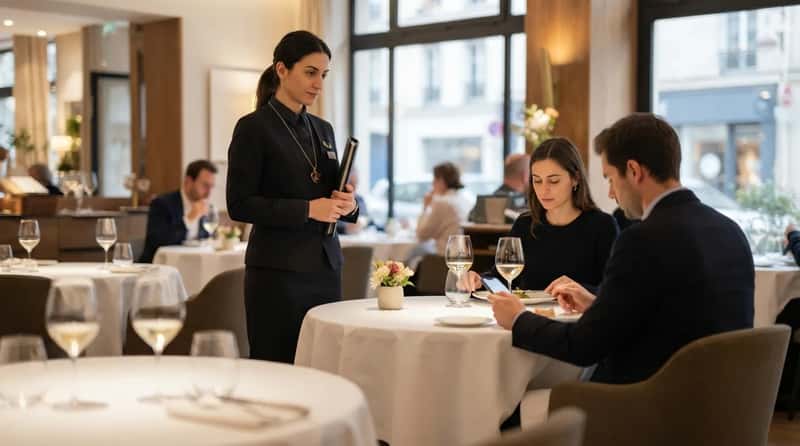
“I observe guests – their mood, the occasion,” says Agnese Morandi, head sommelier at Table by Bruno Verjus in Paris. “I want them to feel comfortable, never judged, so they can relax and enjoy.”
Is this a first date or a twenty-year anniversary? A celebration or a quiet breakup dinner?
Sommeliers are trained to read body language for emotional cues, not just behavioral ones. A table where no one makes eye contact with each other tells its own story.
The sommelier who reads that correctly recommends something easy and familiar – not a challenging natural wine that needs a ten-minute explanation.
- Relaxed shoulders and leaning in signal adventurous pairing potential.
- Stiff posture and phone-checking mean keep it safe and fast.
But that’s nothing compared to what we found about #13…
#13 – How You Hold the Wine List
The wine list is basically a prop, and how you handle it gives you away. Do you open it with confidence, or flip straight to the back page?
Sommeliers are trained to catch these tiny tells – the hesitation when a bottle looks a little too expensive, the way someone scans only the reds. Some guests even check their phone mid-scan, and most sommeliers don’t mind at all.
It tells them the guest actually cares about making a good choice – which is useful information, not an insult.
The guest who flips straight to a familiar region is signaling comfort over adventure. The one who lingers on an unfamiliar page is either curious – or quietly panicking.
- Flipping to the back page usually signals budget awareness.
- Lingering on one page usually signals genuine interest.
But that’s nothing compared to what we found about #12…
#12 – The Price-Point Glance
Remy Loet, sommelier at Aria Restaurant in Atlanta, says he often hears the same quiet question: “What do I drink instead?” It usually follows a glance at the list and the realization that a favorite bottle has crossed a financial line.
Sommeliers are trained to catch that exact micro-moment – the slight wince, the pause, the quiet redirect to a cheaper column. When a guest points at a bottle in their range and says “something like this,” a good sommelier gets it instantly.
Nobody has to announce a number out loud. This silent budget signal is one of the most common – and most misunderstood – moments in restaurant dining.
- Eyes scanning prices before labels means budget is a factor.
- Pointing to the middle of the list means value matters more than luxury.
But that’s nothing compared to what we found about #11…
#11 – Who Does the Talking
“We make sure to connect with everyone. The experience belongs to all,” says sommelier Geddes, who along with colleague Daro listens closely to every guest at the table – not just the loudest one.
The loudest voice at the table is rarely the actual decision-maker. Sommeliers know the real authority is often the quiet one who leans in slightly, or shakes their head faintly at an expensive suggestion.
Pinning all attention on the talker is a rookie mistake. Experienced sommeliers actively resist it.
- A frequent talker isn’t necessarily the one choosing the wine.
- Watch for subtle nods, not just vocal agreement.
But that’s nothing compared to what we found about #10…
#10 – The “Name-Dropper” Signal
At high check-average restaurants, sommeliers see plenty of guests who treat the wine list as a chance to name-drop producers and confirm their own good taste. A guest who mentions Screaming Eagle within 30 seconds isn’t necessarily a serious collector – they might just be performing for the table.
Sommeliers know that nobody really “sells” trophy wines. The guest already arrived wanting to impress everyone in earshot.
A name-drop tells the sommelier less about what a guest actually likes and more about what they want others to think they like. The best ones use that as a launch pad toward a smarter – often cheaper – recommendation.
Worth Knowing
- Screaming Eagle Cabernet typically trades for roughly $2,500 to $4,500 a bottle on the secondary market.
- Top-scoring vintages have climbed into five-figure territory at auction.
- A 6-liter bottle of the 1992 vintage once sold for $500,000 at a charity auction.
But that’s nothing compared to what we found about #9…
#9 – Eye Contact With the Sommelier
Eye contact is one of the clearest invitations a guest can give – and avoiding it is just as loud. Lock eyes when the sommelier approaches, and you’re signaling you’re open to a conversation.
Bury your head in the menu instead, and you’re signaling you’d rather be left alone. A good sommelier reads that gap immediately.
Push past closed-off body language, and you almost always get an uncomfortable moment. The best sommeliers treat avoidance as “not yet” and circle back later.
- Direct eye contact usually means bring on the recommendations.
- Avoidance behind a menu means let them settle first.
But that’s nothing compared to what we found about #8…
#8 – The Food Order Timing
Wine orders typically come after the food order, so the sommelier can suggest bottles that actually complement what’s on the table. But most sommeliers go a step further – they watch when a table orders, and whether the dishes were coordinated at all.
A table that plans together, with one clear decision-maker, is a genuine joy to work with. A fragmented, everyone-for-themselves table forces the sommelier into creative problem-solving mid-service.
Someone who orders a bottle three bites into their steak has already made the night harder for everyone.
But that’s nothing compared to what we found about #7…
#7 – Hesitation When a Bottle Is Presented
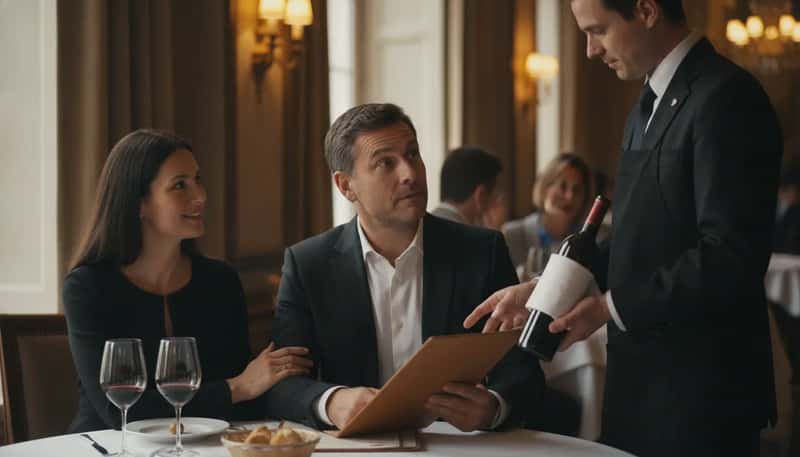
Sommeliers are trained to catch the exact moment a bottle feels a little too expensive. That micro-pause between the recommendation and the response says more than words ever could.
When a sommelier suggests a bottle, they’ll often point discreetly to the price on the list and ask if it works. That’s not just politeness – it’s a read, and the reaction tells them exactly where to go next.
The best sommeliers never let a guest feel embarrassed over price. They’ve already spotted the hesitation and prepared the backup before it turns into an awkward silence.
- A quick “sure” usually means the price is comfortable.
- A pause with a glance at companions usually means it’s too much.
But that’s nothing compared to what we found about #6…
#6 – Whether Guests Consult Each Other
A table that openly discusses the wine together is a completely different animal than one where a single guest just dictates. Sommeliers watch for side conversations, shared glances, and whether people lean in or lean back when a suggestion lands.
A large table of eight or more, ordering dishes running from mild to spicy, with a host wanting one wine that works for everyone, is one of the toughest scenarios a sommelier faces.
A group that can’t agree is actually a goldmine for a skilled sommelier. It’s the perfect opening to suggest two bottles – a red and a white – and make the host look like a genius for solving it.
But that’s nothing compared to what we found about #5…
#5 – The “Curious vs. Rigid” Divide
For sommelier and author Aldo Sohm, the guest always comes first.
When I look to create a wine list, I think first about the guest: what are they looking for, what’s in demand, and how curious, or open-minded, are they.
Aldo Sohm
The toughest guests aren’t the picky ones – they’re the rigid ones who won’t listen to a recommendation at all. Some order strictly by critic score, only to be disappointed later.
A guest who says “surprise me” is a sommelier’s dream. A guest who says “I only drink Napa Cab” is a puzzle – and neither one is wrong, but a good sommelier clocks which type they’re dealing with within seconds.
- Open posture and curious questions signal willingness to explore.
- Crossed arms and specific demands mean meet them exactly where they are.
But that’s nothing compared to what we found about #4…
#4 – The Phone Check
“We look up wine information too. As long as we’re getting the guest what they want,” says sommelier Geddes, who isn’t bothered when a guest checks their phone mid-decision.
But the phone check is still a data point. A guest Googling a producer is curious and engaged; a guest checking Vivino scores is likely price-comparing or hunting for validation.
A guest who glances at their phone, then back at the list with mild panic, just realized they’re out of their depth. Experienced sommeliers treat the phone check as a trust signal – if someone’s researching, they actually care.
Quick Compare
- Googling a producer: usually signals genuine curiosity.
- Checking Vivino scores: usually signals price-comparing or seeking validation.
- Phone, then list, then phone again: usually signals quiet panic.
But that’s nothing compared to what we found about #3…
#3 – The Occasion Signal
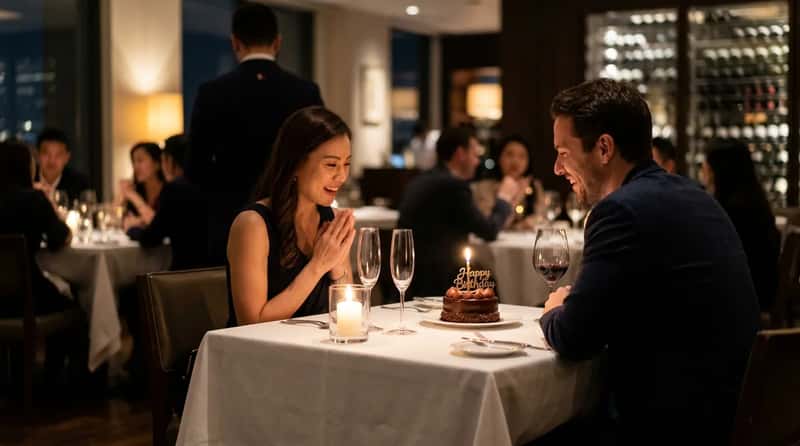
Is this a birthday, an anniversary, or a business dinner where someone’s trying to close a deal? Reading the occasion correctly is central to everything a sommelier does next.
Candles requested in advance, a cake waiting at another table, a nervous energy that smells exactly like a first date – none of it is invisible. Morandi says she watches for mood and occasion so guests can relax without ever feeling judged.
The sommelier who identifies the occasion before being told delivers something that feels almost magical – a choice that seems built for that exact moment.
But that’s nothing compared to what we found about #2…
#2 – Who Actually Makes the Final Call
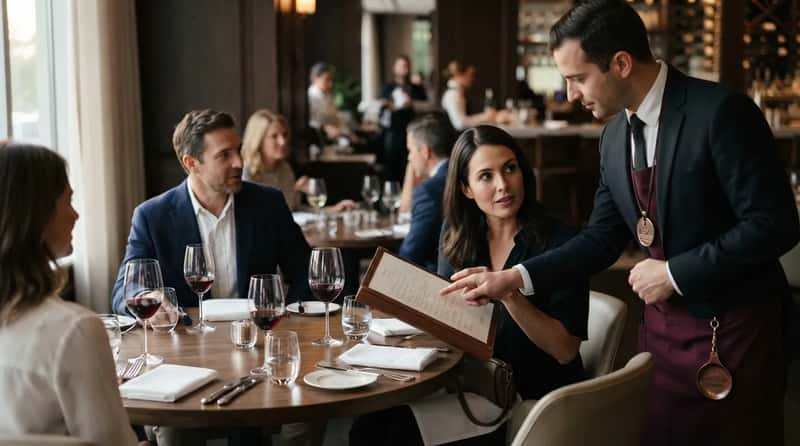
Here’s one most guests get completely wrong: the person who speaks most confidently about wine is rarely the one who actually decides. One sommelier recalled a guest confidently ordering a Margaux for his group of six, clearly trying to impress everyone at the table.
The sommelier quietly pointed out on the list that one vintage was £80 and the other was £600. They shared a look, and the guest understood exactly what was happening.
The real decision-maker is often the quieter partner, the one holding the card, or the one whose eyes the host checks before confirming. Get this read wrong, and you’ve just recommended a £600 bottle to someone who wanted the £80 one.
But that’s nothing compared to what we found at #1…
#1 – The Genuine Connection Moment
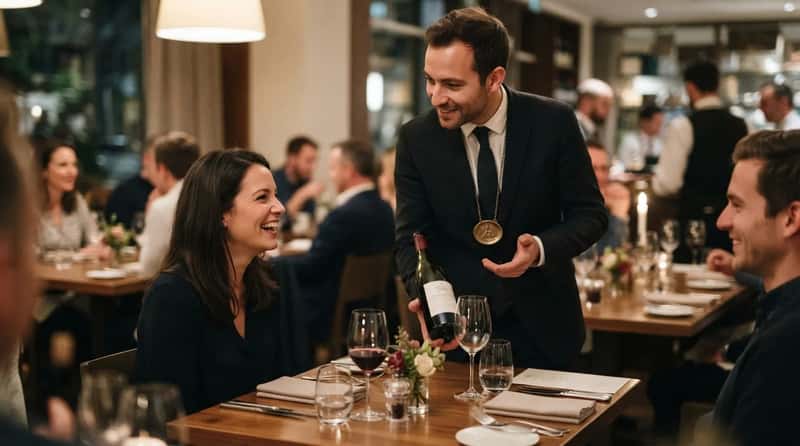
Every clue on this list – posture, eye contact, phone checks, price glances, name-drops – builds toward one single goal: the moment a sommelier truly connects with a table and delivers something the wine list alone never could.
Every sommelier knows different things, has their own local producers, and can suggest a wine that they have observed is a success.
Christian Hamel
This is what separates a great sommelier from someone who just pours wine. It’s the ability to turn 90 seconds of silent observation into a recommendation that feels personal, perfectly timed, and slightly better than anything the guest would have picked themselves.
The table never knew they were being read. That’s the entire point.
The Bottom Line

Sommeliers are trained observers first and wine experts second. From the second you sit down, they’re clocking your posture, your energy, your relationship dynamics, and whether you’re the type to take a recommendation or deflect one.
The best ones are the best listeners – reading clues in everything from the flow of the room to a flicker of hesitation over a price. The next time a sommelier approaches your table, know the reading already started before they said hello.
Did any of these surprise you – or did your sommelier pick up on something we didn’t cover? Drop it in the comments.
Bonus: The One Phrase That Beats All 17 Tells
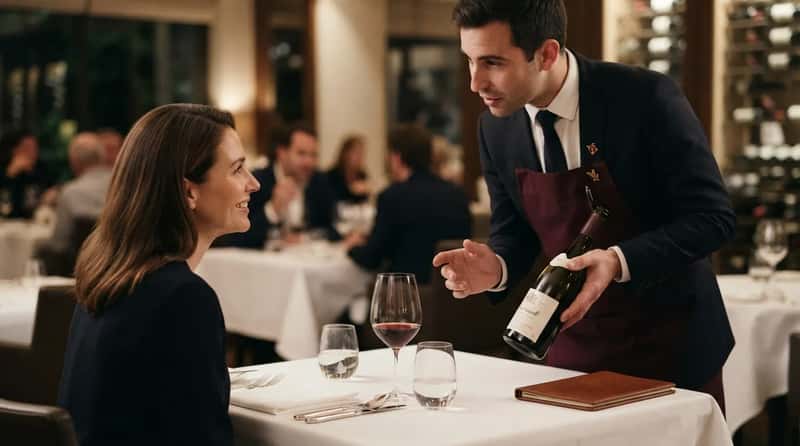
Forget pointing at prices or naming a producer to sound impressive. The single most useful thing you can say to a sommelier is: “What’s the one bottle you’re most excited to pour tonight?”
This question flips the entire dynamic. Instead of guessing your palate from posture or phone checks, the sommelier gives you the wine they’re personally passionate about – which is almost always better value than the flashiest name on the list.
- Ask the question early, right after the food order goes in.
- Follow up with one honest detail: “I tend to like bold and dry” or “I prefer something light and fruity.”
- Give a real budget range out loud instead of scanning prices silently – it saves everyone the awkward hesitation moment.
- If dining as a group, let the host ask the question, then have each guest add one preference word so the sommelier can build a pairing that actually works for the whole table.
This one move does what all 17 tells combined are trying to accomplish – it hands the sommelier the exact read they’d otherwise have to guess at, and it usually gets you the best pour in the house.