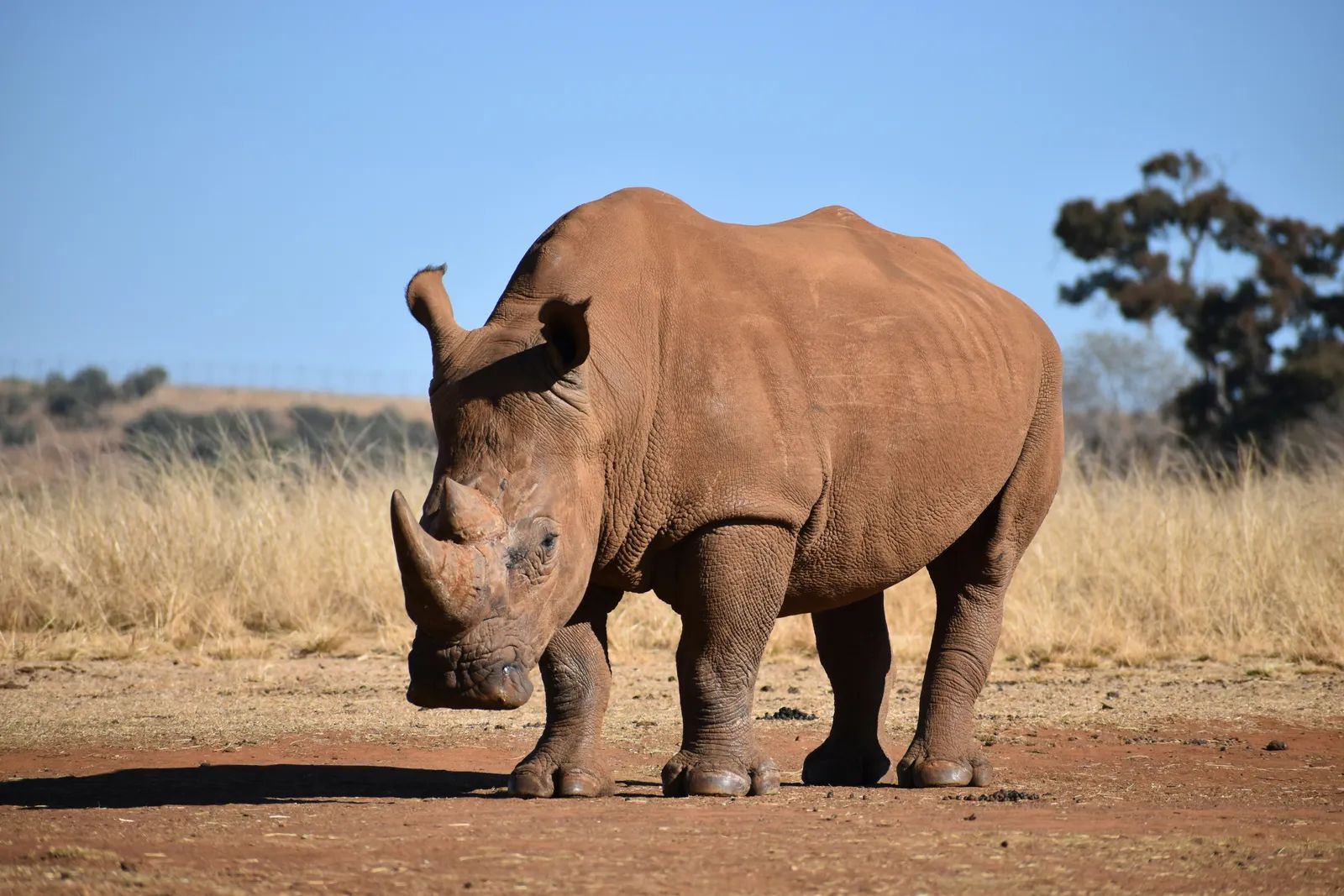
Namibia – In 2022, poachers removed 14 white rhinos from private farms across the country in just six weeks, prompting many owners to begin dehorning their animals as a protective measure. One cow carried an 86-centimeter horn that Jaco Muller found difficult to remove. He viewed the procedure as preferable to discovering another carcass on his land. The decision reflected a broader shift among Namibian farmers facing sustained pressure from illegal hunting. Muller later described the dehorned animals as a reminder of the species’ vulnerability rather than a permanent solution.
Poaching Pressures Force New Approaches
Private landowners in Namibia’s rural regions bore much of the cost for security and monitoring during this period. Removing horns reduced the immediate incentive for poachers, yet it also highlighted the limits of defensive tactics alone. Muller noted that the sight of a living but altered rhino remained far better than the alternative of finding one killed for its horn. Stakeholders across the industry, including farm operators and conservation groups, faced rising expenses for patrols and equipment. These practical burdens encouraged exploration of breeding programs that could increase overall numbers while maintaining strict protection. The timeline of events showed how quickly the crisis escalated and how responses evolved from reaction to proactive management.
A 15-Year-Old’s School Project Takes Hold
Muller’s son proposed the core concept while completing a school assignment around 2010. The family had previously focused on antelope breeding, but the teenager’s suggestion redirected efforts toward white rhinos. Muller converted the existing operation into the Rhino Momma Project in the Kunene region. The plan centered on secure breeding, followed by the release of animals to replenish populations elsewhere in Africa. Early results appeared in 2013 with the birth of the first calf. By 2025 the initiative had grown into one of Namibia’s larger privately managed rhino-breeding efforts, producing a total of 197 births.
Revenue Streams and Policy Views
Muller opened Kifaru Lodge in 2018 to generate income from visitors. Tourism revenue helped offset the ongoing costs of security and animal care. The lodge provided an additional layer of economic support for the custodianship model that kept rhinos on protected land. Muller also advocated for regulated trade in rhino horn. He argued that current prohibitions allowed criminal networks to capture the profits while legitimate operators and nonprofits covered protection expenses. This position reflected the business realities of sustaining large-scale breeding over many years.
Long-Term Outcomes for Stakeholders
The project combined family initiative, tourism income, and policy engagement to address both immediate threats and population recovery. Farm owners, local communities, and conservation organizations all stood to benefit from higher rhino numbers under controlled conditions. The approach demonstrated how a single idea could scale into measurable results when paired with sustained investment. Continued success will depend on balancing security needs with economic viability across Namibia’s private reserves.