You’ve probably packed the same way your whole life: careful folds, squared corners, everything pressed flat like you’re stocking a department store shelf. It feels responsible. It looks organized. And according to packing experts, it’s quietly wasting a third of your suitcase.
Here’s the twist almost nobody tells you, though: rolling isn’t automatically the fix either. A sloppy roll can waste nearly as much space as a fold, while one specific technique – born in the military, rediscovered by travel writers – has helped people cram almost double the clothes into the same bag. The real answer isn’t roll versus fold. It’s knowing which roll actually earns its keep.
#10 – The Basic Roll Everyone Defaults To (And Why It Barely Moves the Needle)
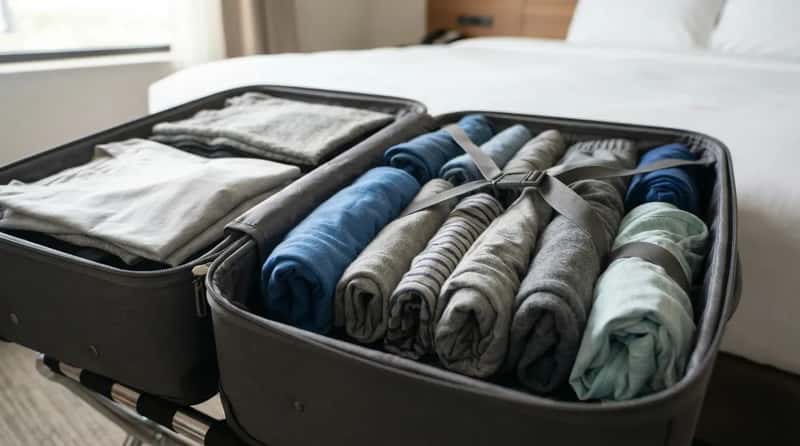
Here’s the uncomfortable part: the loose, casual roll most of us learned by accident isn’t doing much work. It feels productive. But a roll that isn’t tight enough still traps air pockets between the layers – and trapped air is the entire reason rolling is supposed to beat folding in the first place.
Done properly, the payoff is real. Textile compression research suggests rolling can shrink volume by up to 30% compared to traditional folding, especially with lightweight fabrics like cotton t-shirts, jersey knits, and athletic wear. The catch: it only counts as “rolling” if it’s tight. A loose cylinder of fabric is just a fold wearing a disguise.
#9 – The Pants Roll That Actually Crushes Wrinkles Flat
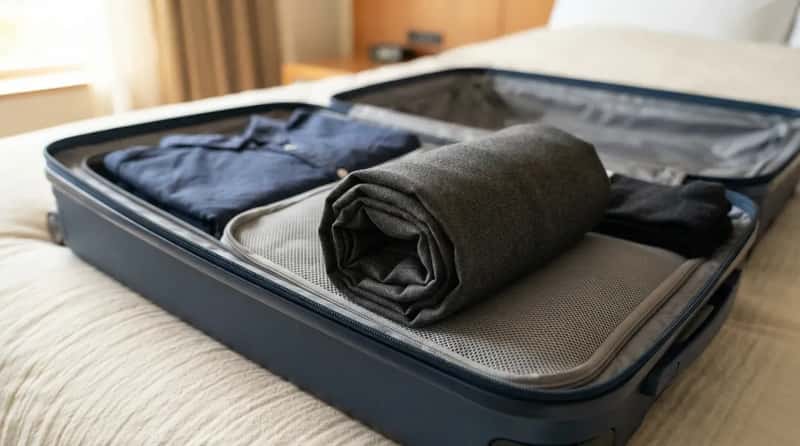
Jeans and trousers are where suitcases quietly lose their shape, and the fix is more specific than most people assume. Fold pants in half lengthwise, then roll them tight – this keeps the bulkiest fabric in your bag from ballooning into wasted space instead of packing down flat.
The detail that trips people up is where the crease lands. Think about where the fold line sits, because you’ll be wearing that line on your body a few days later. A crease at the knee instead of the thigh is the difference between crisp trousers and a visible dent you’re stuck wearing all day at a business meeting or a wedding.
Fast Facts
- Lengthwise fold-then-roll keeps trouser fabric flat instead of ballooning into extra bulk.
- Rolling along the right crease line can prevent a stubborn thigh crease from setting in overnight.
- Denim and heavier trousers benefit the most, since they trap the most air when folded flat.
- Rolled pants also double as soft padding around shoes or electronics packed nearby.
#8 – The T-Shirt Roll Most People Get Half Right
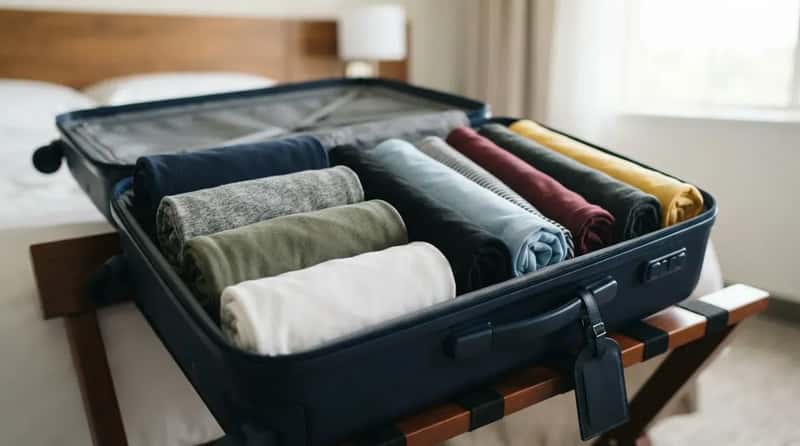
T-shirts should be the easiest win in any suitcase, and they’re also the most commonly botched. Fold the body in half vertically, tuck the sleeves in tight, then roll – skip that sleeve tuck and you’re guaranteed those stubborn triangle wrinkles across the shoulders that show up in every vacation photo.
Thin fabric is where this method truly earns its reputation. Thin clothing like t-shirts genuinely packs tighter and takes up less room when rolled instead of folded, which is exactly why airlines’ carry-on guides and one-bag travelers lean on t-shirts as the backbone of a light-packing wardrobe.
#7 – The Tiny Sock Trick That Fills Dead Space Nobody Notices
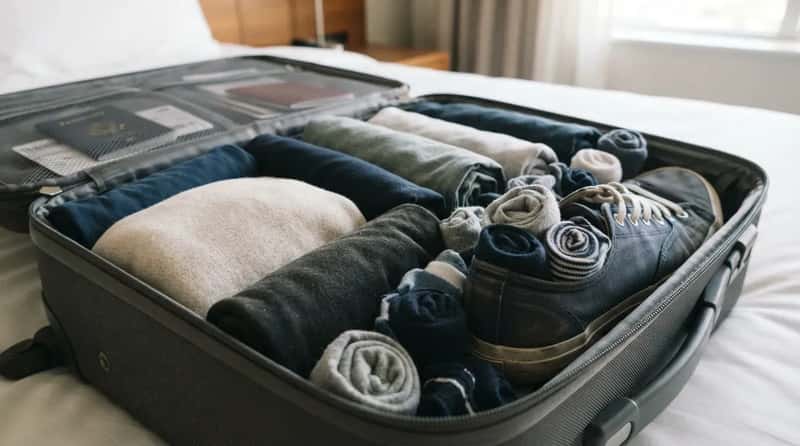
Suitcases don’t run out of room evenly. They run out of room in weird little corners nobody plans for – inside shoes, along zipper edges, in the gaps between folded pants. Rolled socks solve this almost by accident: stuff them into your shoes and you’ve just turned dead cavity space into free storage.
That small-item logic scales up fast once you start looking for it. Rolling lets you treat your packing list like Tetris pieces, wedging smaller rolls into the gaps between bigger items instead of leaving those pockets empty. It’s an unglamorous habit, but it’s often the exact difference between a suitcase that zips shut and one that doesn’t.
#6 – The Outfit Roll That Turns Three Items Into One Grab-and-Go Block
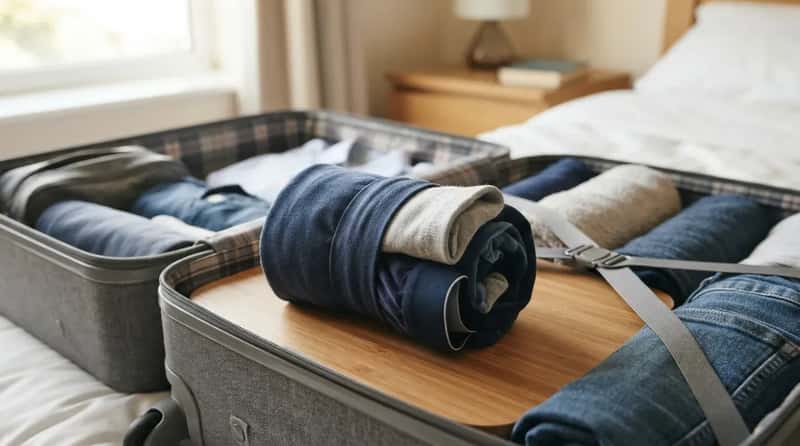
Instead of rolling a shirt, then socks, then underwear separately, some travelers roll an entire outfit as a single unit. Shirt, socks, underwear – all rolled together into one action-ready bundle. It sounds like a small shortcut, but it changes how your whole bag behaves once you’re actually living out of it.
The real payoff shows up at your destination, not in the suitcase itself. One tidy roll per day means no digging through a jumbled pile at 6 a.m. before a flight – you grab a single block, and the whole day’s outfit comes with it, already wrinkle-resistant and self-contained.
#5 – The Ranger Roll: The Military Trick That Outperforms Almost Everything
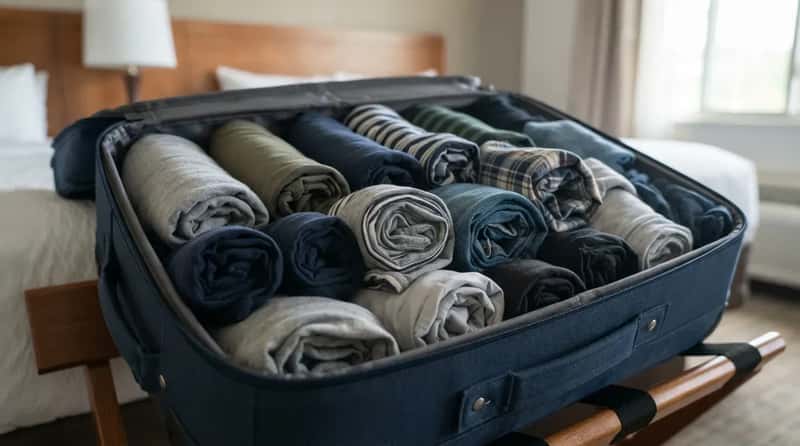
This is the technique most civilians have never heard of, and travel writers keep “rediscovering” it like a secret. When you need to cram a lot of clothes into limited space, the Ranger Roll – familiar to service members, largely unknown outside the military – uses a folded cuff that locks the entire roll shut so it can’t come loose in transit.
The results speak for themselves. It turns clothes into tight, well-packed burritos, minimizing both wrinkling and footprint in the bag. Unlike a casual roll, it won’t come undone unless you deliberately unroll a specific item, which means pulling one shirt out doesn’t collapse your entire packing job.
Why It Stands Out
- Locks shut with a folded cuff, so pulling one item doesn’t unravel the whole roll.
- Built for speed and durability, standardized for packing under tight space and time limits.
- Works especially well on uniforms, workout gear, and other sturdy fabrics that hold a tight roll.
- Takes a bit more practice than a basic roll, but survives being tossed around in transit far better.
#4 – The Bundle Wrap: Wrapping Clothes Around a Core Instead of Rolling Them Flat
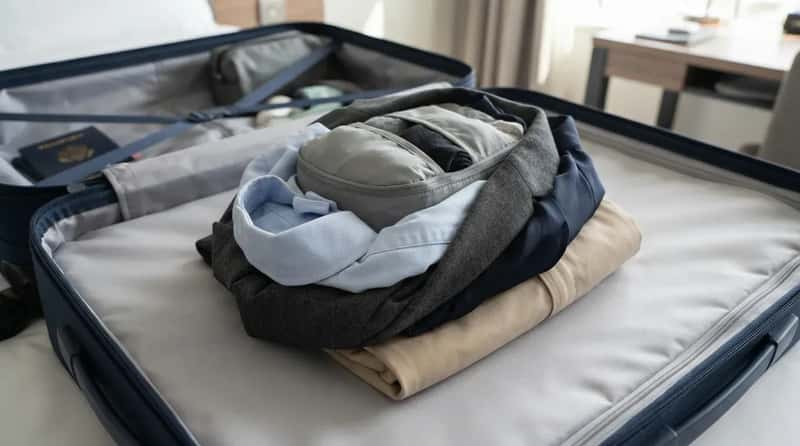
Here’s a genuinely controversial opinion among frequent packers: for anything that actually matters – dress shirts, blazers, silk – rolling isn’t the answer at all. Bundle wrapping beats rolling for wrinkle-free packing, especially for anything that needs to look sharp the moment you step off the plane. The method stacks clothes around a soft central core, like a stuffed packing cube, wrapping each new layer over the last.
It sounds fussy, but the mechanics are simple once you try it once. You wrap clothes one by one around that central core, and the bundle just grows as more items get added. The tradeoff is that it’s slower than a quick roll – but for anyone tired of ironing a hotel-room shirt at 7 a.m., that extra two minutes is worth every second.
#3 – The Roll-Then-Compress Combo That Squeezes Out Hidden Air
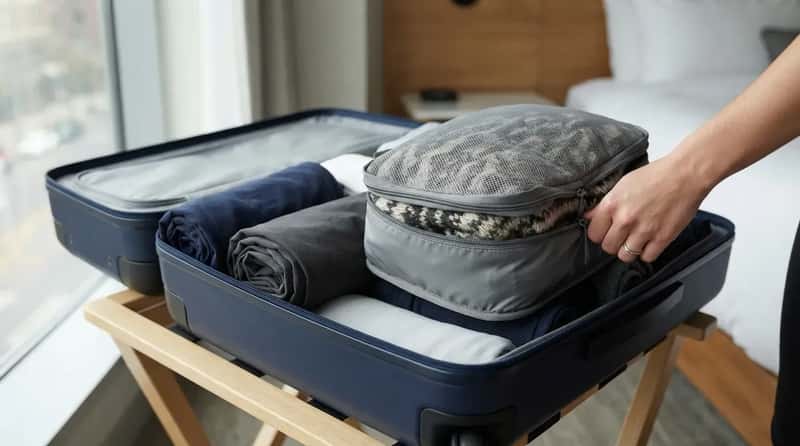
Rolling gets rid of some air pockets. Compression zippers get rid of the rest. Compression cubes are packing cubes with an extra zip layer that squeezes out trapped air and compacts the fabric down – and stacking the two techniques together outperforms either one used alone.
The numbers back this up, though not everyone agrees it’s worth the fuss. Used properly, compression cubes can reduce clothing bulk by up to 30% compared to traditional packing. Skeptics push back hard, though – frequent flyers on packing forums argue the space savings don’t always outweigh the added weight of cramming more into the same bag, especially with strict airline weight limits.
Quick Compare
- Rolling alone: cuts volume but can still leave small air pockets between layers.
- Compression cubes alone: squeeze out air but may leave clothes more wrinkled if items aren’t rolled first.
- Rolling + compression combo: removes air twice over, typically freeing up the most usable space.
#2 – The Cuff-Lock Roll That Keeps Silky Fabrics From Unraveling
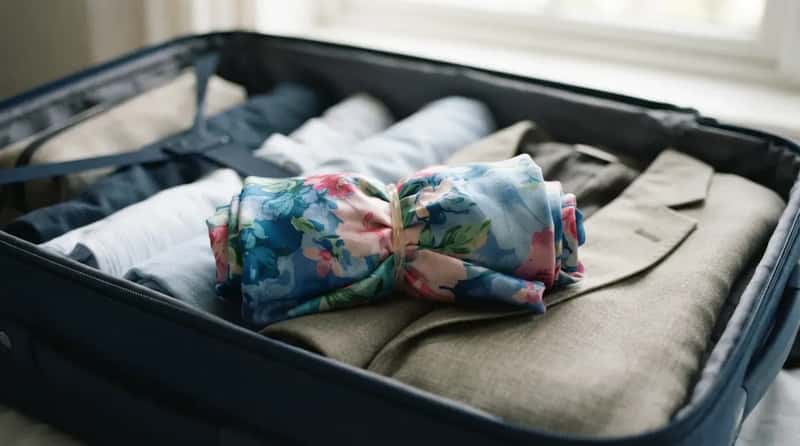
Slippery fabrics are the one place where a standard roll quietly fails. Silk blouses, satin linings, and synthetic athletic wear tend to slide open the moment they get jostled in transit, undoing every bit of that careful compression you just did.
The fix is a small locking step most people skip entirely. For silky or slippery materials, wrap a rubber band or a small elastic tie around the roll to keep it from coming undone. It’s a thirty-second habit that stops a perfectly rolled blouse from becoming a wrinkled heap by the time you land.
#1 – The Hybrid Method: Why Mixing Rolls and Folds Beats Picking Just One
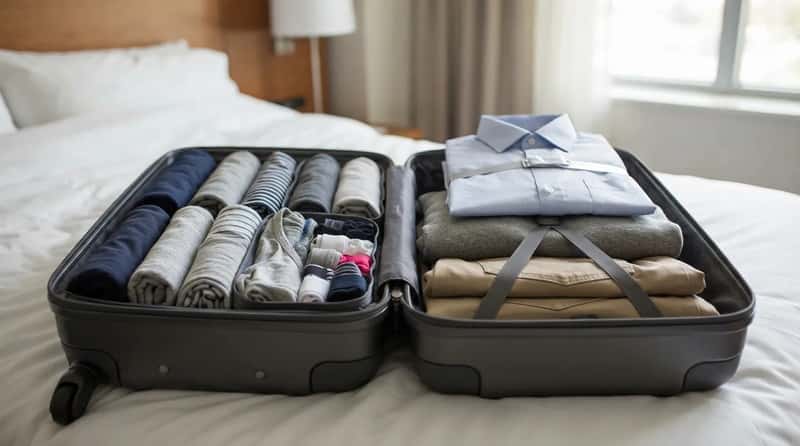
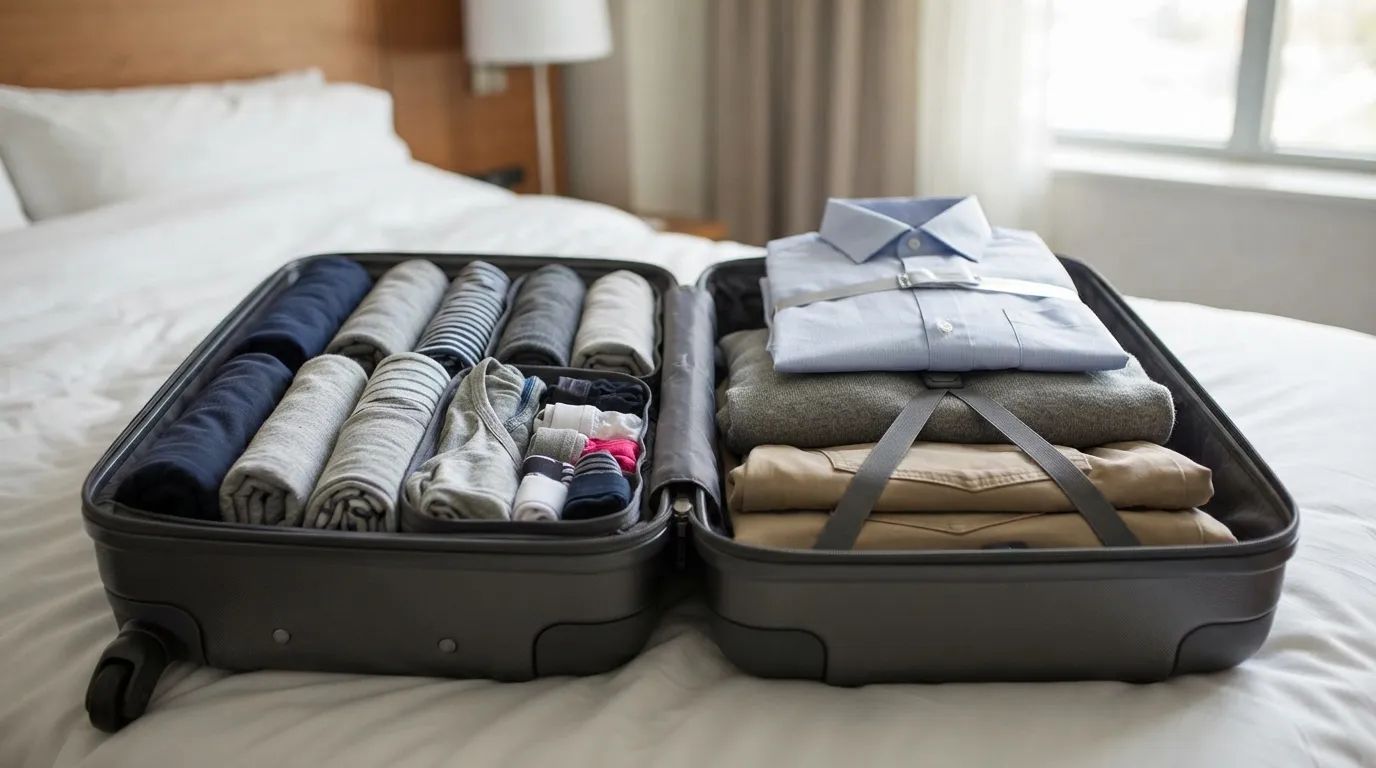
After all these rolling techniques, the most surprising finding is this: the best packers don’t commit to a single method – they mix them. In one side-by-side packing test, a bag using only rolling closed with real resistance and still left shirts deeply creased, while a second bag combining rolled basics with folded, bundle-wrapped dress shirts left 15% more space remaining, with nothing shifting and only minor wrinkling on a single shirt.
Even travelers who built their entire routine around “always roll, never fold” eventually change their minds. The real answer is to do both – roll some clothes, fold others, and match the technique to the fabric instead of forcing every item into one system. That flexibility, more than any single roll, is what actually saves the space.
At a Glance
- Rolling: best for casual basics like t-shirts, socks, and workout gear.
- Folding and bundle wrapping: best for structured pieces like blazers and dress shirts.
- Mixed approach: freed up roughly 15% more space in a side-by-side comparison, with fewer wrinkles overall.
- Bottom line: match the method to the fabric instead of committing to one system for everything.
So next time your suitcase won’t zip, the problem probably isn’t how full it is. It’s that everything inside got packed the same lazy way. Change the roll, and watch the space just show up.