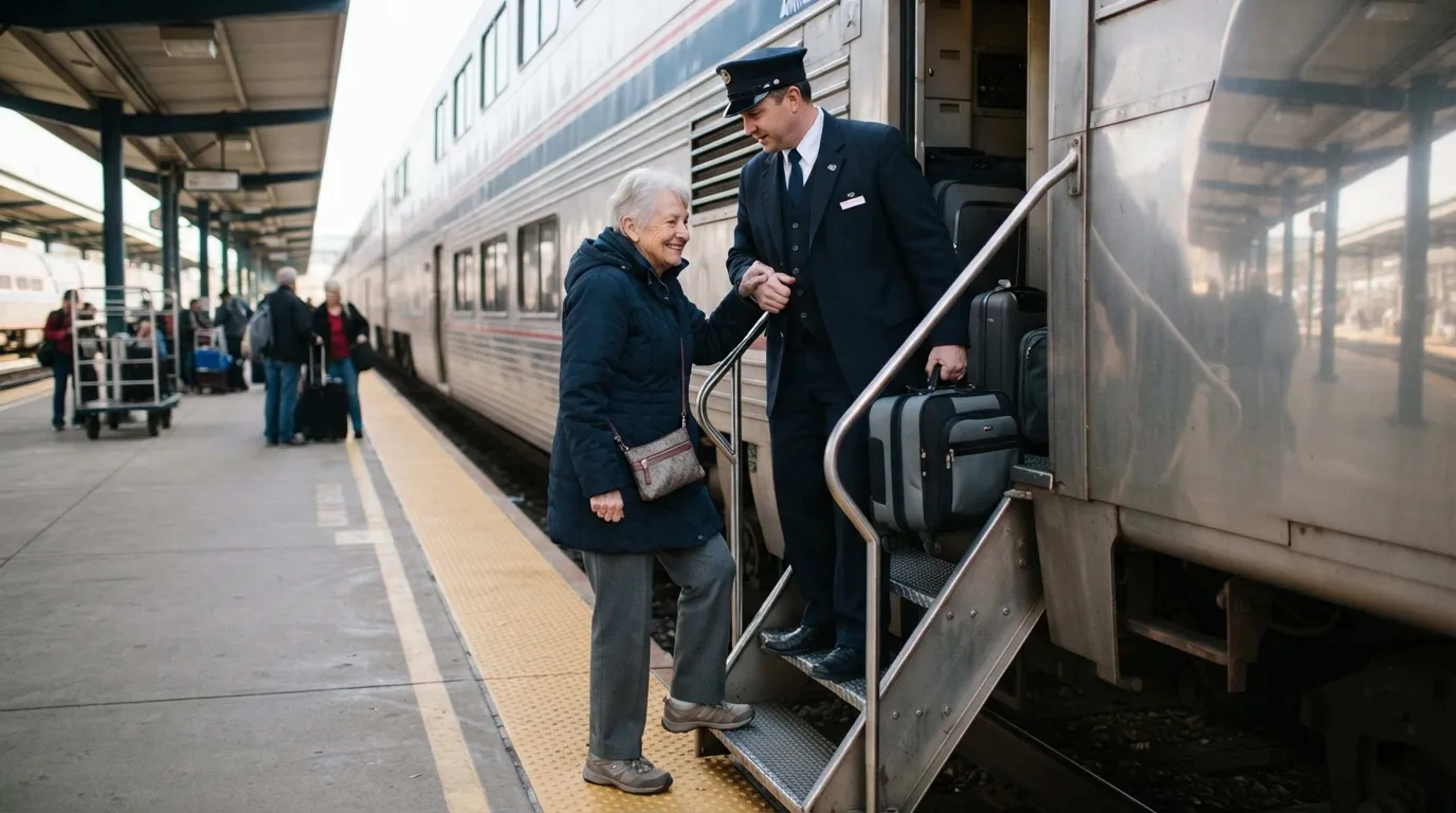
Every single time you step up to an airline check-in counter, there’s a very good chance you’re about to pay for something you could have easily avoided. Bag fees have quietly ballooned into one of the most lucrative revenue streams in the entire travel industry, and the airlines have gotten very, very good at making you forget that alternatives exist.
The truth is, there are real, practical ways to sidestep these charges, and most of them don’t require elite status or a fancy first-class ticket. Some are so straightforward it’s almost embarrassing. Let’s get into it.
1. Understand Just How Much Money You’re Actually Handing Over
Before we talk about escaping bag fees, let’s be honest about what’s at stake here. In 2024, U.S. airlines amassed a staggering $7.27 billion in baggage fees, marking a continued reliance on ancillary revenue streams as the industry rebounds from pandemic-era disruptions. That’s not a typo. Billions. With a B.
American Airlines led the revenue rankings at $1.5 billion, followed by United at $1.33 billion and Delta at $1.06 billion. These are not struggling businesses desperately clinging to bag fees. These are profit machines that have built an entire revenue model around the assumption that you won’t bother to find a workaround.
At the start of 2024, Alaska Airlines kicked things off by raising baggage fees from $30 to $35 for the first checked bag and from $40 to $45 for the second, and other airlines soon matched the increase. Knowing the scale of what you’re up against makes it that much more satisfying to beat the system.
2. Use a Co-Branded Airline Credit Card – It’s Cheaper Than You Think
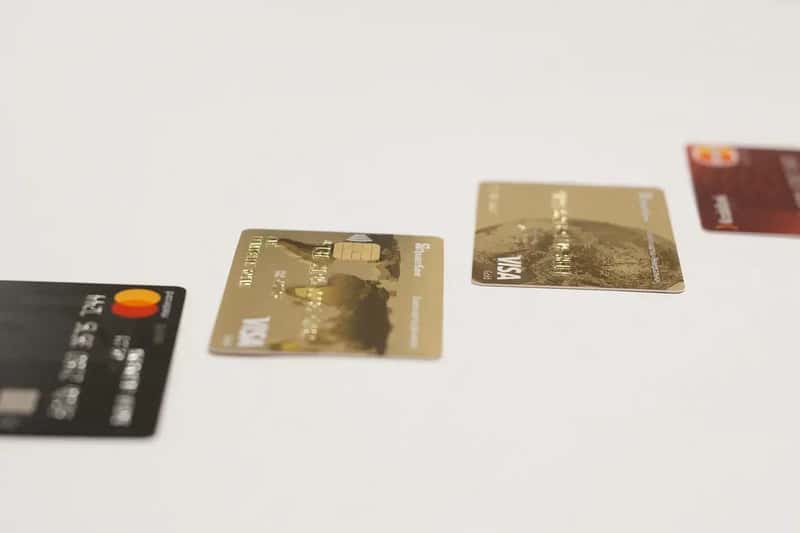
The easiest way to avoid checked bag fees on most airlines is to open a co-branded airline credit card that offers free checked bags as an ongoing benefit. I know what you’re thinking: “But the annual fee!” Hear me out, because the math actually works heavily in your favor.
The Delta SkyMiles Amex, United Explorer, and American Airlines cards waive first bag fees for you and up to eight companions on the same reservation, and just three roundtrips with one checked bag saves you $210, which covers most annual fees. Think of it like a buy-one-get-nine-free deal that resets every single year.
Most major airlines offer co-branded credit cards that waive baggage fees for the cardholder and up to nine passengers traveling together on the same reservation, and though these cards typically charge an annual fee, the savings on bag fees for even just one or two trips could be substantial. If you travel with family even occasionally, this is probably the single biggest money-saver on this entire list.
3. Gate Check Your Carry-On for Free
Here’s the thing most travelers have no idea about: if you’re traveling with only a carry-on and the flight is full, the airline will often offer to check your bag right at the gate – completely free of charge. No fees, no hassle, and your bag gets delivered right to the jet bridge when you land.
If the flight is full, the airline will offer to check your carry-on for free, since they have no overhead space left, and airlines oversell flights whenever they can, so this can occur often enough. The trick here is that you need to already be traveling carry-on only for this to work in your favor.
If the overhead bins are full when you board, you can volunteer to gate-check your carry-on, and airlines often do this for free, letting you avoid standard checked bag fees without the hassle of checking your luggage at the counter. Honestly, on busy travel days and regional jets, this opportunity comes up more than you’d expect.
4. Upgrade Your Fare Class Instead of Paying Separate Bag Fees
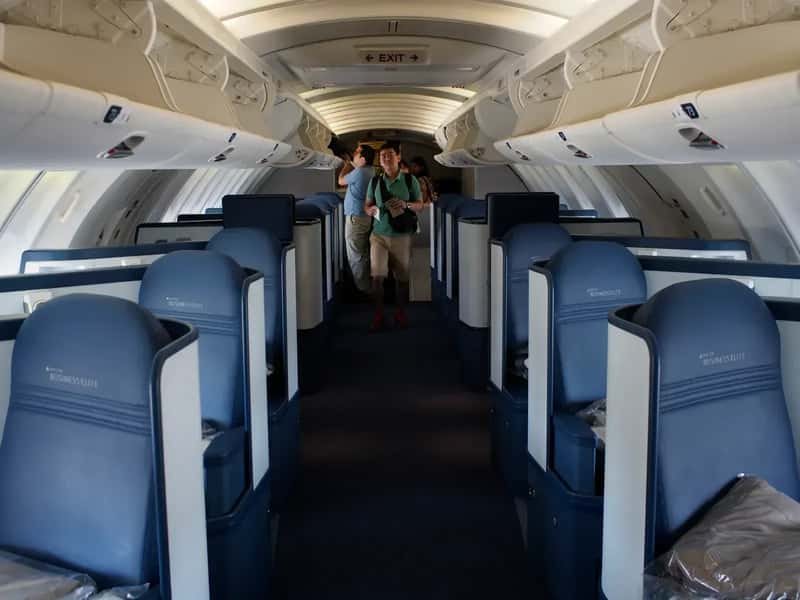
This sounds counterintuitive at first. Spend more on the ticket to save on bags? Absolutely, and here is exactly why it works. If you upgrade to Premium Economy, Business, or First Class, you’ll typically get two to three free checked bags, often with higher weight limits of up to 70 pounds per bag.
Do the math on your specific route before dismissing this. When the combined price of a Basic Economy fare and bag fees gets close to a Main Cabin fare, upgrading could save you money while giving you extra perks. A seat upgrade that includes two free bags, seat selection, and flexibility can genuinely cost the same or less than basic economy plus bags once you add it all up.
Many people trying to save money default to the lowest fare they see, which is the basic economy fare class, but while it can be as much as $100 less expensive at times, it also has fewer benefits, mainly the inability to make changes without an additional fee. That false economy catches a lot of travelers off guard, especially when trip plans shift.
5. Pre-Pay for Bags Online Instead of at the Airport
If you absolutely have to check a bag, timing your payment can save you a meaningful chunk of money. American Airlines raised the checked bag fee on domestic flights to $35 if you check your bag online and $40 if you wait until you get to the airport. That five-dollar difference sounds trivial until you’re a family of four doing it twice, roundtrip.
According to the JetBlue website, passengers can save $10 on their first two bags by checking in at least 24 hours before departure. That’s $20 per person, just for a few extra minutes of planning the night before. Small effort, real savings.
If you do need to pay for a checked bag, be sure to do it when booking your ticket, because airport fees can climb from around $35 to as much as $99. Paying at the counter last-minute is genuinely the most expensive way to do it, and quite a few airlines, in particular ultra-low-cost carriers, charge you more based on when you pay for your checked bag, and if you book a checked bag when you purchase a ticket, you’ll often pay quite a bit less.
6. Use Your Elite Status – Even Someone Else’s
Loyalty programs are not just about free flights. The free bag benefit tied to elite status is one of the most quietly powerful perks in travel. Several carriers have free baggage perks for elite status members: Alaska’s Atmos Rewards holders get free checked bags based on their tier, Delta Silver, Gold, Platinum and Diamond Medallion members get waived baggage fees for the first bag for up to eight companions, and American Gold, Platinum, Platinum Pro and Executive Platinum members can check as many as three bags for free depending on their tier.
Here’s a tip most people overlook entirely. Even if you don’t have elite status yourself, if you’re flying with someone who does, their benefits extend to those on the same reservation. Planning a group trip with a frequent flyer? Make sure you’re all on the same booking.
If you have elite status on an airline, you probably get at least one free bag or more, usually for each person traveling on the same reservation with the elite member. It’s worth a direct conversation before your next group trip to check whether anyone in your party holds status. The savings can easily cover dinner at the destination.
7. Know the Military Baggage Benefits Most Service Members Never Claim
Many airlines in the United States provide generous baggage policies for active-duty military personnel, often allowing additional or heavier bags free of charge, and these policies can be particularly beneficial for servicemembers frequently on the move, whether deploying, returning, or transferring stations. Remarkably, not every eligible service member takes advantage of this.
Depending on your destination, bags are free of charge with an active U.S. military ID, covering up to five bags at 100 lbs each for active military and/or dependents traveling on orders, and up to three bags at 50 lbs each for active military on personal or leisure travel. That’s on American Airlines alone. United Airlines’ military luggage policy similarly permits active-duty military to bring up to five free checked bags with orders and three free for personal travel.
JetBlue offers a baggage waiver for active duty military personnel, allowing two free checked bags at a maximum weight of 50 pounds each and one free carry-on bag, and this benefit extends to dependents traveling on the same reservation as the military member. If you’re in the military community and paying bag fees, it’s worth calling the airline directly to confirm your benefits before your next trip.
8. Pack Smarter and Wear Your Heaviest Items Onboard
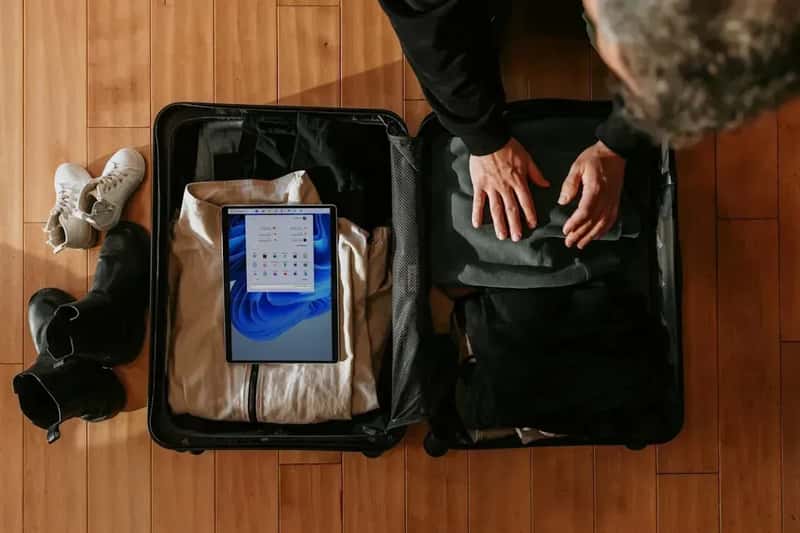
It sounds almost too simple, but smart packing is still one of the most reliable ways to dodge bag fees entirely. One clever trick is to wear your bulkiest items on the plane, since boots, heavy jackets, and thick sweaters don’t count toward your baggage allowance when worn. That bulky winter coat stuffed into your checked bag is costing you money it doesn’t need to.
The most surefire way to not have to pay for checked baggage is to pack light enough that your stuff fits into an appropriately sized carry-on bag that can be stashed under your seat or in the overhead bin for free, and experts say there is a psychological reason we tend to overpack, but having a good strategy for packing light can help keep your baggage and baggage fees in check.
If you do manage to fit enough in your carry-on but don’t want to deal with the hassle of finding overhead space, most airlines will let you check your bag at the gate free of charge. Rolling your clothes instead of folding them, using packing cubes, and limiting yourself to versatile, mixable pieces can genuinely transform a two-bag trip into a one-carry-on trip. It takes practice, but once you nail it, you’ll wonder how you ever traveled any other way.
The Bottom Line on Beating the System
The airlines have made their choice. They will keep raising fees, introducing dynamic pricing, and quietly redesigning the check-in process to make paying feel like the path of least resistance. Utilizing airline loyalty programs, credit card benefits, and strategic packing can help lessen the pain and expense of checking baggage.
You now have eight concrete, proven strategies to fight back. Whether you use one of them or all eight, the days of automatically handing over $35 at the counter should be behind you. Which of these tricks will you try on your next trip? Let us know in the comments.