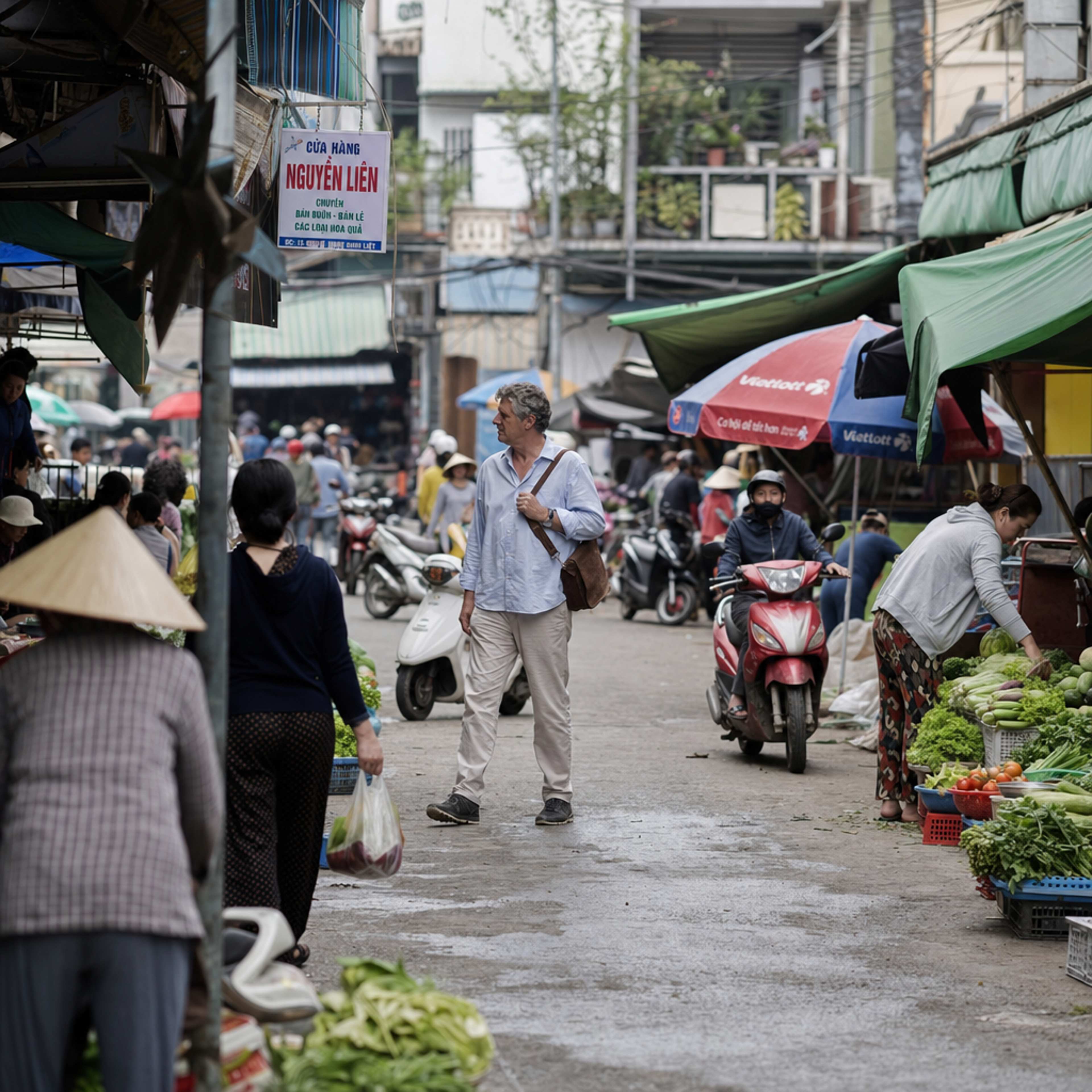

Tao Dan Park is one of the few green spaces in the heart of District 1 where daily life in Saigon unfolds at its own pace. In this article, I’ll share what it’s like to spend time in the park throughout the day, from the early exercise routines and coffee sellers to squirrels moving through the trees toward the end of the year.
I also explore the cultural side of Tao Dan, including the Hùng Kings Temple, student scout training activities, and the park’s popularity as a photography destination. Along the way, I reflect on a memory that unexpectedly tied this park to my own life in Saigon.
Group Exercises and Shared Space

In the early morning, much of Tao Dan belongs to older generations. Elderly exercise groups gather across open patches of ground, forming loose circles and moving together.
Tai chi unfolds beneath the trees with slow, deliberate movements that feel almost meditative. Nearby, lighter aerobic routines play music from small speakers, just loud enough for those taking part. Some sequences are clearly well-practised, while others adapt naturally to ageing joints and individual limits.
No one looks self-conscious. Everyone understands that this is shared space, and people move around each other with quiet respect.
Coffee Sellers and the Morning Rhythm
Coffee arrives early at Tao Dan as small vendors move through the park with metal kettles and plastic cups, stopping near benches where regulars are already waiting. There’s no shouting or hard selling as orders are quick, familiar, and almost wordless.
The coffee is strong, sweet, and practical, but it changes the pace of the morning. People sit longer once they’re holding a cup. Conversations stretch out. The park settles into a slower rhythm. In a city full of cafés, Tao Dan’s coffee culture feels refreshingly uncomplicated.
Squirrels in the Trees (Especially at the End of the Year)

One thing I always notice in the last months of the year – especially November and December – is the squirrels.
They move quickly between the high trees, running up and down trunks and leaping across branches with surprising confidence. Sometimes they pause just long enough for you to notice them before disappearing again. It adds a bit of unexpected life to the park, especially in the quieter morning hours.
Often, you’ll see people leave food at the base of the tree, so if you’re lucky, you’ll see them come down to battle the rats that also frequent the park (just a part of life in a big city) for their share of the spoils.
Watching them dart through the greenery is oddly absorbing, and it’s one of those small details that makes Tao Dan feel alive rather than ornamental.
The Hùng Kings Temple Inside the Park
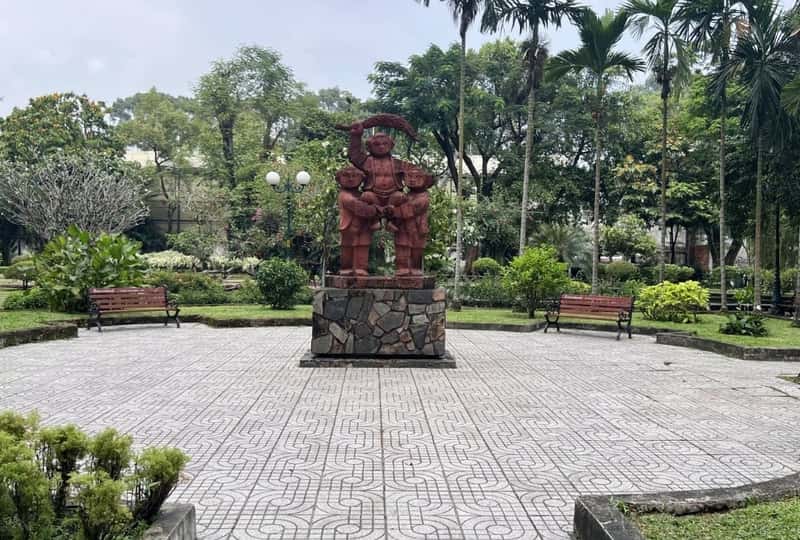
Tucked within Tao Dan’s green space is a place that carries real cultural weight: the Hùng Kings Temple (Đền thờ Hùng Vương).
Built between 1992 and 1994, the temple honours the Hùng Kings – regarded as the founders of the Vietnamese nation – along with Mother Âu Cơ and President Hồ Chí Minh. The architecture follows traditional Vietnamese design, with a tam quan entrance, a three-section main hall, and a stone oath pillar inspired by the Hùng Temple in Phú Thọ.
Despite being located inside a busy city park, the space feels calm and respectful. Visitors come to offer incense, learn about early Vietnamese history, or simply pause for a moment of reflection. During the Hùng Kings’ Death Anniversary (the 10th day of the third lunar month), the area becomes especially lively, decorated with flowers and visited by many locals.
It’s a reminder that Tao Dan isn’t just a recreational space – it also holds layers of history and cultural memory.
Scouts, Students, and Learning Outside the Classroom
Tao Dan is also well known as a place where students gather for organised scout and youth training programs. These are paid programs, but they’re popular and generally well regarded.
You’ll often see groups of students practising drills, teamwork exercises, or outdoor skills under the guidance of instructors. It brings a different kind of energy to the park – structured but lively – and adds to the sense that Tao Dan is used by people of all ages, not just as a shortcut or exercise spot.
Greenery, Flowers, and a Favourite Spot for Photos
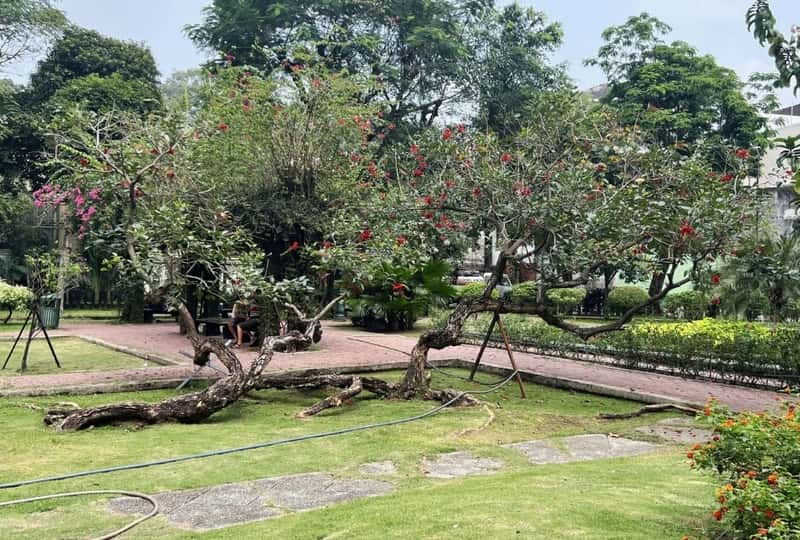
One of Tao Dan’s quieter strengths is its greenery. The park is dense with mature trees, well-kept lawns, and seasonal flowers that change throughout the year.
Because of this, it’s a popular spot for photography. You’ll often see students, couples, and amateur photographers taking advantage of the soft light filtering through the trees. Early mornings and late afternoons are especially good, when the park feels cooler, and the colours stand out more clearly.
The Water Puppet Theatre Next Door
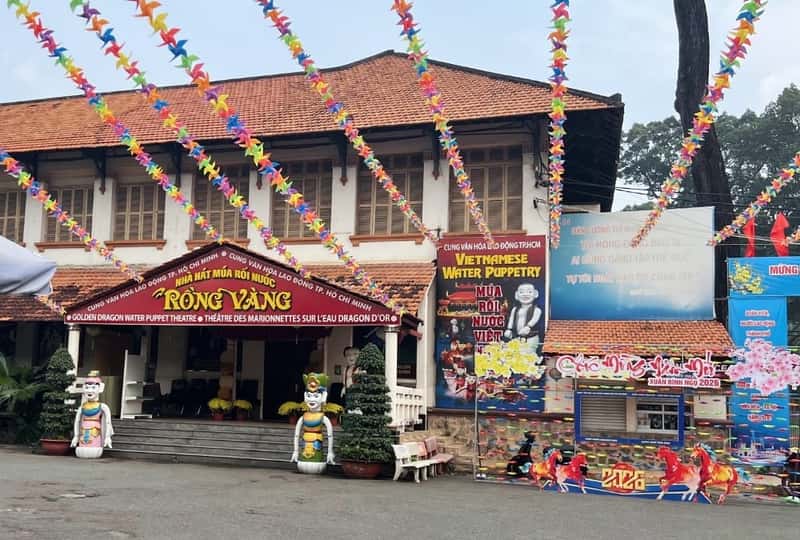
Just outside Tao Dan Park sits one of Saigon’s most well-known cultural venues: the Water Puppet Theatre. It’s close enough that you can walk from the park gates to the entrance in a matter of minutes, yet the contrast between the two spaces is striking.
Inside the theatre, performances are structured, colourful, and intentionally theatrical. Traditional water puppetry tells stories drawn from rural life, folklore, and Vietnamese history, accompanied by live music and narration. It’s a cultural experience many visitors seek out – especially those wanting an introduction to traditional Vietnamese art forms.
What’s interesting is how naturally it fits beside Tao Dan. You can spend a quiet morning watching tai chi under the trees or sitting with a coffee among regulars, then step directly into a formal performance space designed to present culture on a stage. One is lived-in and unscripted; the other is carefully preserved and performed.
I’ve always liked that you don’t have to choose between them. Tao Dan offers context – the everyday rhythms of Saigon life – while the Water Puppet Theatre offers interpretation. Together, they show two sides of how culture survives in a modern city: one through routine, the other through performance.
Even if you don’t attend a show, knowing it’s there adds another layer to the park’s surroundings. Tao Dan doesn’t exist in isolation. It sits quietly alongside some of the city’s most visible cultural landmarks, without ever trying to compete with them.
A Memory That Stayed With Me
Tao Dan also holds one of my favourite memories.
One evening, while sitting in the park, a woman approached me, completely serious, to warn me that the park would close at 9 pm. She’d mistakenly heard it from a security guard and didn’t realise that Tao Dan is a public park and doesn’t formally close.
After explaining this, we laughed – and the conversation didn’t end there.
That brief, awkward exchange turned into something lasting. Three years later, we’re engaged, and Tao Dan has quietly become part of our shared history. Every visit brings that memory back, without needing to announce itself.
It’s strange how ordinary places collect memories without ever trying to.
Final Thoughts
Tao Dan Park is one of those places that doesn’t try to stand out, and that’s exactly why it stays with you. It’s used, lived in, and woven into everyday routines rather than shaped for visitors. People come here to exercise, to learn, to sit quietly with a coffee, or simply to pass through a green space in the middle of the city.
For me, it’s also a place where an ordinary evening turned into a lasting memory. Not because anything dramatic happened, but because life sometimes unfolds when you least expect it.
Whether you visit for the greenery, the cultural spaces, the student activities, or just a break from Saigon’s pace, Tao Dan offers something simple and honest – a park that feels like part of the city rather than separate from it.