
Walk through a maternity ward in Seoul or a schoolyard in rural Bulgaria and you’ll notice something quietly unsettling: fewer strollers, fewer backpacks, fewer kids shouting on the playground. Across large parts of the world, the youngest generations are shrinking faster than most people realize, and the reasons range from economic pressure to war to decades of falling birth rates. This list ranks the twelve countries where that shift is happening most dramatically right now, based on fertility data, migration patterns, and population projections from 2024 through 2026.
1. South Korea

No country on Earth is losing its youth population faster than South Korea. In 2025, the fertility rate in South Korea was estimated to be at 0.68 children per woman, making it the lowest fertility rate worldwide. That number is barely a third of what’s needed to keep a population stable over time.
There have been small signs of a turnaround, with one of the world’s lowest rates in recent years, hovering near or below 0.8 before modest upticks in preliminary 2025 figures. Still, even a slight rebound leaves South Korea with one of the thinnest youth cohorts of any advanced economy, a trend driven by sky high housing costs, brutal job competition, and long working hours that discourage young couples from starting families.
2. Macao

Macao rarely gets mentioned in demographic headlines, but its numbers are staggering. Macao has the lowest fertility rate in the dataset at 0.69, followed by Hong Kong at 0.74 and South Korea at 0.75. That places it at or near the very bottom globally, depending on which dataset you consult.
As a small, densely packed territory built around tourism and gambling revenue, Macao offers little room or incentive for large families. Its population skews toward migrant workers and an aging local base, leaving very few young residents to replace the generations ahead of them.
3. Hong Kong

Hong Kong sits right alongside Macao and South Korea in the race to the bottom on fertility. Hong Kong at 0.74 reflects a city where career pressure, some of the highest housing prices on the planet, and long-standing social shifts have pushed childbearing further down the list of priorities for many young adults.
Statista notes that countries like Hong Kong are a good example for women leaving the patriarchal structures and focusing on their own careers instead of becoming mothers at a young age, causing a decline in the country’s fertility rate. The result is a shrinking pipeline of children entering schools, universities, and eventually the workforce.
4. China

China’s demographic shift may be the most consequential on this list simply because of scale. China now has one of the lowest fertility rates in the world, at just 1.0 birth per woman as of 2023. That’s a stunning drop for a country that once had fertility rates above six births per woman just a few generations ago.
The population has already turned a corner, with China’s population shrank for the first time since the famine of the Great Leap Forward (1959–1961) back in 2022, and losses have continued since. Recent figures show China alone saw a reduction of roughly 3 million people in a recent year, an absolute loss larger than the entire population of some smaller nations. Projections suggest the country could lose a quarter of a billion people from its current total by 2050, a shift that will hit young workforce numbers especially hard.
5. Japan

Japan has been the poster child for population aging for decades, and the youth numbers keep sliding. Japan (50.4 years) faces shrinking workforces and mounting pension obligations, making it one of the oldest societies ever recorded. Its fertility rate sits around 1.2, with births falling to record lows.
The country has been shrinking in absolute terms too, with annual drops exceeding 800,000 at points in recent years. Longer term, Japan’s anticipated 16.3% population decrease by 2050 highlights a global trend, with low fertility rates and aging populations contributing significantly. Government incentives for childcare and parental leave have so far done little to reverse the trajectory.
6. Italy

Southern Europe’s demographic troubles are best summed up by Italy, where fertility has settled at a level far below what’s needed for stability. Italy and Spain post rates near 1.3, meaning each generation is producing noticeably fewer children than the one before it. Rural towns across the country have watched schools close and hospital maternity wards consolidate as young families move to cities or leave entirely.
Italy’s aging profile places it firmly among nations such as Monaco, Japan, Italy, Germany, and Portugal, where large portions of the population are now over the retirement age. High youth unemployment and expensive housing continue to push many young Italians to delay or skip parenthood altogether, deepening the gap between generations.
7. Spain

Spain mirrors Italy almost exactly on the fertility front, with rates hovering near 1.3 in recent years. That leaves the country with one of the oldest populations in Western Europe and a shrinking pool of young workers to support pension systems built for a different era.
Spanish cities have seen a modest cushion from immigration, which has partly offset the natural decline in births. Even so, the underlying trend among native born Spaniards points toward smaller family sizes driven by job insecurity, delayed marriage, and the high cost of raising children in major urban centers like Madrid and Barcelona.
8. Latvia

Latvia’s youth exodus is closely tied to its overall population collapse, one of the steepest in Europe. Latvia is expecting a 21.05% population loss between 2024 and 2050, a figure that ranks among the highest projected declines anywhere in the world.
Much of that loss traces back to young people leaving for better opportunities elsewhere in the European Union, particularly toward Western Europe and Scandinavia. With fewer young adults staying to start families locally, the country faces a compounding effect where each smaller generation produces an even smaller one after it.
9. Lithuania
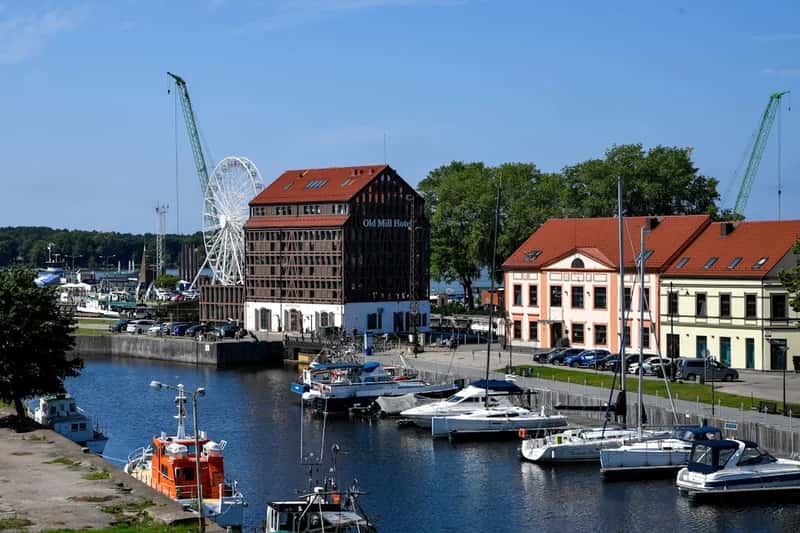
Lithuania faces a strikingly similar path to its Baltic neighbor. The Lithuanian population is projected to shrink by 20.7% between 2024 and 2050, from 2.9 million to 2.3 million people. That’s a loss equivalent to emptying out a mid-sized European capital city.
As with Latvia, the primary driver isn’t a collapse in births alone. Like Bulgaria, Lithuania’s largest population loss is due to mass emigration. Younger, often highly educated Lithuanians have steadily relocated abroad for work, leaving behind an increasingly gray population at home.
10. Bulgaria

Bulgaria’s demographic slide has been unfolding for years, and the projections through mid-century are sobering. Bulgaria’s population is expected to decline by 20.6% from 6.8 million in 2024 to 5.4 million in 2050. Few countries in the world face a steeper percentage drop over that timeframe.
The cause isn’t primarily about people dying faster than babies are born, though that plays a role. Mass outbound migration is the largest contributor towards Bulgaria’s population decline. Young Bulgarians heading to Germany, the UK, and other EU nations for work have left villages and small towns increasingly empty of anyone under 40.
11. Serbia

Serbia’s numbers stand out even among its struggling neighbors in the region. The Serbian population declined from 8.7 million in 2020 to 6.4 million in 2024, another sharp decrease of 26.4% within only four years. That kind of drop in such a short window is rare outside of war zones.
Looking ahead, Serbia’s population is projected to further decline to 5.5 million by 2050, a loss of about 14%. The pattern behind the numbers is familiar: many of Serbia’s highly educated and skilled workers have left the country to find better job opportunities since there are very few in Serbia. That brain drain hits the youngest, most mobile segment of the population hardest.
12. Ukraine

Ukraine’s demographic crisis is unlike any other on this list because it stems directly from war. Ukraine’s population fell from 43.7 million in 2020 to 37.9 million in 2024, a sharp loss of 5.8 million people over only four years, largely due to the war with Russia, which precipitated not only casualties but a flood of refugees. Millions of those refugees were women and children who fled to neighboring countries.
Even accounting for an eventual peace, the outlook remains grim. Ukraine’s population is projected to decline to 35.2 million in 2050, a further 7.12% loss, with high emigration rates coupled with high death rates and low birth rates to blame. Pre-war birth and death figures already pointed to trouble, with the country’s peacetime birth rate was 9.2 births per 1,000 people, and its death rate was 15.2 deaths per 1,000 people even before the conflict accelerated everything.
Taken together, these twelve cases show that there’s no single path to a shrinking youth population. Some countries got here through decades of falling birth rates and rising costs of raising children. Others were pushed there by emigration, war, or a mix of all three. What they share is a future where fewer young workers will need to support more retirees, a challenge that governments from Seoul to Belgrade are still trying to figure out how to solve.