For years, buying a home near the coast felt like trying to board a moving train. Prices kept climbing, inventory stayed thin, and anyone on a regular budget was basically told to wait, or move inland. Well, something interesting is happening in 2026. The tide is quite literally turning in several coastal markets, and buyers who have been sitting on the sidelines might finally be catching a break.
Property prices are forecast to dip in 22 of the largest 100 U.S. cities, and the real estate market is expected to move in a more “buyer-friendly” direction, leading to what analysts are calling the most balanced housing market since the pandemic. That’s a big deal. Let’s get into exactly which coastal cities are seeing it most dramatically – and why.
The Big Picture: A Market Reset Is Underway

The housing market has spent the past few years stuck with high prices and slow sales, but in 2026, conditions are expected to ease slightly for buyers – a shift Redfin describes as a “reset” year, driven by a growing supply of homes after years of limited inventory. Honestly, it’s about time.
That doesn’t mean homes will suddenly become affordable nationwide. Median home prices are still too high for many buyers after rising by roughly a quarter since 2020, according to U.S. Census data, and 30-year fixed mortgage rates are also expected to remain elevated above 6%, limiting how much relief buyers will actually see.
J.P. Morgan’s head of Securitized Products Research noted that home prices are expected to stall at roughly 0% nationally in 2026, with regional variations. House prices are falling most along the West Coast and Sun Belt, where there remains a glut of new homes following the pandemic-era construction boom.
1. Cape Coral, Florida – The Canal City Running Out of Buyers

If there’s a poster child for the 2026 coastal correction, it might just be Cape Coral. Homes around Cape Coral and Fort Lauderdale are expected to see the nation’s largest price decline, with homes dropping by roughly 10%, according to Realtor.com’s analysis. That’s not a soft landing – that’s a meaningful shift.
Home prices there have fallen significantly, with the typical single-family home selling for nearly 7% less in August 2025 compared to the previous year. Even more striking, compared to the pandemic boom era of August 2022, the median home sales price had already dropped by over 13%.
Cape Coral has the third-highest insurance premium-to-market ratio in the nation at 2.2%, meaning a $350,000 home could cost $7,700 annually in insurance alone. That’s a brutal hidden cost that has quietly been chasing buyers away. During the pandemic, demand from people seeking sunshine pushed prices up by a staggering 65% to 70%, but after Hurricane Ian, the market shifted, with more homes becoming available and sales slowing down.
2. North Port–Sarasota–Bradenton, Florida – The Southwest Florida Unwind
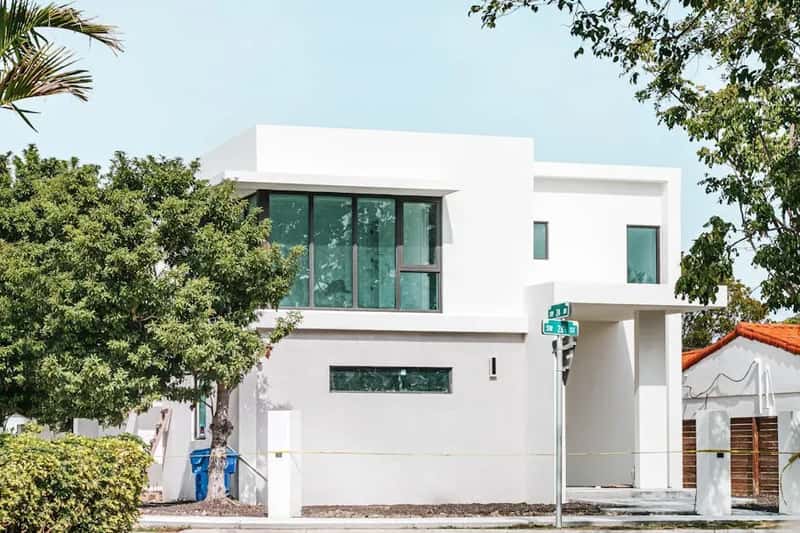
North Port and the broader Sarasota–Bradenton corridor became darlings of the pandemic relocation wave. Remote workers, retirees, and lifestyle seekers flooded in – and prices followed. The North Port–Sarasota–Bradenton region is projected to see an 8.9% price decline in 2026, making it the second-largest expected drop in the entire country.
North Port has seen an even more dramatic long-term correction, with typical August 2025 home sales prices already 20% below where they were just three years prior. That’s not a blip. That’s a full reversal.
The Sarasota metropolitan area may see among the largest declines nationally in 2026. Like Cape Coral, this southwest Florida area benefitted from many people moving to the state around 2020, but is now seeing more homes listing, longer days on the market, and even slower sales. The math just doesn’t work anymore for many who bought at the peak, and sellers are finally starting to blink.
3. Tampa–St. Petersburg–Clearwater, Florida – A Metro-Wide Cooldown
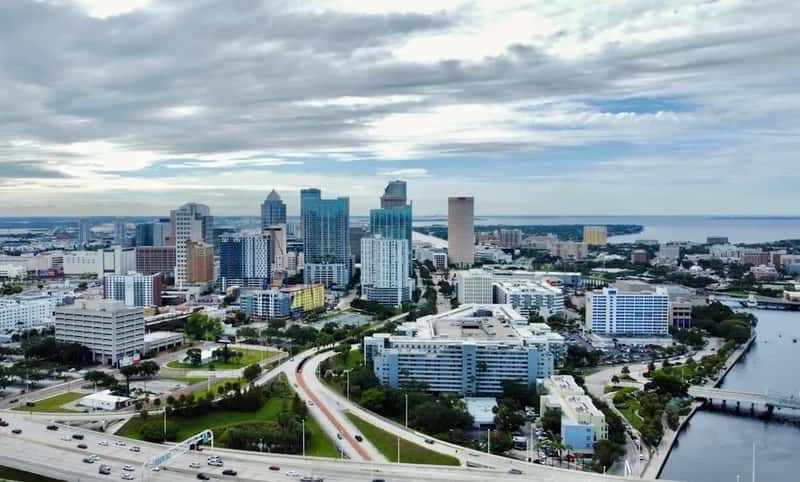
Tampa spent years being heralded as one of America’s most exciting emerging cities. That story hasn’t changed entirely – but the housing market has. Tampa Bay home prices fell roughly 6% in 2025 and are expected to continue declining into at least the first quarter of 2026, with the market shifting dramatically in favor of buyers, rising inventory up nearly 15% year-over-year.
Condos and townhomes have been hit harder than single-family homes, with condo prices dropping around 12% compared to 1.5% for detached homes. Multiple factors are driving the decline, including skyrocketing insurance costs, hurricane worries, and homes simply taking longer to sell.
Properties now take an average of 63 days to sell compared to 47 days the year before, giving buyers more time to negotiate. Even though Tampa Bay home prices declined over the past year, they’re still roughly 40% to 50% higher than before the pandemic – and when combined with higher insurance costs, Tampa is no longer the affordable coastal market it once was.
4. Fort Lauderdale, Florida – Coastal Prestige Meets Market Pressure
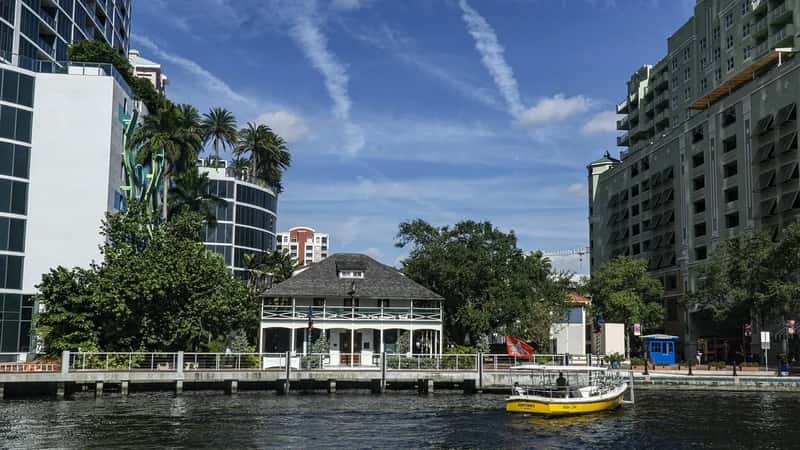
Fort Lauderdale built a reputation as a slightly more accessible version of Miami – beautiful waterways, lifestyle appeal, and just enough luxury to feel aspirational without being completely out of reach. That positioning is now being tested. Fort Lauderdale is among the Florida housing markets in a period of significant price correction, grouped alongside Cape Coral, Lakeland, Palm Bay, and West Palm Beach.
The area boomed during the pandemic relocation wave, but that wave has since receded sharply. Net domestic inflows to Florida fell from over 310,000 in 2022 to just over 22,500 in 2025 – a decline of nearly 93% – driven by affordability and insurance costs.
Coastal markets in Florida, which are particularly prone to natural disasters such as hurricanes and flooding, have also been hit by sharp increases in homeowner insurance premiums, and a rise in homeowners association fees in the condo market due to new building safety legislation. These factors, in turn, have discouraged many potential homebuyers. The lifestyle appeal is real – but the carrying costs are becoming hard to ignore.
5. San Francisco, California – Tech Wealth Can’t Hold Up Every Corner of the Market

Here’s where things get nuanced. San Francisco is not a monolithic market, and let’s be real – lumping all of it into a simple “prices are falling” narrative would be too simplistic. The single-family home market, powered by AI wealth, has remained competitive. The condo market, however, is a different story entirely.
According to Realtor.com’s forecast, the Stockton metro area in California is projected to see around a 4.1% dip in 2026, making it the largest decrease in California. Other major California cities like Sacramento, projected at a 3.3% decrease, and San Francisco, projected at a 2.5% decrease, are also expected to see their appreciation rates slow down.
The average home value in San Francisco is down about 2.5% over the past year according to Zillow, and the latest Zillow forecast for the San Francisco area suggests a gradual dip in property values through mid-2026. The condo segment, in particular, is where opportunities for buyers may be sharpest. The condo market still offers what one local market analyst described as “incredible value and less competition, with prices that haven’t yet skyrocketed back to peak levels.”
What’s Actually Driving These Coastal Price Drops?

It’s tempting to reduce all of this to one factor, but the reality is layered. There isn’t just one villain here – it’s more like a coalition of headwinds hitting coastal buyers simultaneously.
Florida faces what experts are calling a triple squeeze: insurance premiums running roughly 181% above the national average, post-Surfside condo reserve mandates triggering massive special assessments, and domestic in-migration that has collapsed by about 93% from its 2022 peak.
Realtor.com data shows that statewide median listing prices in Florida were down 6% in the first half of 2025 compared to the same period in 2023. A big part of this dip is due to plummeting condo prices, largely the result of new safety legislation passed after the Surfside tragedy, which mandated more funding for building maintenance and inspections, leading to significant increases in HOA special assessment fees.
Inventory Is the Silent Story No One’s Talking About Enough

Everyone fixates on mortgage rates, and I get it – they matter enormously. But inventory might actually be the more powerful force shaping prices in coastal markets right now. Inventory recovery is contributing significantly to market stabilization. Total inventory increased nearly 13% from the previous year nationally, and now sits just about 17% below pre-pandemic averages – the smallest supply deficit since the pandemic began disrupting housing markets.
Inventory levels in Florida have risen significantly and could climb further in 2026. Supply has reached around the six-month mark in some cities and even higher in others, creating far more buyer-friendly conditions compared to the tight inventory of recent years. South Florida has the most inventory among the state’s major metros, with a glut of homes listed for sale.
Nearly 26% of real estate listings nationwide had a price reduction – a record for that month, according to Zillow. Think of it this way: a year ago, sellers held all the cards. In 2026, buyers are finally being dealt a decent hand in these coastal markets.
Is This a Crash or Just a Correction? Here’s the Honest Answer

The word “crash” gets thrown around a lot whenever prices fall in formerly hot markets. It grabs clicks and stirs up anxiety. The reality, though, is more measured than the headlines suggest.
Price drop doesn’t necessarily mean a crash. It means moderation – a cooling off after a period of intense appreciation. Think of it less as a nosedive and more as a gentle descent back to earth after a rocket launch.
Despite broader cooling, a full-scale housing market crash at the start of 2026 is highly unlikely. While some markets may experience modest price corrections, national indicators – including relatively stable employment – point to a more stable overall outlook. The correction is real, but it’s not the apocalypse some headlines would have you believe.
What Buyers Should Actually Do With This Information

Knowing that prices are dipping is one thing. Knowing how to act on that information is another. I think too many buyers either freeze up waiting for a perfect bottom that never really arrives, or rush in because they’ve heard “prices are falling” and assume every property is now a bargain.
The markets that will see the sharpest price declines will give many – especially first-time buyers – better opportunities to step onto the property ladder, according to housing experts. That’s worth paying attention to.
Thirty-year fixed mortgage rates are expected to remain elevated above 6% in 2026, limiting how much relief buyers are likely to see on that front. In some markets, though, builders are increasingly using price cuts and incentives to move inventory, giving buyers more leverage even while affordability remains tight overall. Shop strategically. Focus on newer construction in the markets above, and don’t be shy about negotiating.
The Bigger Trend: Coastal Living Is Being Repriced for Risk

Here’s a thought that I find genuinely fascinating – and a little uncomfortable. What we’re watching in these coastal cities isn’t just a cyclical real estate correction. It might be something more structural and long-term.
Florida has experienced a stark price correction since the end of the pandemic as domestic migration to the state has slowed, and rising housing costs have priced many locals out of the market. Coastal markets in Florida, which are particularly prone to natural disasters such as hurricanes and flooding, have also been hit by sharp increases in homeowner insurance premiums.
Insurance uncertainties remain, especially for coastal properties. Florida holds a large share of federal flood insurance program policies, and lapses or program uncertainty can delay closings, increase costs, and make buyers wary in exposed areas. In other words, the market is beginning to price in what scientists and insurers have been warning about for years: climate risk is real, and it shows up in property values sooner or later. The coastal dream remains alive – but it now comes with a far more honest price tag attached to it.
The 2026 housing shift isn’t just a real estate story. It’s a story about how markets eventually correct the excesses of euphoria, how risk gets repriced, and how buyers who exercised patience might finally get their moment. Whether these dips deepen or level off will depend on insurance reform, mortgage rates, and just how many more people decide that the dream of coastal living is worth the new math – or isn’t. What would you do with prices finally moving your way? Tell us in the comments.