
Moving abroad sounds romantic until the paperwork starts. For Americans, most of the world is reasonably accessible – roughly 186 countries welcome U.S. passport holders without a visa or with a simple visa on arrival. As of 2026, around nine million Americans are living as expats in other countries. Yet a handful of nations quietly close their doors, wrapping residency and citizenship in layers of bureaucracy, religious criteria, and decades-long timelines. These are the countries where even the most determined American applicant will face a real fight.
1. Japan – Years of Waiting and a System Built on Compliance

Japan is one of the world’s most admired places to live, but its immigration system does not exactly roll out the welcome mat for foreigners who want to stay permanently. The primary pathway to permanent residency requires being a resident of Japan for more than ten years – and only after that point does eligibility begin. Simply being present is not enough. One of the most important elements of the permanent residency screening is the payment status of public obligations such as taxes, public pension, and health insurance premiums – and not only unpaid amounts, but even a single instance of delayed payment can result in stricter screening and make approval more difficult.
Things have only grown more complicated in recent years. Immigration screening has become noticeably stricter since late 2025, and cases that were previously approved are now being denied. Processing times are stretching beyond what the government officially advertises. Japan is not impossible to move to, but it demands a long-term commitment, financial consistency, and patience that many Americans simply do not anticipate.
2. Qatar – One of the Tightest Immigration Systems on Earth
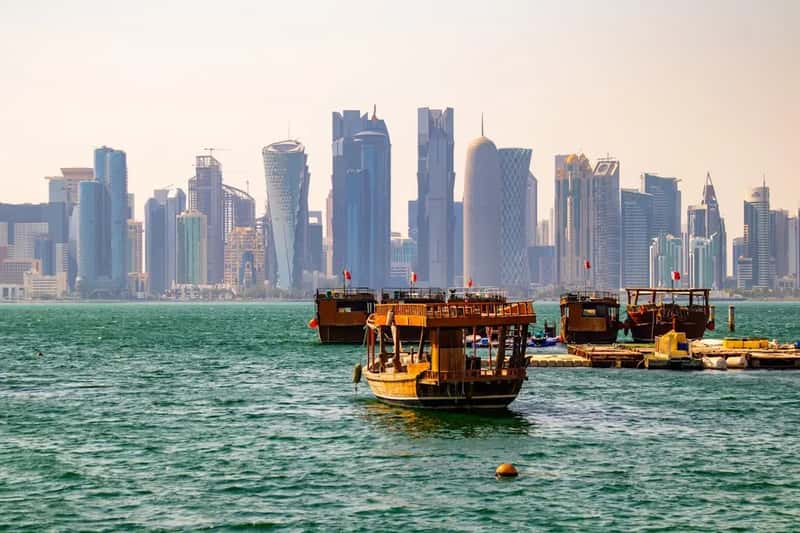
Qatar is one of the wealthiest nations per capita on the planet, and it guards that prosperity fiercely through one of the most restrictive immigration frameworks anywhere in the world. In Qatar, if an individual’s father is not a citizen, then neither is that individual. A mother’s nationality does not automatically qualify someone for citizenship. Those looking to apply must have lived legally in Qatar for at least 25 years without leaving the country for more than two consecutive months. That requirement alone disqualifies virtually every American applicant who values travel or family visits home. Qatar naturalizes no more than approximately 50 foreign-born people per year and grants permanent residency to a mere 100 expatriates annually. Naturalized citizens are not classified the same way as Qatar’s native citizens under the law and may not enjoy the same generous benefits.
For Americans seeking simple long-term residency – not even citizenship – the system is still deeply employer-dependent and restrictive. Qatar requires expatriates to reside continuously for a minimum of 25 years to be eligible for citizenship, dual citizenship is not permitted, and applicants must demonstrate knowledge of Arabic, good conduct, and financial resources. Qatar enforces strict immigration policies, and violating visa rules can result in fines, deportation, or entry bans. The country updated its immigration framework again in 2025, tightening residency permit renewals and adding biometric registration requirements for expatriate workers. For an American hoping to build a life in Qatar, the odds are not just slim – they are institutionally designed to remain slim.
3. Kuwait – Two Decades of Residency and Still No Guarantee

Kuwait has more expatriates than citizens – foreigners actually make up the majority of the country’s population – yet becoming a permanent part of Kuwaiti society as an American is extraordinarily difficult. A foreign-born individual looking to become a citizen must live in the country for at least 20 years, with the period reduced to 15 years only if the person is either a citizen of another Arab country or the foreign-born wife of a Kuwaiti man. For an American with no such connections, the full two-decade clock applies. Naturalization candidates must also demonstrate fluency in Arabic and a firm adherence to the Islamic faith. The language proficiency demands are substantial, requiring functional fluency in Arabic – a requirement that reflects Kuwait’s intention to ensure new citizens integrate into its predominantly Arabic-speaking society.
Kuwait’s immigration rules have actually grown stricter recently, not looser. The Kuwaiti government issued a new immigration law, Amiri Decree No. 114 of 2024, on November 28, 2024, regulating the entry and residency of migrants. This law replaces the previous immigration law, which had been in effect for over six decades, and took effect on January 5, 2025. Among the notable new provisions, expatriate workers are now required to obtain prior consent from their official sponsor or employer before leaving Kuwait, whether temporarily or permanently – aligning Kuwait with practices already in place in four other Gulf Cooperation Council countries. Family visa applicants must earn at least KWD 800 (around US$2,614), hold a university degree, and work in a profession aligned with their qualifications. The message to would-be American residents is clear: Kuwait may need foreign labor, but it does not intend to make staying easy.
4. Saudi Arabia – The Kafala System and Legal Barriers That Follow Americans Everywhere

Saudi Arabia has opened up considerably under Vision 2030, its wide-ranging economic modernization program, but moving there long-term as an American remains a genuinely challenging undertaking. Getting into the country for tourism is now relatively simple – U.S. nationals traveling to Saudi Arabia for tourism are eligible to apply online for a Saudi eVisa, allowing multiple entries for up to 90 days each visit during the one-year validity period. But long-term residence is a different story entirely. Americans who plan on working in Saudi Arabia must obtain a work visa before arriving, and foreigners working in the country are subject to the kafala sponsorship system, which concedes substantial legal authority over the worker to the employer – including the ability to prevent the employee from leaving the country.
The legal environment for Americans in Saudi Arabia carries serious risks that go beyond paperwork. If a visitor or business visa has been annotated “not permitted to work,” working is not legally permitted, and doing so risks substantial financial penalties, detention, deportation, and a ban from returning – with no legal grounds to pursue a case against an employer if a dispute arises. Saudi Arabia updated its residency visa framework in January 2024. New rules were issued related to requirements for obtaining the Special Talent Residency Visa, the Premium Residency Visa, and the Exit-Entry Work Residency Visa. The Special Talent Residency Visa requires applicants to demonstrate expertise in specific fields including scientific research, healthcare, information technologies, financial services, space and defense, renewable energy, and food and agriculture. The duration of the Special Talent Residency Visa is five years. For Americans without those credentials – or without a Saudi employer willing to anchor their stay – legal long-term life in the Kingdom remains firmly out of reach.