Ask people why they love or hate where they live, and you’ll get a tangle of reasons: the commute, the rent, the weather, whether the neighbors wave back. Every year, researchers try to turn that fuzzy feeling into hard numbers, tracking things like divorce rates, sleep habits, and household income to figure out which American cities genuinely lift people up and which ones slowly grind them down.
The patterns that emerge aren’t always what you’d expect. Wealth helps, but it’s not the whole story, and some of the country’s most stressed places have plenty of jobs and sunshine. What separates the cities where people thrive from the ones where people struggle often comes down to a mix of financial stability, physical safety, and something harder to quantify: a sense that the community actually has your back.
Fremont, California: the quiet standout

Fremont doesn’t get the same headlines as San Francisco or Los Angeles, but it has spent recent years topping national happiness rankings. Fremont, California, took the top spot as the happiest city in America, boasting the lowest separation and divorce rate, 4.6 times lower than Detroit, Michigan, the city with the highest.[1] That kind of family stability tends to ripple outward into everything else.
The numbers behind the ranking are striking. One reason Fremont takes the top spot is the city has the highest share of households with an income above $75,000, nearly 80%, and people in Fremont also have the highest rate of life satisfaction, the fifth-lowest depression rate, and the fourth-highest average life expectancy in the country.[2] On top of that, Fremont also ranks sixth among the most caring cities in America, and when people care for each other, they boost each other’s happiness.[2]
San Jose, California: longevity meets stability

Just down the road from Fremont, San Jose has carved out its own reputation for well-being. San Jose is the second-happiest city in the U.S. in part because it has the longest average life expectancy in the country, allowing people to enjoy their lives into old age.[2] That’s not a small detail. Living longer, healthier lives is arguably the clearest signal that a place is doing something right.
Family stability plays a role here too. San Jose also has the fourth-lowest separation and divorce rate.[2] Combine that with the region’s tech-driven income growth and it starts to make sense why Silicon Valley cities, despite their notoriously high cost of living, keep showing up near the top of these lists rather than near the bottom.
Bismarck, North Dakota: a Midwest surprise

Bismarck isn’t a city most Americans think about often, but it has quietly become one of the country’s most consistently upbeat places to live. The second-happiest city is Bismarck, in part because it has the ninth-highest percentage of adults who report having good or better health, allowing residents to maintain a higher quality of life.[3] Good health alone doesn’t guarantee happiness, but it removes a lot of the friction that makes daily life harder elsewhere.
Sleep matters more than people realize, and Bismarck does well there too. It also has the 13th-lowest share of people who sleep less than seven hours per night, meaning families are more well-rested and better equipped to handle daily life with less stress.[3] The city also scores well on community pride, with the seventh-highest score on Sharecare’s Community Well-Being Index, which measures how much residents like where they live, feel safe, and take pride in their community.[3]
Sioux Falls, South Dakota: small city, big consistency
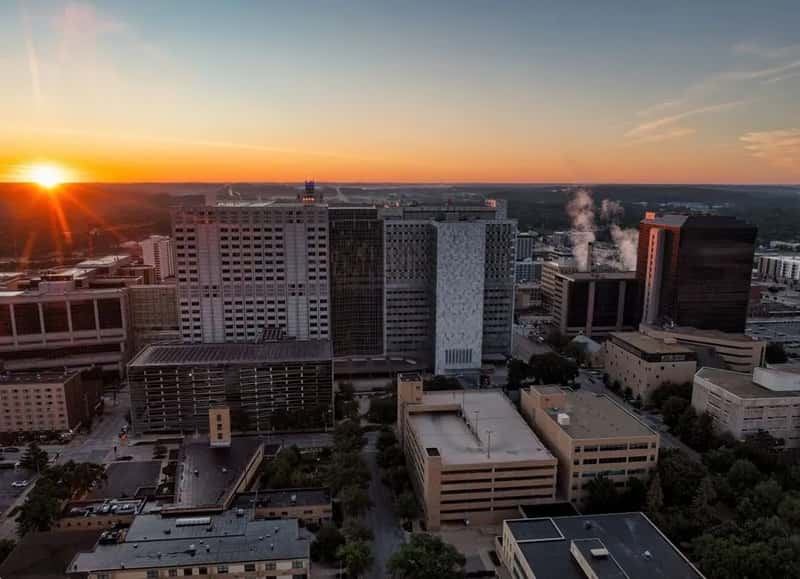
Sioux Falls keeps showing up on both ends of the well-being spectrum, in a good way. On the happiness side, Sioux Falls, South Dakota, followed in fourth place[1] in the most recent national rankings. That’s a notable showing for a city of its size, especially compared to sprawling metros with far more resources.
The city’s low-stress reputation backs this up from a different angle entirely. South Burlington in Vermont, Fremont in California, and Sioux Falls in South Dakota were ranked as the three least stressful cities[4] in a separate national stress study. When a city lands near the top of the happiness list and near the bottom of the stress list at the same time, that’s a pretty good sign the good feelings aren’t just a fluke of methodology.
Detroit, Michigan: where the numbers pile up

Detroit’s struggles aren’t new, but recent data shows just how deep they run. Detroit ranked as the most stressed city in the 2025 study, with an unemployment rate of 11.4 percent, a median household income of around $38,000 after cost-of-living adjustments, and a poverty rate of 31.5 percent.[4] Those figures alone would strain any community, but they don’t stand alone.
Safety concerns compound the financial pressure. The study also noted that the city had one of the highest violent crime rates in the country, as well as the second-highest separation and divorce rate.[4] Credit health tells a similar story, with residents having the lowest median household income adjusted for cost of living, just over $38,000, and a median credit score of 624, considered “bad” by most lenders.[5] It’s a city where the everyday math of survival simply doesn’t add up the way it should.
Cleveland, Ohio: economic strain and family fracture
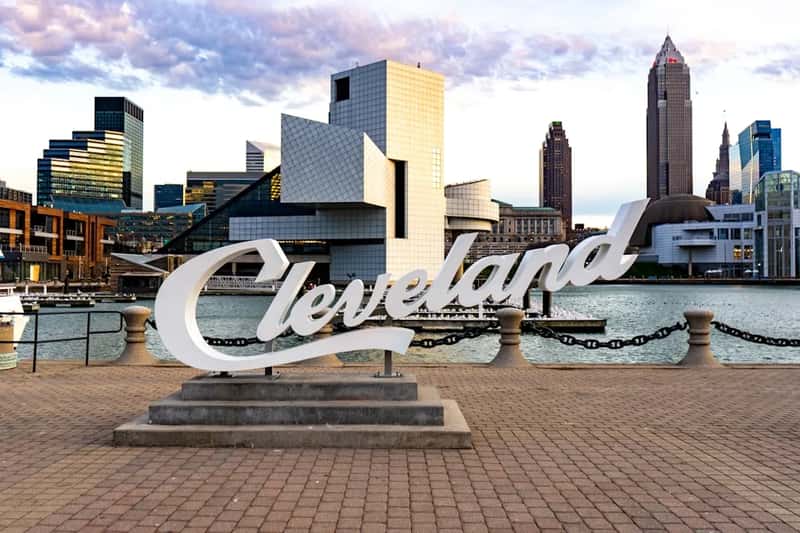
Cleveland’s problems center heavily on money and housing. Cleveland took second place as the most stressed city due to a combination of low adjusted median household income under $43,000, high foreclosure and poverty rates, and the highest separation and divorce rates among the surveyed cities.[4] Foreclosure and divorce aren’t just statistics here, they’re the visible cracks in a city under sustained pressure.
The mental health toll is measurable too. Health and safety issues further added to Cleveland’s stress burden, with more than 22 percent of adults reporting 14 or more “mentally unhealthy” days per month.[4] Financial strain compounds the picture, as Cleveland has the fourth-highest rate of families falling behind on bills, the second-highest foreclosure rate, and leads the nation in divorces at over 41%.[6]
Baltimore, Maryland: housing costs that don’t let up

Baltimore’s stress problem starts with rent. Coming in third was Baltimore, where residents encounter expensive rent, taking up about 40 percent of median household income for a two-bedroom apartment, and many are affected by underwater mortgages.[4] When housing eats up that much of a paycheck, there’s little room left for anything else, savings, emergencies, or simple peace of mind.
Public safety adds another layer of pressure. The city also experiences significant violent crime rates, having the sixth-most mass shootings between March 2020 and March 2025.[4] Homeownership offers little relief either, since Baltimore has the seventh-highest rate of mortgages where families owe significantly more than their homes are worth.[6] Between the rent and the risk, it’s easy to see why Baltimore consistently lands near the top of the stress rankings.
Memphis, Tennessee: safety concerns and long odds

Memphis carries a different kind of weight, one tied closely to daily safety. Memphis ranks first in health and safety stress, and crime is a daily concern for residents.[7] That constant low-level vigilance takes a toll over time, even for people who’ve never personally been affected by an incident.
Work doesn’t offer much of an escape valve either. Work and financial stress also rank high, with residents facing some of the longest hours and lowest rewards in the country.[7] Life expectancy data underscores just how much these pressures compound, since residents of Memphis have the lowest life expectancy at 71.8 years[8] among cities studied in a separate national well-being analysis. That single statistic says more than almost any survey question could.