
As soon as I arrived in Santiago, Chile, I began searching for nearby mountains that I could climb. And it didn’t take long to learn about Cerro Plomo. This mountain has an impressive outline, visible from the city, and it’s the highest mountain right by Santiago.
I found a guided expedition to Cerro Plomo, increased my training for a couple of months, and set out with a large group of about 15 other climbers and our guides to climb it over three tough days in December, a summer month in Chile. What commenced was both an incredible nature experience and an unexpected story that stands out as one of my most unique mountaineering experiences in Chile.
Leaving the City
Early in the morning, before the summer sun had even begun to rise, I met my expedition group at a central point in the city of Santiago. We went in two large vans, together with our four guides and the group leader. Although the size of this group felt overwhelming, it was buzzing with energy and excitement about the adventure that was to come.
It’s a long drive from Santiago to La Parva, the ski resort up in the Andes. And during the car ride, I struggled to keep my breakfast down as the driver navigated the 40 steep, inclined curves that climb past Farellones, taking us up from the valley to a higher elevation. The sun was coming up, so I could see how high up we already were. And although it was summer, I could spot some snow still clinging to shadowy parts of the mountainsides.
I’d only been in Santiago a couple of months so far, and I was eager for a taste of the high altitude of the Andes. I heard about how formidable Cerro Plomo was, but I felt prepared for the challenge. Even though it was summer, it was sure to be extremely cold at high altitude; Plomo’s summit is at 5,444 meters (17,783 feet), an elevation that can bring high wind speeds and below-freezing temperatures. But I’d packed my heavy double boots, down jackets, down gloves, and other technical clothing, so I was ready to tackle anything.
La Parva Ski Lift & Expedition Dynamics
When we reached the ski lift at La Parva, we unpacked all of our gear from the vans and organized our belongings. Although it was early on a Friday morning, our expedition group wasn’t the only one there. Other climbers, some with other guide companies and some independent, were preparing their things in this huge dirt parking lot in the chilly mountain air. Our group would be sharing a dining tent, and the guides would group us into 2-3 people per tent.
It was an unusually large group for this type of mountain expedition, but I was determined to enjoy the experience. After organizing all of our gear and packing our day packs, we received our ski lift tickets from the group leader and prepared to take the ski lift. It felt like cheating a bit; after all, we were using the lift to skip this part of the hike, but looking out at the dusty brown zig-zaggy trail ahead, I was glad to get a head start on the trek.
Approach to Base Camp
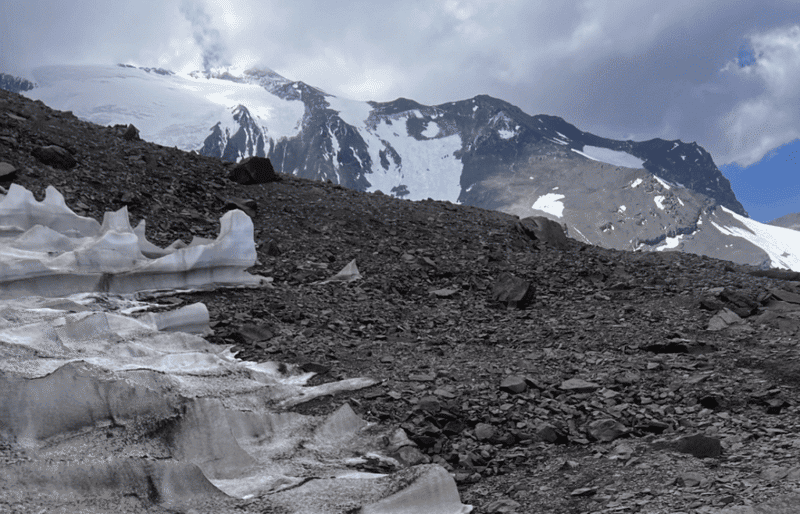
As we began the long trek that would take us from Valle Nevado to Federación Base Camp in several hours, the group naturally spread out into different hiking paces. People came with various levels of experience and fitness, but the guides tried to pace us roughly the same. We started taking extended breaks to wait for those lagging in the back, which is a part of group expeditions that I knew I had to accept. But the hike was stunning; we were surrounded by the majestic Andes mountains, and the weather was sunny and stable.
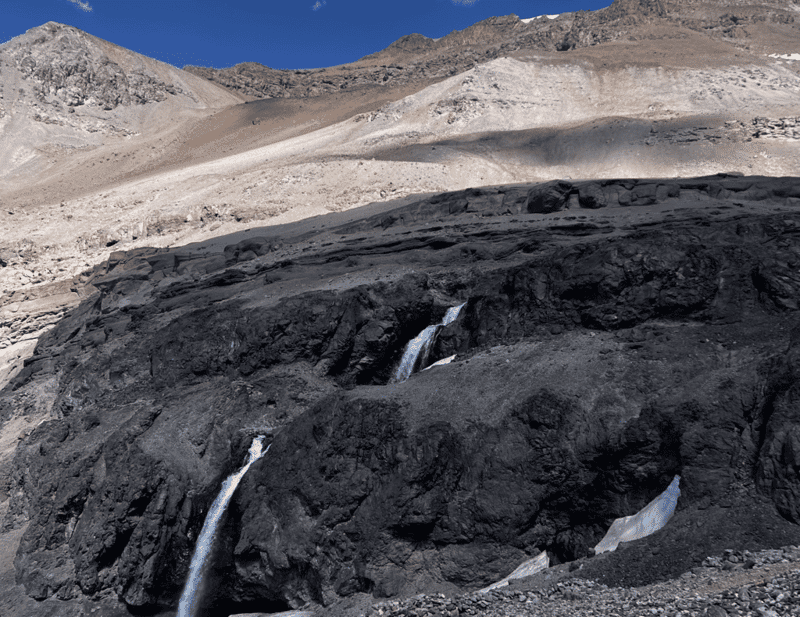
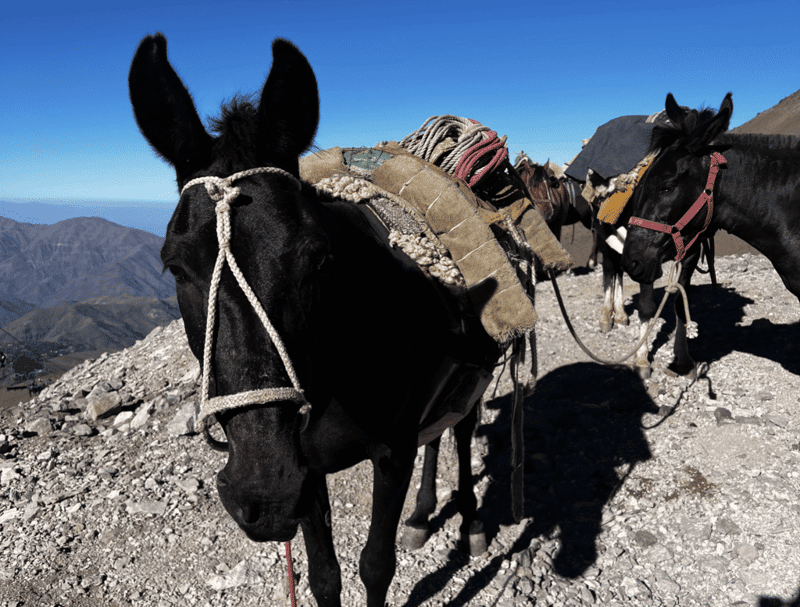
We climbed higher in altitude, and I started drinking more water to compensate for the thinning air. At one point, the mules carrying the rest of our gear passed us by, the muleteer greeting us as he went by. On that rocky, dry terrain, with its steep trail sections, it amazed me that these mules could navigate the terrain while hauling bags. As our group trudged step by dusty step toward the camp, the mules quickly disappeared out of view ahead of us.
Arriving at Base Camp
During our hike, our guides gave us some history about this trek and about Cerro Plomo. I learned that it was considered sacred by the Incas, called an “apu.” It wasn’t considered just rock and ice; it was a sacred spirit. And Cerro Plomo marked the end of the Incan trail, a detail that I found to be fascinating, which seemed to tie together my previous experience on the Incan Trail in Peru a few years ago. It made me feel like this climb now had spiritual or historic significance; there was more to it than a simple mountain trek.
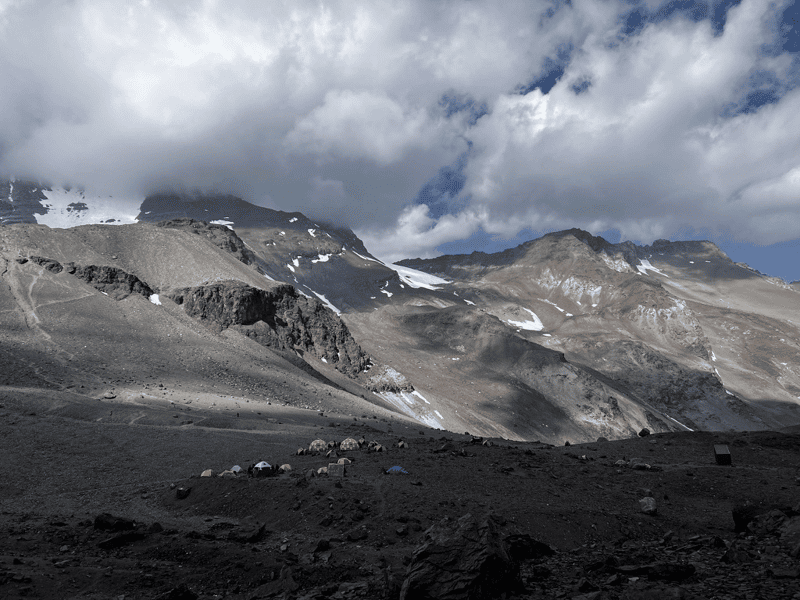
Reaching the base camp at 4,150 meters (13,615 feet), we put our packs down and took a well-deserved break. It was chillier here, so we put on another jacket layer. Working together, we unpacked the group tents as well as our summit day gear. I was using this opportunity to practice with my double boots. They’re literally two boots: one inner boot, and then the heavy outer plastic boot. I struggled with them on a previous high-altitude expedition, so Cerro Plomo would serve as practice in them before moving on to bigger peaks. I put them inside my shared tent, along with my other gear, and went out to explore the Federación Base Camp.
The Night Before the Summit at Federación Base Camp
Our dinner, a strange mix of stale couscous and rehydrated pork garnished with canned olives, was shared inside a large tent that couldn’t quite hold our massive group. The sun was already starting to set, causing the temperature to drop even more. After finishing dinner, my tentmate and I went for a short walk around the campsite before heading into our tent as the wind started to pick up.
The rest of the group was busy managing gear items and making general preparations for the very early summit morning we’d have tomorrow. As I chatted with my tentmate about the challenge to come tomorrow, I couldn’t help but start to feel like something was off in my body, but in that moment, I chalked it up to general nerves and a pinch of adverse effect from the altitude. Little did I know what was in store for me that night and the following day… (continued in Part 2.)