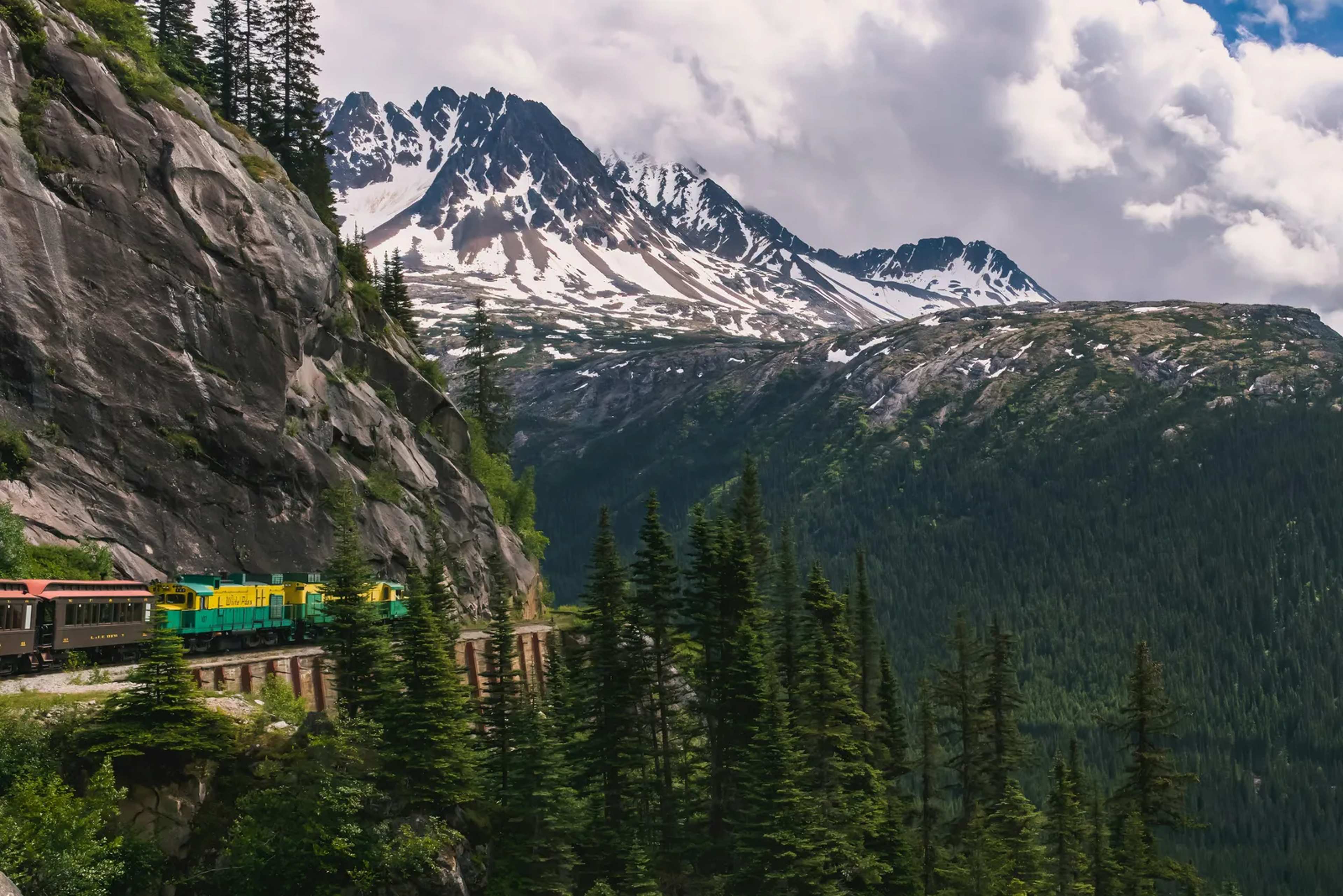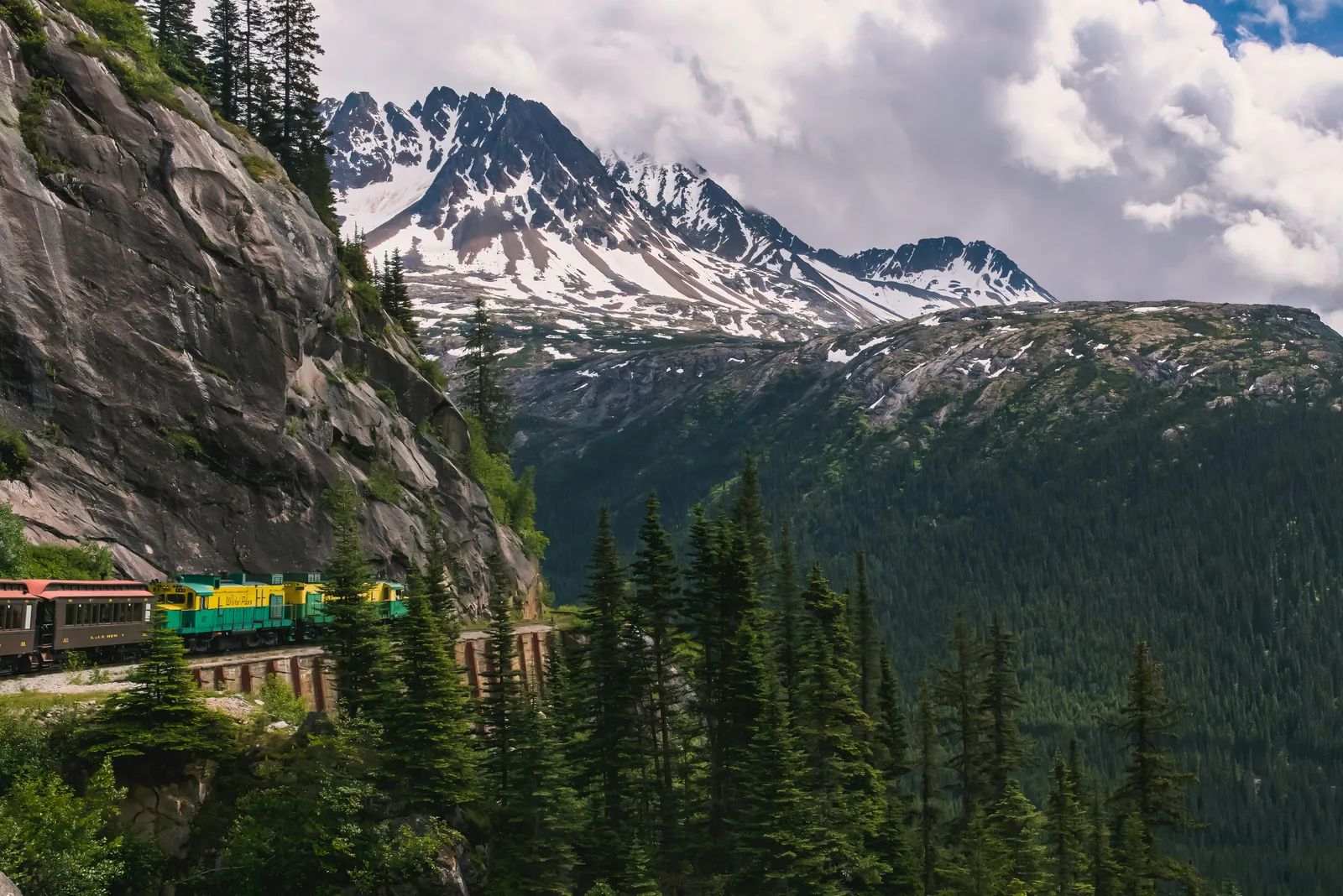
Skagway, Alaska, draws thousands of cruise visitors each season to a railway that once carried gold seekers through punishing terrain. The White Pass and Yukon Route Railway blends engineering history with sweeping mountain views in a way few other excursions match. Its tracks climb steep grades carved into cliffs more than a century ago, offering a moving perspective on the region’s past and present landscape.
A Project Completed in Record Time Amid Brutal Conditions
Construction of the White Pass and Yukon Route began in 1898 and finished just two years later at a cost of $10 million. More than 35,000 workers from the United States, Canada and England helped lay the tracks that connected Skagway to the Canadian border. Before the railway, prospectors faced two grueling trails over the mountains, each requiring them to haul a full ton of supplies. The completed line eased that burden and sped travel to the Klondike gold fields. The railroad operated year-round for more than eight decades until falling metal prices and mine closures forced a shutdown from 1982 to 1988. It reopened in 1988 focused on tourism and now runs from late April through mid-October to match the cruise season. In 1994 the route earned designation as a Historic Civil Engineering Landmark alongside icons such as the Eiffel Tower and the Statue of Liberty.
Route Options That Range from Quick Summit Trips to Full-Day Journeys
The most popular White Pass Summit excursion covers roughly 20 miles and reaches nearly 3,000 feet in elevation before turning around at the Canadian border. Tickets purchased online in advance cost $155 for adults and $77.50 for children on standard coaches. A steam-powered parlor-car version on limited vintage equipment runs $249 for adults and $180 for children. Travelers seeking a longer outing can choose the Bennett Scenic Journey, an eight-hour round trip that reaches Carcross in Canada’s Yukon Territory. That option costs $289 for adults and $144.50 for children and includes a boxed lunch plus a stop in Bennett, British Columbia. Passengers on routes that cross into Canada must carry passports, while the shorter summit trip does not require one. Additional hiker shuttles serve trailheads at Denver Glacier and Laughton Glacier for $60 and $106 respectively for adults. These services provide round-trip rail transport with time for self-guided hikes and also require passports.
Practical Steps for Booking and Boarding
Tickets are available directly through the White Pass and Yukon Route website, by phone at 800-343-7373, or at the ticket office on Second Avenue in Skagway. Cruise passengers can also book through their ship’s shore-excursion desk, though prices often carry a significant markup. Advance reservations are strongly recommended because popular departures sell out during peak season. The train departs from tracks located about halfway between the cruise docks and downtown Skagway. Riders receive a free booklet that includes a route map, safety guidelines and brief descriptions of sights along the way. Guides narrate the journey, pointing out maintenance shops, waterfalls, steel bridges, two tunnels and historic gravesites.
Accessibility, Comfort and Onboard Experience
Ten coaches feature wheelchair lifts and accessible restrooms, primarily assigned to summit and Fraser routes. Cruise lines such as Holland America and Princess offer adapted versions of the excursion for guests who need them. Passengers with limited mobility should request lift-equipped cars when booking independently. The fleet includes six new locomotives along with vintage steam engines and restored coaches, some more than 140 years old. No air conditioning is available, so temperatures inside can feel warm on sunny days or pleasantly cool when the weather turns chilly. Riders may step onto exterior terraces for unobstructed views while the train is stopped, though movement between cars is not permitted while underway.
Why the Ride Endures as a Signature Alaska Experience
The combination of narrated history, dramatic elevation gain and cliffside scenery creates an experience that stands apart from typical shore excursions. Clear days deliver sweeping vistas of the surrounding wilderness, while the engineering story behind the line adds depth to every mile. Visitors who value context and movement over static viewpoints often find the journey memorable long after they return to their ships. For those who prefer to stay active or dislike heights, other Skagway activities may suit better. Yet the White Pass and Yukon Route continues to draw repeat interest because it delivers both tangible history and an unmatched sense of place in one compact outing.